1. Conquering the North American Continent: The Myth of the Stadium World Tour
In modern music history, the trajectory carved by BTS represents far more than pop stardom—it marks a profound civilizational shift in global culture.
For a non-English-speaking, seven-member Asian group to score six or more #1 hits on the Billboard Hot 100 and repeatedly top the Billboard 200 albums chart was an unprecedented phenomenon in the history of the Western music industry.
🏟️ Monumental Stadium Dominance
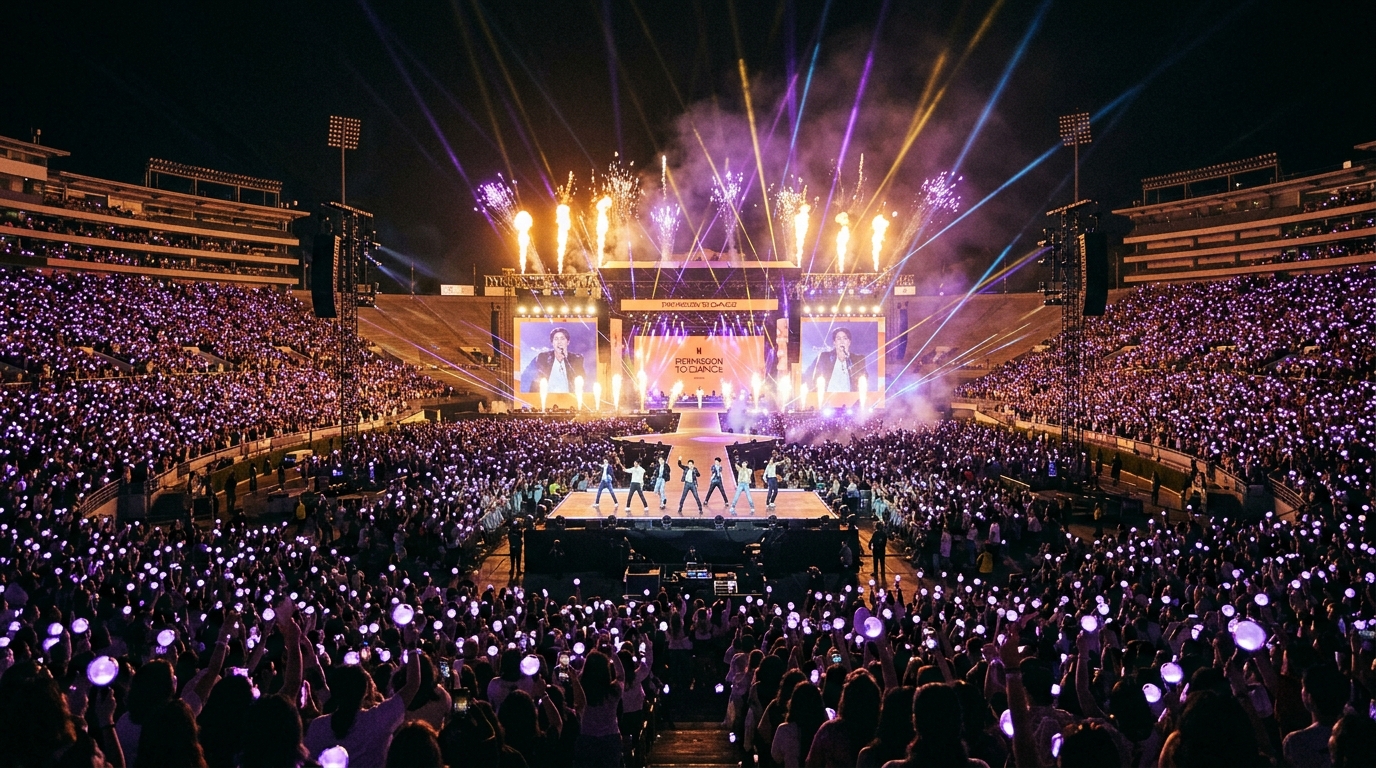
• Sold-Out Stadiums: From the Pasadena Rose Bowl and SoFi Stadium in Los Angeles to MetLife Stadium in New Jersey and Allegiant Stadium in Las Vegas, BTS achieved consecutive 100% sold-out runs across 70,000–80,000 capacity arenas.
• Breaking Language Barriers: Hearing tens of thousands of diverse American fans chanting Korean lyrics in unison—fusing traditional Korean folk melodies like Arirang with contemporary hip-hop—symbolized a historic transition from Anglo-American hegemony toward genuine global pluralism.
2. Ratings Exploitation and the Contradiction of 'Asian Pop' Ghettoization
Despite these monumental commercial and cultural achievements, the most conservative bastion of the American music establishment—the Grammy Awards (The Recording Academy)—remained stubbornly exclusionary.
Year after year, the Grammys placed BTS at the center of their promotional broadcasts to harvest record television ratings, viral impressions, and global engagement from millions of ARMY fans.
Yet, when it came to award recognition, BTS was consistently locked out of the Big 4 General Fields (Album, Record, Song of the Year) and relegated strictly to minor pop duo/group subcategories.
⚠️ The Backlash Against 'Best Asian Pop Music Performance'
In 2026, the Recording Academy introduced the 'Best Asian Pop Music Performance' category.
While ostensibly framed as an embrace of diversity, critics and industry observers immediately identified it as an effort to prevent Asian artists from competing directly in top-tier General Fields, creating a segregated side league.
• Double Standards: The Grammys have no "European Pop" or "American Pop" categories to restrict Western artists. Establishing a linguistic and racial barrier solely for Asian music represents a blatant act of musical ghettoization.
3. "Music Transcends Borders": BTS’s Historic Grammy Boycott
Rather than chasing institutional validation, BTS chose to uphold artistic dignity and integrity.
The group officially announced a complete non-submission boycott for the Grammy Awards, releasing unified statements:
"We hope our music is heard and loved for what it is, rather than being defined by region or language."
This declaration completely upended the traditional power dynamics between awarding bodies and global creators.
"We do not need your trophies. Rather, it is the Grammys—facing declining cultural relevance—that desperately needs us."
4. MetLife Stadium, New Jersey: RM’s Unfiltered 'MIC Drop' Lyric Defiance
BTS’s uncompromising stance was dramatically vocalized live on stage at MetLife Stadium in New Jersey.
During their performance of 'MIC Drop', leader RM replaced the standard verse with an electrifying, unscripted callout to the 80,000-strong stadium:
"Haters will keep hating, and we'll keep living our lives.
We were born in Korea. That's why they don't know about us!"
The roar from the crowd shook the stadium. It was a fearless artistic declaration: We have never concealed our Korean heritage, and your ignorance and institutional gatekeeping will never diminish our impact.
5. Global Media Indictment: Forbes, Rolling Stone, and Billboard Speak Out
Following the boycott and MetLife performance, leading international publications published blistering critiques of the Recording Academy:
- Forbes:
"BTS’s Grammy boycott serves as an urgent audit of the Recording Academy’s diversity problem. The Asian Pop category acts as a ceiling rather than a doorway, perpetuating the systemic 'othering' of non-Western artists." - Rolling Stone:
"When stadium-conquering giants walk away from an award show, it signals that the cultural balance of power has decisively shifted from gatekeepers to global artists." - Billboard:
"Demanding regional categorization solely for Asian creators while exempting European artists exposes an undeniable double standard." - The Guardian:
"The Grammys continue their long history of packaging exclusion under the guise of diversity."
6. Epilogue: For Whom Do the Aging Gates Remain Closed?
Music is a universal language that transcends racial, national, and linguistic boundaries.
While millions of fans across every continent connect through shared melody and emotion, the Recording Academy remains sheltered behind outdated Eurocentric conservatism.
"How long will Asian artistry be treated as an outsider?
As the world moves toward a borderless musical ocean, for whom do the Grammys’ bolted gates truly stand?"