Weapons Losing Control: What are 'Killer Robots'?
On August 25, 2026, the global news headline that garnered the highest view count was none other than the international community's strong call for sanctions on 'Lethal Autonomous Weapons Systems (LAWS)', commonly known as 'killer robots'.
The United Nations (UN) and the International Committee of the Red Cross (ICRC) issued a joint statement warning that the development and use of artificial intelligence-based weapons systems capable of identifying and attacking targets without human control must be completely banned. What was once seen only in sci-fi movies is now on the verge of being introduced onto real battlefields.
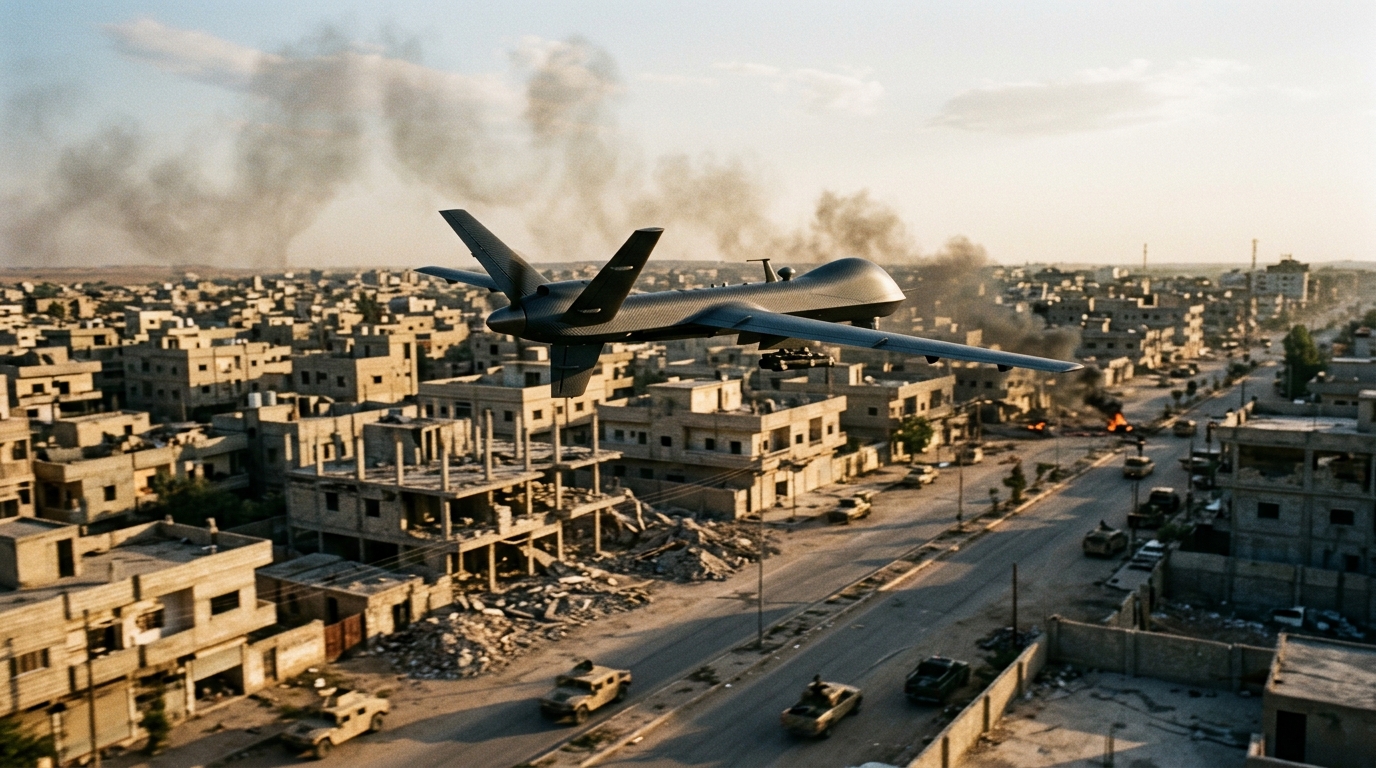
Why is the World So Tense Right Now?
Recently, as military tensions in the Middle East have peaked, there have been successive reports of AI-equipped drones being deployed in localized conflicts. While AI weapons do not feel fatigue and can strike with calculated precision, the biggest problem is the exclusion of 'human ethical judgment'.
- Risk of Malfunction: Algorithmic errors or hacking could lead to an inability to distinguish between civilians and combatants, causing massive casualties.
- Ambiguity of Responsibility: When a robot commits a war crime, international law has yet to establish standards on whether the programmer, manufacturer, or military commander should be held accountable.
- Accelerating Arms Race: There are significant concerns that this could trigger a new, highly uncontrollable form of arms race, perhaps the most dangerous since nuclear weapons.
The Need for New International Norms for AI-Human Coexistence
UN Secretary-General Guterres emphasized, "Handing over the authority to decide life and death to machines is morally repugnant and politically unacceptable." Currently, dozens of countries and thousands of AI and robotics experts worldwide are demanding a preemptive ban treaty on these weapon systems.

The Question We Must Ask
While technological advancement enriches human life, where do we draw the line when it evolves into a tool that takes lives? This news, which captured the world's attention in August 2026, goes beyond mere military technology; it poses a profound philosophical question: 'What does it mean to be human in the age of technology?'