1. Introduction: Why Headlines Proclaiming "Reactor Construction Approval" Are Only Half True
In late August 2026, European energy markets and the global nuclear industry turned their attention to the area around Dunkirk, a port city in the Hauts-de-France region of northern France. Numerous Korean and international media outlets rushed to report the news: "the French government has officially approved the construction of two next-generation large reactors at the Gravelines complex, Western Europe's largest nuclear power station." Hopeful interpretations followed. Some suggested that the "French nuclear renaissance" proclaimed by President Macron had at last moved beyond paper plans. In their view, it had reached the stage of actual construction.
However, the original document tells a different story. It was issued under the Prime Minister's name and published in the Journal officiel de la République française, the French Official Journal, on 22 August 2026. A close reading shows that the reality is far more precise and limited than reported.
Legally, Decree No. 2026-807 (Décret n° 2026-807 du 20 août 2026) does not authorise the final construction or operation of the reactors. It is no more than an "environmental authorisation (Autorisation environnementale) for the site preparation works for the two planned EPR2 pressurised water reactors." Under French administrative law, preliminary site preparation and the main construction of a nuclear facility are entirely separate procedures. They have different competent authorities and different legal requirements.
Drawing this boundary precisely matters. Without it, one can seriously misjudge the safety reviews and licensing risks that must still be cleared before the reactors are actually connected to the grid. This article fact-checks what the permitted works actually are and which areas have not yet been approved. It draws on primary sources: the French Official Journal and documents from EDF, the state utility, and from the nuclear regulator.
2. What Decree No. 2026-807 Authorises: Ground Preparation and Enabling Infrastructure
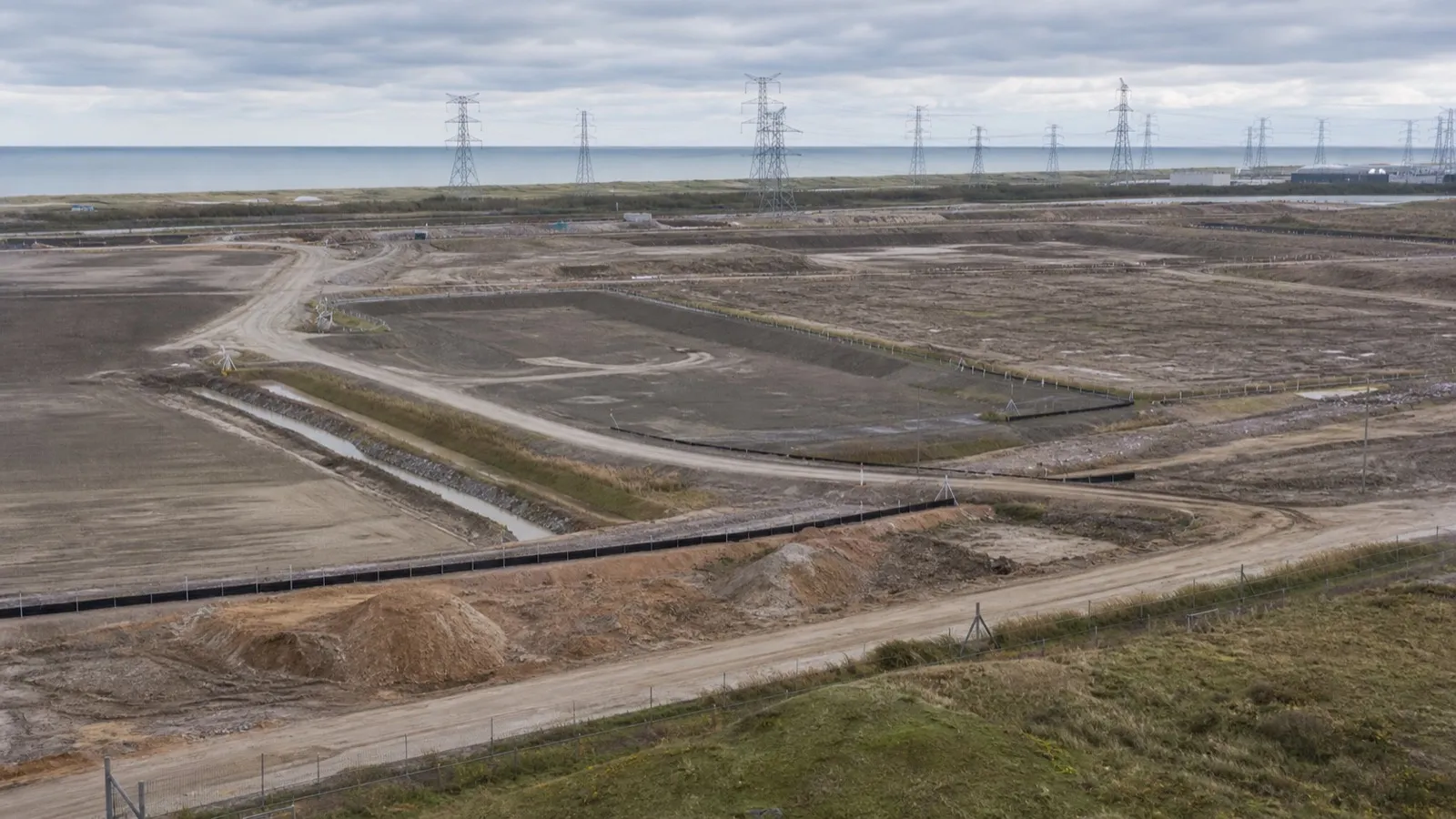
Article 4 of Decree No. 2026-807, as published in the French Official Journal (Article 4 — Description des travaux objet de l'autorisation), sets out in detail the works EDF may begin on site immediately. The authorised activities are strictly limited to enabling works. These works prepare the physical condition of the vast coastal site ahead of the main construction. The specific operations permitted by the decree are as follows:
First, biodiversity conservation measures. These include capturing and safely relocating the protected wild animal and plant species living on the planned construction site, and creating replacement habitats. Second, laying out work platforms for heavy equipment and construction materials, and installing temporary site offices and large material storage yards. Third, rerouting the existing freight rail terminal, which ran through the site, around its outer edge. This item also covers building a dedicated access road and parking areas linked to the Dunkirk port road network. Fourth, large-scale earthworks and deep ground reinforcement to stabilise the soft coastal dune ground. These come with ancillary civil works for initial surveys of the cooling water intake and discharge facilities.
According to EDF's official Concertation EPR2 announcement, these are preparatory steps. They are intended to shorten the site preparation period on the basis of the Nuclear Acceleration Act promulgated in June 2023 (Loi n° 2023-491). It is true that physical change has begun, with excavators and trucks moving onto the site. But this is "levelling the ground," not "building a reactor."
3. What Remains Unapproved: The Creation Authorisation Decree (DAC) and Reactor Foundations
So why can one state categorically that this environmental permit does not allow reactor construction to begin? The answer lies in France's strict two-track licensing structure for Basic Nuclear Installations (INB, Installation nucléaire de base). This structure is laid down in the French Environmental Code (Code de l'environnement). In France, some facilities handle high-risk nuclear material, such as a commercial reactor. To build one, a developer must separately obtain a "Creation Authorisation Decree" (Décret d'autorisation de création, DAC). The DAC is the cabinet's highest form of administrative legislation.
According to EDF's official project disclosures, EDF formally submitted its DAC application for the two Gravelines EPR2 units to the competent ministry on 30 June 2026. The application is now undergoing detailed technical review by France's independent nuclear safety regulator. This is the Nuclear Safety and Radiation Protection Authority (ASNR), the body formed by merging the former ASN and IRSN.
To guarantee the regulator's independence, Article 11 of the 2023 Nuclear Acceleration Act states flatly: "before the DAC decree has been enacted and promulgated, the pouring of underground concrete foundations for the main buildings that will hold nuclear fuel or house safety-system equipment (the reactor containment building, the fuel building, auxiliary buildings and so on) may never begin."
In other words, EDF may dig out sand and lay roads. But it cannot pour even a single bag of concrete where the reactors are to stand. Approval to start the main reactor construction in the true sense has therefore not yet been given. Depending on the outcome of the ASNR's technical review, design changes or schedule delays could occur at any time.
4. The Scale of the Programme: Six Planned EPR2 Units across Penly, Gravelines, and Bugey
To put the Gravelines project in context, what standing does the site have today? And what is the real scale of this expansion? The Gravelines plant sits on the North Sea coast near Dunkirk. It has six 900 MWe second-generation pressurised water reactors (the CP1 model), which entered service in stages between 1980 and 1985.
Consider the national statistics in the International Atomic Energy Agency's (IAEA) Power Reactor Information System (PRIS). According to them, the Gravelines complex has a total installed capacity of 5,460 MWe. It produces 30 to 35 TWh of clean electricity a year. On its own, that is roughly 8 to 9 percent of all French nuclear generation, making it Western Europe's largest nuclear heartland.
President Macron's new nuclear programme envisages a first phase of six new EPR2 reactors. Its formula is "three hubs, two units per site, six in total." The first, lead project is the Penly site (Penly units 1 and 2), near Dieppe in Normandy. The second is Gravelines in the north (Gravelines units 7 and 8), which has now received the environmental permit for site preparation. The third is the Bugey site in the Rhône valley, near Lyon in the southeast.
Each new EPR2 reactor has a net electrical output of about 1,670 MWe. So when two units are completed at Gravelines, they will add 3,340 MWe of large-scale carbon-free baseload capacity. The complex's six existing 900 MWe reactors are ageing. Built in the early 1980s, they are already past their 40-year design life. They will be gradually retired from the late 2030s through the 2040s. The new capacity is enough to offset that loss of output. It will also keep supplying enormous amounts of electricity to the industrial belt of northern France.
5. EPR2 Reactor Technical Specifications: Standardisation, a 30% Component Reduction, and the Core Catcher
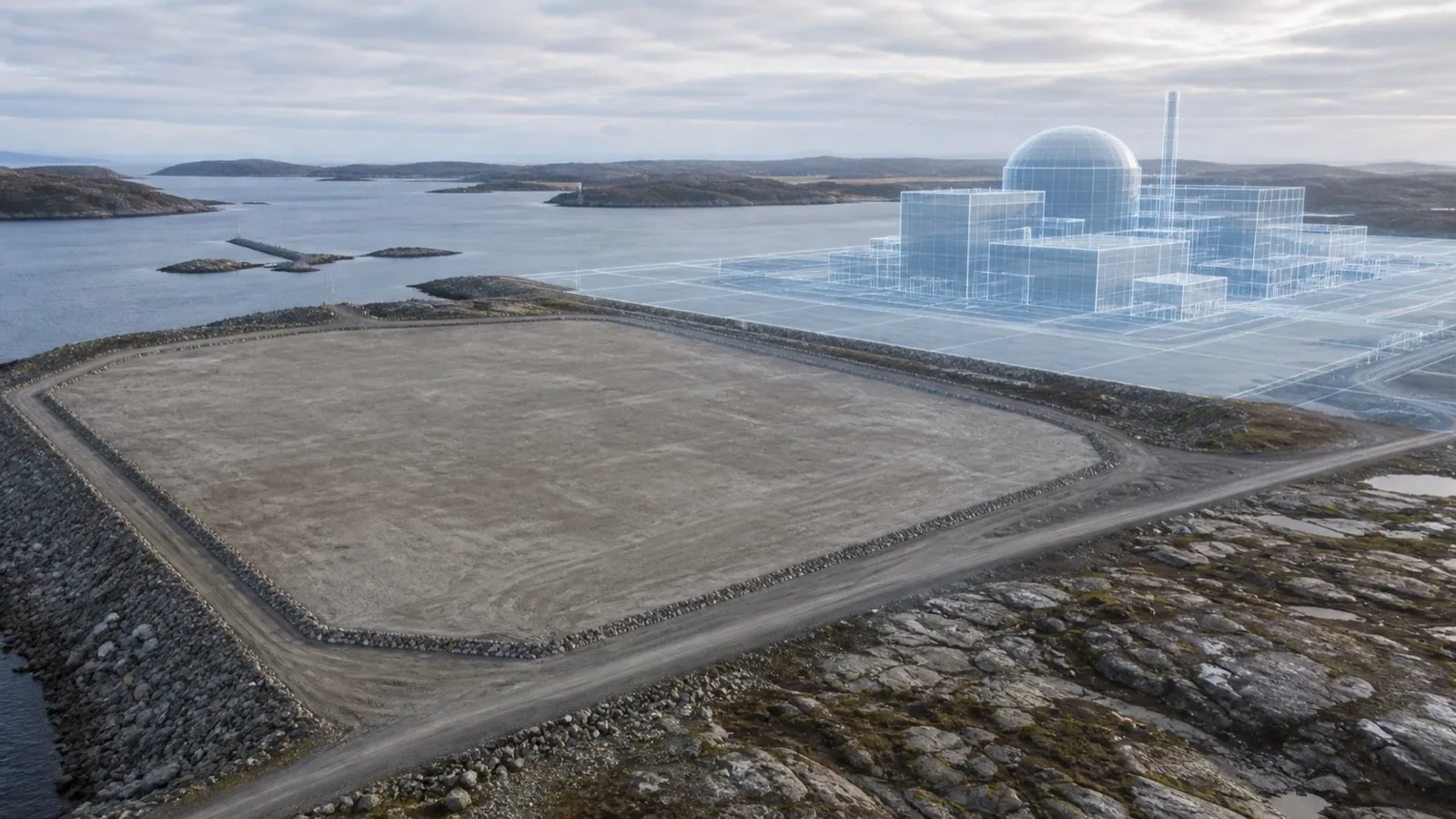
How does the EPR2, the reactor France has adopted for its next generation, differ in engineering terms from earlier designs? The EPR2 is a "standardised, simplified model." It grew out of hard-won reflection on three earlier projects that suffered severe schedule delays and cost overruns running into trillions of won. These were Olkiluoto 3 in Finland, Flamanville 3 in France itself, and Hinkley Point C in the United Kingdom. The existing Generation III EPR was criticised for its design choices. In pursuit of outstanding safety, it made its piping and instrumentation and control systems excessively complex. This sharply undermined on-site constructability and economics.
According to EDF's engineering design documents and the French regulatory authority's preliminary review opinion (Avis n° 2019-AV-0329), the EPR2 boldly reduces valve counts and total pipework length by more than 30 percent compared with the existing EPR. It also avoids complex site-specific design, greatly expanding the use of "factory modular construction," in which modules prefabricated in factories are transported to the site and bolted together. On safety redundancy, it carries over Europe's highest safety standards with four independent safety trains physically separated from one another, and it comes as standard with protection against the impact of a large commercial aircraft and a "core catcher" system that, in a severe accident, cools and isolates molten core material (corium) at temperatures above 2,000°C at the base of the building so that it cannot escape into the surrounding soil or groundwater. Its design life, too, goes beyond the 40 years of existing plants to at least 60 years and up to 80 years of operation, with the aim of spreading depreciation over the long term and lowering generation costs.
6. The Strategic Drivers: Low-Carbon Baseload Electricity and Continental Power Exports
Three strategic factors explain why France is staking so much on a massive nuclear expansion. Its approach stands in direct contrast to neighbouring European countries' nuclear phase-outs and single-minded renewables policies.
The first is "complete control of carbon-free baseload power." Solar and wind are intermittent; their output swings wildly with the weather. The European Union has now formally included nuclear power in the EU Green Taxonomy. Against this backdrop, France is building an unrivalled carbon-neutral system. It makes its baseload power 100 percent carbon-free and supplies electricity stably 24 hours a day, regardless of the weather.
Second, "export competitiveness and a leading position as the electricity export hub of continental Europe." Consider *Bilan électrique 2025*, a report by RTE, the French transmission system operator. According to it, France recorded its highest ever net electricity exports in 2025, at 92.3 TWh. That is 17% of domestic generation and more than Belgium's entire annual consumption. France firmly holds its place as Europe's largest electricity exporter. It supplies clean energy to neighbours including Germany, the United Kingdom, Italy, Switzerland and Belgium.
Germany offers a contrast. It halted its nuclear plants and has at times recorded net electricity imports while rebalancing renewables and fossil fuels. France, by comparison, exports stable clean power through the integrated European grid. This preserves both economic gains and bargaining power in regional energy.
Third, "national competitiveness in attracting AI data centres and future advanced manufacturing." Running generative AI models and operating large semiconductor fabs requires gigawatt-scale power. That power must be supplied around the clock without interruption. Thanks to cheap, stable nuclear electricity, the Hauts-de-France region in northern France is drawing attention. It is a strong candidate in the competition to attract the data centres and advanced manufacturing facilities of global big tech companies.
7. Key Uncertainties Ahead: ASNR Safety Review, Financing Decisions, and Supply Chains
The grant of a site preparation permit by no means guarantees the success of the Gravelines EPR2 project. Four huge challenges still stand between it and actual commercial operation.
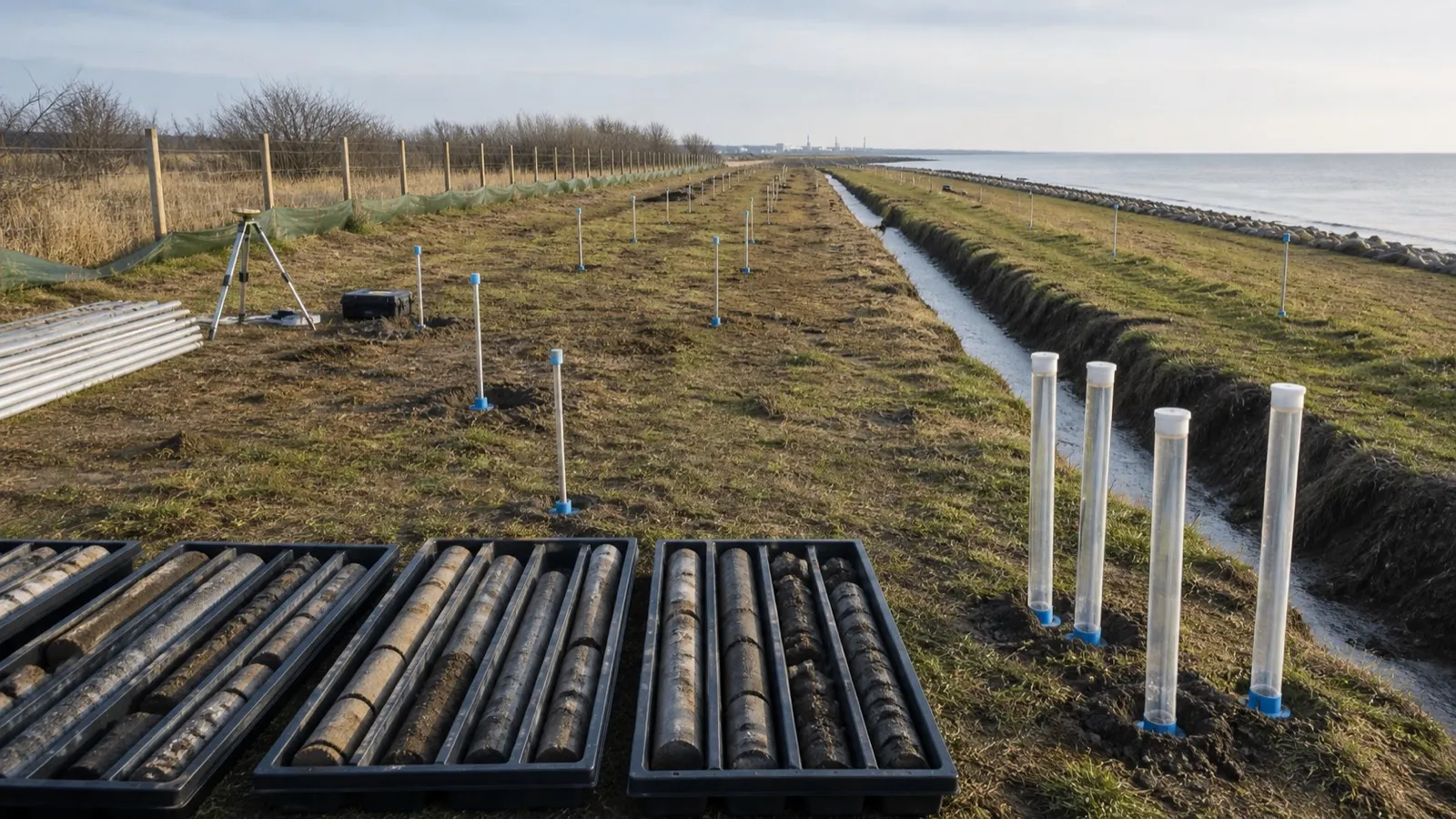
The first is "the gateway of the ASNR's strict safety review." In an earlier technical opinion, the regulator, ASNR, required EDF to provide additional demonstration in three areas. These were protection design against internal fire and flooding hazards; the internal pressure resistance of the reactor containment building; and the cyber security of the digital instrumentation and control (I&C) system. If the safety demonstration proves inadequate, issuance of the DAC could be delayed by several years.
Second, "astronomical financing and the final investment decision (FID)." The National Commission for Public Debate (CNDP) has published official public-debate materials. According to them, the two Gravelines units alone are estimated to cost about 16.9 billion euros (roughly 25 trillion won). The full six-unit programme will demand investment of more than 50 billion euros. The French government would provide financial support structures, such as loan guarantees or Contracts for Difference (CfD). These must clear State Aid approval by the European Commission (EC).
Third, "bottlenecks in a broken supply chain and in skilled labour." France must avoid repeating Flamanville 3, which was delayed by more than ten years because of pipe welding defects and other problems. To do so, its heavy industry must be able to manufacture high-quality reactor forgings. It must also be able to train and supply tens of thousands of specialist welders in time.
Fourth, "the risk of rising seawater temperatures and coastal erosion caused by climate change." As coastal water temperatures rise, can the plant maintain output while meeting the environmental standards for cooling water intake and discharge? This question will be monitored continuously during the operating phase.
8. Three Core Takeaways from the Gravelines Decision
First, the progress of a large energy infrastructure project must be verified through "the text of official administrative decrees," not media rhetoric. A sensational headline such as "construction approval" hides a densely interwoven set of institutional stages. These include the environmental permit, the DAC review, public debate and State Aid approval. Only when these boundaries are clearly identified can one gauge the realistic timeline for macroeconomic and technology investment.
Second, nuclear power and renewables are not mutually exclusive antagonists. They are complementary partners that underpin a carbon-neutral grid. France's multi-annual national energy programme (PPE) adopts a hybrid portfolio. It combines strong nuclear baseload with the flexible expansion of offshore wind and solar. A single-source power system that leans on only one pillar is inevitably extremely vulnerable in the face of geopolitical crises or climate extremes.
Third, the regulator's independent safety verification is the nuclear industry's sturdiest breakwater. For decades, France has sustained its safety regulation culture without a catastrophic large-scale radioactive release. Two things made this possible. One is the tradition of strict, independent safety regulation carried on since the days of ASN and IRSN. The other is ASNR, the merged body that inherited this tradition. It controls DAC licensing by rigorous standards and is not swayed by the operator EDF's drive for speed. The future of Gravelines depends not on speed but on the precise demonstration of safety.