At a glance
• The underlying reason a single plastic container transforms from recyclable material into incinerated trash across borders cannot be reduced merely to civic morality; it is fundamentally governed by statutory differences in how laws define ‘recycling versus recovery’ alongside municipal processing infrastructure.
• The EU Waste Framework Directive (2008/98/EC) strictly excludes waste-to-energy incineration from recycling definitions; following mandatory separate collection for biowaste (December 2023) and textiles (January 2025), its revised directive entering into force on October 16, 2025 further tightens legal reduction targets.
• Germany’s Packaging Act (VerpackG) restricts yellow bins strictly to fee-licensed packaging, whereas Japan’s Containers and Packaging Recycling Act recognizes high-efficiency thermal incineration as legitimate recycling.
• The United States records a plastic recycling rate of only 8.7% due to single-stream contamination, while South Korea established an intensive multi-stream collection system through its 1995 volume-based fee system and 2003 EPR framework.
1. Introduction: Why the Same Plastic Cup Becomes Garbage Across Borders
Imagine holding a clean, single-use transparent plastic beverage cup. In Berlin, unless this cup originally contained packaged commercial food, residents cannot lawfully dispose of it in the yellow collection bag (Gelber Sack); it must be discarded in the residual municipal waste bin (Restmüll). In residential Tokyo, if the cup retains residual food oils or lacks the certified container packaging logo, municipal guidelines direct households without hesitation to toss it into the combustible trash bag (moeru gomi) destined for the municipal incinerator. In suburban New York, that very same cup is tossed commingled into a single blue bin alongside cardboard, tin cans, and glass jars, while in Seoul, residents rinse it thoroughly and sort it into a dedicated transparent plastic fraction.
International travelers, students, and expatriates routinely experience acute disorientation when confronting these divergent waste rules. While public commentary often attributes these differences to cultural diligence or environmental ethics, environmental law and infrastructure engineering tell a completely different story. Whether an item qualifies as valuable raw material or municipal contamination cannot be reduced merely to individual civic morality; it is fundamentally governed by statutory definitions of recycling adopted by national parliaments, extended producer responsibility (EPR) fee systems, and the physical capabilities of regional sorting and incineration facilities. Through official government legislation and verified data from the European Union, Germany, Japan, the United States, and South Korea, this analysis examines the mechanical and legal foundations separating global waste regimes.
2. The EU Waste Framework Directive: Five-Tier Hierarchy and Material Recycling
The overarching statutory pillar governing waste across the European Union is Directive 2008/98/EC on waste, commonly designated as the Waste Framework Directive. Article 4 of this directive establishes the foundational five-step ‘waste hierarchy’ that legally mandates public priorities for resource conservation. The highest priority is assigned to waste prevention, followed sequentially by preparing for re-use, recycling, other recovery (including energy recovery), and lastly disposal in landfills as an ultimate failure of resource management. The Directorate-General for Environment of the European Commission imposes a binding legal obligation on member states to prioritize physical material reprocessing over combustion or burying.
The critical legal dividing line lies in the precise statutory definition of recycling. Article 3(17) of the directive defines recycling as “any recovery operation by which waste materials are reprocessed into products, materials or substances whether for the original or other purposes.” Crucially, the statutory text adds an explicit caveat: “It does not include energy recovery and the reprocessing into materials that are to be used as fuels or for backfilling operations.” Consequently, burning municipal plastics to generate electricity or steam cannot legally be tallied toward European recycling targets. Furthermore, following mandatory separate collection for biowaste (December 31, 2023) and textiles (January 1, 2025), the revised directive entering into force on October 16, 2025 strengthens legal reduction targets and expands mandatory extended producer responsibility schemes to textiles, reinforcing physical circularity standards across the continent. Similarly, the UK Department for Environment, Food & Rural Affairs (Defra) has advanced its 'Simpler Recycling' framework under the Environment Act 2021, standardizing fragmented municipal collection mandates across England while tightening packaging Extended Producer Responsibility rules.
3. Germany’s Yellow Bin and VerpackG: Why Only Packaging Qualifies
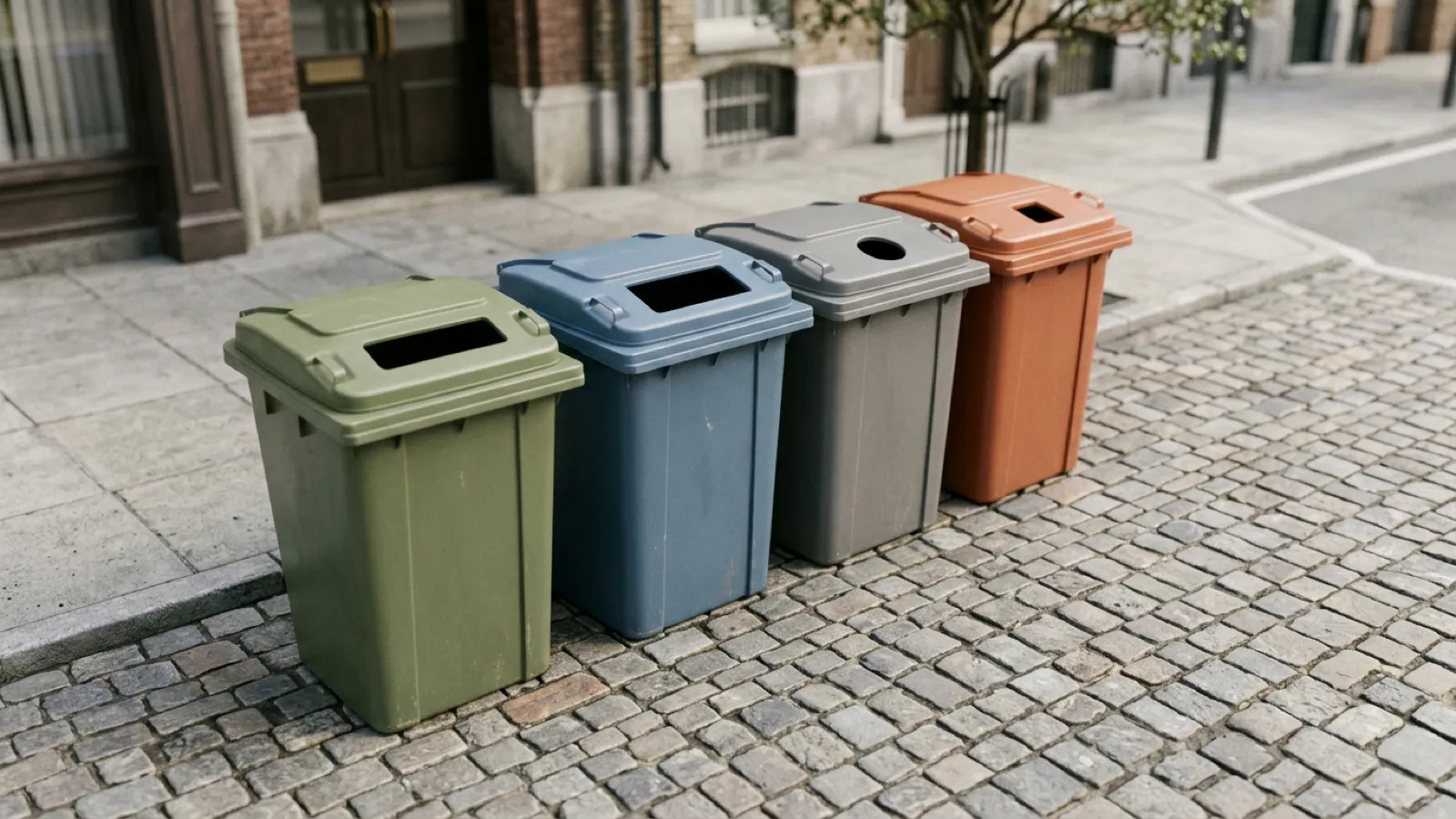
Foreign residents encountering the yellow bin (Gelbe Tonne) or yellow bag (Gelber Sack) across German municipalities almost universally assume it functions as a generic container for all plastic items. However, administrative regulations issued by the German Environment Agency (Umweltbundesamt) and the statutory mandates of the German Packaging Act (Verpackungsgesetz, VerpackG) are exceptionally rigorous. The yellow collection system is exclusively designated for lightweight packaging (Leichtverpackungen). As a consequence, even if an item is manufactured from pristine 100% polypropylene (PP) or polyethylene (PE), a child’s plastic toy, a plastic basin, a toothbrush, or a coat hanger is strictly prohibited from the yellow bin and must be relegated to residual trash (Restmüll).
The rationale for this strict segregation originates in Germany’s unique private financing structure known as the Dual System (Duales System Deutschland). Under the Packaging Act, brand owners and commercial distributors must register with the Central Packaging Register (ZSVR) and pay licensing fees proportional to the packaging mass placed on the retail market. The collection, transport, and sorting costs of yellow bins are entirely financed by these manufacturer license fees, rather than municipal taxpayer funds. Depositing non-packaging plastic items into the yellow bin is legally considered an unfinanced externality that overburdens a privately capitalized recycling infrastructure. While certain municipalities have introduced unified recyclables bins (Wertstofftonne) to capture non-packaging goods, the statutory foundation remains anchored to packaging licensing.
4. Japan’s Combustible Sorting and Thermal Recycling: Licensing Incineration as Recovery
A visit to any residential waste station or convenience store across urban Japan reveals a sorting philosophy diametrically opposed to European norms. If a plastic wrapper, noodle cup, or takeaway lid lacks the official ‘Pla-mark’ (プラマーク) authorized by the Ministry of Economy, Trade and Industry and the Ministry of the Environment, or if it carries stubborn food residue, municipal signage instructs citizens to classify it as ‘combustible trash’ (可燃ごみ, moeru gomi). Across Tokyo’s 23 special wards and surrounding prefectures, meticulously collecting only pristine container packaging while routing vast volumes of soiled consumer plastics into high-temperature municipal incinerators represents standard operating procedure.
This operational framework is anchored by Japan’s Containers and Packaging Recycling Act of 1995 (容器包装リサイクル法) and its distinctive institutional codification of ‘thermal recycling’ (サーマルリサイクル). Constrained by acute mountainous geography that makes landfill development virtually impossible, Japan invested heavily in advanced municipal waste incineration plants capable of generating high-temperature steam and grid electricity while strictly filtering toxic dioxins. Official Japanese Ministry of the Environment statistics classify thermal energy recovery alongside material recycling under the overarching category of ‘effective resource utilization.’ What European Union jurisprudence strictly categorizes as R1 energy recovery is legally embraced in Japan as an advanced technological pillar of national resource stewardship.
5. American Single-Stream Collection: Convenience Versus an 8.7% Recycling Rate
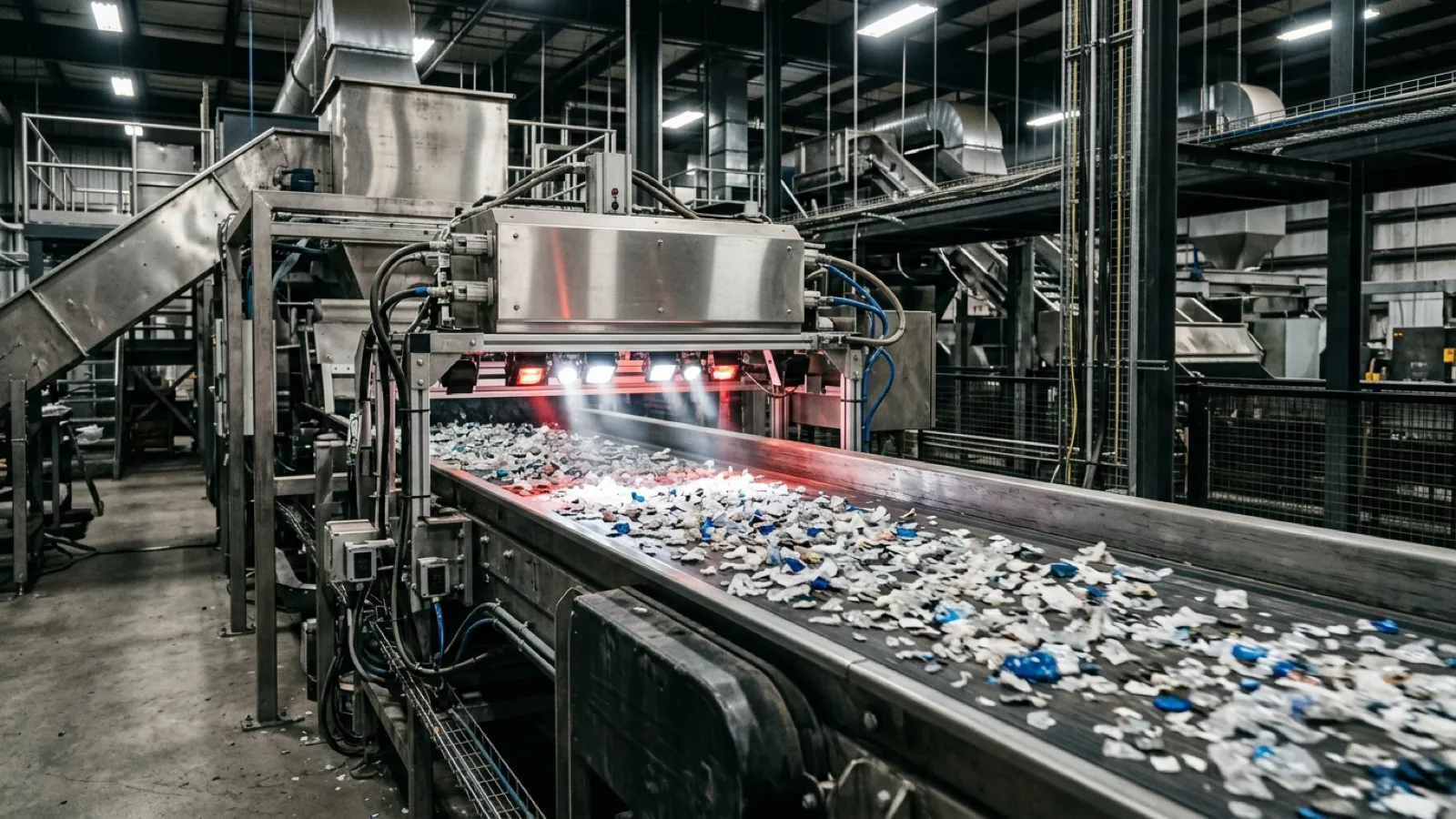
Across American residential suburbs, millions of households roll a single large wheeled cart—frequently blue—to the curbside each week, depositing mixed paper, corrugated cardboard, plastic jugs, glass bottles, and beverage cans into one unsegregated compartment. This methodology, termed ‘single-stream recycling,’ was engineered to maximize residential participation and reduce municipal labor by enabling automated side-loader trucks with mechanical arms to service neighborhoods swiftly without manual sorting crews.
However, official data from the United States Environmental Protection Agency (EPA) exposes the profound systemic costs underlying this convenience. In its comprehensive national report, Plastics: Material-Specific Data, the EPA documents that out of 35.7 million short tons (35,680,000 tons) of municipal plastic waste generated annually, merely 3.1 million tons were mechanically recycled, yielding a plastic recycling rate of only 8.7%. In stark contrast, 75.6% (27.0 million tons) was buried in municipal landfills, and 15.7% (5.6 million tons) was directed to waste-to-energy combustion facilities. When commingled within single collection hoppers, shattered glass shards embed themselves into paper fibers and residual cooking oils contaminate clean cardboard; according to the EPA’s National Recycling Strategy and materials recovery facility (MRF) industry assessments, 15% to 25% of all inbound materials are rejected as contaminated residue. Compounded by market price competition from cheap virgin resins, single-stream collection faces persistent economic and operational bottlenecks.
6. South Korea’s Volume Fees and Multi-Stream Sorting: High Recovery and Processing Bottlenecks
South Korea maintains one of the most granular, citizen-enforced multi-stream residential waste separation systems in the world. The legal cornerstone of this model was laid in 1995 with the nationwide implementation of the Volume-Based Waste Fee System (종량제) alongside the Act on the Promotion of Saving and Recycling of Resources. By requiring households to purchase standardized prepaid disposal bags for non-recyclable refuse while offering free collection for sorted recyclables, the government established an immediate financial incentive for citizens to categorize discards into dedicated fractions: plastics, glass, metals, paper, soft vinyl films, and expanded polystyrene. In 2003, this municipal framework was augmented by the Extended Producer Responsibility (EPR) system.
To secure premium secondary plastic feedstock, Korean administrative guidelines have grown increasingly sophisticated. Between 2020 and 2021, the Ministry of Environment mandated the separate collection of transparent polyethylene terephthalate (PET) water and beverage bottles, requiring residents to remove vinyl labels and drain fluids prior to disposal. According to the Ministry of Environment and the Korea Environment Corporation’s annual statistics on National Waste Generation and Treatment, South Korea records an official municipal separate collection recycling rate exceeding 60%, ranking among the highest worldwide. Nonetheless, public waste authorities face ongoing challenges: contaminated film plastics and multi-layer laminates frequently fail to achieve high-grade mechanical reprocessing at automated commercial sorting facilities, often being redirected into solid recovered fuel (SRF) for cement kilns or thermal facilities in notable proportions, prompting continuous investments in domestic processing technology.

7. Why Global Recycling Rules Cannot Be Harmonized: Legal and Structural Dependence
The divergence in global waste rules is structural, driven by four interconnected institutional variables. First is the economic cost allocation model: systems that rely on citizen volume fees (South Korea) contrast fundamentally with producer-financed packaging licensing (Germany’s VerpackG) and flat-rate municipal tax funding prioritizing curbside convenience (the United States). Because the financial entity funding collection differs, the legal threshold for which discards are entitled to enter the recycling stream differs accordingly.
Second is the divergence in national treatment infrastructure and geographical topography. Densely populated nations such as Japan and European states maintain state-of-the-art waste-to-energy incineration facilities integrated into district heating networks, whereas nations with expansive landmass like the United States rely on economically inexpensive landfill capacity, dampening capital investments in complex multi-stream facilities. Third is urban housing morphology: high-density high-rise residential complexes in South Korea facilitate centralized, supervised multi-bin depots, whereas sprawling single-family detached housing across North American suburbs ranks among the key structural factors driving the preference for automated single-stream collection.
Fourth is statutory taxonomy: whether national legislatures legally codify thermal recovery as recycling or isolate it strictly under secondary recovery fundamentally alters municipal sorting rules.
8. What the Cases Show Together: Three Rules for Decoding Waste Rules
First, consumers must recognize that the resin identification code (the triangular chasing arrows numbered 1 through 7) molded onto plastic goods does not guarantee municipal recyclability. The numeric code was designed solely to identify chemical polymer compositions (PET, HDPE, PVC, LDPE, PP, PS, and OTHER); whether that specific resin is physically captured and remanufactured depends entirely upon the technology, end-markets, and statutory sorting rules of the local municipality.
Second, physical cleanliness and absence of residue dictate actual material survival far more than an item’s nominal label. Grease-soaked food containers, unwashed condiment jars, and oily delivery cartons introduce chemical impurities that degrade secondary polymer bonds, risking the condemnation of an entire commercial sorting bale to substandard rejection for landfill disposal or incineration. In mechanical recycling streams, heavily contaminated packaging is far more likely to be classified as sorting residue than recovered material.
Third, international citizens must align their habits with the specific statutory purpose of their host country. In Germany, the governing inquiry is whether the item constitutes licensed commercial packaging; in Japan, whether it is clean packaging versus combustible energy feedstock; and in South Korea, whether transparent containers have been stripped of labels and flattened. Navigating global resource stewardship begins with understanding the legal contracts and engineering systems embedded within each nation’s waste infrastructure.
Sources and references
- European Commission — Waste Framework Directive (Directive 2008/98/EC on waste) (accessed 2026-09-09)
- Umweltbundesamt (UBA) — Waste and Resources: Packaging Act (VerpackG) and Dual System Regulations (accessed 2026-09-09)
- Ministry of the Environment, Japan — Waste Management and Recycling Policy in Japan (accessed 2026-09-09)
- Ministry of the Environment, Japan — Act on the Promotion of Sorted Collection and Recycling of Containers and Packaging (accessed 2026-09-09)
- US EPA — Reduce, Reuse, Recycle: Municipal Solid Waste and Recovery Overview (accessed 2026-09-09)
- US EPA — Plastics: Material-Specific Data (Advancing Sustainable Materials Management) (accessed 2026-09-09)
- US EPA — National Recycling Strategy: Part One of a Series on Building a Circular Economy (accessed 2026-09-09)
- Korea Ministry of Government Legislation — Act on the Promotion of Saving and Recycling of Resources (Law No. 20235) (accessed 2026-09-09)
- Ministry of Environment / Korea Environment Corporation — National Waste Generation and Treatment Statistics (Resource Circulation Information System) (accessed 2026-09-09)
- UK Department for Environment, Food & Rural Affairs (Defra) — Waste legislation and regulations: Collection and Packaging Requirements (accessed 2026-09-09)