The short answer: a high of 56.7°C and a low of -89.2°C
Earth's official highest temperature is 56.7°C, and its official lowest is -89.2°C. Both figures come from the Weather and Climate Extremes archive of the World Meteorological Organization (WMO). The high was measured on 10 July 1913 at Furnace Creek in Death Valley, California. The low was measured on 21 July 1983 at Vostok Station in Antarctica.
Each record is tied to a place and a date, not just a number. So "the hottest" can be understood as referring to one particular day at one particular weather station. You can read the original entries on the archive's map pages at wmo.int and in WMO news releases.
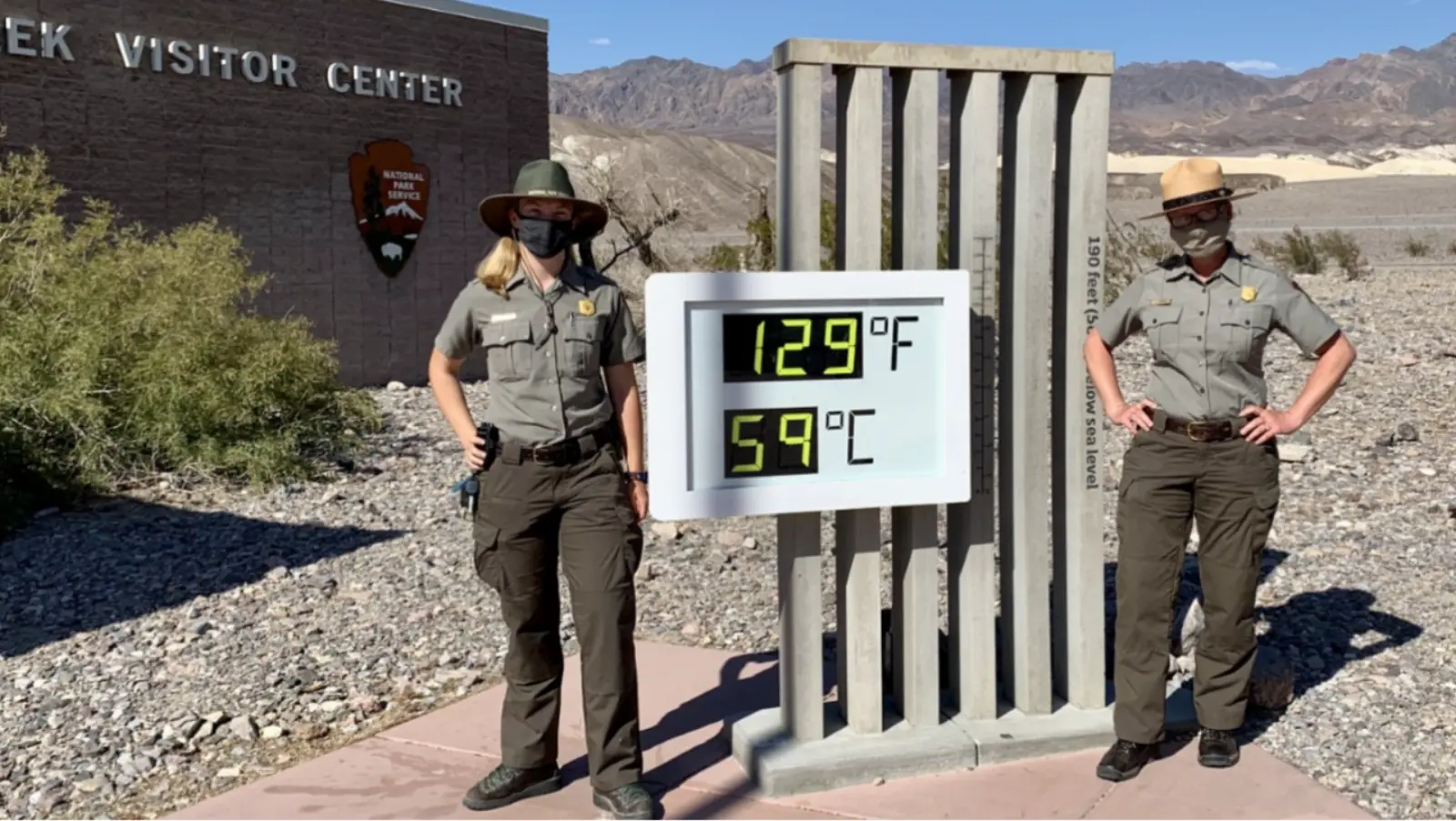
Death Valley: the 1913 record and the 54.4°C reading under review in 2020
On 16 August 2020, the WMO announced that it would verify a reading of 54.4°C (130°F) taken in Death Valley. According to the release, the reading would be Earth's highest temperature since 1931 if confirmed. It would also rank as the third-highest temperature ever recorded.
The release also notes doubts about older records: "some weather historians have questioned the accuracy of old temperature records." That sentence says only that doubts exist. It does not say the 1913 record has been changed.
In short, a new reading and an official record are two different things. The 54.4°C figure had been measured, but when the release came out it was still awaiting verification. When a news story calls a reading the "highest ever," check first whether it has been verified.
Vostok's 1983 record: -89.2°C in the station log
Vostok Station sits at 77°32′S, 106°40′E, 3,420 m above sea level. The Arctic and Antarctic Research Institute in Leningrad (now St Petersburg), Russia, confirmed the record low.
The commentary in the WMO's world lowest temperature entry explains where the figure comes from: "However, the actual reported temperature was -89.2°C, as shown in the monthly summary log (Figure 1), which I photographed at the Vostok meteorological office in January 1991." (The commentary was written in English.)
The same commentary treats the -89.4°C figure in a 1997 publication by Krause and Flood as an error. The likely cause, it says, was a round trip between units. The Celsius value was converted to Fahrenheit, rounded to -129°F and then converted back to Celsius. When one observation appears as two different values, the original log is the standard. Repeated unit conversions can also introduce small discrepancies.
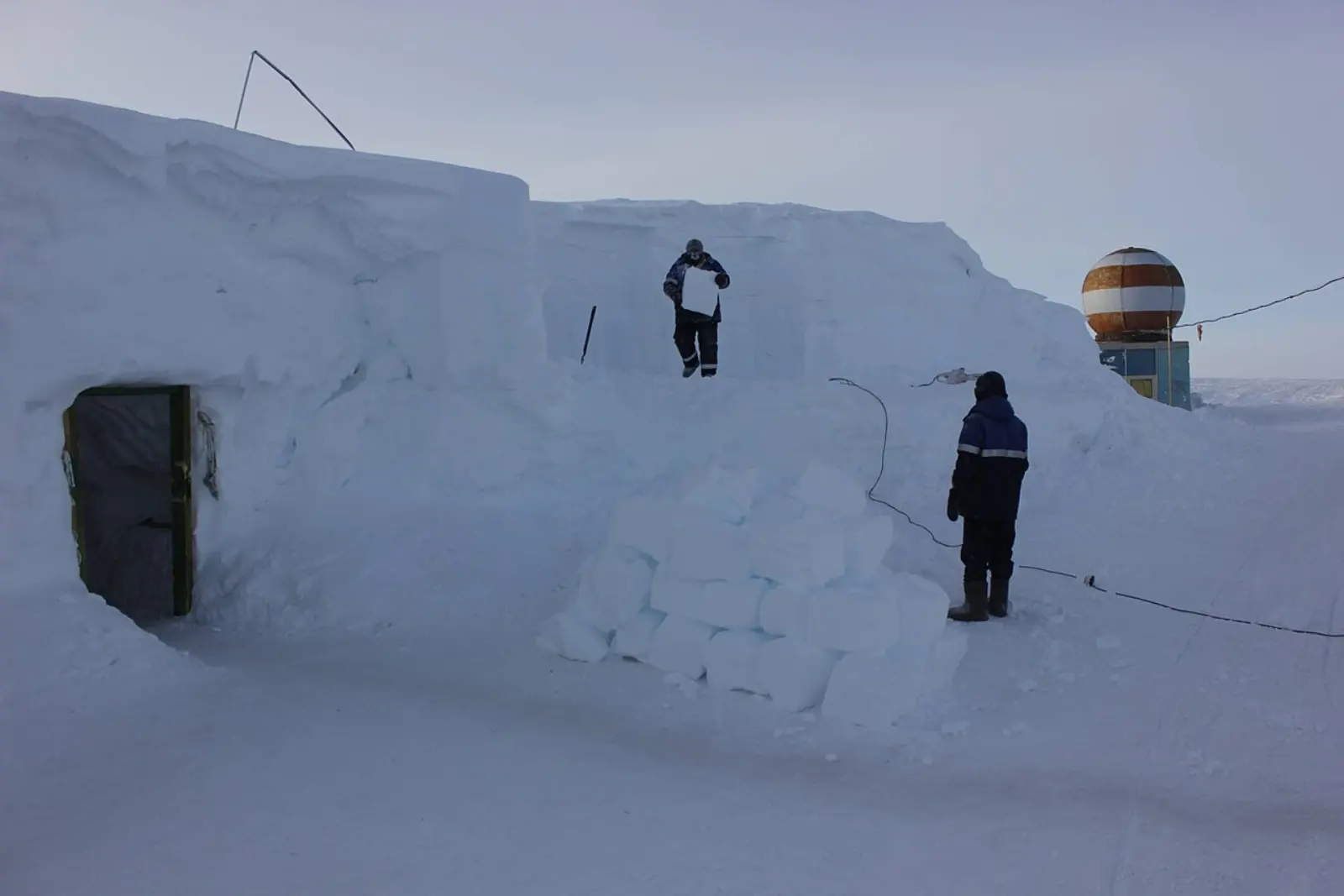
The Northern Hemisphere's lowest temperature: -69.6°C at Klinck, Greenland, in 1991
The WMO recognizes -69.6°C (-93.3°F) as the Northern Hemisphere's lowest temperature. An automatic weather station in Greenland measured it on 22 December 1991. The station, Klinck AWS, stands at 72°18′N, 40°28′W, 3,216 m above sea level. According to the WMO, "climate detectives" working on the extremes archive uncovered the record some 30 years later.
The Klinck reading beat two Russian records. Verkhoyansk recorded -67.8°C in February 1892, and Oymyakon matched it with -67.8°C in January 1933.
The gap of about 30 years between measurement and recognition shows that the official rankings are not a fixed list. When data are re-examined, the record holder can change. Vostok and Klinck, discussed above, also both sit more than 3,000 m above sea level, so station elevation is worth noting when the two extreme-cold records are compared side by side.
Heat records side by side: Kebili's 55.0°C in 1931 and the rest
The Eastern Hemisphere's highest temperature is 55.0°C, recorded at Kebili, Tunisia, in July 1931. WMO releases list other heat records as well. Mitribah, Kuwait, reached 54.0°C on 21 July 2016. Turbat, Pakistan, matched that 54.0°C on 28 May 2017.
Here are the heat records by category. World highest: Furnace Creek, Death Valley, USA, 10 July 1913, 56.7°C. Eastern Hemisphere highest: Kebili, Tunisia, July 1931, 55.0°C. Other heat records: Mitribah, Kuwait, and Turbat, Pakistan, both 54.0°C. Under verification: Death Valley, 16 August 2020, 54.4°C.
Set out this way, you can see that "highest since 1931" in the Death Valley release (Section 2) coincides with the year of the Kebili record. Calling 54.4°C the "third-highest" can likewise be read as placing it after 56.7°C and 55.0°C. For the heat standards used in Korea, see Korea's thresholds for tropical nights and heat warnings.
| Location | Country/region | Temperature | Date measured | Record type |
|---|---|---|---|---|
| Furnace Creek (Death Valley) | California, USA | 56.7°C | 10 July 1913 | World highest temperature |
| Kebili | Tunisia | 55.0°C | July 1931 | Eastern Hemisphere highest temperature |
| Mitribah | Kuwait | 54.0°C | 21 July 2016 | Other high-temperature record |
| Turbat | Pakistan | 54.0°C | 28 May 2017 | Other high-temperature record |
| Vostok Station | Antarctica | -89.2°C | 21 July 1983 | World lowest temperature |
| Klinck automatic weather station | Greenland | -69.6°C | 22 December 1991 | Northern Hemisphere lowest temperature |

Summing up
The records above have one thing in common. An official temperature record is not a single number but a bundle of place, date and supporting evidence. A photograph of the observation log backs Vostok's -89.2°C. The Greenland record was recognized about 30 years after it was measured.
Some questions remain open. The WMO's 2020 release on Death Valley's 54.4°C announced only a plan to verify the reading. For the final ruling, check the relevant WMO archive entry. If you want to read the original sources, start with the Figure 1 log photograph in the Vostok entry.