The short answer: the law puts pedestrians on the right
Korea's Road Traffic Act makes keeping right the rule for pedestrians. Japan's Road Traffic Act (道路交通法) likewise tells pedestrians to walk along the right edge of roads without a sidewalk. The sources used for this article contain no Japanese or British keep-left provision. For Britain's Highway Code, they confirm only where it applies and how its rules are numbered.
These sources alone, then, offer no statutory backing for the claim that "Japan and Britain keep left." Korean and Japanese law do, however, describe roundabouts as turning in different directions. Korea says counterclockwise, while Japan says turning right (右回り). The difference shows that pedestrian rules and vehicle rules need to be read separately.
Korea's Road Traffic Act, Articles 8 and 9: the version in force from October 13, 2026
This article uses the version of Korea's Road Traffic Act in force from October 13, 2026. It is Act No. 22067, partially amended on the same day. Its version line reads "Road Traffic Act [Enforcement 2026. 10. 13.] [Act No. 22067, 2026. 10. 13., Partial Amendment]." Naming the version fixes the point in time for the provisions quoted below.
The pedestrian rule appears in Article 8(4): "Pedestrians shall, in principle, keep to the right on sidewalks." Article 9 covers processions moving along the roadway, such as columns of students. It states: "In such cases, processions, etc. shall keep to the right side of the roadway." Police officers may also order a procession to keep close to the right side of the road or roadway.
Read together, the two provisions make the right the standard on both sidewalks and roadways. The words "in principle" in Article 8(4) suggest the rule is not an obligation without exceptions. Our sources do not say what those exceptions are. Even so, the wording is reason to rethink the common view that keeping right is an absolute rule.
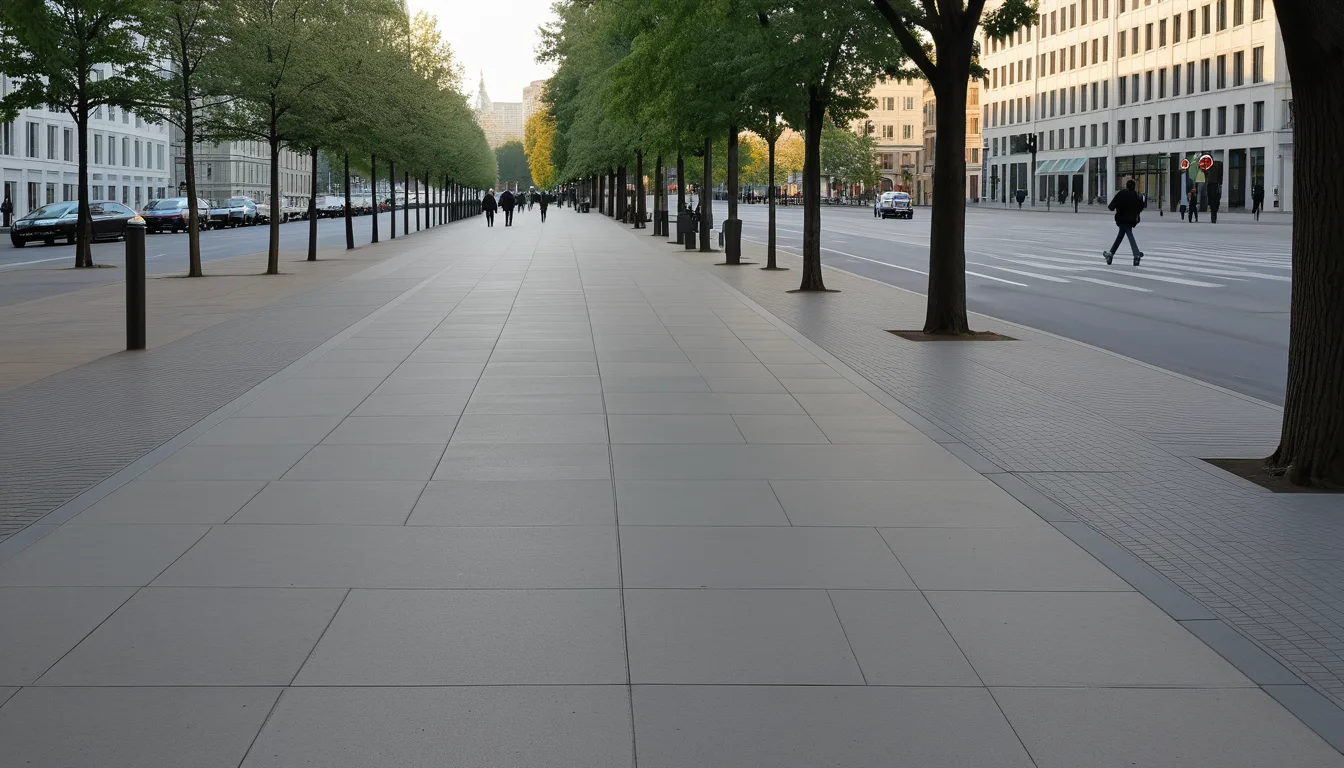
Japan's Road Traffic Act, Article 10: the right edge where there is no sidewalk
Article 10 of Japan's Road Traffic Act deals with roads that have no separate sidewalk and roadway. It states which side pedestrians must use on such roads. The relevant wording is "道路の右側端に寄つて通行しなければならない。"
In English, pedestrians "must keep close to the right edge of the road." The provision ends in the mandatory form "must." It is the only Japanese rule on walking direction that we confirmed in the original text.
This provision reads differently from the common belief that "in Japan, people walk on the left too." At least on roads without a sidewalk, Japanese pedestrians keep right, just as Korean pedestrians do. However, Korea's Article 8(4) governs sidewalks, while Japan's Article 10 governs roads with no sidewalk. Our sources do not show which side Japanese pedestrians use on sidewalks, or which side vehicles drive on. So although both provisions point to the right, we also need to keep in mind that they apply to different spaces.
Britain's Highway Code: GOV.UK guidance and rules 159–203
GOV.UK publishes Britain's Highway Code as guidance and calls it essential reading for all road users. Its audience includes pedestrians, mobility scooter users, cyclists and horse riders. It also covers drivers and motorcyclists. The code is marked as applying to England, Scotland and Wales.
Rules 159–203 group together the rules for using the road. According to the guidance, this part covers general rules, overtaking, road junctions, roundabouts, pedestrian crossings and reversing. Our sources, however, show no wording telling road users to keep left. Nor do they show which way traffic goes around a roundabout.
The two systems also differ in how you look things up. Korean and Japanese law are searched by article number, while the Highway Code is searched by rule number. Anyone checking Britain's direction of travel in the original could treat rules 159–203 as the first place to look.

Roundabout definitions: Korea's and Japan's Road Traffic Acts side by side
Korea's Road Traffic Act defines the roundabout in its definitions clause: "'Roundabout' means a circular road within an intersection where vehicles are directed to travel counterclockwise around a circular traffic island...." Japan's Road Traffic Act uses the term 環状交差点 (ring intersection). The Japanese definition describes an intersection where the part used by vehicles is ring-shaped. Road signs and similar means designate that vehicles travel around that part by turning right.
Item by item, the two definitions compare as follows. The name is 'roundabout' in Korea and 'ring intersection' in Japan. The sources are Korea's Road Traffic Act (Act No. 22067 version) and Japan's Road Traffic Act. The direction of travel is counterclockwise in Korea and turning right (右回り) in Japan. Korea defines a circular road around a circular traffic island, while Japan relies on designation by road signs and similar means. Britain's Highway Code covers roundabouts in rules 159–203, but our sources show no wording on direction.
For pedestrians, Korea and Japan both take the right as the standard. Their roundabout definitions, however, use different terms: counterclockwise and turning right. The contrast shows that 'direction of travel' is not a single idea. Rules for people and rules for vehicles should be examined separately.
| Law | Version checked / where it applies | Pedestrian side | Roundabout direction |
|---|---|---|---|
| Korea's Road Traffic Act | Act No. 22067, in force Oct. 13, 2026 | Keep right on sidewalks, in principle (Art. 8(4)) | Counterclockwise |
| Korea's Road Traffic Act, Art. 9 (processions) | Act No. 22067, in force Oct. 13, 2026 | Processions keep to the right of the roadway | Governs roadway processions (roundabouts defined as counterclockwise in Art. 2) |
| Japan's Road Traffic Act | Act No. 105 of Showa 35 (e-Gov Law Search) | Right edge on roads without a sidewalk (Art. 10) | Turning right (右回り) |
| Britain's Highway Code | England, Scotland and Wales | Applies to pedestrians, cyclists, horse riders and drivers | Covered in rules 159–203 (road junctions, overtaking and roundabouts) |
Summing up
The main finding is that the statutes set direction separately for different users and spaces. Korea's Road Traffic Act treats pedestrians on sidewalks and processions on the roadway in separate provisions. Japan's Road Traffic Act has its own rule for pedestrians on roads without a sidewalk. One question remains open: which article or rule sets the side of the road vehicles use in Japan and Britain? Our sources could not answer it.
Readers can check the original texts themselves. Korean provisions are on the National Law Information Center (law.go.kr). Japanese provisions are on e-Gov 法令検索 (e-Gov Law Search). The Highway Code is on GOV.UK. Out on the street, watch how traffic flows around roundabouts and which side people walk on along roads without a sidewalk.