1. The moment “we got married” becomes legally true
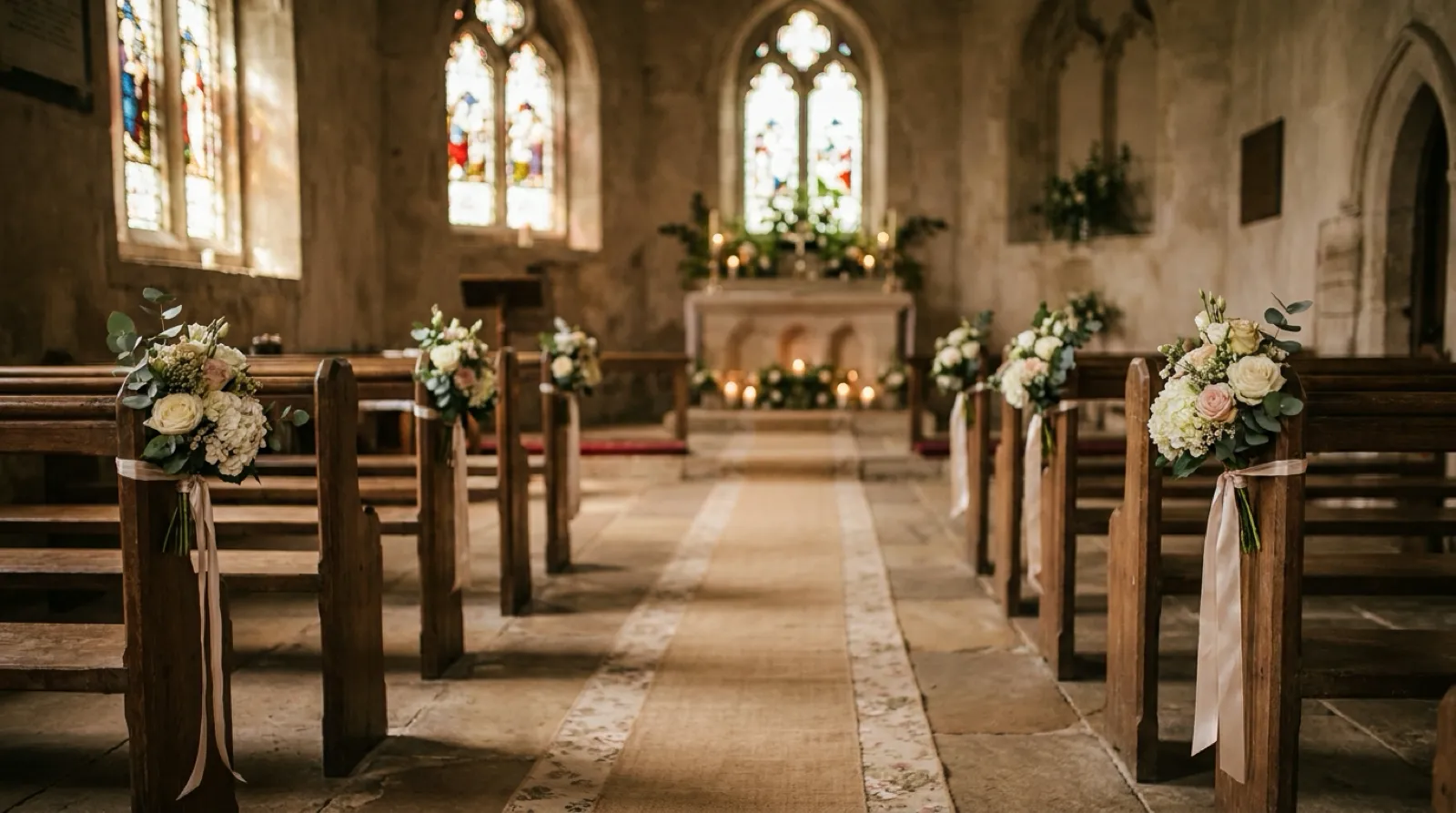
Wedding photographs usually show a venue or a chapel, guests, and rings. But at which moment in those pictures did the two people become legally married? The answer differs by country. In some, it is the moment they said “yes” before a town-hall official; in others, the moment a form was accepted at a government counter; in others still, the moment a member of the clergy pronounced them married. The same photograph can show, in France, “a blessing for a couple already married at the town hall,” and, in Korea, “a ceremony for two people who are legally single until they file their marriage report.”
This article looks at how a marriage becomes legal in three types: countries that recognize only civil marriage (France, the Netherlands, Germany), countries where filing alone creates the marriage (Korea, Japan), and a country that recognizes religious and civil ceremonies side by side (England and Wales). Finally, it adds how “who may marry” has changed, drawing on the cases of the Netherlands and the United States. Every statement rests on the governments’ own guidance or the text of the law.
2. France: town hall first, church second, and a penalty for getting the order wrong
The French government’s public-service guide summarizes the procedure plainly. The marriage “must be celebrated at the town hall (mairie), in a room open to the public,” and the banns are “notices posted on the door of the town hall by the civil registrar.” A ten-day waiting period follows the banns, and the wedding must take place within the following year. Then comes one more line: “It is forbidden to celebrate a religious marriage before the civil marriage.”
That prohibition is backed by the Penal Code. A 2007 written question in the French Senate and the government’s reply cite Article 433-21, which punishes “any minister of religion who habitually performs religious marriage ceremonies without having been shown the marriage certificate previously drawn up by the civil registrar,” and confirm that the article “applies to all religions, without any distinction and whatever form the religious ceremony may take.” The penalty quoted at the time was six months’ imprisonment and a fine of 7,500 euros. In France a wedding in a church, cathedral, or mosque does not create a marriage in law, and if the order is reversed the officiant bears the responsibility. The principle that only the state makes a marriage is enforced by criminal law.

3. The Netherlands and Germany: only the declaration before the registrar is a marriage
The Dutch government’s marriage guide states the same principle in gentler words: “After your marriage or civil partnership ceremony has been conducted by the registrar you may hold a religious ceremony in a church or mosque, if you wish. The religious ceremony may not take place before the civil ceremony.” The requirements are equally clear. Both partners must be 18 or older and not married or in a civil partnership with anyone else, and the couple “will need to appoint at least 2 and no more than 4 witnesses,” who “must be 18 years or older.”
Germany fixes the principle in a single sentence of its Civil Code. Section 1310(1) of the German Civil Code (BGB) provides that “the marriage is concluded only if the parties contracting the marriage declare before the registrar (Standesbeamter) that they wish to enter into the marriage,” and adds that the registrar “may not refuse to cooperate in the conclusion of the marriage if the prerequisites for concluding the marriage are met.” The key phrase is “only if” (nur dadurch). In Germany a marriage exists in one form alone, the declaration before the registrar; a church wedding is a separate event with no legal effect.
4. Korea: a form, not a ceremony, makes the marriage
Korea is a country where a marriage comes into being neither at the town hall nor in a church but on paper. The Ministry of Government Legislation’s Easy-to-Find Law guide lists three requirements: the parties must agree to marry (without agreement the marriage is void, Civil Code Article 815); they must have reached marriageable age (“a person who has turned 18 may marry,” though a minor needs the consent of parents or guardian, Articles 807 and 808); and “a marriage takes effect only when a marriage report is filed under the Act on Registration of Family Relations (Civil Code Article 812(1)).”
The same guide’s description of the filing procedure makes the structure clearer still. A marriage report is “a report of the fact of marriage to the head of the city (district), town, or township,” and “because a marriage takes effect by filing, there is no separate filing deadline.” The form must be “co-signed by two adult witnesses.” The law takes no interest in when, where, or how the wedding ceremony is held, and a couple who never hold one become spouses by filing alone. Conversely, a couple who hold a lavish wedding but never file are, in law, in a de facto marriage. That is why Koreans have two “wedding dates,” the day of the ceremony and the day of registration.

5. Japan: the moment it is written into the family register, and why “a church wedding alone is not enough”
Japan, too, is a filing-based country. The Ministry of Justice’s guide to the family register explains that the register is an official document that records and certifies a Japanese national’s nationality and such major matters as birth, marriage, divorce, and death “on the basis of notifications (birth notification, marriage notification, divorce notification, death notification, and so on).” A marriage is created by submitting a marriage notification (婚姻届) at a city, ward, town, or village office, and it is entered in the family register.
The ministry’s Q&A on international marriage shows the principle from the other side. To a Japanese national who held a wedding abroad, the answer reads: “Holding a wedding ceremony abroad may in some cases create a legally valid marriage under that country’s law, but in other cases, as when a ceremony is held in a church in Japan or Hawaii, the ceremony alone cannot be treated as having created a legally valid marriage.” Where a marriage has validly been concluded under foreign law, a copy of the marriage certificate must be submitted to a Japanese consulate or the municipality of the registered domicile “within three months of the date the marriage was concluded” so that it can be entered in the register; where no marriage exists, the couple must “conclude a marriage in the Japanese manner again,” that is, file a notification. In Japan a church wedding is not an event the law knows about; what the law knows is the date written in the register.
6. England and Wales: church or register office, either one is a legal marriage
England and Wales take a third path. The UK government’s guide says that “you can choose to have either a religious ceremony or a civil ceremony if you’re getting married.” A religious wedding “can take place at any registered religious building,” and a civil ceremony at “a register office” or “any venue approved by the local council, for example a stately home or hotel.” Either way “you must have at least 2 witnesses at the ceremony,” and for a civil ceremony “a registrar must carry out, or be present at, your ceremony.” For a religious ceremony, couples are told to check whether the venue has an authorised person and, if not, to book a registrar.
The common starting point is “giving notice.” Couples “must sign a legal statement at your local register office to say you intend to get married,” “at least 29 days before your ceremony,” and “must hold your ceremony within 12 months of ‘giving notice’”; they must have lived in the district for at least 7 days, and the process of giving notice may be different for Church of England weddings. After the ceremony the couple, the witnesses, and the registrar sign a “schedule,” which is sent to the register office and entered in the register. Unlike in France, in England a religious ceremony can itself be the legal marriage, just as a couple “can get a religious blessing of your marriage after a civil ceremony.” The Marriage (Same Sex Couples) Act 2013, which received Royal Assent on 17 July 2013, allowed same-sex couples to marry in England and Wales, and the government guide explains that same-sex couples “can get married in a religious building if it has been registered for the marriage of same-sex couples.”
7. Who may marry: Amsterdam in 2001 and Washington in 2015
Apart from where a marriage becomes legal, who may marry has changed sharply over the past quarter century. According to a March 2026 Pew Research Center summary, “the world’s first nationally recognized same-sex marriages” were “performed in the Netherlands in April 2001,” when four couples were married at Amsterdam City Hall on 1 April 2001. “Belgium was the next to do so in 2003, followed by Canada and Spain in 2005,” and the most recent additions were “Estonia, Greece and Nepal in 2024 and Liechtenstein and Thailand in 2025.” The Dutch government’s page still puts it in one sentence: “In the Netherlands it is possible for two men or two women to marry.”
The United States changed by judgment rather than statute. On 26 June 2015, in Obergefell v. Hodges, the Supreme Court considered laws in Michigan, Kentucky, Ohio, and Tennessee that “define marriage as a union between one man and one woman” and held that “the Fourteenth Amendment requires a State to license a marriage between two people of the same sex and to recognize a marriage between two people of the same sex when their marriage was lawfully licensed and performed out-of-State.” The opinion described the right to marry as a “fundamental right” and found that denying it to same-sex couples violated both the Due Process Clause and the Equal Protection Clause. Where a marriage is created remained a matter of each state’s licensing system; to whom the door must be opened became a matter of the federal Constitution.
8. What the three types show together
First, marriage is a legal event defined by the state, and a ceremony may or may not coincide with it. In France, the Netherlands, and Germany the only place a marriage can be made is before a state registrar; in Korea and Japan the ceremony lies entirely outside the law’s field of vision; and in England and Wales the state has kept both paths open by sharing its registration authority with religious buildings and clergy.
Second, in some countries the order of events is itself the law. In France and the Netherlands a religious ceremony may take place “only after” the civil marriage, and in France clergy who break the rule can be punished under the Penal Code. The rule is a trace of the history that moved marriage from religion to the state, and it is the difference that couples marrying across borders most often run into.
Third, the date on the document is the real date. Korea’s filing date, Japan’s register entry, England’s signed schedule, and Germany’s declaration before the registrar are each the legal wedding day. A couple marrying across two countries has to check not one wedding date but which document in which country will carry which date. Marriage is a promise of love; in the eyes of the law it is a document produced in a particular place before a particular person.