The short answer: the people gathered, sang, and struck the hills
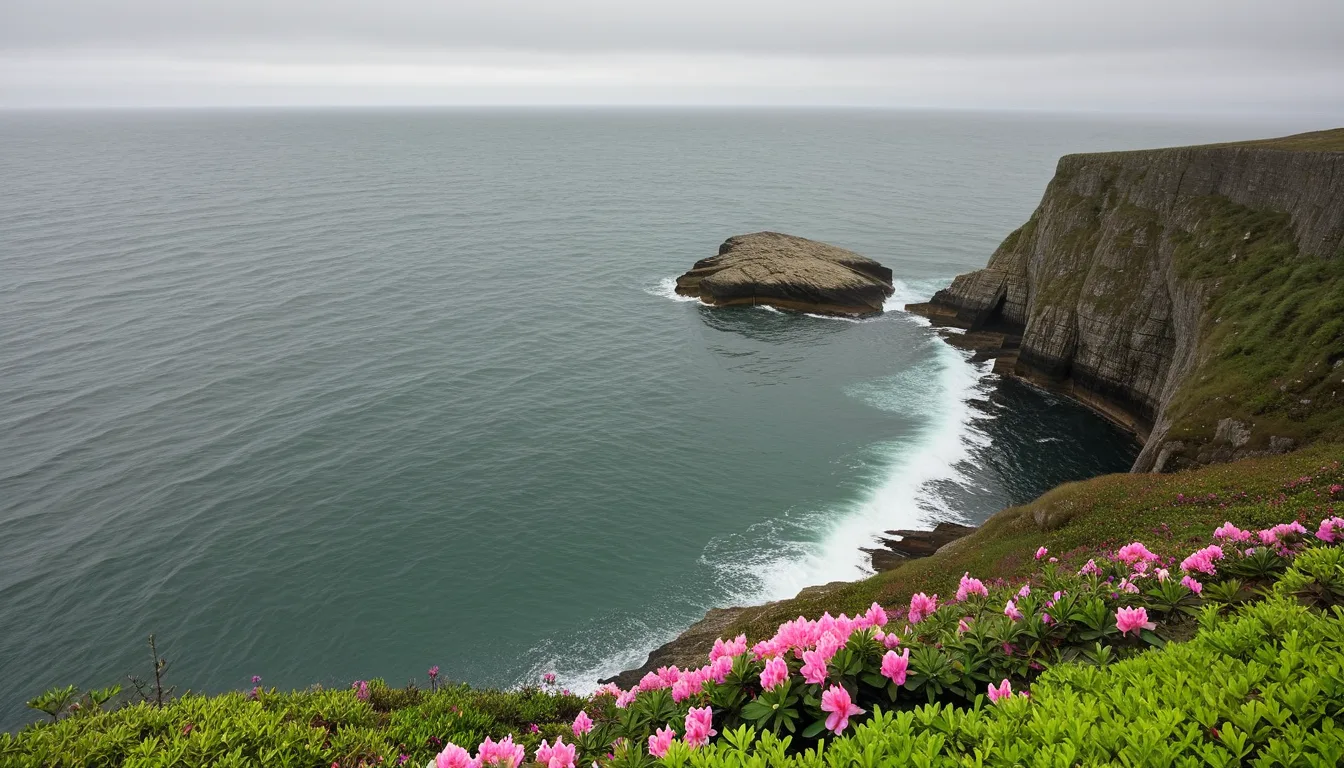
Lady Suro (水路夫人) returned from the sea after people gathered to sing and struck the hills with a stick. According to the National Folk Museum of Korea's Encyclopedia of Korean Folk Culture, she emerged once this was done. The Lady Suro entry in Samguk Yusa (三國遺事) Volume 2 splits the affair into two episodes. In the first, during the reign of King Seongdeok (聖德王), Lord Sunjeong (純貞公) is traveling to take up the post of governor of Gangneung and stops for lunch by the shore. There a rock cliff a thousand fathoms high faces the sea, with azaleas in full bloom on top.
Two days further along the road, at the pavilion of Imhaejeong (臨海亭), a sea dragon suddenly drags the lady into the sea. Lord Sunjeong, the text says, fell to the ground and had no remedy. Another old man then advises him to gather the people of the district, sing a song, and strike the hills with a stick. In the Academy of Korean Studies' Encyclopedia of Korean Culture, the people assemble, compose and sing the Haega (海歌), and the dragon escorts Lady Suro out. How the story ends differs slightly from one source to the next.
The first episode in Samguk Yusa Volume 2: azaleas on a cliff a thousand fathoms high
The first episode unfolds on a rock cliff a thousand fathoms high facing the sea, where azaleas were in full bloom. When Lady Suro asked who would pluck a flower and offer it to her, her attendants all declined, saying it was a place no one could reach. The Lady Suro entry in Samguk Yusa Volume 2 gives her question as 「折花獻者其誰?」 — who will pluck a flower and present it?
Then an old man passing by, leading a cow, plucked a flower, composed a song, and offered both. The original text says there is no telling who he was. At the end of the Lady Suro entry stands the hyangchal original of the Heonhwaga (獻花歌), the song he composed, and its four lines open with 「紫布岩乎邊希」. The Encyclopedia of Korean Culture classifies the Heonhwaga as a four-line hyangga sung by an old man during the reign of King Seongdeok of Silla.
The National Folk Museum of Korea's Encyclopedia of Korean Folk Culture tells the same scene in slightly different words. During the reign of King Seongdeok (702–737), Lord Sunjeong was on his way to take up the governorship of Gangneung, and along that road Lady Suro wanted the azaleas on a cliff a thousand fathoms high. Everyone balked, but an old man driving an ox picked the flowers for her and composed the Heonhwaga as an offering. Korean Wikisource's page on the Heonhwaga lists the author as Gyeonu noong (牽牛老翁) and notes that most translations of hyangchal are under copyright.
Two days later in the Encyclopedia of Korean Culture: the lady dragged away at Imhaejeong
The second episode happens on the journey to the post. After two more days on the road, says the Lady Suro entry in Samguk Yusa Volume 2, there was another pavilion, Imhaejeong. While the party was eating lunch there, a sea dragon suddenly dragged the lady into the sea, and Lord Sunjeong fell to the ground with no plan. The Encyclopedia of Korean Culture likewise places the scene two days after the Heonhwaga episode and says Lord Sunjeong had no time to act.
The National Folk Museum of Korea's Encyclopedia of Korean Folk Culture records the same episode: when Lady Suro reached Imhaejeong, a dragon suddenly appeared and pulled her into the sea. That encyclopedia sums up the tale as two episodes — the plucking of azaleas on a cliff and the dragon carrying her off into the sea — and explains that although they stand apart as stories, they matter because together they show a ritual site in sequence. It is this account that supports reading the two episodes as one continuous whole.
The Haega lyrics in Samguk Yusa Volume 2: turtle, turtle, give up Suro
With the lady gone into the sea, another old man offers advice. Here the Lady Suro entry in Samguk Yusa Volume 2 quotes the old saying 「衆口鑠金」, that many mouths melt even metal, and then asks how a creature in the sea could fail to fear so many mouths. The old man therefore advises gathering the people of the district, singing a song, and striking the hills with a stick, and says the lady can then be seen. The passage can be read as treating the number of people and their sound as the conditions for a solution.
The lyrics of the Haega the people sang appear in the same entry. The first line, 「龜乎龜乎出水路」, means turtle, turtle, give up Suro. The lines that follow ask how great the crime is of stealing another man's wife, then threaten to catch the turtle in a net and roast and eat it if it does not give her up. The original is explicit that the song addresses a turtle rather than a dragon, and nothing in the passage explains how the two names are related.
King Seongdeok's reign (702–737): how three sources end the story
Accounts of the ending diverge. The Lady Suro entry in Samguk Yusa Volume 2 goes as far as the old man's advice and the lyrics of the Haega the people sang. In the Encyclopedia of Korean Culture, the people gather, compose and sing the Haega, and the dragon escorts Lady Suro out; in the National Folk Museum of Korea's Encyclopedia of Korean Folk Culture, they do as the old man said and Lady Suro emerges. Set side by side, the three overlap on the advice and the song but differ on whether the dragon appears again. You can read the original text in Korean Wikisource's '번역:삼국유사/권제2', and the commentary in the Academy of Korean Studies' Encyclopedia of Korean Culture and the National Folk Museum of Korea's Encyclopedia of Korean Folk Culture.
The Lady Suro entry in Samguk Yusa Volume 2 says her beauty (姿容) was unmatched in her day, and that for this reason divine creatures seized her several times whenever she passed a deep mountain or a large pond. The Encyclopedia of Korean Culture describes Lady Suro as the wife of Lord Sunjeong during the reign of King Seongdeok. The same encyclopedia adds that Lord Sunjeong appears to be Kim Sunjeong (金順貞), who served as sangjae (上宰), and that he became governor of Gangneung.
| Source | The first episode | The second episode | After the singing |
|---|---|---|---|
| Lady Suro entry, Samguk Yusa Vol. 2 (Korean Wikisource) | Azaleas atop a rock cliff a thousand fathoms high facing the sea; an old man leading a cow plucks a flower and composes a song as an offering | Two days further along the road, at Imhaejeong, a sea dragon drags the lady into the sea | The people sing the Haega, whose first line is 「龜乎龜乎出水路」 |
| Encyclopedia of Korean Culture (Academy of Korean Studies) | Classified as the Heonhwaga, a four-line hyangga sung by an old man in the reign of King Seongdeok | Two days after the Heonhwaga episode, a sea dragon drags the lady in; Lord Sunjeong has no time to act | Says the dragon escorted Lady Suro out |
| Encyclopedia of Korean Folk Culture (National Folk Museum of Korea) | Azaleas on a cliff a thousand fathoms high in the reign of King Seongdeok (702–737); an old man driving an ox composes the Heonhwaga as an offering | When Lady Suro reaches Imhaejeong, a dragon appears and pulls her into the sea | Says Lady Suro emerged once they sang and struck the hills with a stick |
| Heonhwaga page (Korean Wikisource) | Lists the author as Gyeonu noong; carries the four hyangchal lines | Not confirmed | Not confirmed |
Putting it together
To get Lady Suro back, the record says, the people gathered to sing and struck the hills with a stick. The Lady Suro entry in Samguk Yusa Volume 2 preserves both the old man's advice and the lyrics of the Haega, a song addressed to a turtle that pairs a demand to hand her over with a threat. Two days' travel lies between the two episodes.
Interpretations do not converge on a single reading. The Encyclopedia of Korean Culture reads the gathering of the people to sing as a rite, something like a prayer for rain or a sacrifice offered from afar, with Lady Suro in a priestly role, and it links that interpretation to the record of severe drought in the Samguk Yusa entry on King Seongdeok. The same encyclopedia notes that the Haega and the Gujiga share an intent to calm public sentiment through magical action, and it introduces the reading that the Haega carries an intent to seize ritual authority over the East Coast region. The National Folk Museum of Korea's Encyclopedia of Korean Folk Culture judges that the tale lets us glimpse rational thinking and magical belief coexisting.