The short answer: pansori uses the voice and shapes the performance differently
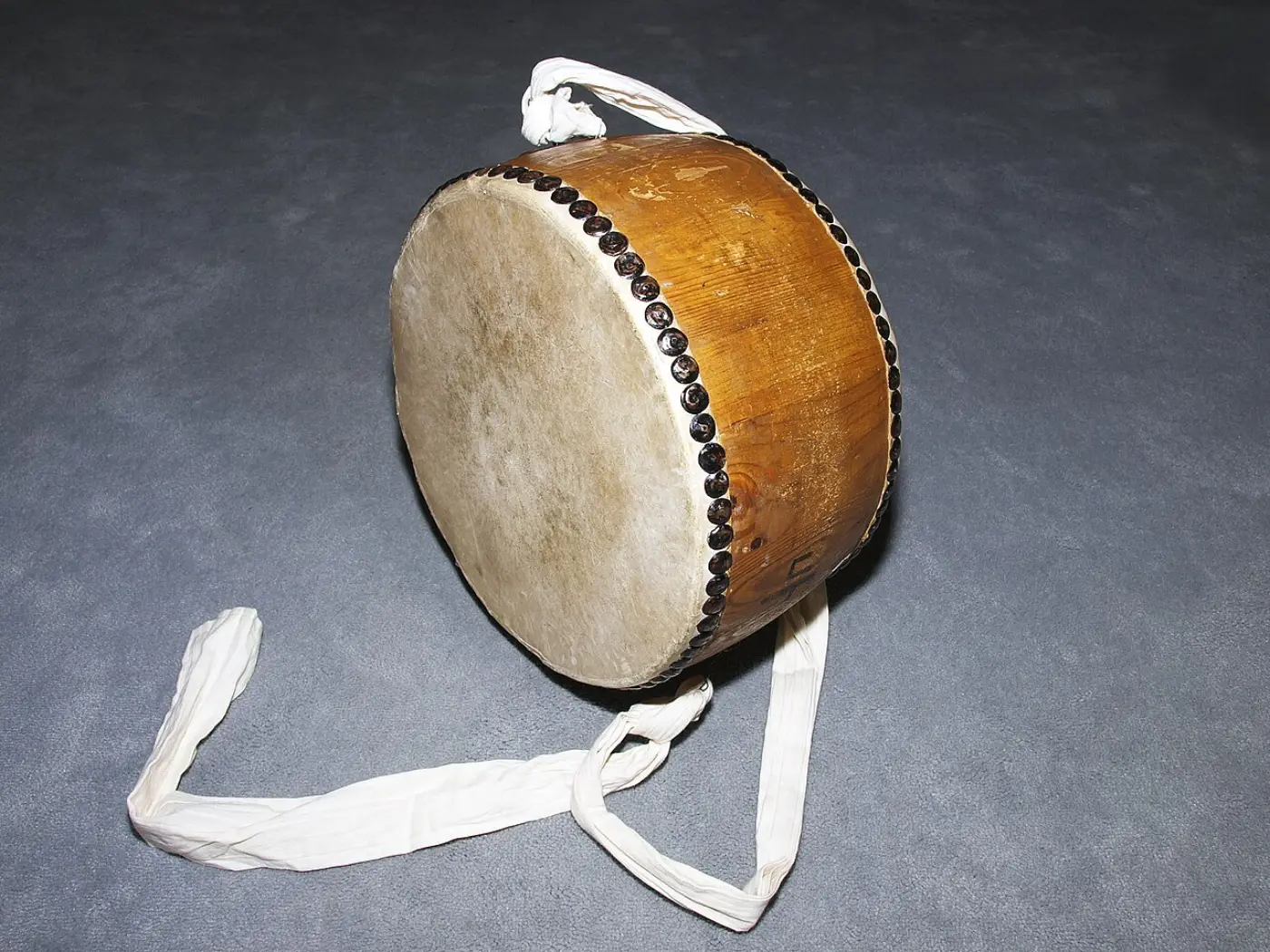
Pansori singers rely mainly on tongseong, a technique of pushing the voice out with power from the abdomen. One singer and one drummer take the stage. The audience joins in with chuimsae, shouts of encouragement. UNESCO defines pansori as a genre of musical storytelling performed by a vocalist and a drummer.
According to UNESCO, pansori emerged in southwestern Korea in the 17th century. It may have developed as a new form of expression from the narrative songs of shamans. The English-language webzine of the Cultural Heritage Administration (now the Korea Heritage Service) names the first text in which the term appears. That text is Joseon changgeuk sa, written by Jeong No-sik and published by the Chosun Ilbo in 1940. The webzine adds that the Korean government designated pansori an Important Intangible Cultural Property on December 24, 1964.
Tongseong and suriseong: how the voice is produced, from a Korean encyclopedia and a 2006 vocal-fold study
The Encyclopedia of Korean Culture, published by the Academy of Korean Studies, says pansori singing rests on tongseong. In tongseong, the singer breathes from the abdomen (danjeon) and pushes the sound out with the danjeon's strength. Training the vocal folds first produces a husky, rough tone. Eventually, though, the singer gains a voice that is powerful and clear within that huskiness.
In its discussion of vocal production, the encyclopedia describes one kind of prized voice: "Suriseong is a voice in which a clear sound projects powerfully from within a husky tone, while cheolseong is a voice with a strong, metallic timbre mixed in." The encyclopedia explains that a voice trained this way lets a singer change timbre while singing alone. One performer can thus portray many characters and their joy, anger, sorrow and pleasure.
A 2006 Korean paper, available through Kyobo Scholar, measured 29 classical singers and 16 pansori singers using laryngoscopy and CSL. First, the classical singers produced a musical formant in the 2,600–3,500 Hz range, while the pansori singers largely lacked it. Second, the classical singers' vibrato oscillated 5.5–6 times per second; the pansori singers' oscillated 4–5.5 times. Third, the vibrato's pitch range was 3.8–11.0 Hz for the classical singers and 7.2–46.0 Hz for the pansori singers. Fourth, the pansori singers had asymmetrical vocal folds, unlike the symmetrical folds of Western classical singers. In this writer's view, the results suggest that the two traditions train toward different sounds.
Sori, aniri, ballim and chuimsae: the structure and modes of a performance, as the National Archives explains
ISDP (Institute for Security and Development Policy), a Swedish research institute, explains the format. A single singer (gwangdae) usually stands and tells a story through speech and song. The drummer sits and accompanies on the buk drum. The National Archives of Korea calls the song sori, the speech aniri and the gestures ballim. The drummer does not play during aniri.
At suitable moments the drummer calls out "Eolssigu jota!" or "Eui jochi!" The National Archives calls this 'adding chuimsae'. It explains that when the singer makes the audience laugh and cry, the audience adds chuimsae too. This structure can be seen as a way for listeners to join the performance with their own voices. According to the Cultural Heritage Administration's English webzine, gobeop, the drummer's art of accompaniment, became a separate Important Intangible Cultural Property in 1978. It was merged into pansori in 1991.
The Encyclopedia of Korean Culture says that in the late Joseon period pansori borrowed ujo and gyemyeonjo, mode names used in gagok. Melodies resembling gagok and pungnyu were called ujo. Melodies resembling yukjabaegi, Namdo shaman songs and sinawi were called gyemyeonjo. The encyclopedia describes ujo in pansori as solemn and steadfast. The dominant mode also shifts with the rhythmic cycle (jangdan). Pyeongjo passages dominate in jungmori and jungjungmori, and ujo passages in jajinmori. The sources consulted for this article do not confirm the character of the other rhythmic cycles.
Five batang and their nundaemok: Chunhyangga, Simcheongga, Heungboga, Sugungga and Jeokbyeokga
According to the Encyclopedia of Korean Culture, five batang, or complete stories, are still performed today: Chunhyangga, Simcheongga, Heungboga, Sugungga and Jeokbyeokga. Their themes are, in order, chastity, filial piety, rewarding good and punishing evil, wisdom and loyalty, and valor. Simcheongga tells of Simcheong, who is sold for 300 seok of offering rice as a sacrifice to the waters of Indangsu (印塘水). With the Dragon King's help she is reborn and becomes empress. She is then reunited with her father and restores his sight. ISDP notes that one of the five batang comes from a Chinese story. It is the 'Battle of Red Cliffs' in Sanguo yanyi (Romance of the Three Kingdoms), a 14th-century novel.
The encyclopedia lists nundaemok, or highlight passages, for several of the works. Chunhyangga's include Sarangga, Ibyeolga, Sipjangga, Okjungga and Eosa chuldo. Heungboga's include Nolbo simsul, Ganan taryeong, Jebi nojeonggi and Heungbo baktaryeong. Sugungga's include Tokki hwasang, Gogocheonbyeon and Beom naeryeonda. Jeokbyeokga's include Samgochoryeo, Gunsa seorum taryeong, Jeokbyeokgang ssaum and Sae taryeong. Another entry in the encyclopedia gives two examples of ujo passages: the opening of Jeokseongga in Chunhyangga and the opening of Samgochoryeo in Jeokbyeokga. The sources consulted for this article do not confirm Simcheongga's representative highlight passages.
According to UNESCO, commoners passed pansori down orally until the late 19th century. A performance can last up to eight hours, accompanied by a single drum. The singer improvises texts that mix the speech of ordinary people with the literary expressions of the educated class. The National Archives documents the complete performances (wanchang) of Pak Dong-jin. He sang Chunhyangga for eight hours in 1969 and Simcheongga for six hours in 1970. In 1971 he sang Jeokbyeokga for five hours and Sugungga for four.
From twelve madang to three schools: lineages and the sorrow of gyemyeonjo, according to the National Archives and the Cultural Heritage Administration webzine
The National Archives of Korea says twelve madang existed in the mid-18th century. Besides the five batang, the list included Byeongangsoe taryeong, Baebijang taryeong, Onggojip taryeong, Musugi taryeong, Jangkki taryeong and Gajja sinseon taryeong. Works heavy with earthy, commoners' humor, such as Gangneung maehwaga and Byeongangsoe taryeong, dropped out of the repertoire. Shin Jae-hyo (1812–1884) spent 30 years reorganizing the twelve madang into six. He also wrote original short songs (danga) such as Seongjoga (成造歌), Gwangdaega and Dorihwaga, and collected them in the Sin owijang bon. In the late Korean Empire period, the Wongaksa (圓覺社) theater opened. Its founding made changgeuk, a theatrical adaptation of pansori, popular.
The National Archives divides the schools by the Seomjin River. Singing from the east, around Gurye and Namwon, is Dongpyeonje (東便制). Singing from the west, around Boseong, Gwangju and Naju, is Seopyeonje (西便制). Singing from Gyeonggi and Chungcheong provinces is Junggoje (中古制). The Cultural Heritage Administration's English webzine describes each style. Dongpyeonje has simple, vigorous melodies and deep resonance. Seopyeonje has long vibrato and delicate ornamentation. Junggoje is close to Dongpyeonje. The Encyclopedia of Korean Culture adds that Dongpyeonje excelled at ujo and Seopyeonje at gyemyeonjo.
The Encyclopedia of Korean Culture explains that the 'sorrowful feeling' of gyemyeonjo conveys a pansori text realistically. It also introduces a classification that grades the mode by degree of sorrow: jingyemyeon, dangyemyeon and pyeonggyemyeon. Yi Ik (李瀷), author of Seongho saseol, traced the name 'gyemyeon' to listeners' tears drawing lines down their faces. The master singer Kim Yeon-su said that 'won (怨) is a way of singing that conveys poignant, heartrending grief, and this is gyemyeonjo.' ISDP writes that han (恨) permeates Im Kwon-taek's 1993 film Seopyeonje from start to finish. Taken together, these sources can be read as treating sorrow as one pillar of pansori's emotional world.
| Group | Character of the voice | Acoustic and melodic features | Sources |
|---|---|---|---|
| Pansori singers | Tongseong; suriseong, powerful within a husky tone | Musical formant largely absent; vibrato 4–5.5 times per second; pitch range 7.2–46.0 Hz; asymmetrical vocal folds | Encyclopedia of Korean Culture; 2006 paper |
| Western classical singers | Not confirmed in the sources | Musical formant at 2,600–3,500 Hz; vibrato 5.5–6 times per second; pitch range 3.8–11.0 Hz; symmetrical vocal folds | 2006 paper |
| Dongpyeonje | Powerful, masculine voice; excels at ujo | East of the Seomjin River (Gurye, Namwon, etc.); simple, vigorous melodies; deep resonance | National Archives of Korea; CHA webzine; Encyclopedia of Korean Culture |
| Seopyeonje | Soft, plaintive voice; excels at gyemyeonjo | West of the Seomjin River (Boseong, Gwangju, Naju, etc.); long vibrato; delicate ornamentation | National Archives of Korea; CHA webzine; ISDP |
| Junggoje | More melodic voice | Gyeonggi and Chungcheong; close to Dongpyeonje but with simpler ornamentation | National Archives of Korea; CHA webzine; ISDP |
Summing up
The sources above do not reduce pansori's emotional range to sorrow alone. The Encyclopedia of Korean Culture explains that commoners originally enjoyed pansori for its satire and humor. The Cultural Heritage Administration's English webzine writes that pansori depicts the joys and sorrows of ordinary people realistically through song and gesture. The fact that laughter and tears sit side by side can be seen as connected to a performance in which the audience answers with chuimsae. The sources consulted for this article do not, however, establish what place sinmyeong (collective exhilaration) holds in pansori.
How the records describe pansori's international recognition also deserves a look. The National Archives and the Cultural Heritage Administration's English webzine cite its proclamation as a 'Masterpiece of the Oral and Intangible Heritage of Humanity' on November 7, 2003. The UNESCO website gives the original proclamation as 2003 and the inscription on the Representative List as 2008, at the Committee's 3rd session (3.COM). UNESCO also warns that preservation efforts have produced more written texts, and these have tended to suppress improvisation. Readers can consult the original texts on UNESCO's intangible heritage website, in the Academy of Korean Studies' Encyclopedia of Korean Culture and on the National Archives of Korea website.