The short answer: the drama was how it spread
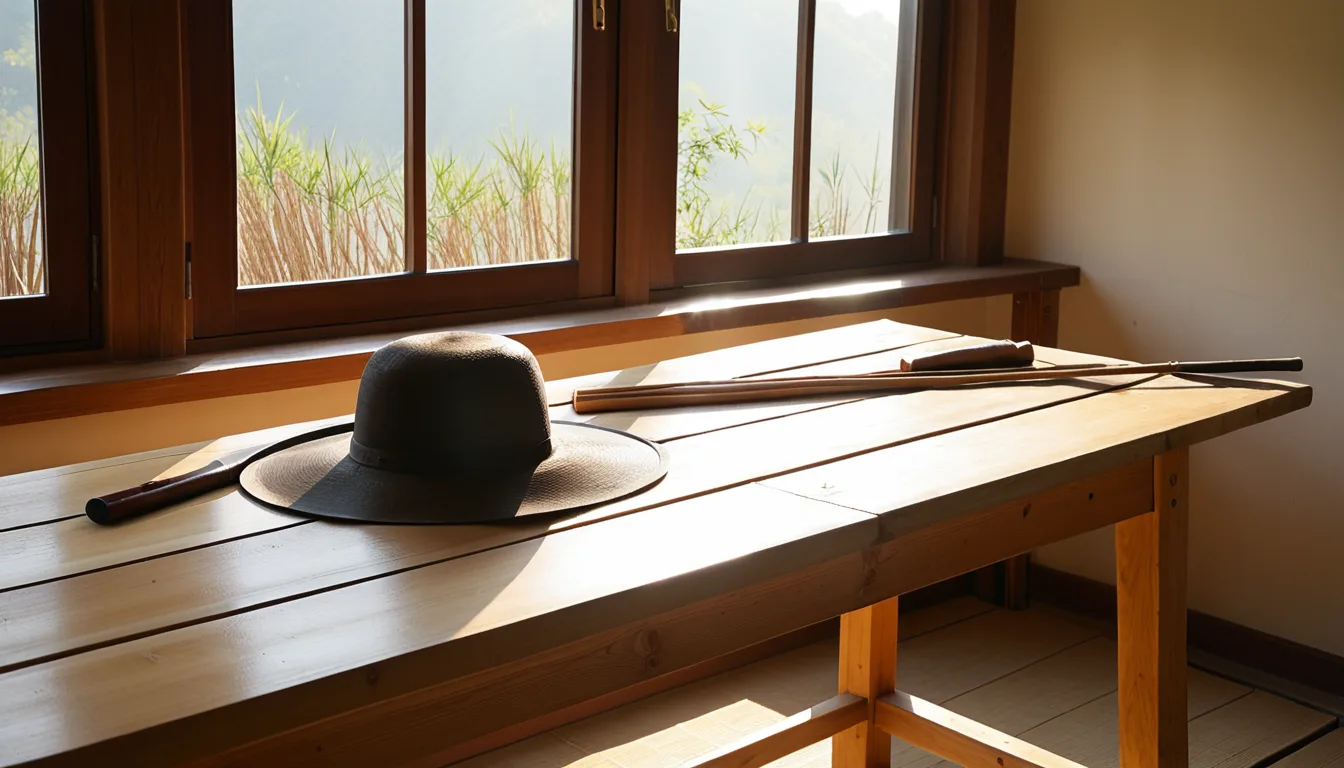
The death messenger in a black durumagi and gat, face painted white, is explained as an image that spread through the TV drama 'Legend of the Hometown'. The Academy of Korean Studies' Encyclopedia of Korean Culture wrote that, through this drama, the image of the death messenger came to suggest a figure in a black durumagi overcoat and a gat hat, with white face paint. Choi Sang-sik, the producer who directed it, has said that no characterized image existed before then. So the starting point for the figure most people picture today can be seen as the broadcast.
That does not mean the black gat first appeared on television. A bier ornament in the collection of the National Folk Museum of Korea shows a death messenger with a white face, a black gat and black clothes, while the messenger who appears in gut, the shamanic ritual, wears the dress of a foot soldier instead. In other words, the black gat was one form among several, and the drama can be seen as what made that one form widely known.
What producer Choi Sang-sik said about making 'Legend of the Hometown'
Segye Ilbo reported that Choi Sang-sik, the director of 'Legend of the Hometown', explained how he came to create the death messenger's look. According to the report, he appeared as a guest on tvN's 'You Quiz on the Block', broadcast on March 3, 2021. In the same article Choi said, "Before 'Legend of the Hometown' there was no characterized image." He said he had agonized over creating a Korean image of death, and that the image of death is pitch black. The quotation is the passage of Choi Sang-sik's remarks carried in the Segye Ilbo article.
The same article also carried an anecdote: Choi Sang-sik related that a grandmother in Daegu who had died and then revived said the death messenger looked exactly as he did in 'Legend of the Hometown'. The story is secondhand as printed, and whether it is true cannot be confirmed. Still, it can be seen as a scene showing how firmly the drama's image settled into people's memories.
In gut rituals the messenger wears a soldier's dress and comes in threes
The Encyclopedia of Korean Culture explains that the death messenger who appears in gut wears the dress of a foot soldier. SBS News published photographs of a Hwanghae-do jinogi-gut taken by Lee Yong-bum, a professor of folklore at Andong National University; in them the shaman receives the messengers' offering table dressed as a foot soldier in a jeonrip hat. Kim Hwang-ryong, a manshin who performs Hwanghae-do rituals, says three messengers come to this world to take the dead while seven remain in the next. The death messengers of Seoul gut are called 'sajae samseong' and counted as three — Cheonhwang, Jihwang and Inhwang sajja.
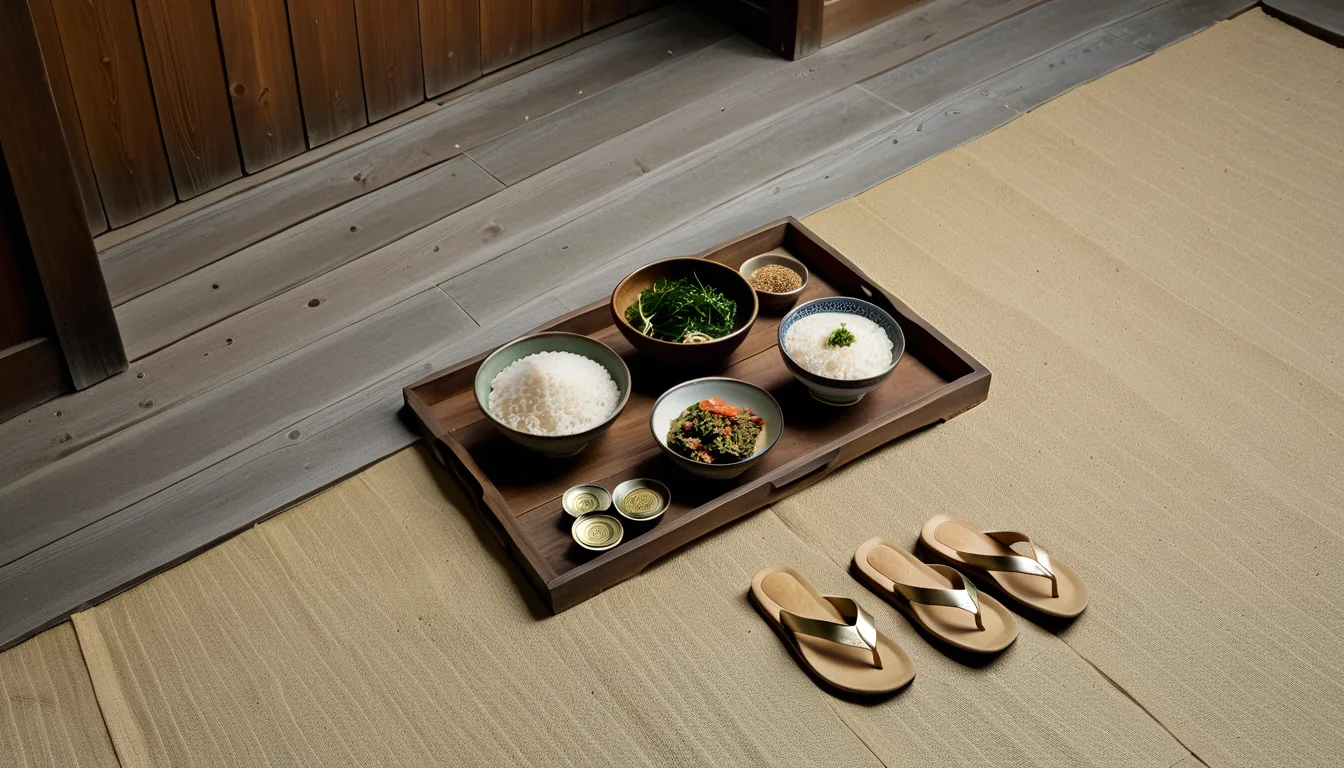
The number three also shows up in the offerings. At the Hwanghae-do jinogwi-gut, three dishes of rice, three pairs of straw sandals and three pairs of spoons and chopsticks are set out. The National Institute of Korean History's Urihistorynet describes sajatbap, the messengers' meal, as usually laid out in front of the main gate or in the yard with three bowls of rice, three bowls of greens, three coins and straw sandals. In the Nonsan area of Chungnam, the bowls were turned upside down once the body had been placed in the coffin, a signal that the encoffining was finished. The point of the meal, Urihistorynet explains, is to treat the death messengers who have come for the soul well so that they will carry it away gently. Offerings like these sit alongside funeral and mourning customs that vary from country to country.
Some accounts are frightening. Ordinary people, Urihistorynet writes, believed that figures carrying iron clubs and iron chains struck the back with the club and bound the body with the chain to drag the soul away. SBS News reported that the Encyclopedia of Korean Folk Culture names the three death messengers of the afterlife as Sijik-chasa, Iljik-chasa and Woljik-chasa, with Hwangcheon-chasa sometimes replacing Sijik-chasa. That is a very different picture from the dignified figure in a gat.
The black gat on bier ornaments and the history of the heungnip
Death messengers were mounted on biers as well. SBS News introduced a death-messenger ornament from a bier in the collection of the National Folk Museum of Korea, described as 'a figure with a white face, a black gat and black clothes, riding a beast or a tiger'. According to Urihistorynet, the Nameundeul bier used to carry Prince Namyeon, the father of Heungseon Daewongun, has a single figure mounted in the middle of the ridgepole of the dragon-head board at the very top; the bier was designated Important Folklore Material No. 31. On the bier of Cheongpung Buwongun, the boy figure rides a lion and wears a wide-brimmed beonggeoji hat.
How far back does the gat itself go? The Korea Heritage Service explains that gat is a native Korean word and that the oldest record of it appears in the Samguk yusa as sorip (素笠). A mural in the Goguryeo tomb of Gamsinchong shows a figure wearing a paeraengi-type gat with a clear distinction between crown and brim. The service also explains that heungnip (黑笠), the general term for the gat, can be seen as having reached its finished form in the mid-Joseon period.
Heungnip, the Korea Heritage Service writes, is the name that represents the headgear of adult men in the Joseon period. Men wore it in everyday life, when going out and also at home. The baengnip (白笠), wrapped in white cloth, went with mourning dress and marked a period of mourning during a national funeral. Then King Gojong's dress reform of 1884 made the large gat of the time lower and narrower. That the black gat was the everyday headgear of men in Joseon is useful background for reading the death messenger's costume.
Officials of the afterlife in Ten Kings paintings: from Joseon to Dunhuang and Ningbo
Scenes of judgment in the afterlife survive in Buddhist painting too. The Ten Kings painting in the National Museum of Korea is a Joseon-period Buddhist painting showing the First King, Jingwang, together with the Third King, Songje. According to the museum, the type that divides the ten kings across four scrolls in groups of two, two, three and three was greatly in fashion from the late 18th century to the late 19th century. The museum takes the view that this new format emerged as Ten Kings paintings came to be made to fit the size of the myeongbujeon hall. In the hell scene of King Jingwang, jailers pull the dead from their coffins and drag off the condemned bound with rope. The hell scene of King Songje shows the Hell of Tongue Plowing (耕舌地獄), where a sinner's tongue is pulled out and oxen are driven over it to plow it like a field.
Setting the same subject beside other sources, item by item, brings out the differences. Sources and holdings: the National Museum of Korea's Ten Kings painting is a Joseon-period Buddhist painting, while the Harvard Art Museums' Ten Kings paintings are thought to have been produced in workshops in Ningbo, China, both for temples and for export. Dates: the Scripture of the Ten Kings preserved in the Dunhuang (敦煌) caves is a ninth-century text, and the Dunhuang hemp painting 'Ksitigarbha and the Ten Kings of Hell' was made in the early 10th century, during the Cao family's Guiyijun period. Composition: the Dunhuang painting places the Western Pure Land at the top, with a hooded Ksitigarbha (地藏菩薩) and the ten kings below, and at the bottom Ksitigarbha sits behind a rectangular desk along with monks, the ten kings and the six paths of rebirth. Numbers: temple myeongbujeon halls sometimes show two death messengers, Jikbu-sajja and Gamjae-sajja, while the 'Sajik sajja-do' at Gaesimsa temple in Seosan, Chungnam, shows four, the messengers of the year, month, day and hour. SBS News reported that folklorists hold that the image of the afterlife took on a complex and elaborate form in the Goryeo period, as the cult of the Ten Kings and related ideas arrived from China.
The Harvard Art Museums' account is worth consulting as well. The museum describes the Scripture of the Ten Kings as presenting the afterlife as a three-year journey through the courts of ten kings of hell. The dead pass through a different king's court every seven days and meet the seventh king on the 49th day; they then stand before the eighth king at 100 days, the ninth at 13 months and the tenth at three years. Harvard's five paintings were originally part of a set of ten, and the whereabouts of the other five are unknown. Korean paper turned up in much of the backing, raising the possibility that paintings made in China were relined in Korea. All of this can be read directly in the National Museum of Korea's collection notes, on the Harvard Art Museums website and on the Dunhuang exhibition pages of the University of Washington's Tateuchi East Asia Library.
| Case | Appearance | Number | Text, holding institution, date |
|---|---|---|---|
| 'Legend of the Hometown' death messenger | Black durumagi, gat, white face paint | Not confirmed | Encyclopedia of Korean Culture; Choi Sang-sik appeared on tvN's 'You Quiz on the Block' on March 3, 2021 |
| Hwanghae-do jinogi-gut | The shaman receives the messengers' offering table in a foot soldier's dress with a jeonrip hat | Three messengers in this world, seven in the next (manshin Kim Hwang-ryong) | Photographs by Professor Lee Yong-bum of Andong National University, SBS News |
| Seoul gut 'sajae samseong' | Not confirmed | Three: Cheonhwang, Jihwang and Inhwang sajja | Encyclopedia of Korean Culture |
| Bier death-messenger ornament | White face with a black gat and black clothes, riding a beast or a tiger | Not confirmed | Collection of the National Folk Museum of Korea |
| Temple myeongbujeon halls and Gaesimsa's 'Sajik sajja-do' | Not confirmed | Two, Jikbu and Gamjae sajja; four, the messengers of year, month, day and hour | Gaesimsa in Seosan, Chungnam; SBS News |
| Ten Kings painting | Jailers binding the condemned with rope and dragging them away | Ten kings divided across four scrolls | Collection of the National Museum of Korea; in fashion from the late 18th to the late 19th century |
In summary
The Encyclopedia of Korean Culture calls the death messenger an important cultural object that shows how Koreans viewed death. The figure also turns up in many areas — legends and folktales, bier songs, funerals and cheondo-gut rites for guiding souls. The path by which the combination of a black gat, a black durumagi and white face paint spread widely is explained as 'Legend of the Hometown'. Even so, other sources preserve different looks side by side: the soldier's dress in gut, the black gat on bier ornaments, the jailers in Ten Kings paintings. Which of them is the oldest original form cannot be confirmed from these sources alone.
In the Segye Ilbo report, Choi Sang-sik noted that there was no concept of copyright back then. According to SBS News, the film based on the webtoon 'Along with the Gods' passed 12 million admissions. Side by side, the two facts suggest that stories of the afterlife keep being remade.