The short answer: Britain's RUSI notes integrity and humility alongside skill
Britain's Royal United Services Institute (RUSI) devoted a podcast episode to Yi Sun-sin as 'Korea's greatest commander'. Unlike other commanders called 'great', RUSI explains, Yi is remembered for integrity and humility as much as for military ability. The episode is built around the analysis of Lieutenant Commander Seok Young-dal, PhD, a naval historian who teaches naval history and strategy at the Republic of Korea Naval Academy.
Korean institutions record the same man from a different angle. The Korea Heritage Service's Korea Heritage Portal describes Nanjung Ilgi as a diary written in Yi's own hand and lists it as National Treasure No. 76, while Gunsa, the academic journal published by the Military History Institute of the Ministry of National Defense, analyzes the Battle of Noryang on its own terms. This article draws only on the records of these institutions.
Nanjung Ilgi: seven volumes of a handwritten diary covering 1592 to 1598
According to the Korea Heritage Portal, Nanjung Ilgi is a diary Yi Sun-sin wrote himself, recording seven years of life with his troops from 1 January 1592 to 17 November 1598. The autograph manuscript is listed as one item in seven volumes and as National Treasure No. 76. Eight volumes existed originally, and the seven that survive today exclude the Eulmi diary of 1595. The record runs from the outbreak of the Imjin War in January 1592 to the days just before Yi was killed at the Battle of Noryang in November 1598.
Both institutions record when the diary was inscribed. The Korea Heritage Service says it was inscribed at the UNESCO International Advisory Committee for the Memory of the World, held in Gwangju from 18 to 21 June 2013. Korea.net, operated by the Korean Culture and Information Service of the Korean government, likewise states that Nanjung Ilgi joined the UNESCO international register in 2013. The UNESCO Memory of the World database carries an entry for Nanjung Ilgi as well, though the original wording of its description could not be verified while this article was being written.
The Korea Heritage Portal's description includes this sentence: "Although Nanjung Ilgi is a record in the form of a personal diary, it is a documentary heritage without parallel either in history or in world history, in that the supreme commander of the navy during the war personally set down the day-to-day course of the fighting and his own private reflections with a vivid sense of the scene." Readers can find the sentence in the portal's Memory of the World entry for Nanjung Ilgi. The same heritage item also appears in the UNESCO Memory of the World database.

Korea.net's timeline: the 1566 decision and the 1591 appointment
Korea.net sets out Yi Sun-sin's career year by year. In 1566 he decided to become a military officer and took up the study of military science, and in 1576 he entered military service. In 1591, at the age of 46, he was appointed Naval Commander of Left Jeolla Province. Twenty-five years passed between the decision and the appointment.
RUSI records a different scene from the years in between. According to RUSI, superiors who envied his ability had him unjustly court-martialled twice and he was reduced to serving in the ranks as a common soldier; then, in 1592, he answered the call to save his country from invasion. Placed side by side, the two accounts suggest that what the foreign institution noticed was closer to the return after setbacks than to the record of promotions.
The received view on the turtle ship, the 15th century, and the twelve ships at Myeongnyang
The popular story about the turtle ship differs from the records. Korea.net notes that many people credit Yi Sun-sin with inventing the turtle ship, yet the same article states that ships of this type had existed on the Korean Peninsula since the 15th century. The Korea Heritage Portal says that during the Imjin War Joseon developed what is known as the world's first armored ship and put it into battle. Read as two separate questions — who invented it, and what kinds of ships existed — the two accounts need not contradict each other.
The figures for the scale of the fighting come from Korea.net, which states that at the Battle of Myeongnyang the Joseon navy faced 333 Japanese ships with only about twelve vessels. RUSI treats the 15th and 16th centuries as a period of unprecedented creativity in naval warfare. The Korea Heritage Portal adds that there is evidence of mercenaries from several Southeast Asian countries and from Europe taking part in the Imjin War.

Hyeonchungsa in 1706, the 1932 rebuilding, and what each institution records
A study published in Gunsa, the journal of the Military History Institute of the Ministry of National Defense, takes a narrower focus on the Battle of Noryang. It describes the battle as the only joint Joseon–Ming operation of the Imjin War and credits Yi's leadership with drawing the Ming navy under Chen Lin into the fight. The victory, it argues, rested on a strategy of seizing position first and on the tactic of luring the Japanese forces into the Noryang Strait. The same study estimates that Yi fell near Gwaneumpo and that he died at dawn, and it also records that Song Hui-rip, who was aboard the flagship, dealt with the death and carried on command during the battle.
The Korea Heritage Service's Hyeonchungsa Management Office sets out the history of the shrine honoring him. Hyeonchungsa was built in 1706 under King Sukjong, then abolished in 1868 by the order dissolving private academies, leaving only a memorial stele. During the Japanese colonial period, the auction of the farmland that supported Chungmugong's grave prompted a nationwide fundraising campaign, and the shrine was rebuilt in 1932. An order in 1967 to turn the grounds into a sacred site produced the present Hyeonchungsa, and the earlier building is now called 'Old Hyeonchungsa'. The portrait at Hyeonchungsa was painted in 1953 and designated the national standard portrait in 1973, and a government-hosted memorial rite is held every year on 28 April, his birthday.
All of these institutions deal with the same man, but each records something different. Britain's RUSI covers his character, his return to service and the end of the Imjin War, while Korea.net supplies years such as 1566, 1576 and 1591 along with the scale of the battles. The Korea Heritage Portal gives the number of volumes of Nanjung Ilgi, its National Treasure designation number and the year of inscription, and it renders the English name of the Asan site as Historic Site Related to Yi Sun-sin, Asan. The same portal puts the site at 48 Yeomchi-eup, Asan-si, Chungcheongnam-do, and names the Hyeonchungsa Management Office of the Korea Heritage Service as the managing body. Gunsa covers the nature of the operation at Noryang and the place and time of Yi's death.
| Institution or publication | Scope covered | Figures and years recorded |
|---|---|---|
| Royal United Services Institute (RUSI) podcast, UK | Integrity and humility, two court-martials and service in the ranks, the end of the Imjin War | Episode 6, 1592, twelve turtle ships, 15th–16th centuries |
| Korea.net (Korean Culture and Information Service) | Career dates, the received view on the turtle ship, the scale of Myeongnyang, his death | 1566, 1576, 1591 at age 46, 12 ships against 333, 1598, inscribed 2013 |
| Korea Heritage Service, Korea Heritage Portal | The form and designation of Nanjung Ilgi, the armored ship, the Asan site | One item in seven volumes, National Treasure No. 76, 1 Jan 1592 – 17 Nov 1598, 18–21 June 2013 |
| Gunsa, Military History Institute, Ministry of National Defense | The nature of the Noryang operation and the circumstances of Yi's death | The only joint Joseon–Ming operation, near Gwaneumpo, dawn |
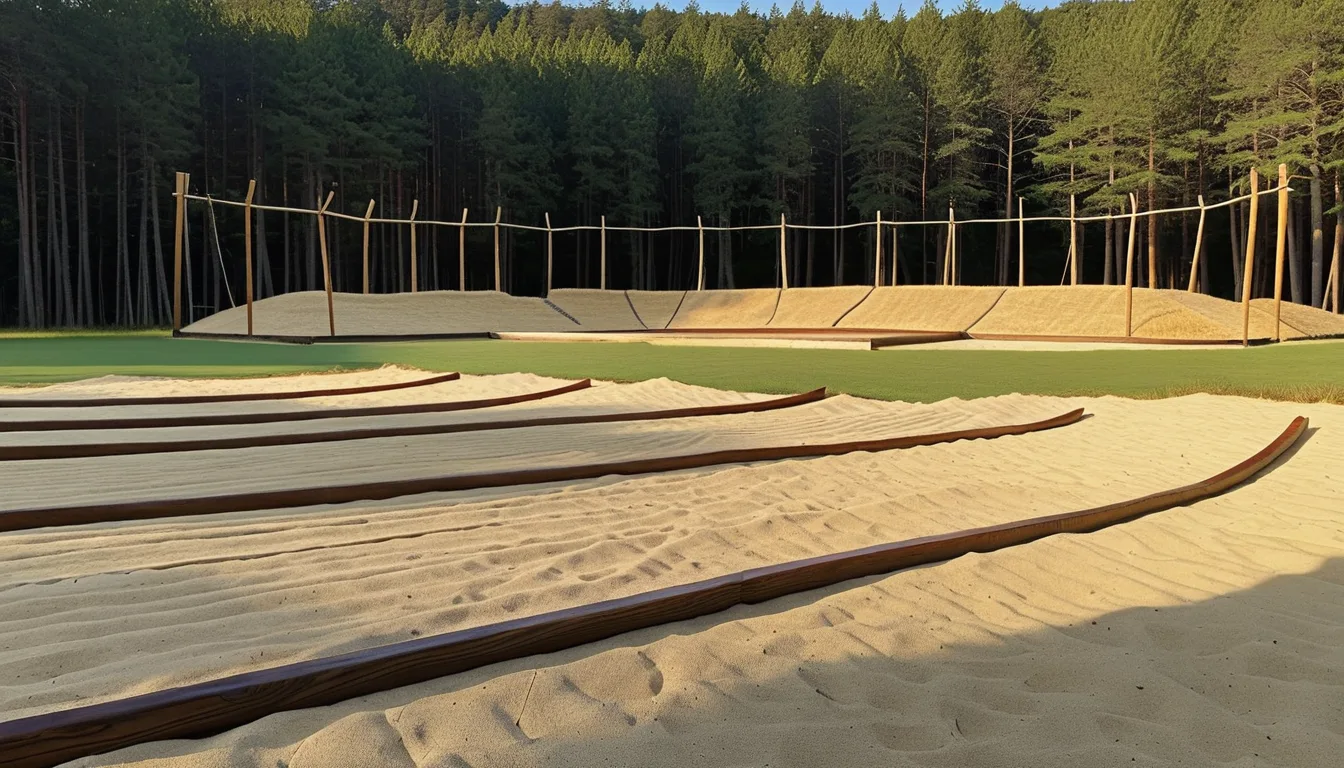
| Korea Heritage Service, Hyeonchungsa Management Office | The history of Hyeonchungsa, the portrait, the memorial rite, the archery range | 1706, 1868, 1932, 1967, painted 1953 and designated 1973, 28 April, 145 m (200 m at the time) |
| UNESCO Memory of the World entry page | Carries an entry for Nanjung Ilgi | Not verified |
In summary
Foreign and Korean institutions each record a different side of Yi Sun-sin. RUSI states that he destroyed the Japanese fleet with twelve turtle ships and the support of the Ming navy, bringing the Imjin War to an end, and that he lost his life in that victory. Korea.net says a stray bullet struck and killed him in the last battle of the war in 1598. Gunsa narrows the focus to the Battle of Noryang and says the victory demonstrated the strength of the Joseon navy to neighboring countries.
So, rather than defining 'greatness' in a single sentence, it seems safer to check which institution recorded what. The number of volumes of Nanjung Ilgi and its National Treasure number can be confirmed on the Korea Heritage Portal, the year of inscription on the same portal and on Korea.net, and the nature of the operation at Noryang in the Gunsa paper indexed in KCI. Any assessment beyond that cannot be verified from the records used here.