The short answer: a shared ending place in Scrolls 11 and 16
The passages quoted below from Scrolls 11 and 16 of In Search of the Supernatural (搜神記) all end in much the same place. First comes a death suffered unjustly or a marriage blocked. Then nature or the authorities respond. At the end, something remains that can be shown to others: the name of a grave, the name of a tree, a memorial submitted to the throne. This is the second installment of a three-part series.
The scope is deliberately narrow. The focus falls on “The Grave of the Three Kings,” the Donghai filial wife entry and “Han Ping and His Wife” in Scroll 11, together with “Song Dingbo Catches a Ghost” and the Ziyu entry in Scroll 16. The Hebo entries in Scroll 4 serve as the point of comparison. Plot summary goes only as far as the analysis requires; the rest of the space belongs to the original lines and what they mean.
Begin by placing the book. In chapter 5 of A Brief History of Chinese Fiction (中國小說史略), Lu Xun (魯迅) sums up the period: 「凡此,皆張皇鬼神,稱道靈異,故自晉訖隋,特多鬼神誌怪之書。」 Books of ghosts and strange tales were especially numerous from the Jin through the Sui. Of Gan Bao (干寶) the same chapter says: 「新蔡干寶字令升,晉中興後置史官,寶始以著作郎領國史」 — his courtesy name was Lingsheng, and after the Jin restoration he took charge of the national history as a court writer.
The English Wikipedia article “In Search of the Supernatural” says the book usually consists of 464 stories. That large number of pieces can be taken to mean that it is hard for any single passage to speak for the book as a whole, so this article stays with specific lines in specific scrolls. What holds elsewhere in the book cannot be confirmed from the passages quoted here.
Three heads and a place name in “The Grave of the Three Kings” (Scroll 11)
The “Grave of the Three Kings” entry in Scroll 11 of In Search of the Supernatural, as given on Chinese Wikisource, opens like this: 「楚干將莫邪為楚王作劍,三年乃成,王怒,欲殺之。」 Gan Jiang Moye (干將莫邪) of Chu made a sword for the king of Chu and finished it after three years; the king, enraged, wanted to kill him. A single sentence holds the making, the completion, the anger and the intent to kill. Why the king was angry goes unstated. The approach here can be seen as one of recording events without unpacking motives.
The entry closes like this: 「三首俱爛,不可識別。乃分其湯肉葬之。故通名三王墓。今在汝南北宜春縣界。」 The three heads have been boiled past telling apart, so the broth and the flesh were divided and buried together. The place then takes a name: the Grave of the Three Kings (三王墓).
The last sentence is the one to watch, because the original adds the location as well: within the bounds of Yichun county, north of Runan. A name and a place are information a reader can go and look up, and the arrangement can be seen as one that closes a strange event with a piece of geography. What became of the grave afterwards, the original does not say.
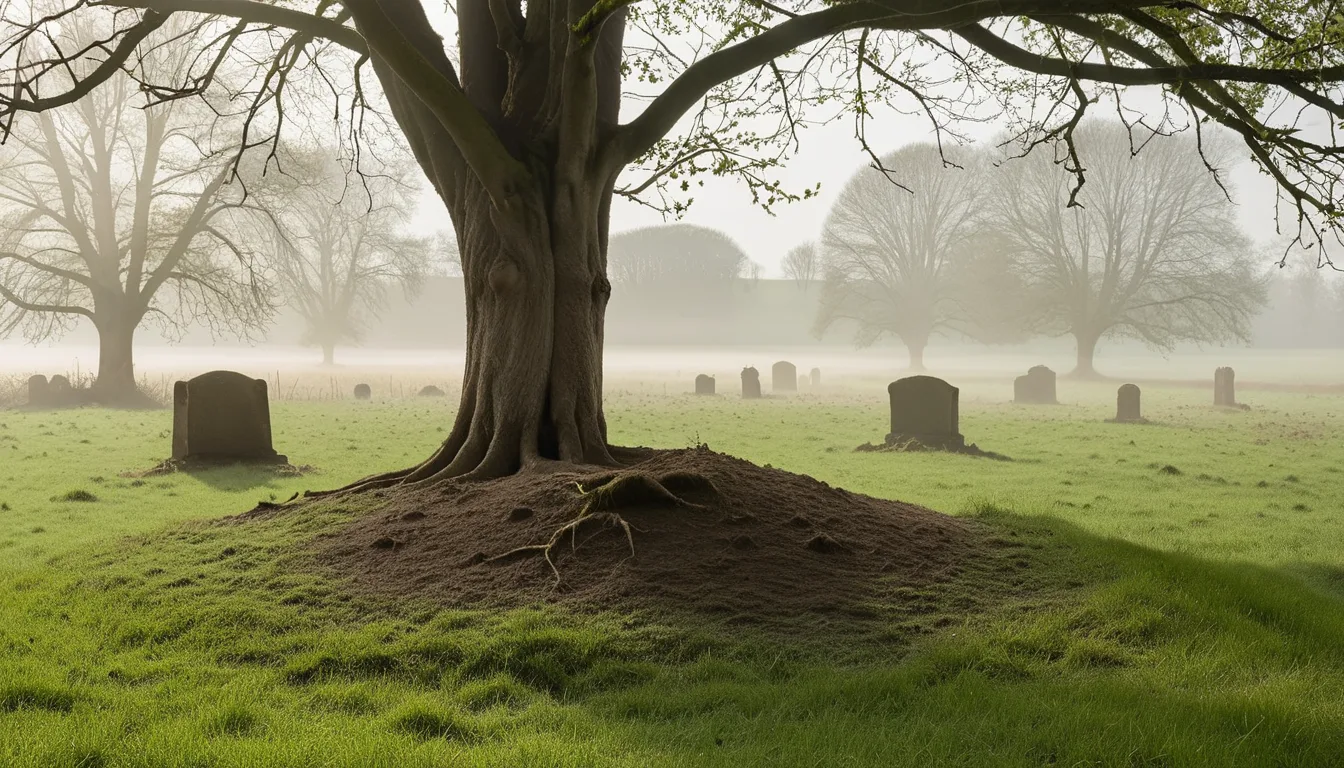
The Donghai filial wife in Scroll 11 and Su'e's plea at Huben Pavilion in Scroll 16
The Donghai filial wife entry in Scroll 11 reads: 「漢時,東海孝婦養姑甚謹...自后郡中枯旱,三年不雨。」 It opens with the wife serving her mother-in-law with great care; afterwards the commandery fell into drought, with no rain for three years. One woman's unjust death and a whole region's drought sit side by side in a single entry.
Scroll 11 also preserves the oath of the filial wife Zhou Qing: 「青若有罪,愿殺,血當順下;青若枉死,血當逆流。...既行刑已,其血青黃緣旛竹而上,极標,又緣旛而下云。」 If she were guilty, her blood would run downward; if she died unjustly, it would run backwards. The original says that after the execution the blood climbed the banner pole and then ran back down. The trace left by her body can be seen as being recorded like evidence that reopens the verdict.
The scene of response is brief: 「太守實時身祭孝婦冢,因表其墓,天立雨,歲大熟。」 The governor goes in person to sacrifice at the filial wife's grave and honors her tomb; heaven sends rain at once, and the harvest that year is abundant. In the order of the telling, this much can be confirmed: the sacrifice and the honoring stand at the turning point.
In the Huben Pavilion entry in Scroll 16, the plea is spoken aloud. Su'e says: 「妾既冤死,痛感皇天,無所告訴,故來自歸於明使君。」 Having died unjustly with nowhere to bring her complaint, she has come to the envoy herself. The same scroll carries He Chang's words: 「令鬼神訴者,千載無一,請皆斬之,以明鬼神,以助陰誅。上報聽之。」 Together with his judgment that a ghost pleading its own case happens but once in a thousand years, the passage reads as a record that his memorial was granted.
The tree of longing and the act of naming in “Han Ping and His Wife” (Scroll 11)
“Han Ping and His Wife” in Scroll 11 begins like this: 「宋康王舍人韓憑娶妻何氏,美,康王奪之。憑怨,王囚之,論為城旦。」 Han Ping (韓憑) married a woman of the He clan (何氏), and King Kang of Song took her from him. When Han Ping resented it, the king imprisoned him and sentenced him to hard labor as a chengdan. The exercise of power is over within two sentences. Nothing explains the cause of events; only the measures taken go on the record.
A tree stands at the place of the ending. The same entry reads: 「宿昔之間,便有大梓木,生于二冢之端,旬日而大盈抱,屈体相就,根交于下,枝錯于上。...宋人哀之,遂號其木曰「相思樹。」」 Overnight a great catalpa grew at the ends of the two graves. In ten days it was an armful thick, its roots twined below and its branches crossing above. Then comes the sentence in which the people of Song, grieving, call the tree the 相思樹, the tree of longing.
The closing sentences of both entries leave a name behind. “The Grave of the Three Kings” records the name of a grave, “Han Ping and His Wife” the name of a tree, and in each case the event survives by turning into the name of a thing. The English Wikipedia article “In Search of the Supernatural” also notes that the book contains a variant of the swan-maiden tale in which the maiden marries a human man — a reminder that the marriage entries do not all run in one direction.

Two different endings: “Song Dingbo Catches a Ghost” and the Ziyu entry in Scroll 16
“Song Dingbo Catches a Ghost” in Scroll 16 opens with dialogue: 「南陽宋定伯,年少時,夜行,逢鬼,問之。鬼言:「我是鬼。」」 Song Dingbo (宋定伯) of Nanyang, still young, met a ghost on a night road and questioned it, and the ghost said outright that it was a ghost. What stands out is that the other party makes no effort to hide what it is. The entry can be seen to open with question and answer rather than with any build-up of dread.
A sum of money turns up later in the same entry: 「逕至宛市中下著地,化為一羊,便賣之,恐其變化,唾之,得錢千五百,乃去。」 When he reached the middle of the Wan market and set it down, it turned into a sheep. Fearing another change, he spat on it, sold it and got 1,500 coins. The ending closes on a market transaction and a figure, and it can be seen as a place where a supernatural event is recorded as a number.
The Ziyu entry in the same Scroll 16 starts with people's ages: 「吳王夫差,小女,名曰紫玉,年十八,才貌俱美。童子韓重,年十九,有道術,女悅之,私交信問,許為之妻。」 Ziyu (紫玉), the younger daughter of King Fuchai of Wu, is eighteen; Han Zhong (韓重) is nineteen. They exchanged messages privately, and she promised to become his wife. A later line in the entry reads: 「重學於齊,魯之間,臨去,屬其父母使求婚。王怒、不與。女玉結氣死,葬閶門之外。」 The request for marriage is refused, and she dies with her breath knotted in her and is buried outside the Chang Gate.
Scroll 16 also includes a line about awareness after death. The Jiang Ji entry reads: 「辰時,傳阿心痛;已時,傳阿劇;日中,傳阿亡。濟曰:「雖哀吾兒之不幸,且喜亡者有知。」」 The hours come in sequence: the chen hour, the si hour, midday. Jiang Ji grieves at his son's misfortune yet is glad that the dead have awareness. Noting the hours reads like an attempt to leave the event behind in the form of a report.
Drought and burial in the Liang Fu and Zhou Chang entries (Scroll 11)
The Liang Fu entry in Scroll 11 describes a drought like this: 「時夏枯旱,太守自曝中庭,而雨不降...至日中時,山气轉黑,起雷,雨大作,一郡沾潤。」 A parching drought came in summer, and the governor sat out in the blazing sun himself, yet no rain fell. Then at midday the mountain air turned black, thunder rose and heavy rain came down. The closing sentence leaves the whole commandery soaked. This habit of noting time and extent can be seen to resemble the Jiang Ji entry.
The Zhou Chang entry gives a date and an office: 「元初二年,為河南尹,時夏大旱,久禱無應;暢收葬洛陽城旁客死骸骨万余,為立義冢,應時澍雨。」 In the second year of Yuanchu he became governor of Henan, and that summer brought a great drought; prayers went on long without answer. He then gathered more than ten thousand sets of bones of people who had died away from home beside the walls of Luoyang, buried them and set up a charity graveyard. The last sentence reports that timely rain fell.
What repeats across the two entries is a kind of act: in one a governor sits out under the sun, in the other bones are collected and a charity graveyard built. The Donghai filial wife entry, too, records the sacrifice at the grave and the honoring of the tomb before the rain. How the dead are treated can be seen to sit near the turning point of the telling — though the quoted lines themselves never state that they illustrate one and the same principle.
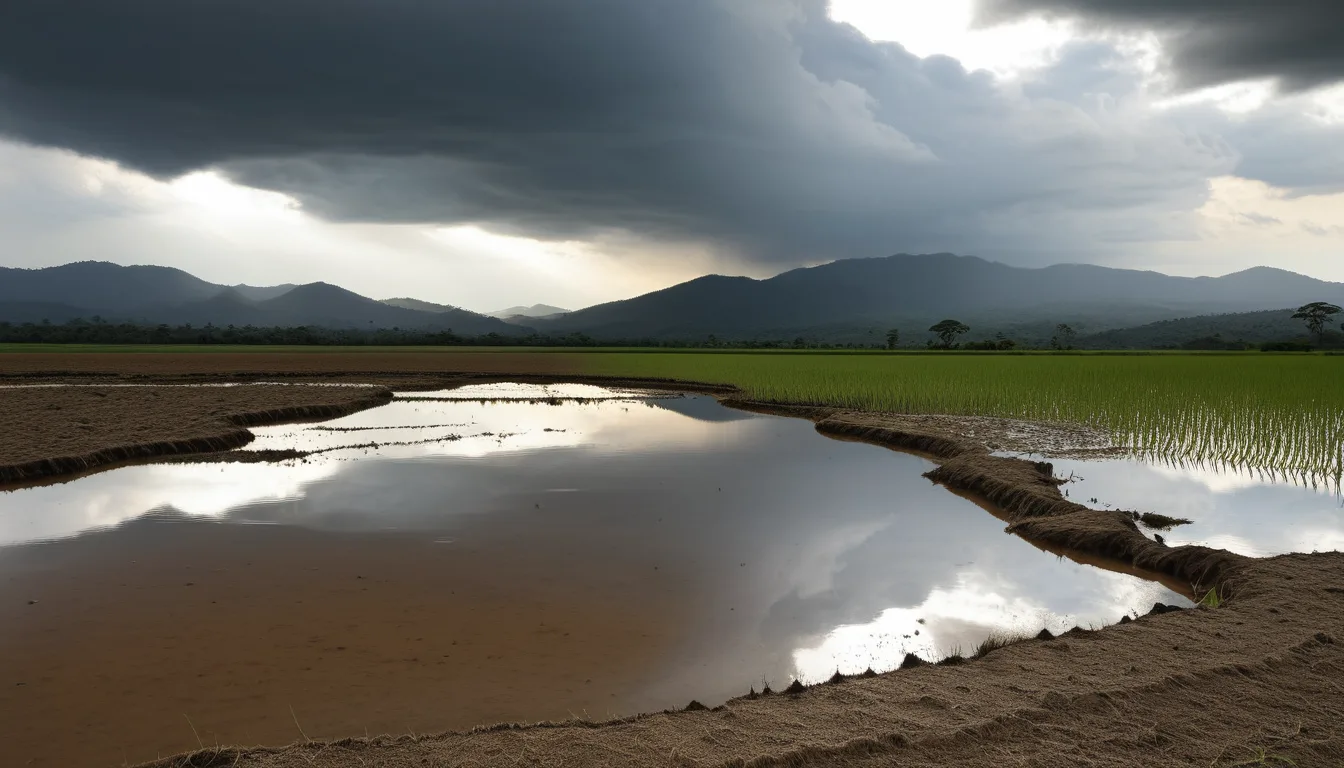
Scroll 4's Hebo entries and the boundary the Lord of Mount Tai states
Scroll 4 goes about things differently. It says: 「風伯,雨師,星也。風伯者,箕星也。雨師者,畢星也。」 The Wind Lord (風伯) and the Rain Master (雨師) are stars, identified as Ji (箕星) and Bi (畢星). The Hebo entry reads: 「宋時弘農馮夷,華陰潼鄉隄首人也。以八月上庚日渡河,溺死。天帝署為河伯。」 Feng Yi (馮夷) of Hongnong drowned while crossing the Yellow River on the first geng day of the eighth month, and the Celestial Emperor appointed him Hebo (河伯).
Scroll 4 has scenes of marriage and of gifts. In the Humu Ban entry, when Ban asks where the young lady is, the answer comes back: 「女為河伯婦。」 The daughter of the Lord of Mount Tai has been made Hebo's wife. In the story of Shang Lake in Yuhang county, Hebo says: 「僕有小女,頗聰明,欲以給君箕帚。...此人知神,不敢拒逆。」 The man, knowing he faced a god, did not dare refuse. At parting, Hebo's daughter gives him 「又與錢十萬,藥方三卷,云:「可以施功布德。」」 — a hundred thousand coins and three scrolls of prescriptions, with the word that he should use them to do good works.
The same scroll also contains lines that state a boundary. The Lord of Mount Tai says: 「生死異路,不可相近,身無所惜。」 Life and death travel different roads and cannot come near one another. In the Zhang Pu entry, the registrar of the god of Mount Lu reports: 「吾廬君主簿也。廬君謝君。知鬼神非匹。又敬君之義,故悉還二女。」 Knowing that ghosts and humans cannot be matched, and respecting the man's sense of duty, the god sends both daughters back.
The differences among the quoted lines come down to three points. First, what is left at the end: the Scroll 11 lines record the name of a grave and the name of a tree, while the Scroll 4 lines record objects such as a hundred thousand coins and three scrolls of prescriptions. Second, the direction of the relationship: in the Scroll 16 lines a ghost speaks directly to a human, while the Scroll 4 lines state the principle that life and death run on different roads and cannot come near. Third, the way gods are introduced: Scroll 4 identifies the Wind Lord and the Rain Master as stars and attaches a procedure, appointment, to Hebo.
Gan Bao's way of recording and the editions of In Search of the Supernatural
The recorder's attitude shows through in Lu Xun's summary. Chapter 5 of A Brief History of Chinese Fiction says: 「蓋當時以為幽明雖殊途,而人鬼乃皆實有,故其敘述異事,與記載人間常事,自視固無誠妄之別矣。」 People of the time held that, although the dark world and the human world travel separate roads, humans and ghosts alike really exist. In their own eyes, then, writing down strange matters was no different from writing down everyday human affairs. The dates, offices, sums and hours seen above can be seen to fit that attitude.
The same book also tells a story about Gan Bao's household: 「而性好陰陽術數,嘗感於其父婢死而再生,及其兄氣絕復蘇,自言見天神事」 Gan Bao was fond of yin-yang arts and numerology, and he was struck by his father's maidservant coming back to life after dying and by his elder brother reviving after his breath had stopped and saying he had seen heavenly spirits. The Japanese Wikipedia article “捜神記” likewise reports that strange events in his own family prompted him to collect records of mysterious figures and events in the world at large.
There is more than one edition. Chapter 5 of A Brief History of Chinese Fiction says: 「《隋書·經籍志》著錄三十卷,題干寶撰。今本二十卷,系後人從類書中輯錄而成。」 The bibliographic treatise of the Book of Sui lists the work in thirty scrolls under Gan Bao's name, and the present twenty-scroll version was compiled by later hands from encyclopedic compendia. The same chapter holds that the surviving twenty-scroll text is not the original work, and that besides marvels, numinous events and transformations of people it mixes in immortality and five-phases lore as well as Buddhist teaching. The Japanese Wikipedia article says the current twenty-scroll version carries more than 470 tales, sorted scroll by scroll according to type, and that of the forty entries in the eight-scroll version, eleven match the twenty-scroll version. The one-scroll Dunhuang version, the same article adds, has twenty-three entries in all, sharing thirteen with the eight-scroll version and eight with the twenty-scroll version.
It is worth noting where the originals can be read directly. The lines from In Search of the Supernatural quoted here appear on the Chinese Wikisource pages for Scrolls 4, 11 and 16 of “搜神記,” and chapter 5 of Lu Xun's A Brief History of Chinese Fiction is on the same Wikisource. Information on editions and translations is gathered in the Japanese Wikipedia article “捜神記” and the English Wikipedia article “In Search of the Supernatural.” The English article says the book was issued repeatedly in several editions, including one in 1593, and that an English translation by Kenneth J. DeWoskin and J. I. Crump, Jr. appeared in 1996.
Later comments survive as records too. The English Wikipedia article says Pu Songling rated Gan Bao's work far above his own Strange Tales from a Chinese Studio. The Japanese Wikipedia article explains that many tales in later books are marked as quotations from In Search of the Supernatural. It also explains that as Daoism and Buddhism entered a culture once dominated by Confucianism alone, the culture grew more varied and the strange was talked about and written down a great deal.
| Item | Quoted lines from Scrolls 11 and 16 | Quoted lines from Scroll 4 |
|---|---|---|
| What is left at the end | The spot where the remains were buried together is named the Grave of the Three Kings, and its location is given as within Yichun county north of Runan (Scroll 11) | Hebo's daughter gives a hundred thousand coins and three scrolls of prescriptions, with the word that he should do good works (Scroll 4) |
| Marriage | The king refuses the marriage; Ziyu dies with her breath knotted in her and is buried outside the Chang Gate (Scroll 16) | Hebo offers his younger daughter, and the man, knowing he faces a god, does not dare refuse (Scroll 4) |
| Tree and grave | A great catalpa grows at the ends of the two graves and is called the tree of longing (Scroll 11) | The daughter of the Lord of Mount Tai is made Hebo's wife (Scroll 4) |
| Distance between humans and ghosts | A ghost pleads directly to the envoy, and He Chang calls it a once-in-a-thousand-years event in a memorial that is granted (Scroll 16) | The Lord of Mount Tai says that life and death travel different roads and cannot come near one another (Scroll 4) |
| How rain is described | After the governor sacrifices at the grave and honors the tomb, rain falls and the harvest that year is abundant (Scroll 11) | The Wind Lord is explained as the star Ji and the Rain Master as the star Bi (Scroll 4) |
In summary: the shape of the endings in the quoted passages
The passages quoted here differ in the shape of their endings. In Scroll 11, “The Grave of the Three Kings” and “Han Ping and His Wife” attach names to a grave and a tree, and the first also gives the location, within Yichun county north of Runan. The Donghai filial wife entry in Scroll 11 records rain and a good harvest after the sacrifice and the honoring, while the Liang Fu and Zhou Chang entries record a governor out in the sun and the founding of a charity graveyard. In Scroll 16, “Song Dingbo Catches a Ghost” records 1,500 coins, and the Ziyu entry a refused marriage and a death. The Hebo entries in Scroll 4 record an appointment, a marriage, gifts, and the principle that life and death run on different roads.
One conclusion follows, and only with caution. The quoted lines from Scrolls 11 and 16 choose to leave events behind as names and numbers, while the lines from Scroll 4 come closer to confirming a god's office and the boundaries that hold. Whether the two groups were written on the same principle cannot be settled from the quoted passages alone, and it is worth keeping in mind that the text comes down through several lines of transmission.