1. A funeral is both culture and law
What people do after a death is among the oldest of cultures, yet much of today’s procedure is written in law: when burial may begin, where cremation must take place, where ashes may rest, and whether a body may be returned to the earth. How the dead are remembered and mourned, on the other hand, still belongs to the community. This article reads both layers together: the “24 hours” of Korea and Japan, what cremation rates in Britain, the United States, and elsewhere reveal about change, Washington State’s new option, and the mourning festival of Mexico as recorded by UNESCO.
2. Korea: 24 hours after death, and a cremation rate above 90%
The Korean Ministry of Government Legislation’s Easy-to-Find Law guide opens its rules on burial with one sentence: “Burial may take place only after 24 hours have passed since death or stillbirth.” The basis is Article 6 of the Act on Funeral Services, and “anyone who buries a body within 24 hours of death or stillbirth in violation of this is punished by imprisonment of up to one year or a fine of up to 10 million won (Article 40(1)).” Earlier burial is allowed only where another law provides otherwise or a listed exception applies. The same Act defines burial as “interring a body (including a foetus that died after four months of pregnancy) or remains in the ground,” and reburial as “moving a buried body or remains to another grave or columbarium, or cremating them or placing them in a natural burial.”
Traditionally a burying society, Korea became a cremating one within a generation. According to the international statistics the Cremation Society of Great Britain compiles from agencies in each country, 326,183 of Korea’s 352,906 deaths in 2023 ended in cremation, a rate of 92.43% (provisional). As cremation grew, the resting places of ashes divided between columbaria and natural burial, and the Act sets out all three routes — burial, cremation, and natural burial — side by side. The rule of waiting a day after death has not changed; the road taken after that day has changed dramatically.
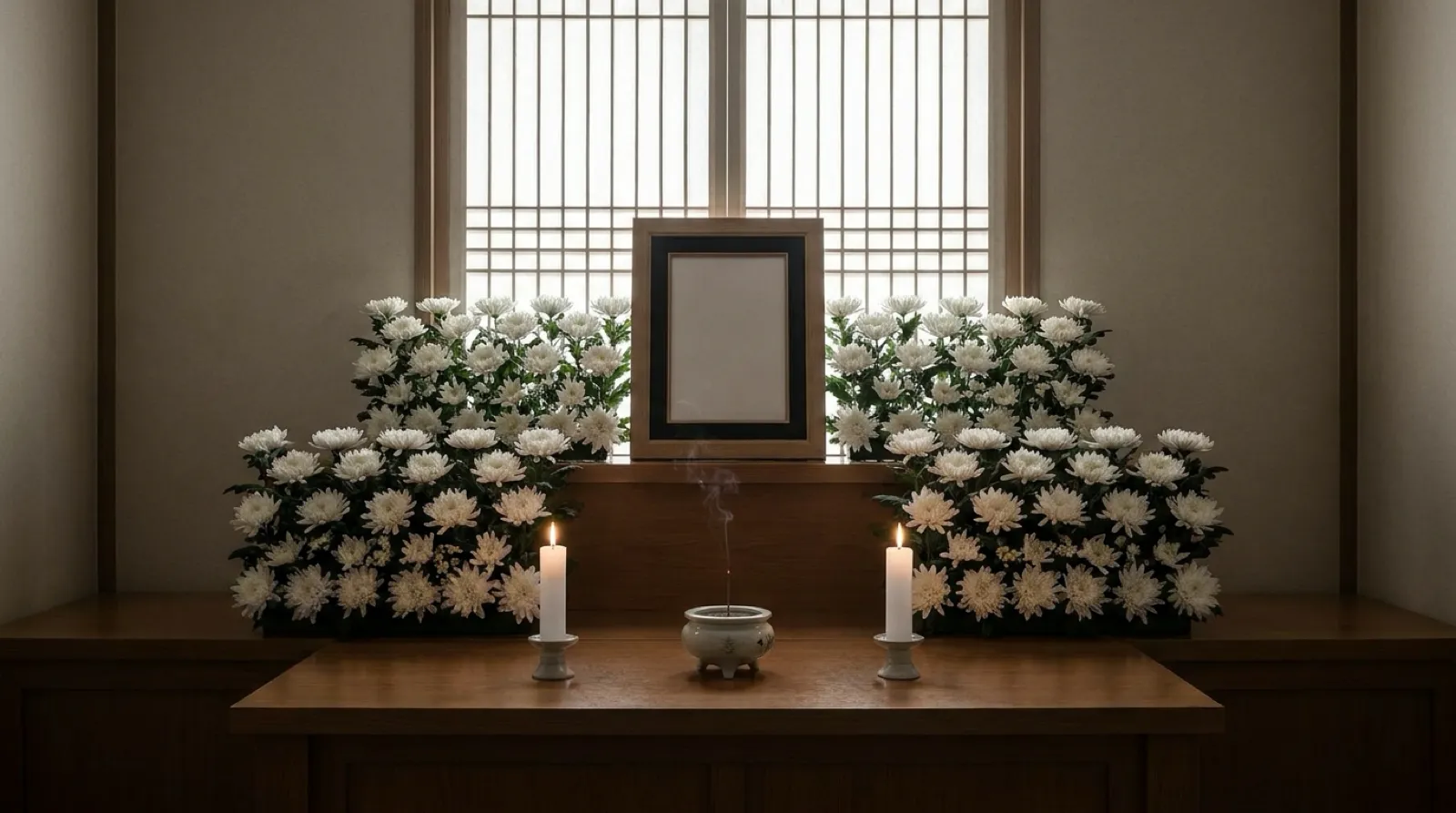
3. Japan: the 24 hours and crematoria fixed by a 1948 law, and 99.97%
Japan’s rules are in the Act on Graveyards and Burial, Law No. 48 of 1948. Article 1 states that the law’s purpose is to ensure that the management of graveyards, charnel houses, and crematoria, and burial and related acts, “conform to the religious sentiments of the people and are carried out without hindrance from the standpoint of public health and other public welfare.” Article 3 is the same 24-hour rule as Korea’s: “Burial or cremation shall not be carried out until 24 hours have passed after death or stillbirth, except as otherwise provided by other laws,” with the proviso that “this does not apply to a stillbirth that has not reached seven months of pregnancy.” Article 4 provides that “burial, or the interment of cremated remains, shall not be carried out outside a graveyard” and that “cremation shall not be carried out in any facility other than a crematorium,” and Article 5 requires anyone wishing to bury, cremate, or rebury to obtain permission from the head of the city, town, or village.
Japan, where this legal framework meshes with long-standing custom, has the highest cremation rate in the world. The Cremation Society’s international table records that in 2023, 1,621,548 of Japan’s 1,622,009 deaths ended in cremation, 99.97%, the same rate as in 2022. In the same table Hong Kong stood at 96.96%, Denmark 86.48%, the Czech Republic 85.64%, Germany 76.00%, and Canada 75.31%, while Italy recorded 38.16%, Ireland 28.25%, and Greece 4.61%. The numbers show how differently “the road after death” runs from country to country, according to religion, history, and land.
4. Britain: from the first cremation in 1885 to four in five
The Cremation Society has tracked the progress of cremation every year since 1885. According to its table, “the first cremation was carried out on 26th March 1885, at Woking,” and in 2024, 522,429 of 651,380 deaths in the British Islands ended in cremation, a rate of 80.20%. England and Wales stood at 82.70% and Scotland at 73.59%, while Northern Ireland was far lower at 24.16%. The provisional figure for 2025 is 80.46% overall.
Britain’s curve is a case study in how cremation moves from “exception” to “default.” From a single case in 1885 it reached four deaths in five by 2024, and even within one country a region such as Northern Ireland remains a burying majority for reasons of religion and culture. A cremation rate is not a matter of technology but an index of how each community handles death.
5. The United States: 82% cremation by 2045, and Washington State’s law of “returning to soil”
The United States is in the middle of its transition. The National Funeral Directors Association’s statistics page, updated in September 2025, gives “63.4%” as “the projected 2025 cremation rate,” with “the burial rate projected at 31.6%,” and states that “by 2045, cremation is expected to reach 82.3%.” The same page reports that 61.4% of consumers “would be interested in exploring green funeral options.” In a country where cremation became the majority only recently, the next question has already become “what comes after cremation.”
One answer came from Washington State. The state legislature’s record shows that Senate Bill 5001, “concerning human remains,” was signed by the governor on 21 May 2019, becoming Chapter 432 of the 2019 laws, with an effective date of 1 May 2020. MRSC, the research body for local governments in Washington State, explains that the law defines “natural organic reduction” as “the contained, accelerated conversion of human remains to soil,” a process that places remains in large vessels with straw, wood chips, and other natural materials “for a period of time of about four to six weeks,” after which the family may receive the soil to spread in a garden or plant a tree. Washington is “the first state in the US” to allow it, and the same law also permits alkaline hydrolysis, known as “water cremation,” which at the time was already legal in 19 other states. MRSC adds that Washington’s cremation rate of 77% is “higher than any other state.” The state with the highest cremation rate was thus also the first to open the road beyond it.
6. Mexico: the day the dead return, as recorded by UNESCO
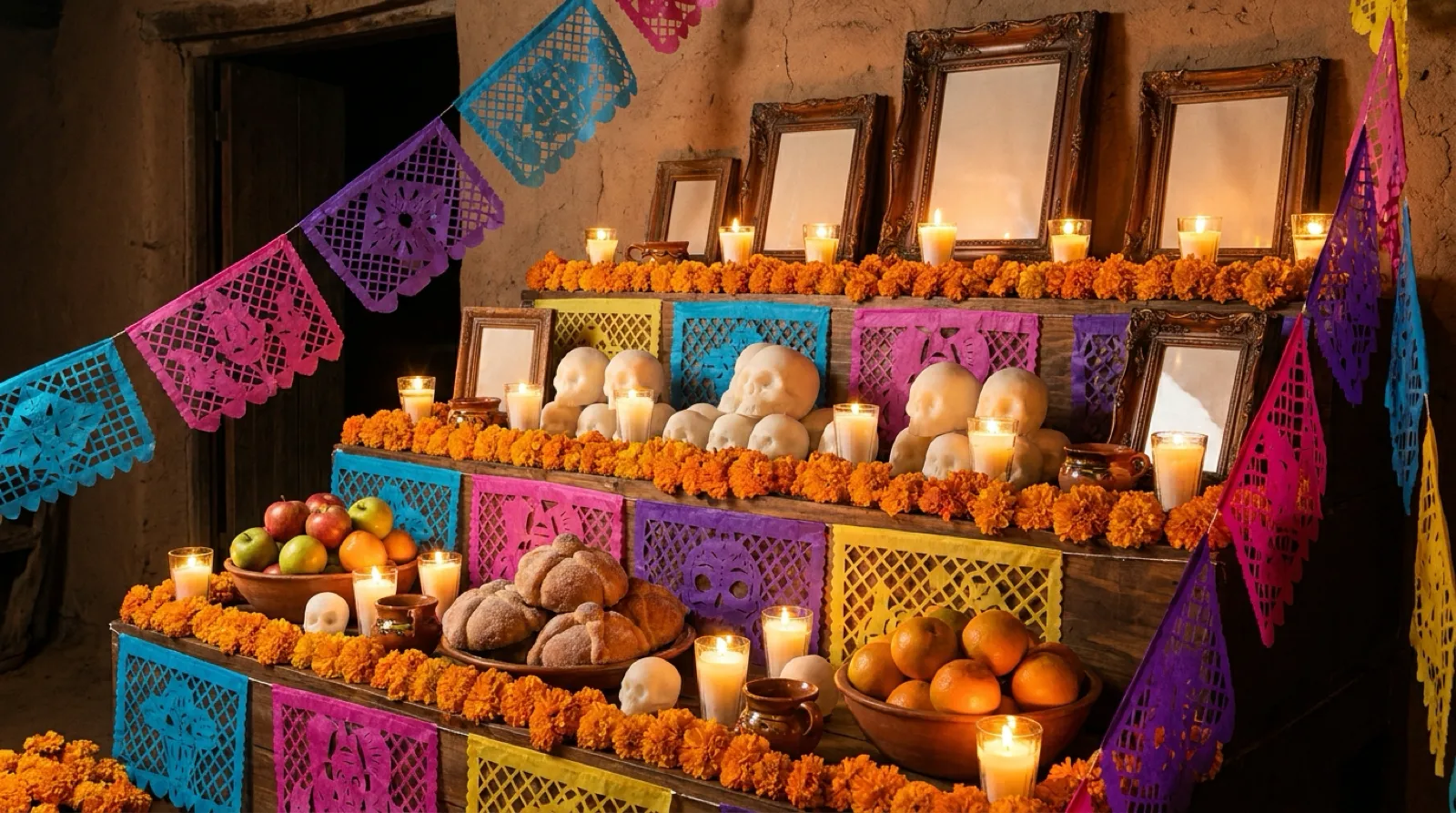
Mourning after the funeral is the domain of culture rather than law. UNESCO proclaimed Mexico’s “Indigenous festivity dedicated to the dead” (Day of the Dead) a masterpiece in 2003 and inscribed it on the Representative List of the Intangible Cultural Heritage of Humanity in 2008. In UNESCO’s description, the festival “commemorates the transitory return to Earth of deceased relatives and loved ones” and takes place “each year at the end of October to the beginning of November,” a period that “also marks the completion of the annual cycle of cultivation of maize, the country’s predominant food crop.”
Families “facilitate the return of the souls to Earth by laying flower petals, candles and offerings along the path leading from the cemetery to their homes,” and “the deceased’s favourite dishes are prepared and placed around the home shrine and the tomb alongside flowers and typical handicrafts, such as paper cut-outs.” UNESCO adds that “great care is taken with all aspects of the preparations, for it is believed that the dead are capable of bringing prosperity (e.g. an abundant maize harvest) or misfortune (e.g. illness, accidents).” This view of death as an annual visit rather than a severance, set beside the earlier stories told in 24-hour rules and cremation figures, shows best how broad funeral culture can be.
7. What the six countries show together
First, the first rule of a funeral is waiting. Korea and Japan fix 24 hours by law; the statutes do not state the purpose directly, but the interval is usually explained as a minimum margin for confirming death and for the preparations of those left behind.
Second, cremation is rising worldwide, but its speed and destination differ. Japan’s 99.97%, Korea’s 92%, Britain’s 80%, America’s 63%, Italy’s 38%, and Greece’s 5% are figures from the same era. The gaps reflect religion, land, law, and the choices one generation made differently from the last.
Third, the ways of the funeral keep being rewritten. Washington’s 2019 law opened a road that returns a body to soil, and Korea’s Funeral Act placed natural burial alongside burial and cremation. And even after all those procedures are over, Mexican families lay paths of petals each year to welcome the dead home. A funeral sends the dead away; mourning keeps them near.