The short answer
The jangdo (粧刀) is a small knife carried on the body. According to the Encyclopedia of Korean Culture, it "was used in everyday life and also served for self-defense, self-harm (自害), and adornment" — four uses overlapping in a single object. The National Heritage Portal likewise describes the jangdo as a very small knife used in daily life, for self-defense, or as an ornament. The idea of a blade of chastity reads as a later emphasis on one part of that range.
The ways of wearing it span both sexes. The Encyclopedia of Korean Culture notes that a man threaded the loop of the jangdo's cord through his jacket tie or his belt, while a woman wore it on the belt beneath her skirt or made it the centerpiece of a norigae pendant. The Encyclopedia of Korean Folk Culture, published by the National Folk Museum of Korea, says men wore it on the jacket ties or at the waist, and women kept it in a pouch or hung it with a norigae on the front panel of the jacket; the same encyclopedia notes that the jangdo was also called doja (刀子). Both encyclopedias, in short, treat the jangdo as an object used by men and women alike.
The symbolism of chastity comes attached to a particular period. The Encyclopedia of Korean Folk Culture states that "through the Imjin War and the Manchu invasion, the jangdo also came to symbolize a woman's chastity." What follows covers the records of origin, the restrictions from 1498 onward, the practical functions of the cheomjado, the classification of forms, the production work of the jangdojang, and the differences from the Japanese Wikipedia entry.
The 945 state gifts in the Goryeosa and the small knives from the tomb of King Muryeong
The sources themselves decline to say when people began carrying small knives. The Encyclopedia of Korean Folk Culture states: "It is not precisely known when people in Korea began to carry small knives, but small knives and decorative sodo (小刀) have been excavated from the tomb of King Muryeong of Baekje, the north mound of Hwangnamdaechong in Gyeongju, Geumgwanchong, Cheonmachong, and the husband-and-wife tomb in Yangsan, which shows that their history is a long one." The starting point stays blank, and only the antiquity is asserted, on the evidence of excavated objects. That is a different kind of claim from one that pins down an origin.
The Goryeo records are more specific. The Encyclopedia of Korean Folk Culture notes that the Goryeosa records daggers and small knives sent to Later Jin in 945 as part of a set of state gifts, and adds: "The Goryeosa jeoryo (高麗史節要) also records that the wearing of daggers was prohibited in 1014 (the fifth year of Hyeonjong) and in 1045 (the eleventh year of Jeongjong), which shows that the custom of wearing daggers was widespread enough for the state to regulate it in early Goryeo." Here a ban becomes evidence of a fashion: carrying a small knife was already something the authorities policed.
A different account of the origin also circulates. The Encyclopedia of Korean Culture states that "the custom of men and women wearing the jangdo began after Goryeo submitted to the Yuan dynasty, and became widespread in the Joseon period." The Encyclopedia of Korean Folk Culture reports that Choe Nam-seon (崔南善) called the practice of wearing a jangdo a Mongol custom transmitted from the Yuan during the Goryeo period. An argument for antiquity drawn from excavated objects and an account that begins the story after the Yuan submission do not land in the same place, and these sources offer no grounds for choosing between them.
Material names already appear in descriptions of Three Kingdoms artifacts. The Encyclopedia of Korean Folk Culture states: "Decorative knives attached to waist pendants (腰佩) have been excavated from Silla tombs, and gold- and silver-mounted knives of Baekje have been found in the Han River basin and in the tomb of King Muryeong." Knives, strikingly, served as ornamental fittings hung at the waist. On this evidence, decoration and blade were joined from the start.
The sumptuary ban of 1498 and the 1522 rule for senior officials
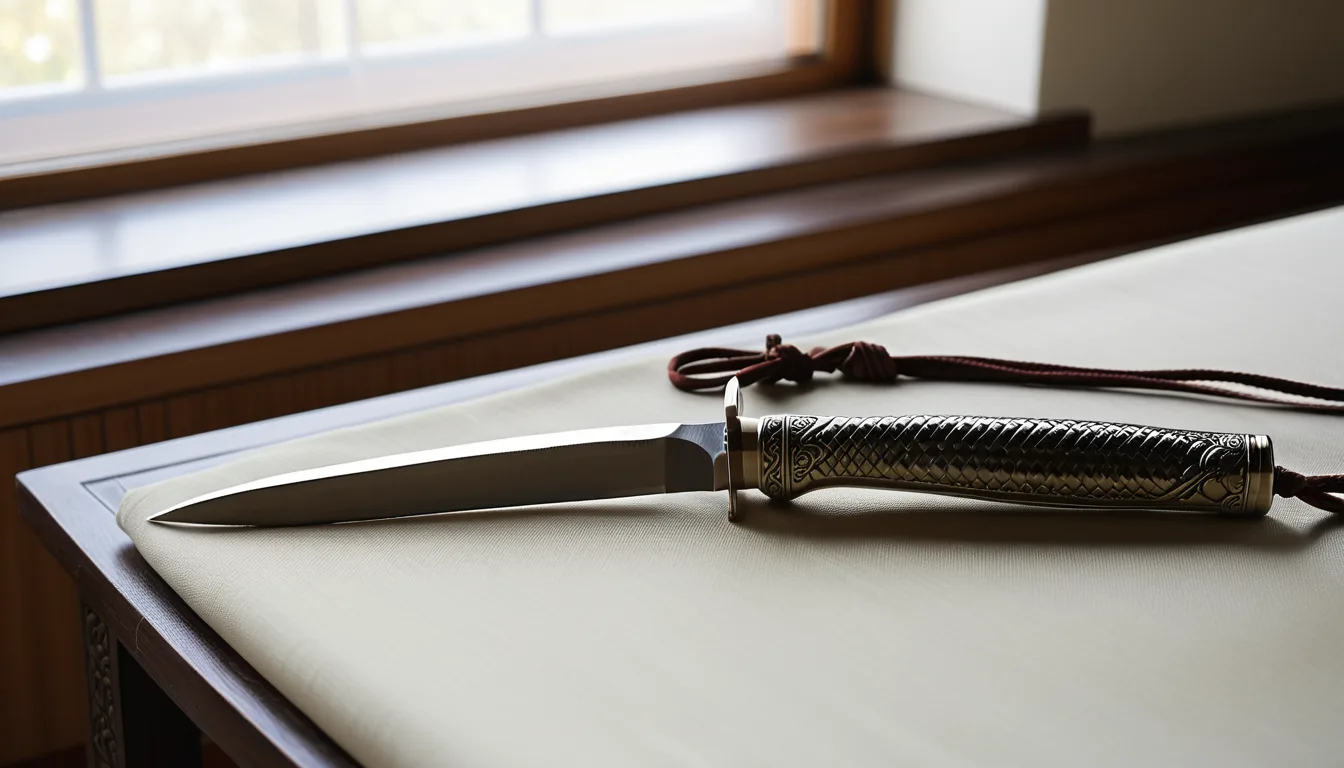
The eunjangdo is simply a jangdo made of silver, which is why material becomes the issue in the regulatory records. The Encyclopedia of Korean Culture states: "The sumptuary ban of 1498 (the fourth year of Yeonsangun) also prohibited commoners from using silver jangdo, but it was poorly enforced, so in 1670 (the eleventh year of Hyeonjong) it was even ordered that Confucian students, holders of minor offices, and commoner men and women wearing a silver jangdo be prosecuted." The prohibition did not end with a single order. Since the same encyclopedia says it "was poorly enforced," the ban and everyday reality can be seen to have diverged.
The reasons for the restrictions are on record too. The Encyclopedia of Korean Culture explains that the use of gold and silver served in a feudal society as a marker of high and low, noble and base, privileged and common, and adds that the measures were also taken so as to avoid paying tribute in gold and silver to Ming China. Two reasons — status marking and the tribute burden — are bound together in a single statement. Silver as a material was at once a question of ornament and a question of state finances.
The scope of the restrictions varies from source to source. The Encyclopedia of Korean Folk Culture says that in 1498 the use of the jangdo was prohibited only to commoners, while in 1522 it was prohibited to all but officials of dangsanggwan rank. For 1498, the Encyclopedia of Korean Culture speaks of commoners' silver jangdo, the Encyclopedia of Korean Folk Culture of commoners' jangdo. Whether the two accounts summarize the same measure in different ways cannot be confirmed.
The regulatory records show the character of the jangdo in reverse: they can be read as meaning that it was in wide enough use to be worth banning. Accounts that speak of chastity say nothing about rank or material, while the silver jangdo records turn on both. The first task, then, is to separate the two questions these accounts answer.
The cheomjado's silver chopsticks and the caveat 'there is a theory'
The cheomjado is a jangdo fitted with chopsticks. The Encyclopedia of Korean Folk Culture states: "Among them, the cheomjado (籤子刀) had chopsticks attached to the jangdo's sheath, so it could be used for eating (取食) away from home, and being made of silver it also served to determine whether food was poisoned." The sheath, in other words, doubled as a holder for eating utensils — a use easily missed if you read only the description of a self-defense weapon.
Another source records the same function more cautiously. Writing about the jangdo fitted with silver chopsticks, the Encyclopedia of Korean Culture says there is a theory that it was used as chopsticks when eating away from home and as a tool for detecting poison in food. The caveat matters: "there is a theory." The two encyclopedias record the same function with different degrees of confidence, and the claim about detecting poison cannot be confirmed outside these two accounts.
The cheomjado shows that the jangdo's uses were never of a single kind. The Encyclopedia of Korean Folk Culture states: "The jangdo (粧刀) is a small knife [小刀] worn with everyday clothing, serving both for self-defense (護身) and as an ornament. It was also called doja (刀子)." That definition already puts self-defense and decoration in one object. Add the use as an eating utensil and the jangdo starts to look like a household tool that went with everyday dress.
The Imjin War record in the Dongguk sinsok samgang haengsildo and the jangdo given at 12 or 13
When the sources discuss the symbolism of chastity, they cite a particular text. The Encyclopedia of Korean Culture states: "That is, the Dongguk sinsok samgang haengsildo (東國新續三綱行實圖) records that during the Imjin War people kept a small jangdo with them at all times and, in an emergency, either took their own lives or attacked their assailant." Suicide and attack appear together there, a wider scope than an account that points only to self-harm. The jangdo was described, in other words, as a weapon for defending oneself.
The period in which the symbolism attached is on record as well. The Encyclopedia of Korean Folk Culture says that through the Imjin War and the Manchu invasion the jangdo also came to symbolize a woman's chastity. The National Heritage Portal says that from the Goryeo period adult men and women carried it for self-defense, and that in the Joseon period, from the Imjin War onward, women of yangban scholar-official households carried it as a necessity for preserving their purity. A statement about shared use by men and women runs straight into a statement about women carrying it, and the meaning of chastity looks like a later layer.
Families also handed a jangdo down. The Encyclopedia of Korean Folk Culture says that in scholar-official households a jangdo was given at the age of 12 or 13 along with instruction in the rules of proper conduct, and that the knife then passed from mother to daughter. Age and transmission are recorded together: the object served as both a vehicle of instruction and a family heirloom.
Accounts of the late Joseon period point elsewhere. The National Heritage Portal says that from the late Joseon period the jangdo was a norigae for personal adornment and thus a kind of luxury item, which is why its manufacture developed into a refined process. Accounts of chastity point to the years of the Imjin War and the Manchu invasion; accounts of a luxury item point to the late Joseon period. These sources give no grounds for treating the two as referring to the same period, and anyone lining the accounts up chronologically should preserve that distinction.
Paedo and nangdo, gajeun jangsik and matbaegi
The jangdo divides first by how it was carried. The Encyclopedia of Korean Culture states: "A jangdo meant to be worn is called a paedo (佩刀), and one carried in a pouch is called a nangdo (囊刀)." The names come from a difference in use: a knife shown on the body and a knife kept out of sight counted as distinct things.
Sizes are recorded as figures as well. The same encyclopedia says that the large jangdo measured about 5 chon overall with a blade of 3 chon, and the small one about 3 chon overall with a blade of 1.5 chon; the nangdo carried by women was usually 3 chon overall with a blade of 1.5 chon. The figures for the small type and for the nangdo are identical. A size that fits in the palm underlies the whole classification.
Elaborateness of decoration is another axis of classification. The Encyclopedia of Korean Folk Culture states: "Pieces with elaborate decoration on the sheath and hilt are called 'gajeun jangsik', and plain ones 'matbaegi'; matbaegi are divided in turn into 'pyeong-matbaegi', in which the sheath and hilt form a straight line like the character 一, and 'eulja-matbaegi', shaped like the character 乙." Both the amount of decoration and the curve of the body enter the name. The Encyclopedia of Korean Culture notes that the samo jangdo is four-sided and the mojaebi jangdo eight-sided, so even the number of facets in cross-section split the names.
Some names come from the material. The National Heritage Portal describes the nakjuk jangdo as a knife of bamboo with seven or more joints, inscribed with poetry of the kind scholars favored, and explains that, unlike the ordinary silver jangdo, it was known as a scholar's knife. The silver jangdo and the nakjuk jangdo sit side by side in that account. The axes of classification run in several layers — how it was worn, its size, its decoration, its cross-section, its material — which is also why the silver jangdo cannot stand for the jangdo as a whole.
Six dojajang in the Gyeongguk daejeon's Gongjeon and the jangdojang of Gwangyang
Making one began with working the iron. The Encyclopedia of Korean Culture says the blade was steel heated in the fire and forged into the shape of a knife through more than twenty rounds of hammering and tancheol, and that the paektong used for the fittings was alloyed at a ratio of 7 parts tin to 3 parts ikki. Blade and decoration clearly involved work in different materials. The same encyclopedia notes that the silver jangdo is made of silver with a steel blade, and that the characters for ilpyeondansim, a single unwavering heart, were sometimes carved on the blade as a decorative motif.
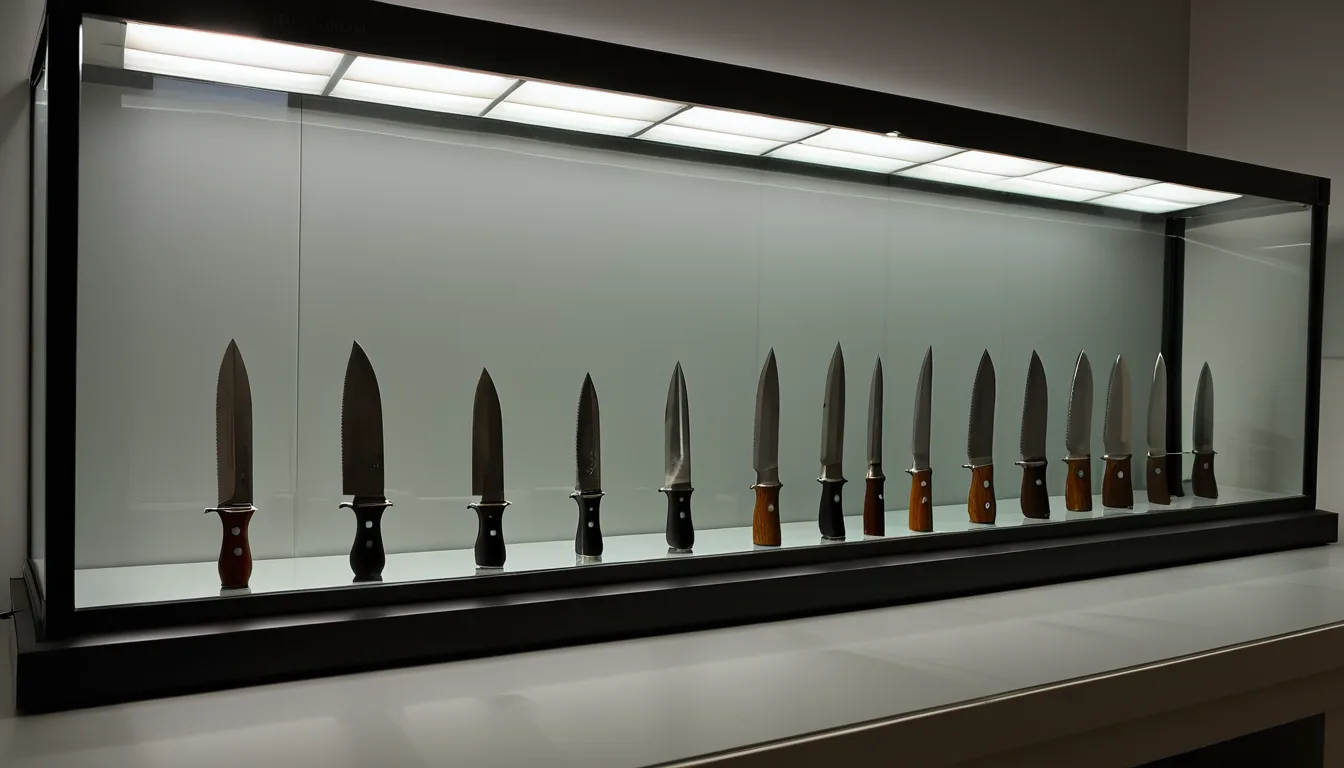
Records about the makers survive too. The Encyclopedia of Korean Folk Culture states: "According to the Gongjeon (工典) section of the Gyeongguk daejeon (經國大典), six dojajang (刀子匠) belonged to the Sanguiwon (尙衣院), the office responsible for the king's clothing, and made the jangdo used by the royal household." The staff assigned to royal jangdo comes with a number. The same encyclopedia reports that in 1774 some twenty jeonin and five or six dojajang opened shops, and that private production and distribution were lively as well. Makers worked both at court and in the market.
The place names come from the National Heritage Portal, which says that both the skill of making jangdo and the person who possesses that skill are called a jangdojang. The same source says jangdo were made in quantity in Seoul above all, as well as in Ulsan, Yeongju and Namwon, and it judges the jangdo of the Gwangyang area in Jeollanam-do to have a long history, fine workmanship and a wide variety of types. Factual description and evaluation mix in a single sentence there, so the evaluative part is best read as that source's own view.
The National Heritage Portal's statement that the manufacturing process developed into a refined one in the late Joseon period can also be set alongside this division of labor. These sources, however, give no grounds for attributing the development of the two crafts to the same cause.
The decline after the opening of Korea and Japanese Wikipedia's '銀粧刀' entry
Use of the jangdo declined. The Encyclopedia of Korean Folk Culture says that after the opening of Korea people gradually stopped wearing it, and that as the spread of Western-style pocket knives and similar goods reduced its use, the number of jangdojang who made them fell as well. Use of the object and the number of its makers are recorded together, and the passage reads as an argument that when use declines, the craft declines with it.
The jangdo has been introduced in other languages too. Japanese Wikipedia's '銀粧刀' entry describes the eunjangdo as a dagger (短刀) for a woman in Korea to protect her chastity if attacked by a man, and as a small silver-colored or silver knife received from her parents at the age of 16. The entry gives the reading as "eunjangdo," dates the origin to around 1400, and says the knife is said to carry the meaning of stabbing one's own thigh to master oneself when drawn to a man other than one's husband. It adds that old eunjangdo can be seen in museums and that they are now sold in Korean department stores and souvenir shops as well. The Japanese passages quoted here are the author's own translations.
The entry attaches a caveat to itself. A notice at its head says that no sources at all are given, or that they are insufficient, and that literature or information sources on the content are needed. The same entry also claims that the Hangul word "eunjangdo" is sometimes used in the sense of 銀粧道. Figures and claims in an entry carrying a sourcing notice cannot stand on their own as established fact. None of the sources used for this article explains Japanese dagger culture itself, so comparing the jangdo with Japanese daggers lies beyond what can be verified here.
Laying the two sets of accounts side by side, item by item, brings the differences out. The wearer is both men and women in the Korean institutional sources, a woman in the Japanese Wikipedia entry. The main function is everyday life, self-defense, self-harm and decoration in the Korean institutional sources, the protection of chastity in the Japanese Wikipedia entry. As for age, the Encyclopedia of Korean Folk Culture gives 12 or 13 in scholar-official households, while the Japanese Wikipedia entry gives 16. Readers can check the originals entry by entry at the Encyclopedia of Korean Culture of the Academy of Korean Studies, the Encyclopedia of Korean Folk Culture of the National Folk Museum of Korea, and the National Heritage Portal of the Korea Heritage Service.
| Item | Korean institutional sources | Japanese Wikipedia '銀粧刀' |
|---|---|---|
| Who wore it | Men on the jacket ties or belt; women on the belt beneath the skirt or as a norigae | Described as a dagger carried by women |
| Main function | Serves at once for everyday life, self-defense, self-harm and adornment | A knife for protecting chastity when attacked by a man |
| Age at which it was given | Given at 12-13 in scholar-official households, with instruction in proper conduct | Said to be received from the parents at 16 |
| Account of origin | Small knives excavated from tombs, the Goryeosa record of 945, the theory of a start after submission to the Yuan | Dates the origin to around 1400 |
| Sourcing | Materials from the Academy of Korean Studies, the National Folk Museum of Korea and the Korea Heritage Service | The entry carries a notice that sourcing is insufficient |
Related reading: Najeonchilgi: Why Korean Mother-of-Pearl Lacquerware Grinds Seashell Thin and Glues It On · Manggeon: The Korean Horsehair Headband That Showed a Man's Rank
Putting it together
The jangdo was a small knife worn by both men and women. The Encyclopedia of Korean Culture records its roles in everyday life, self-defense, self-harm and adornment; the Encyclopedia of Korean Folk Culture records a knife worn with everyday clothing that served for both self-defense and decoration. The symbolism of chastity attached through the Imjin War and the Manchu invasion, and the record in the Dongguk sinsok samgang haengsildo mentions suicide and attack together. The eunjangdo takes its name from its material, which is why it surfaces as a question of rank in the records of 1498 and 1670.
Forms divide along several axes: paedo and nangdo, gajeun jangsik and matbaegi, samo jangdo and mojaebi jangdo, nakjuk jangdo. Production is documented by the six dojajang of the Sanguiwon in the Gyeongguk daejeon's Gongjeon and by records of private shops, and the National Heritage Portal points to Seoul, Ulsan, Yeongju and Namwon, as well as Gwangyang. Japanese Wikipedia's '銀粧刀' entry describes the jangdo only as a woman's dagger and carries a notice that its sourcing is insufficient. Read against one another, the records lead to one conclusion: the jangdo cannot be reduced to a single meaning.