The short answer: the manggeon was a horsehair band that bound the topknot
The manggeon (網巾) was a headband that bound up the topknot and held the hair in place. The Encyclopedia of Korean Culture (Academy of Korean Studies) defines it as "an ornament worn around the head in order to bind up the topknot and keep the hair from falling loose," and adds that "it is therefore less a cap than a form of hair ornament, with a formal cap worn over it." The manggeon, then, can be seen not as a hat complete in itself but as the foundation that a cap rested on.
The Korea Heritage Service's National Heritage Portal states the material plainly. Its file on the manggeonjang describes the manggeon as a headband woven from horsehair to keep the hair from falling loose before a gat was put on. The Encyclopedia of Korean Folk Culture (National Folk Museum of Korea) calls it a band that wrapped the forehead of adult men in the Joseon period so their hair would not fall forward. All three accounts point to the same function: gather the hair, then set a cap or a gat on top of it.
Rank was read from the ornaments attached to the band. According to the Encyclopedia of Korean Folk Culture's entry on the manggeonjang, the gwanja (貫子) also symbolized status and class, and the English Wikipedia entry on the manggeon notes that materials such as gold, metal, bone, horn and jade indicated the wearer's social standing. What follows covers the manggeon's four parts, the gwanja and pungjam, horsehair and the stages of the maker's work, the relationship with Ming-era manggeon, and what changed after the 1895 edict on cutting topknots.
Dang, pyeonja, front and back: the four parts described in the Encyclopedia of Korean Culture
The Encyclopedia of Korean Culture's entry on the manggeon divides the shape into four pieces: "The manggeon consists of four parts — the dang, the pyeonja, the front and the back — and is shaped so that the front is high and the sides a little lower." That single sentence contains almost everything about how the band was used. A high front is understood to mean that it wrapped the forehead broadly, and lower sides can be taken to mean that some room was left around the ears.
The Encyclopedia of Korean Folk Culture's entry on the manggeon describes the same structure in three tiers, from bottom to top: the pyeonja, a narrow rim, at the bottom; the broad front and back in the middle; and the dang at the top, forming the loops that take the cords. The National Heritage Portal spells out what each part does. The dang draws the upper edge tight and the pyeonja the lower edge, while the front, woven like a net, wraps the forehead and the back wraps the back of the head.
Putting one on depended on the cords. The Encyclopedia of Korean Culture describes how "a fine dangjul cord is twisted through the loops of the dang, drawn tight around the head from behind and tied to the topknot," then adds that sturdy cords were attached to the ends of the pyeonja and that the gwanja was fixed to the pyeonja where it met the ears. A single cord pulled the band tight and was knotted at the topknot. These accounts can be read directly in the Encyclopedia of Korean Culture at the Academy of Korean Studies, the Encyclopedia of Korean Folk Culture at the National Folk Museum of Korea, and the National Heritage Portal of the Korea Heritage Service.
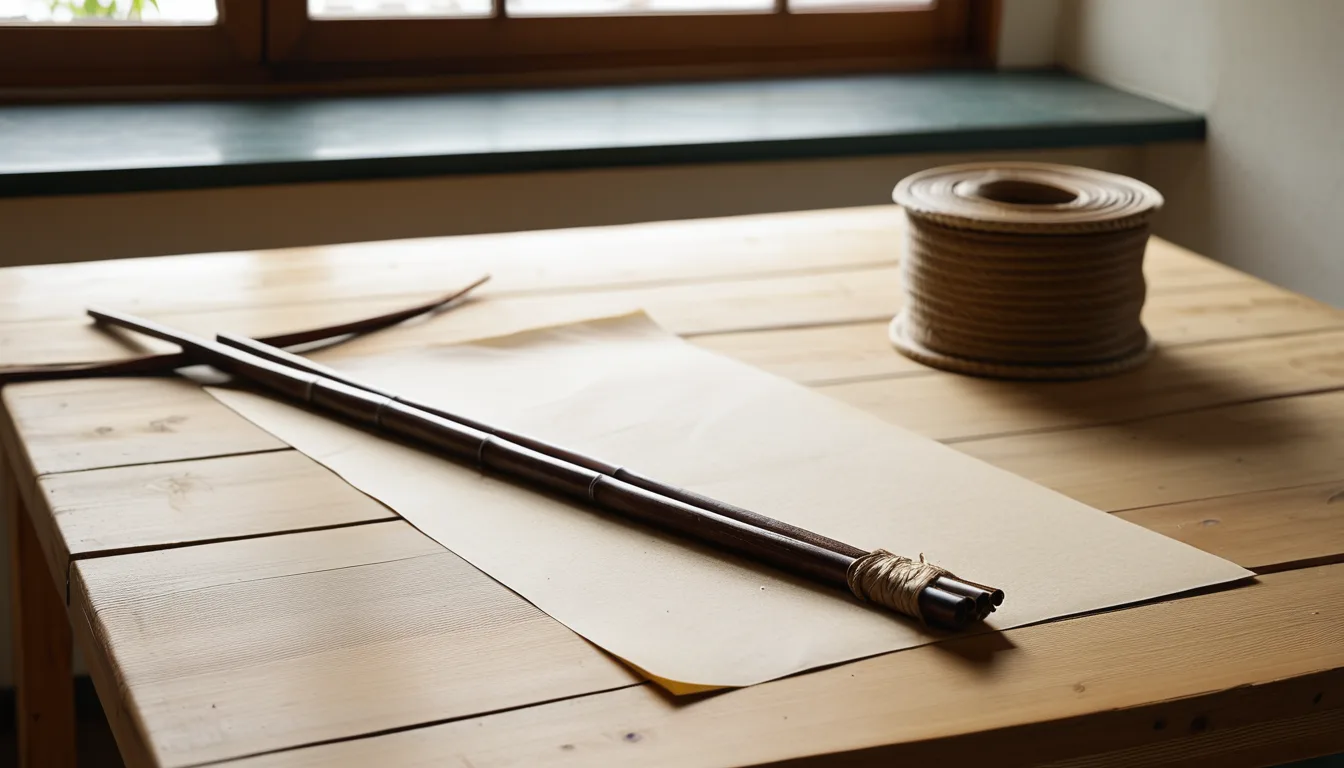
Gwanja and pungjam: graded materials set by the Gyeongguk daejeon and the Joseonbu
The Encyclopedia of Korean Folk Culture's entry on the manggeonjang explains the gwanja this way: "The gwanja 貫子 (a small button-shaped ring attached to the manggeon through which the cords are threaded) also served to symbolize status and class." The gwanja was the fitting through which the cords were threaded. At the same time, it is explained as a marker that told onlookers where the wearer stood. One small ring, it can be said, served both a practical function and a signalling one.
The materials were fixed by regulation. The same encyclopedia's entry on the manggeon states: "According to the Gyeongguk daejeon and the Joseonbu 朝鮮賻, the gwanja was graded in material by official rank, with jade prescribed for the first rank, gold for the second and silver for the third." Jade, gold and silver each corresponded to a rank. The gwanja, it can be read, was an ornament and at the same time part of the institutional system.
A pungjam (風簪) was fitted to the front of the band. The Encyclopedia of Korean Folk Culture's entry on the manggeon notes that it was attached above the forehead, together with the gwanja, to keep the gat from tipping backward, and it separates the materials by class: upper-class wearers used geumpae, amber, crystal and milhwa, commoners bone, horn or wood. The National Heritage Portal likewise notes that a gwanja and pungjam were sometimes attached to indicate class or simply as decoration.
The English Wikipedia entry on the manggeon casts a wider net, listing gold, metal, bone, horn and jade among the materials used and explaining that these indicated the wearer's social standing. Read alongside the distinctions in pungjam materials, this suggests that status did not hang on any single fitting. The gwanja, the pungjam and the ornamental materials were read together.
Horsehair and human hair: the manggeonjang's weaving of the pyeonja and attaching of the dang
Horsehair was the core material. The Encyclopedia of Korean Culture's entry on the manggeon states: "The materials used are horsehair (馬尾毛) or human hair (人毛), though human hair is not common and is used when repairing a worn manggeon." Human hair, it is explained, was a secondary material. The English Wikipedia entry on the manggeon notes that the band was usually woven from dyed horsehair.
The work came in three stages. The Encyclopedia of Korean Folk Culture's entry on the manggeonjang divides it into weaving the pyeonja, netting the body and attaching the dang, and its figures for the first stage are precise: "Forty strands of horsehair 75 cm long are set on the heddle at a width of 1.2 cm, and with the pyeonja knife serving as the reed or the shuttle, a narrow plain-weave band is woven like hemp cloth." This describes a narrow strip woven like cloth, which can be taken to show that manggeon making lay close to the craft of weaving.
The National Heritage Portal adds the finishing steps. Weaving the pyeonja leads into netting the front and back; once the dang is attached, the manggeon is boiled to soften it, then dyed and assembled. The same account gives the materials as horsehair from a horse's tail or human hair. An artisan who specializes in making manggeon, the English Wikipedia notes, is called a manggeonjang.
Horsehair manggeon in the gyeongja entry for Sejong's second year in the Annals of King Sejong, and Dong Yue's Joseonbu
Records of exchange between Joseon and Ming survive. The Encyclopedia of Korean Culture's entry on the manggeon states: "The Annals of King Sejong, in the gyeongja entry for his second year, records horsehair manggeon (馬尾網巾) presented to Ming envoys, and the Joseonbu 朝鮮賦 by Dong Yue (董越), a Ming envoy who came in 1488 (the 19th year of Seongjong), also states that Joseon's manggeon were all made of horsehair." Separated in time, the two records point to the same material. Horsehair manggeon were set down as a distinctive feature of Joseon.
The Encyclopedia of Korean Folk Culture's entry on the manggeonjang gives two dates: in 1420 (the second year of Sejong) and again in 1429 (the eleventh year), the king presented Joseon-style horsehair manggeon to Ming envoys. The Encyclopedia of Korean Culture reads the flow of materials this way: "It is therefore thought that after the manggeon entered Korea and took local form, the method of using horsehair as its material was in turn re-exported to China." The English Wikipedia entry on the manggeon likewise suggests that Chinese manggeon took up horsehair from Joseon. Both accounts frame this as a supposition rather than a settled fact.
The Chinese record passes the origin along as legend. The Chinese Wikipedia entry on the manggeon (網巾) relates that the Ming founder Zhu Yuanzhang (朱元璋), out in plain clothes, saw a Daoist wearing a manggeon and asked about it. The Daoist's reply: "此曰网巾。裹以头,则万髮俱齐。" Wrap the head with it, and every hair falls into order. After returning to the palace, the same entry says, Zhu Yuanzhang ordered all adult men to wear the manggeon, regardless of occupation or station.
The English Wikipedia entry on the manggeon says the Joseon manggeon first came from China and over time developed features of its own. Whether the legend is true cannot be settled from these sources alone. What they do establish is that two regions refined an object of the same name in different directions.
The Gyeongguk daejeon's manggeonjang, Park Mal-nam and Nanjing's manggeon market
Production also went on inside government offices. The Encyclopedia of Korean Folk Culture's entry on the manggeonjang cites the Gyeongguk daejeon: the manggeonjang who made horsehair bands were enrolled as capital artisans, two in the Board of Works and four in the Royal Wardrobe. The same entry compares the numbers in royal protocol records: "The only manggeonjang on record is Park Mal-nam 朴唜男, who worked at the royal wedding of Crown Prince Sohyeon in 1627 (the fifth year of Injo), whereas a list of 578 gwanja makers can be confirmed." How many artisans the records preserve differs sharply from trade to trade.
Demand rose later. The same entry notes that in the late eighteenth century, under Jeongjo, a growing yangban class increased demand for manggeon, which private workshops then produced in quantity. The English Wikipedia entry on the manggeon records regional reputations: Tongyeong manggeon were fine and of good quality, Seoul manggeon had good pyeonja, Nonsan manggeon were said to have the best back and Hwangdeung manggeon the best front.
Chinese records cover making and selling as well. The Chinese Wikipedia entry on the manggeon (網巾) notes that merchants and shops produced and sold the bands, forming an industry of their own, and that the place name manggeonsi (网巾市), the manggeon market, still survives in Nanjing (南京). An adult man who went without a manggeon, it adds, was regarded as an "uncivilized" (「不文明」) street vagrant, and men had a manggeon placed on them as part of the coming-of-age rite. It can be read that the band also served as a marker of adulthood.
The manggeon after the 1895 edict and the 1980 designation of the manggeonjang
The decline fits in a sentence. The Encyclopedia of Korean Culture's entry on the manggeon states: "After the edict on cutting topknots was issued in 1895, demand for the manggeon fell sharply, and today it is said to be worn by some 5,000 people in special organizations or among the elderly." That figure is reported rather than counted. When hairstyles change, it can be said, the things worn beneath them lose their place too.
The English Wikipedia entry on the manggeon sketches a broader background, attributing the disappearance of both types of manggeon to state-led hair-cutting edicts during the Korean Empire and the Japanese colonial period and to the spread of Western hairstyles. No single cause is singled out. Policy and everyday habit stand side by side.
The craft itself survived through official status. The Encyclopedia of Korean Culture notes that manggeon making was designated an Important Intangible Cultural Property, now a National Intangible Heritage, in November 1980; the National Heritage Portal's file on the manggeonjang gives the date as 17 November 1980. The Encyclopedia of Korean Folk Culture's entry on the manggeonjang traces the line of holders. After Im Deok-su died, no manggeon weaver was left on the mainland, so Yi Su-yeo of Jeju Island was recognized as holder in 1987; when Yi died, her daughter Kang Jeon-hyang was recognized in 2009 and carries the skill forward.
Joseon and Chinese manggeon: the recorded differences, point by point
The two regions shared a name but not a shape. The first difference is form. The English Wikipedia entry on the manggeon describes the Chinese version as covering the top of the head like a cap, while the Joseon manggeon was a round headband with cords at both ends. The National Heritage Portal's account agrees: the front of the Joseon band wraps the forehead and the back wraps the back of the head.
The second difference is how it was fastened. The Chinese Wikipedia entry on the manggeon (網巾) states: "通常使用 丝网 编成,以 帛 作边,内引以小 绳 ,穿过两侧耳边的小环(名曰 贯子 ),并在脑后以及 发髻 处扎结固定。" It was woven from silk netting with a silk-cloth edge, and a small cord was threaded through the little rings beside the ears and knotted at the nape and the topknot. The Joseon manggeon, by contrast, had its cords twisted through the loops of the dang, drawn tight around the head from behind and tied to the topknot. The third difference is material: Dong Yue's Joseonbu recorded that Joseon manggeon were all made of horsehair, and the English Wikipedia says they were usually woven from dyed horsehair.
The fourth point is how the band spread. According to the Chinese Wikipedia entry on the manggeon (網巾), Joseon consulted Ming dress and cap regulations and distributed the manggeon nationwide. The fifth is the nasumang (懒收网): the same entry says a later form gathered only the forehead and did not tie the topknot, and that the Joseon nasumang differed from the Chinese version of the time. The sixth is surviving artifacts. The Encyclopedia of Korean Folk Culture's entry on the manggeon says the Chinese-style form can be confirmed in a manggeon recovered from the tomb of Grand Prince Neungchang, Yi Jeon (1599–1615), and sums up the function this way: "The manggeon is a kind of headband, woven like a net and worn around the forehead to keep the hair in order."
Related reading: How the Joseon Gat Became an Institution: Legal Codes, the Annals, and the Three Artisans of Gannil · Did Ondol Really Become a World Standard? ISO 11855, Floor Heating and Heat Pump Efficiency Checked
In summary
The manggeon was a horsehair headband that bound up the topknot and held the hair in place. The Encyclopedia of Korean Culture describes it as a form of hair ornament rather than a cap, with a formal cap worn over it. Rank was read from the gwanja and pungjam attached to the band and from the materials of its ornaments: the Gyeongguk daejeon and the Joseonbu prescribed jade for the first rank, gold for the second and silver for the third.
The making came in three stages: weaving the pyeonja, netting the body and attaching the dang. The relationship with Ming-era manggeon runs in two directions in the records — the account that the Joseon manggeon came from China, and the account that the use of horsehair is thought to have been re-exported to China. Demand fell sharply after the 1895 edict on cutting topknots, and manggeon making survived through its designation on 17 November 1980. Whether the legend is true, and exactly when the band fell out of use, cannot be settled from these sources alone.