The short answer
A norigae is an ornament that women of the Joseon dynasty hung from their clothing, and it has five parts: the belt hook and the cord, the main pendant, the knots and the tassel. One main pendant makes a danjak norigae; three carried as a single set make a samjak norigae. Taken together, the encyclopedia entries suggest that the samjak norigae was the form used on more formal occasions.
The norigae entry in the Encyclopedia of Korean Culture (Academy of Korean Studies) defines the object this way: "A norigae is an ornament worn by women on the ties of a jeogori jacket or at the waist of a skirt." The definition fixes two points on the body — the jacket ties and the skirt waist — so where a norigae hangs comes before any mention of what it is made of.
The same entry adds that necklaces and earrings declined among women's ornaments during the Joseon dynasty while the norigae developed in many forms instead. The Korean name has its own paper trail: the Encyclopedia of Korean Folk Culture (National Folk Museum of Korea) points to the word "norigaeyet" in the Sukmyeong sinhancheop (淑明宸翰帖) as evidence that norigae was in use from an early date. According to the English Wikipedia article on the norigae, the word originally meant "a pretty and amusing thing" or "a favourite ornament".
This article covers four things: the theory that the norigae descends from the Silla yopae, the symbolism attached to each ornament, the techniques behind the knots and tassels, and records of surviving pieces.
The five parts of a norigae in the Encyclopedia of Korean Culture
The norigae entry in the Encyclopedia of Korean Culture lists the components in a single line: "A norigae consists of a belt hook (帶金), a cord (多繪), the main pendant (三作 or 單作), knots (每緝) and a tassel (流蘇)." Five names in one sentence, and three of them — the cord, the knots and the tassel — carry Chinese-character names as well: dahoe, maejip and yuso. Every component had a name of its own in Chinese characters.
That same list puts samjak or danjak in parentheses after the pendant, which suggests the number of main pendants belonged to the structure from the start. The English Wikipedia article counts differently, describing a norigae as having three basic parts: the main ornament, elaborate knotwork and a tassel at the bottom. A count of five and a count of three both exist.
The cord gets a more concrete treatment in the Encyclopedia of Korean Folk Culture: "The cord is usually a 'dahoe 多繪', a braid woven from several strands of silk thread, with knots [每楫] tied into it and a tassel hanging below." A single cord carries both the knots and the tassel, and the phrase about weaving several strands of silk thread shows that the cord is itself a woven textile.
The belt hook did not begin as a women's ornament. The same encyclopedia explains that the daejeon was attached mainly to a man's waist cord, to hang a small knife, a fan or similar items, and that women appear to have taken it up for norigae only in the late Joseon period. One of the five parts, then, joined the set late.
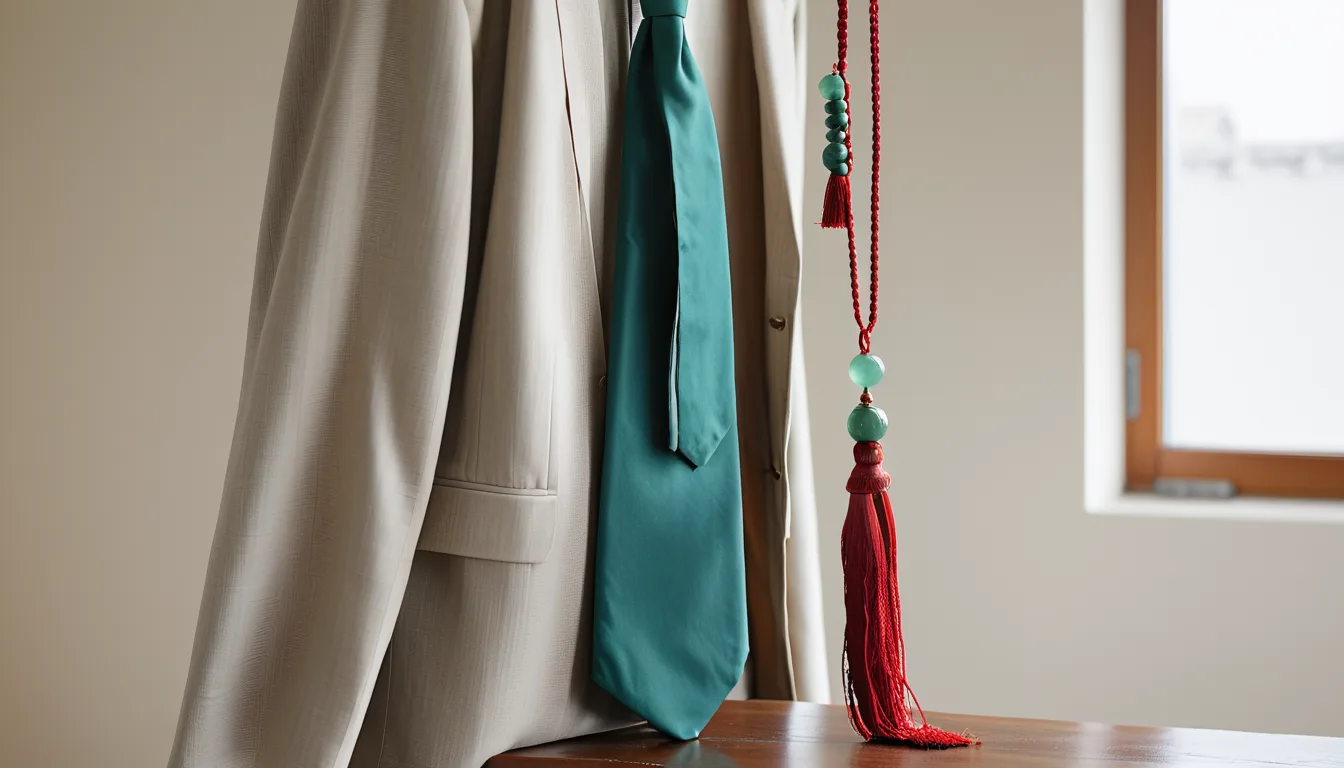
Danjak, samjak and the names in the Jeongmi garyesi ilgi
The number of main pendants changes the name. The norigae entry in the Encyclopedia of Korean Culture says that one or three main pendants were hung: a norigae with one was a danjak or an oejul norigae, while a set of three was a samjak norigae. The Encyclopedia of Korean Folk Culture adds the occasion, distinguishing danjak from samjak by the number of pendants and noting that women wore a danjak on ordinary days and a samjak on festive ones.
The names of samjak norigae then split in two directions. According to the samjak norigae entry in the Encyclopedia of Korean Culture, when the three pieces differed in shape but shared a material, the set was called a geum-samjak, eun-samjak, ok-samjak, bichwi-samjak, jamano-samjak, milhwa-samjak and so on. When they differed in material but shared a shape, the set was sometimes called a horobyeong-samjak, tuho-samjak, bakjwi-samjak or dongja-samjak. The name follows whichever of the two the three pieces hold in common, so what they share is what the name reveals.
Naming was not always handled this way. The Encyclopedia of Korean Folk Culture cites a document listing goods for a royal wedding: "In the Jeongmi garyesi ilgi (丁未嘉禮時日記, 1847), which records the goods for a royal wedding, neither the word norigae nor the word pae appears." The same encyclopedia explains that the record named items by material and shape, as in "sujeong ssangaji." The names in the inventory are not the same as the classification terms used today.
The Silla yopae and the gold bells of the Goryeo dogyeong
Statements about the origin are carefully worded. The Encyclopedia of Korean Folk Culture puts it this way: "The Silla yopae (腰佩), hung with various ornaments from a belt, is generally considered the origin of the norigae." The sentence ends in "is considered" — an introduction to the prevailing view rather than a verdict.
The Encyclopedia of Korean Culture is equally tentative. Its entry supposes that the custom of hanging a yopae from a belt in Silla, or of hanging gold bells or a gold pouch filled with fragrance from the belt tied over a robe in Goryeo, had turned by the Joseon dynasty into the norigae worn on jacket ties or at the skirt waist. The English Wikipedia article says the true prototype appears to be the waist ornament worn in the Silla period. All three point to the same object and differ only in how firmly they say so.
The Encyclopedia of Korean Folk Culture also cites a Goryeo record: the Goryeo dogyeong (高麗圖經) describes a custom of women wearing gold bells on coloured cords and silk scent pouches at the waist. Set the three periods side by side and the differences stand out. In Silla it was a yopae hung from a belt; in Goryeo, gold bells or a gold pouch worn on the belt tied over a robe; in Joseon, a norigae worn on the jacket ties or at the skirt waist. Across the three records, the place of attachment moves from the waist to the ties of the jacket.
Tiger claws and a pair of jade butterflies
The combinations in a samjak norigae followed a rule. According to the Encyclopedia of Korean Folk Culture, the three pendants were assembled so that they shared something in shape or material, and the set of three could also symbolise heaven, earth and humanity (天·地·人) — meaning attached to the number itself.
The meaning of each ornament survives as a list. The same encyclopedia records: "Tiger claws, a symbol of courage that drove off evil spirits; the tuho (投壺), which captured and expelled misfortune; bells, which drove off wickedness and summoned good fortune; and gwaebul, which drove off the three calamities (三災), were used in the sense of warding off misfortune, while bats and cicadas symbolised the five blessings (五福) and the five virtues (五德)." The first four keep something out; the last two invite something in. A single set carried both warding and wishing.
A pair of jade butterflies even had an assigned position: the Encyclopedia of Korean Folk Culture says the pair was worn at the centre, where it signified conjugal love and fertility. The English Wikipedia article sorts the motifs of the main ornament into five groups — animals, plants, everyday objects, written characters and religious symbols — so the tuho and the bells can be seen as closer to everyday objects, and the tiger claw and the cicada closer to animals. Read side by side, the two accounts organise the same ornaments by different criteria: meaning in one case, subject matter in the other.
Techniques from the dorae knot to the nakjibal tassel
The knots count as part of the decoration. The Encyclopedia of Korean Folk Culture records: "The knots are decoration that makes the main pendant stand out more beautifully, and the knots used on norigae were mainly the dorae knot, the saengjjok knot, the butterfly knot, the chrysanthemum knot, the janggo knot and the byeongari knot." Six names in one sentence — but the point to hold onto is the role assigned to the knots: to show off the main pendant.
The tassels have names too. The same encyclopedia calls the decorative tassel at the bottom of a norigae a yuso and distinguishes bong tassels, strawberry tassels and nakjibal tassels according to how they were made. The classification rests on method of manufacture rather than appearance, so to look at a tassel is to see the process that produced it.
The same encyclopedia lists the techniques for ornamenting the main pendant separately: nisa work, in which gold is applied to metal; seop-ok work, in which jade is pierced to carve a pattern; and enamel or jadeite ornament. The English Wikipedia article explains how sizes were matched — a large main ornament goes with small knots, a small one with large knots. Knot size, in other words, was adjusted to the size of the pendant.
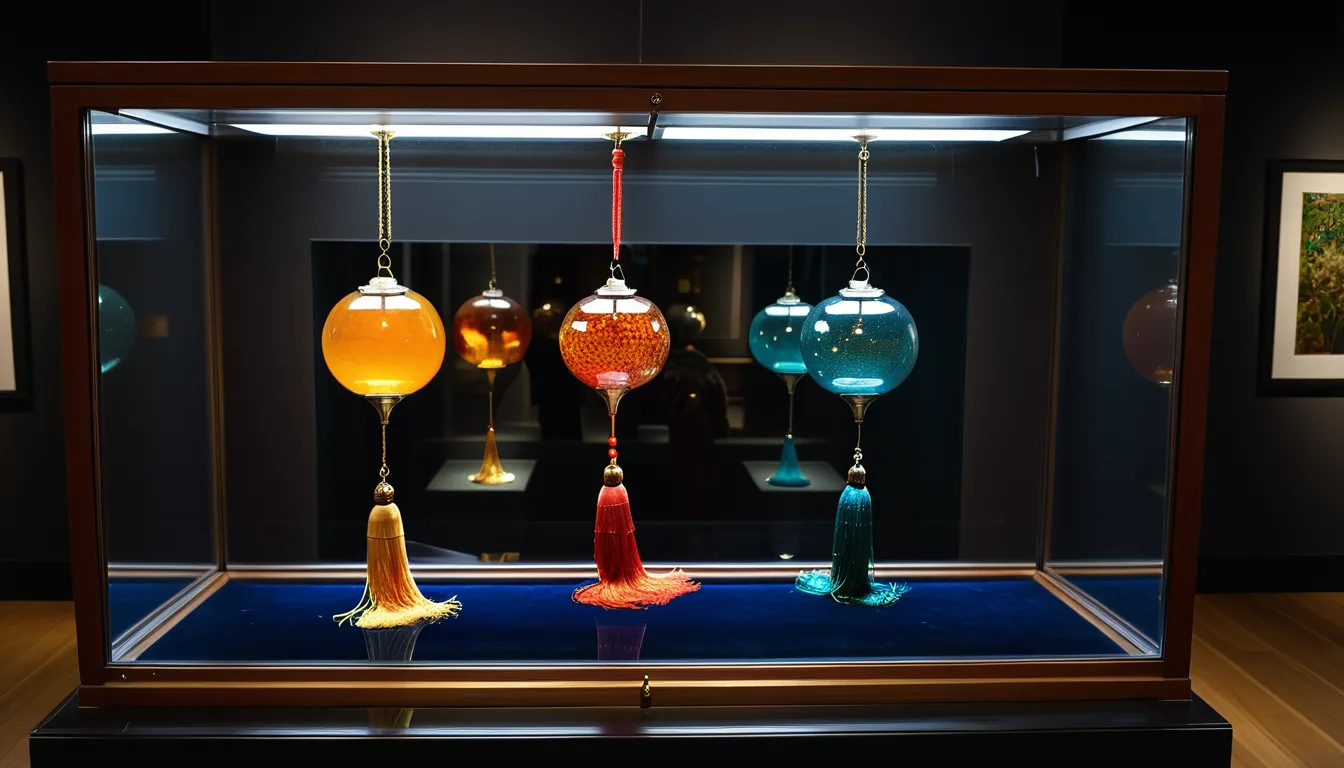
Daesamjak and samcheonju norigae in the Gungjung balgi
Samjak norigae were graded. The samjak norigae entry in the Encyclopedia of Korean Culture divides them into large, medium and small samjak norigae according to the rarity and the size and scale of the gold and silver, jade stones and precious ornaments used. The same entry records that the large samjak norigae, the most lavish and the biggest, is said to have been used mainly at court, and adds that the medium samjak norigae was worn at court and by the upper classes, while the small samjak norigae was worn by young women and children.
Even at court, eligibility was divided. The Encyclopedia of Korean Folk Culture records: "Even at court, the only people who could wear a samjak norigae were the queen and the crown princess, the first-rank naemyeongbu, princesses of both ranks and the women of the royal clan, and high-ranking oemyeongbu." The list is specific down to court rank. The same encyclopedia notes that the Gungjung balgi records a variety of samjak norigae — "daesamjak, jungsamjak, sosamjak, sososamjak" — along with danjak norigae, and explains that a daesamjak is said to have been worn with full ceremonial dress, a jungsamjak with the lesser ceremonial dress of the dangui, and a sosamjak with everyday clothes.
One passage describes the narrowest eligibility of all. The norigae entry in the Encyclopedia of Korean Culture records: "The samcheonju (三千珠) norigae, said to have been worn only by the queen, symbolised the samcheondaecheon segye (三千大天世界) of Buddhism, and very large pearls are said to have been strung three at a time." Form and meaning sit in a single sentence — and here too the phrasing reports what is said rather than asserting it.
Other records draw the circle wider. The English Wikipedia article on the norigae says that in Joseon women of many classes, from the queen down to commoners, all wore norigae, and that King Yeonsangun of Joseon used the lavishness and size of norigae to mark the rank of the women around him. On the main ornaments of a daesamjak, the Encyclopedia of Korean Folk Culture offers a description: the set worn at major occasions such as court ceremonies or a commoner's wedding was called a daesamjak norigae, and its main ornaments were often coral, a pair of jade butterflies and a piece of patterned amber.
Seasonal records in the Sajeol boksaek jajang yoram and the National Folk Museum's holdings
Records of seasonal wear also survive. The norigae entry in the Encyclopedia of Korean Culture reports: "Also, according to season, from Dano in the fifth month women are said to have worn single-strand norigae of white jade or jadeite, and from Chuseok in the eighth month samjak norigae." The markers are a month and a holiday, with Dano and Chuseok as the turning points — so the danjak–samjak distinction appears to have been tied to the seasons as well.
Another entry cites another source. The samjak norigae entry in the Encyclopedia of Korean Culture draws on the Sajeol boksaek jajang yoram (四節服色自藏要覽): samjak norigae of jade or beads were worn in autumn, and in winter women wore samjak norigae of jamano agate, amber and the like. Both records pair a season with a material.
Surviving pieces are documented as well. The norigae entry in the Encyclopedia of Korean Culture describes one of them: "Three pendants of coral, a lump of amber and a pair of jade butterflies, with tassels in three colours — blue, red and yellow; used mainly at court. Collection of the National Folk Museum of Korea." Three pendants and three tassel colours in one sentence, and the pair of jade butterflies matches the description of the main ornaments of a daesamjak norigae.
Readers who want the original text have two places to go: the Encyclopedia of Korean Culture, run by the Academy of Korean Studies, and the Encyclopedia of Korean Folk Culture, run by the National Folk Museum of Korea. Look up the entries for norigae and samjak norigae in those two databases and you will find the passages quoted here.
Related reading: How the Joseon Gat Became an Institution: Legal Codes, the Annals, and the Three Artisans of Gannil · Did Ondol Really Become a World Standard? ISO 11855, Floor Heating and Heat Pump Efficiency Checked
In summary
The frame of a norigae has five parts: the belt hook and the cord, the main pendant, the knots and the tassel. The number of main pendants separates danjak from samjak. According to the Encyclopedia of Korean Folk Culture, women wore a danjak on ordinary days and a samjak on festive ones, and at court the samjak norigae was limited to the queen and the crown princess, the first-rank naemyeongbu, princesses of both ranks and the women of the royal clan, and high-ranking oemyeongbu. The set of three can be seen as standing at the most formal end of the scale.
Every account of the origin is cautious. One sentence calls the Silla yopae the generally accepted origin of the norigae; another supposes that it had turned into the norigae by the Joseon dynasty; a third says the true prototype appears to be the waist ornament of the Silla period. The meanings of the ornaments and the names of the knots and tassels, by contrast, come through clearly as lists. Some passages connect to surviving objects, such as the holdings of the National Folk Museum of Korea. Beyond that, these records alone do not establish dates or lines of descent.