The short answer: from Seonjo's temporary residence to an emperor's palace
Deoksugung (德壽宮) began as a temporary residence for King Seonjo after the Imjin War. It later became Gyeongungung (慶運宮) and then the imperial palace of the Korean Empire. It received its present name in 1907. The Encyclopedia of Korean Culture, published by the Academy of Korean Studies, says the site was originally the private residence of Grand Prince Wolsan. Once Seonjo moved in, it became known as the Jeongneung-dong Haenggung, or temporary palace. This article is Part 4 of a seven-part series.
The history of Deoksugung can be read as a history of its names. In order, it was called Jeongneung-dong Haenggung, Gyeongungung, Seogung (the West Palace), the imperial palace and Deoksugung. Each name can be seen as reflecting the role the palace played at the time. So knowing the order makes its long history easier to follow.
From temporary palace in 1593 to Deoksugung in 1907: a history told through names
The Royal Palaces and Tombs Center of the Korea Heritage Service says the palace became a temporary royal residence in 1593, the 26th year of Seonjo's reign. An overview from the Ministry of Culture, Sports and Tourism (KOCIS) notes that this was one year after Japan's 1592 invasion. In 1611, the third year of Gwanghaegun's reign, the palace was named Gyeongungung. The Royal Palaces and Tombs Center explains that at this point Gyeongungung became a formal palace with a full royal court. Later, Seonjo's queen, Queen Dowager Inmok, was confined there, and as a result the palace was demoted to Seogung, the West Palace.
When Gojong proclaimed the Korean Empire in 1897, Gyeongungung became the seat of the imperial court. In 1904, the eighth year of Gwangmu, a great fire destroyed most of its buildings. In 1907, Gojong abdicated under pressure from Imperial Japan. The National Institute of Korean History's synopsis of the Annals of King Gojong dates his abdication to July 20. The palace was then renamed Deoksugung. Reading this alongside the series' installment on Changdeokgung Palace lets you compare the histories of Seoul's palaces.
The Encyclopedia of Korean Culture's entry on Deoksugung explains what the new name meant: "It was renamed Deoksugung (德壽宮) as a wish for Gojong's long life." The Royal Palaces and Tombs Center places the same renaming after Gojong's forced abdication under Japanese pressure. Read side by side, the two records suggest a single renaming recorded from two angles: one stresses the abdication, the other a prayer for longevity. This makes it clear that "Deoksugung" was not the palace's original name.
1896 to 1897: Gojong's refuge at the Russian Legation and his return to Gyeongungung
The National Institute of Korean History describes the scene before dawn on February 11, 1896, the 33rd year of Gojong's reign. Two palanquins of the kind used by court ladies slipped quietly out of Yeongchumun Gate at Gyeongbokgung. That day, Gojong moved to the Russian Legation. He stayed there for a year and returned to Gyeongungung on February 20 of the following year.
Uri History Net, run by the National Institute of Korean History, describes other steps Gojong took while at the legation. He had the Queen Dowager and the Crown Princess moved to Gyeongungung, which stood close to the Russian Legation. On August 10, 1896, he ordered repairs to Gyeongungung. The spirit and remains of Queen Myeongseong (明成王后) were also moved there from Gyeongbokgung. According to the National Institute of Korean History, reconstruction work on Gyeongungung went on at the same time.
The synopsis of the Annals of King Gojong says Gojong returned to the palace in February 1897. In October of that year, he proclaimed the founding of the Korean Empire (大韓帝國) and adopted the era name Gwangmu (光武). Uri History Net dates his enthronement as emperor at the Hwangudan Altar (圜丘壇) to October 12, 1897. The Encyclopedia of Korean Culture adds that after his return, Jeukjodang (卽阼堂) served as the main throne hall. Taken together, these accounts suggest that Gyeongungung had been prepared for his return a full year in advance.
Seokjojeon, completed in 1910, and Deoksugung's Western-style buildings
Seokjojeon is a Western-style stone building constructed during the Korean Empire period (1897–1910). The Encyclopedia of Korean Culture describes it as a three-story stone building with a 54 m facade and a width of 31 m. The KOCIS article says it calls to mind a Greek temple. It served as a reception hall for guests and as the living quarters of the emperor and empress.
The building's use changed several times after it was finished. According to the Ministry of Culture, Sports and Tourism article, Seokjojeon became a gallery of modern Japanese art soon after its completion in 1910. The Royal Palaces and Tombs Center notes that the US–Soviet Joint Commission held its first and second sessions there between 1946 and 1947. Today Seokjojeon houses the Daehan Empire History Museum, restored by the Cultural Heritage Administration.
Jeonggwanheon is another Western-style building inside Deoksugung. The Encyclopedia of Korean Culture describes it as the place where Gojong took refreshments and listened to music. Together, the two buildings show that Deoksugung was not made up of wooden halls alone. Seokjojeon alone can be read as a building where the eras of imperial palace, exhibition hall, conference hall and history museum overlap.
Gojong's death at Hamnyeongjeon in 1919 and a tour starting at Daehanmun
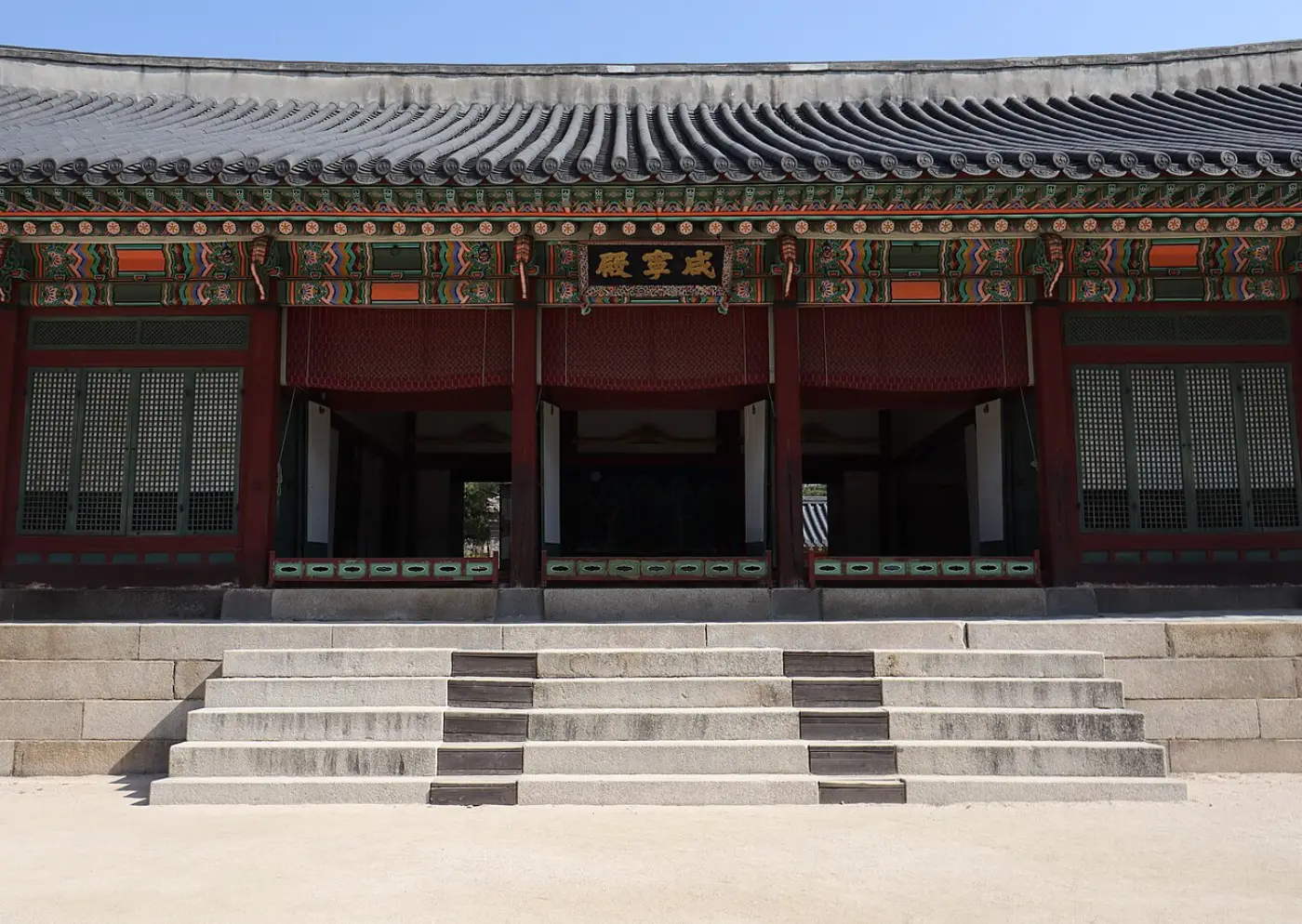
The Encyclopedia of Korean Culture says Gojong lived at Hamnyeongjeon for 13 years after giving up the throne in 1907. He died there in 1919. The synopsis of the Annals of King Gojong says he was demoted to Yi Taewang (李太王) in 1910 and dates his death to the first month of 1919. It goes on to say that in March 1919, ahead of his state funeral (因山), the Gimi Independence Movement broke out across the country. By these accounts, Hamnyeongjeon was the last residence of a Korean Empire emperor.
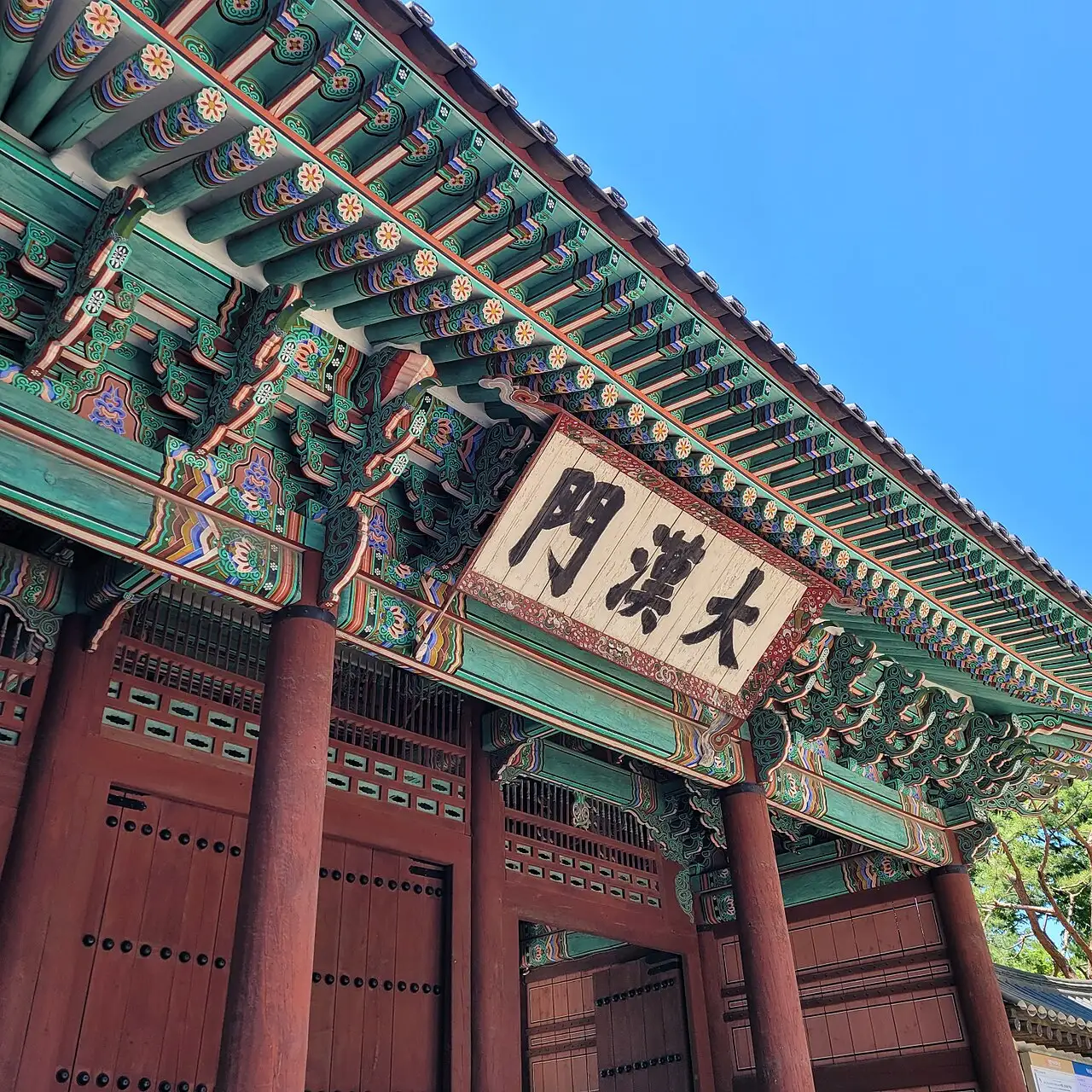
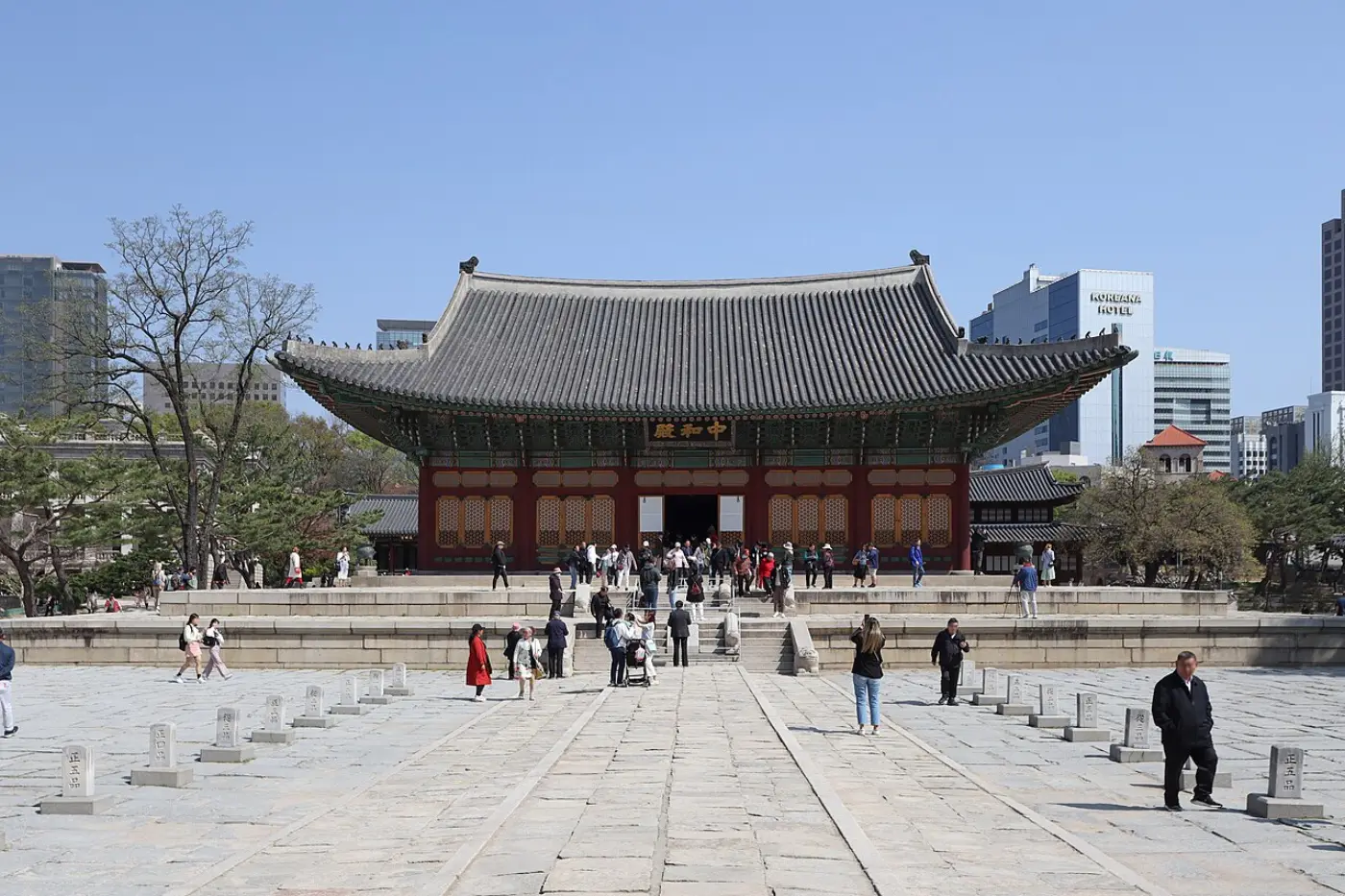
Start your visit at Daehanmun, the main gate. It was originally Daeanmun, the gate east of the main hall. During reconstruction work in 1906, it was repaired and renamed Daehanmun. Urban planning in 1968 moved the palace wall inward, and the gate itself was moved inside in 1970. From there, see Junghwamun Gate and Junghwajeon Hall, then head to Hamnyeongjeon. These three buildings were designated Treasures in 1985.
Seogeodang and Jeukjodang also deserve a close look. The surviving Seogeodang was rebuilt in 1906 and was never painted with dancheong. Its bare wood makes an interesting contrast with the dancheong painting on other palace buildings. The name Jeukjodang has been in use since King Injo took the throne in 1623. A signboard reading "Gyeongungung (慶運宮)" hangs high on the pillars in front of Jeukjodang's main hall. The palace's old name survives inside the palace itself.
| Year | Event | Source |
|---|---|---|
| 1593 | Became King Seonjo's temporary residence, known as the Jeongneung-dong Haenggung | Royal Palaces and Tombs Center (Korea Heritage Service); Ministry of Culture, Sports and Tourism (KOCIS) |
| 1611 | Named Gyeongungung; became a formal palace with a full royal court | Royal Palaces and Tombs Center (Korea Heritage Service); Ministry of Culture, Sports and Tourism (KOCIS) |
| 1897 | Gojong returned in February; the palace became the imperial palace when the Korean Empire was proclaimed in October | National Institute of Korean History; Royal Palaces and Tombs Center (Korea Heritage Service) |
| 1904 | A great fire destroyed most of the buildings | Academy of Korean Studies; Ministry of Culture, Sports and Tourism (KOCIS) |
| 1907 | Renamed Deoksugung after Gojong's abdication | Royal Palaces and Tombs Center (Korea Heritage Service); Academy of Korean Studies |
| 1919 | Gojong died at Hamnyeongjeon | Academy of Korean Studies; National Institute of Korean History |
Summing up
Throughout Deoksugung's history, its name changed along with its status. The temporary palace became a formal palace, was demoted to Seogung and then became an imperial palace. Seogeodang, rebuilt in 1906 after the great fire of 1904, still stands. It is a reminder that some of the buildings visitors see today postdate that fire.
On site, be sure to see both the Gyeongungung signboard at Jeukjodang and the Daehan Empire History Museum in Seokjojeon. Together, they let you compare the periods behind the palace's two names, Gyeongungung and Deoksugung, in one place. The original texts are available in the Deoksugung and Jeukjodang entries of the Encyclopedia of Korean Culture. The Deoksugung overview on the Royal Palaces and Tombs Center's website is also worth reading.