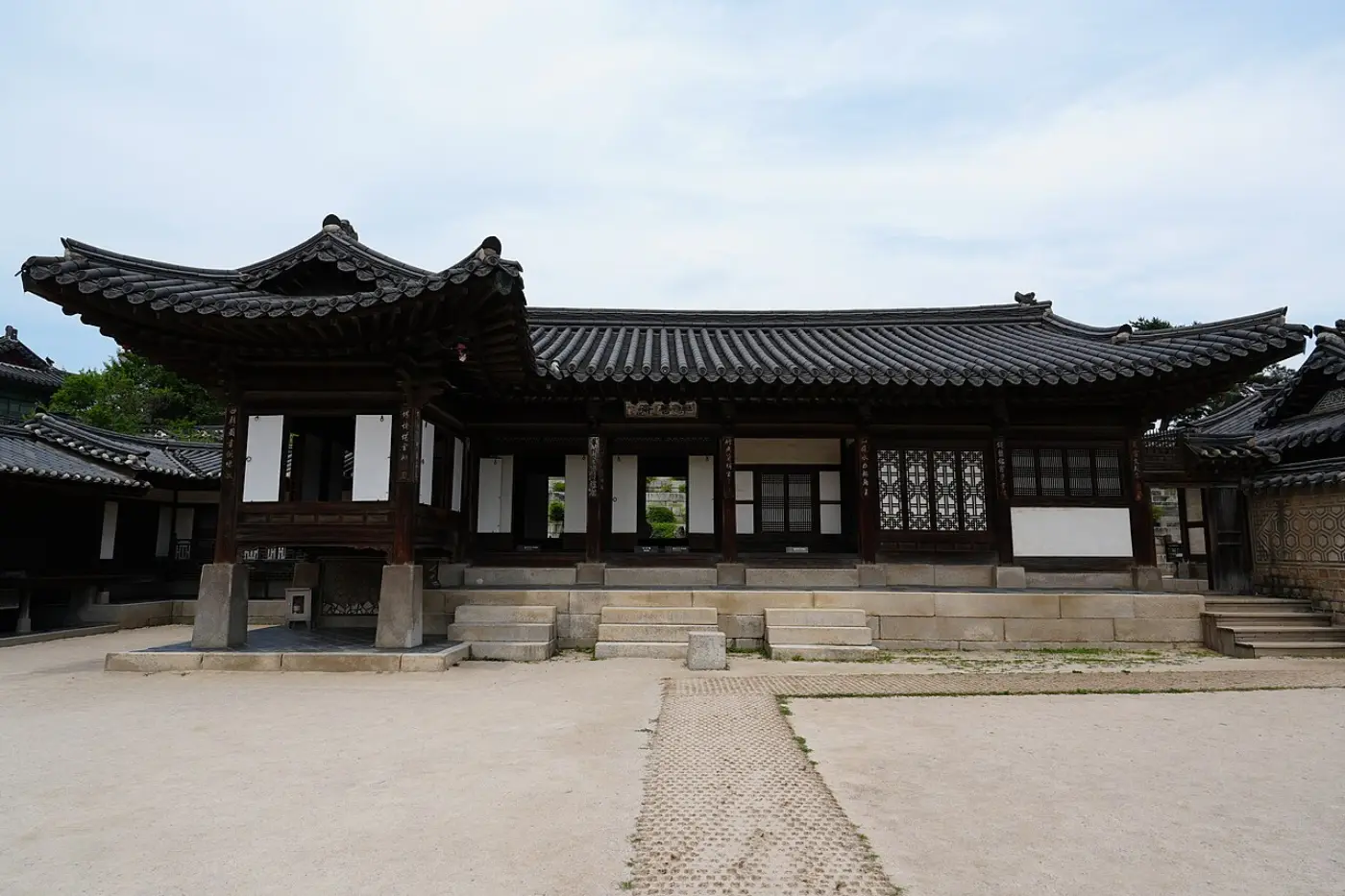
The short answer: first rebuilt after the Imjin War, it took over the role of main palace
According to the Changdeokgung page of the Royal Palaces and Tombs Center of the Korea Heritage Service, Changdeokgung (昌德宮) was the first of the royal palaces to be rebuilt after the Imjin War. From then until Gyeongbokgung was reconstructed in 1867, it served as the de facto main palace for about 270 years. It had been founded in 1405 (the 5th year of King Taejong) as a secondary palace (離宮) to Gyeongbokgung, the main palace. This article is part 2 of a seven-part series.
Changdeokgung was inscribed on the UNESCO World Heritage List in 1997. The Royal Palaces and Tombs Center attributes this recognition to its layout, which harmonizes with the surrounding terrain. A rear garden lies to the north of the palace, and the Nakseonjae compound is where the last imperial family of the Korean Empire lived.
The Annals entry for the 6th day of the 10th month of Taejong's 4th year (1404) and the founding in 1405
The story of the palace's founding begins with an entry dated the 6th day of the 10th month of Taejong's 4th year (1404) in the Annals of the Joseon Dynasty, which the National Institute of Korean History publishes online. In it, Taejong says that floods and droughts struck repeatedly while he was in Songdo (松都), so he sought his officials' views. He then divined the fortunes of the candidate capitals by casting coins (cheokjeon) at the Jongmyo shrine. Sindo (Hanyang) drew two auspicious results to one inauspicious, while Songgyeong (松京) and Muak (毋岳) each drew two inauspicious to one auspicious.
The same entry records the decision: "He again fixed the capital (都邑) at Hanyang (漢陽) and at last ordered a secondary palace (離宮) to be built at Hyanggyo-dong (鄕校洞)." It adds that a site on the eastern edge of Hyanggyo-dong was surveyed for the new palace. The original entry is available on the National Institute of Korean History's Annals of the Joseon Dynasty website.
According to Uri Yeoksanet, another National Institute of Korean History site, Changdeokgung was completed in the 10th month of 1405, a year after construction began. The Encyclopedia of Korean Culture, published by the Academy of Korean Studies, says the palace was named "Changdeokgung" on the 25th day of that month. At the time, the outer quarters had 74 kan (bays) and the inner quarters 118. The encyclopedia explains that a major reason was Taejong's aversion to Gyeongbokgung because of the political events that had taken place there, and it regards this as what gave rise to the two-palace system, under which both palaces were used side by side. The history of the main palace is covered in part 1, on the founding and rebuilding of Gyeongbokgung.
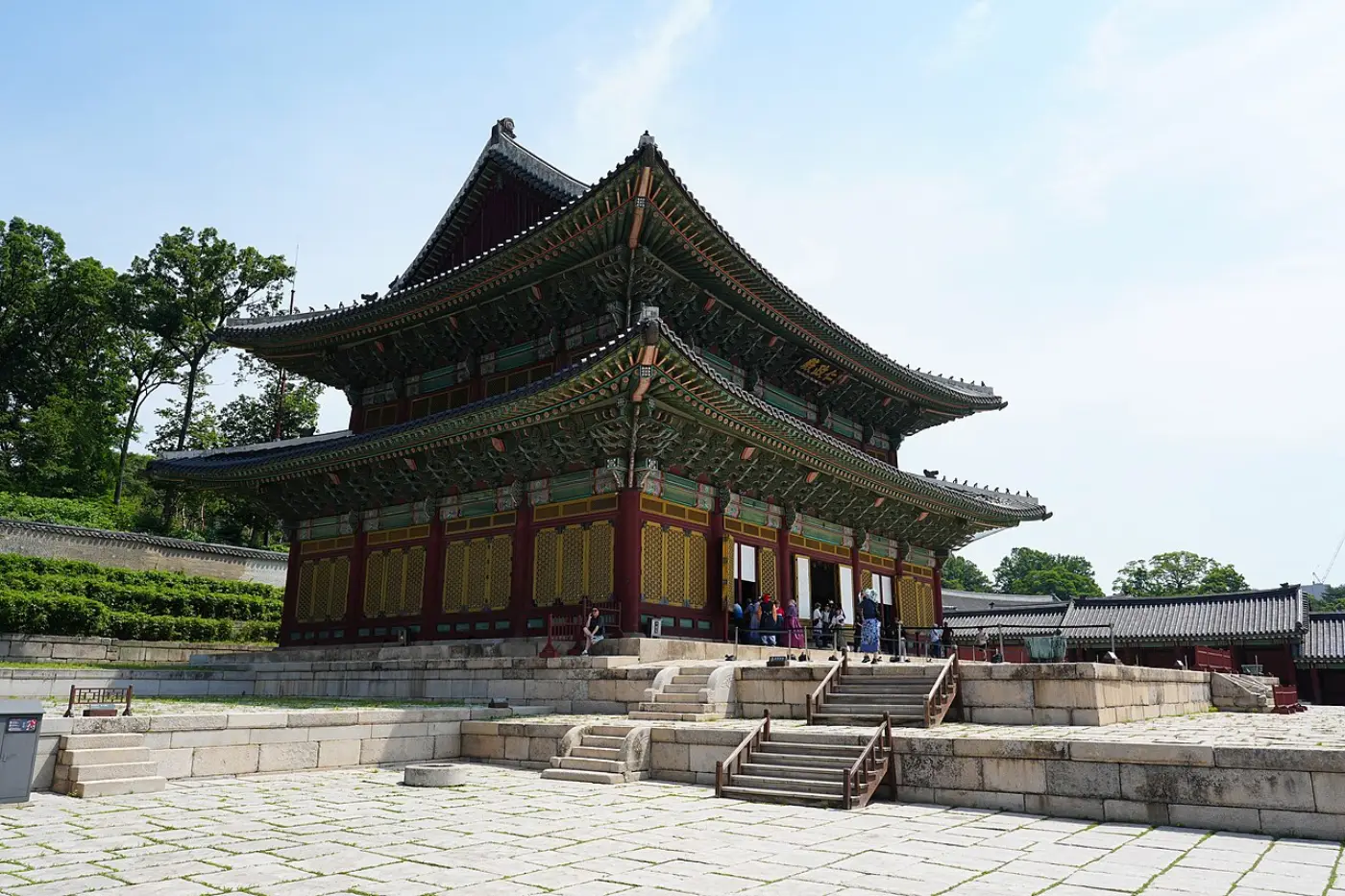
Destroyed in 1592, rebuilt in 1610: about 270 years as the main palace until 1867
According to Uri Yeoksanet, Changdeokgung served as a secondary palace for 187 years in the early Joseon period, until arsonists burned it down early in the Imjin War. The Royal Palaces and Tombs Center says that in 1610 (the 2nd year of King Gwanghaegun) it became the first palace to be rebuilt. The Encyclopedia of Korean Culture gives two reasons it was restored first: kings had mainly lived at Changdeokgung until then, and some regarded Gyeongbokgung as inauspicious in terms of geomancy (pungsu).
The sources date the rebuilding to different stages. The Royal Palaces and Tombs Center gives 1610 (the 2nd year of King Gwanghaegun) as the year of reconstruction, while Uri Yeoksanet says the first phase of work was finished in the 10th month of 1608, by which point most of the important halls had been built. These sources alone do not make clear which stage each year refers to.
According to the Encyclopedia of Korean Culture, about ten years after the reconstruction, most of the halls burned down during the Injo Restoration of 1623, leaving only part of the outer quarters standing. The palace lay in ruins for 25 years until its restoration in 1647. Uri Yeoksanet notes that a fire in 1833 destroyed most of the inner quarters. The encyclopedia dates the last major fire to November 1917; in the restoration that followed, buildings such as Gangnyeongjeon and Gyotaejeon were moved from Gyeongbokgung and reassembled at Changdeokgung to fill in the main sections.
World Heritage status in 1997 and a rear garden first laid out in 1406
The Royal Palaces and Tombs Center explains that Changdeokgung was built not to an artificial plan but in harmony with the surrounding terrain, which is why it has been called "the most Korean of palaces." The UNESCO World Heritage Committee decided on its inscription at its 21st session (CONF.208), citing criteria (ii), (iii) and (iv). The decision praised the way the buildings were adapted to the terrain, preserved the native trees and harmonized with the natural environment.
The Royal Palaces and Tombs Center's English-language page notes that Changdeokgung was known as Donggwol (the Eastern Palace) and adjoined Changgyeonggung with no boundary between them. The rear garden was first laid out to the north of Changdeokgung in 1406 (the 6th year of King Taejong), expanded in 1463 (the 9th year of King Sejo) and destroyed during the Imjin War.
According to Uri Yeoksanet, King Injo devoted himself to the rear garden, building pavilions and landscaping the grounds from the 14th (1636) to the 25th (1647) year of his reign. The Royal Palaces and Tombs Center says Ongnyucheon, Gyujanggak, Juhamnu, Aeryeonji, Uiduhap and Yeongyeongdang, among others, were built between the reigns of Injo and Sunjo. Juhamnu is a two-story building that King Jeongjo built in 1776, the year he took the throne, to store royal writings and calligraphy; its ground floor housed the Gyujanggak. Yeongyeongdang was built in 1828 on the former site of Jinjanggak (珍藏閣) as a venue for royal banquets.
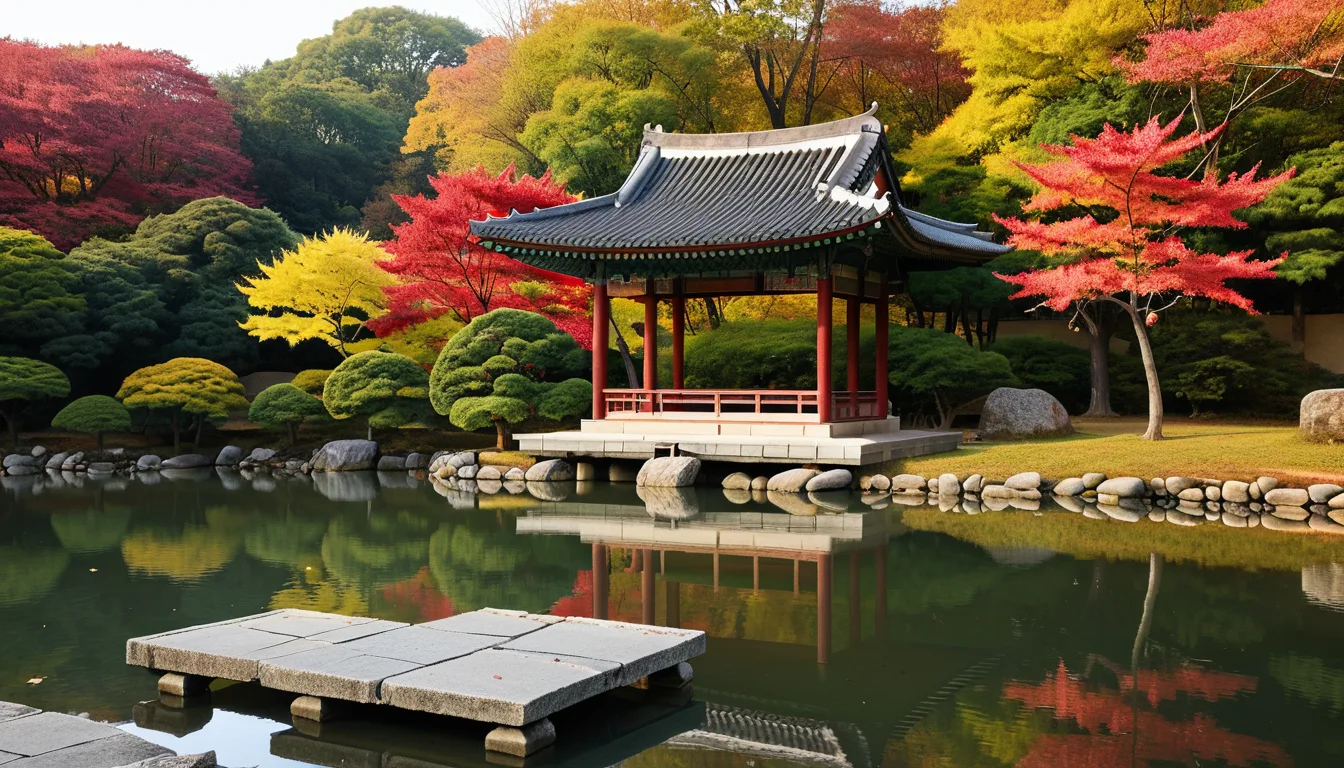
Nakseonjae in 1847 and the last imperial family of the Korean Empire
According to the Royal Palaces and Tombs Center's English-language page, the Nakseonjae compound was built in 1847 (the 13th year of King Heonjong), further enlarging the palace grounds. The Encyclopedia of Korean Culture describes Nakseonjae as a palace building in the style of a scholar-official's house, rebuilt in 1847 for the royal consort Gyeongbin Kim, and notes that it was designated a Treasure in 2012. Nakseonjae originally belonged to Changgyeonggung but is now managed by Changdeokgung.
The encyclopedia says that after the Gapsin Coup of 1884, King Gojong used Nakseonjae as his office, receiving ministers and foreign envoys there. Uri Yeoksanet notes that Emperor Sunjong lived at Changdeokgung from 1907 to 1928, and the Royal Palaces and Tombs Center says he died there. The 1910 annexation of Korea by Japan was decided at Heungbokheon, an annex of Daejojeon.
The Royal Palaces and Tombs Center describes the Nakseonjae compound as the place where the last members of the Korean Empire's imperial family lived after Korea's liberation and where they died: Empress Sunjeong, Crown Princess Uimin (Lady Yi Bang-ja) and Princess Deokhye. According to the Encyclopedia of Korean Culture, Crown Prince Yeong (Yi Eun) lived at Nakseonjae from 1963 to 1970, and Lady Yi Bang-ja from 1966 to 1989. The Korea Times reports that Princess Deokhye returned to Korea in 1962 at the age of 50 and died at Nakseonjae in 1989.
| Year | Event | Source institution |
|---|---|---|
| 1405 (Taejong 5) | Founded as a secondary palace to Gyeongbokgung; completed in the 10th month | Royal Palaces and Tombs Center; Uri Yeoksanet |
| 1592 (Seonjo 25) | Destroyed during the Imjin War | Royal Palaces and Tombs Center |
| 1610 (Gwanghaegun 2) | Became the first palace to be rebuilt (first phase recorded as completed in the 10th month of 1608) | Royal Palaces and Tombs Center; Uri Yeoksanet |
| 1647 | Restored 25 years after its destruction in the Injo Restoration | Academy of Korean Studies |
| 1847 (Heonjong 13) | Nakseonjae compound built | Royal Palaces and Tombs Center; Academy of Korean Studies |
| 1997 | Inscribed on the UNESCO World Heritage List (21st session, CONF.208) | Royal Palaces and Tombs Center; World Heritage Committee |
Summing up
In brief, Changdeokgung was founded in 1405, destroyed in 1592, rebuilt in 1610 and inscribed as a World Heritage Site in 1997. The Royal Palaces and Tombs Center explains that for about 270 years, until 1867, successive kings made greater use of Changdeokgung. Read together, the Annals and the official records arguably allow us to trace its shift from secondary palace to de facto main palace.
Some of the buildings in these records still matter to visitors today. Uri Yeoksanet says the oldest surviving building at Changdeokgung is Donhwamun, the gate rebuilt under King Gwanghaegun. The Encyclopedia of Korean Culture describes Injeongjeon as the throne hall, where court ceremonies were held and foreign envoys received. The sources for this article do not confirm which halls are currently open or the visiting route, however, so check the Royal Palaces and Tombs Center's visitor information before you go.