The short answer
Hanji (韓紙) is paper made by dispersing paper-mulberry bark fibers in water and lifting them onto a screen. Its toughness is accounted for in three separate places: the material, the couching method and the finishing. The National Folk Museum of Korea's Encyclopedia of Korean Folk Culture notes that the fibers of paper-mulberry bark are long and bond strongly. The English Wikipedia entry "Korean paper" adds that traditional hanji is couched in several layers by the single-frame (we bal) method, so that the fiber grain runs in several directions. Dochim, the beating of dried paper, is described as a process that raises density and smooths the surface.
The name, too, comes from the material. The "Hanji" entry in the Academy of Korean Studies' Encyclopedia of Korean Culture puts it this way: "Today all traditional paper made from paper-mulberry bark is collectively called hanji, but in China and elsewhere it was called gyerimji (鷄林紙), goryeoji or joseonji, depending on the period." This can be read as meaning that the names for the same paper differed by era and by region. Korea Heritage Service material states that "a 'hanjijang (韓紙匠)' is an artisan who makes traditional hanji."
This article covers the properties of the fiber, the hanjijang's process, the use of hanji on window lattices, the name goryeoji, and the differences from Japanese washi (和紙) and Chinese xuan paper (宣紙). No figures or dates absent from the sources have been used. Where the Encyclopedia of Korean Folk Culture refers to Japanese paper as hwaji (和紙), this article calls the same paper washi.
The Mugujeonggwang daedarani gyeong and paper-mulberry bark fiber
The Encyclopedia of Korean Folk Culture describes the oldest surviving paper as follows: "The oldest paper now remaining in Korea is the Mugujeonggwang daedarani gyeong (無垢淨光大陀羅尼經), discovered in 1966 in the Seokgatap pagoda at Bulguksa temple in Gyeongju." Because the year and the place of discovery are given together, the claim is easy to verify. The passage says nothing about the process that produced this paper.
The same encyclopedia describes the properties of the material: "Paper-mulberry bark has long fibers and strong bonding strength, so it can be made into tough paper." Both conditions appear together in a single sentence, so the explanation of hanji's toughness can be seen to begin at the level of the raw material.
The English Wikipedia entry "Korean paper" says hanji is made from the inner bark of the paper mulberry native to Korea. The same entry notes that ordinary paper is acidic, with a pH of 4 to 5.5, and that high acidity causes it to decompose completely within 100 years. No figure for hanji's own acidity appears in the sources consulted, so on this evidence alone the claim that hanji outlasts acidic paper cannot be settled.
Every passage quoted here can be looked up directly. The Academy of Korean Studies' Encyclopedia of Korean Culture, the National Folk Museum of Korea's Encyclopedia of Korean Folk Culture and the Korea Heritage Service's heritage portal all publish the relevant entries. The passages on Japanese paper were checked against the Japanese Wikipedia entry "和紙".
Boiling the bark and the name baekji in the Encyclopedia of Korean Culture
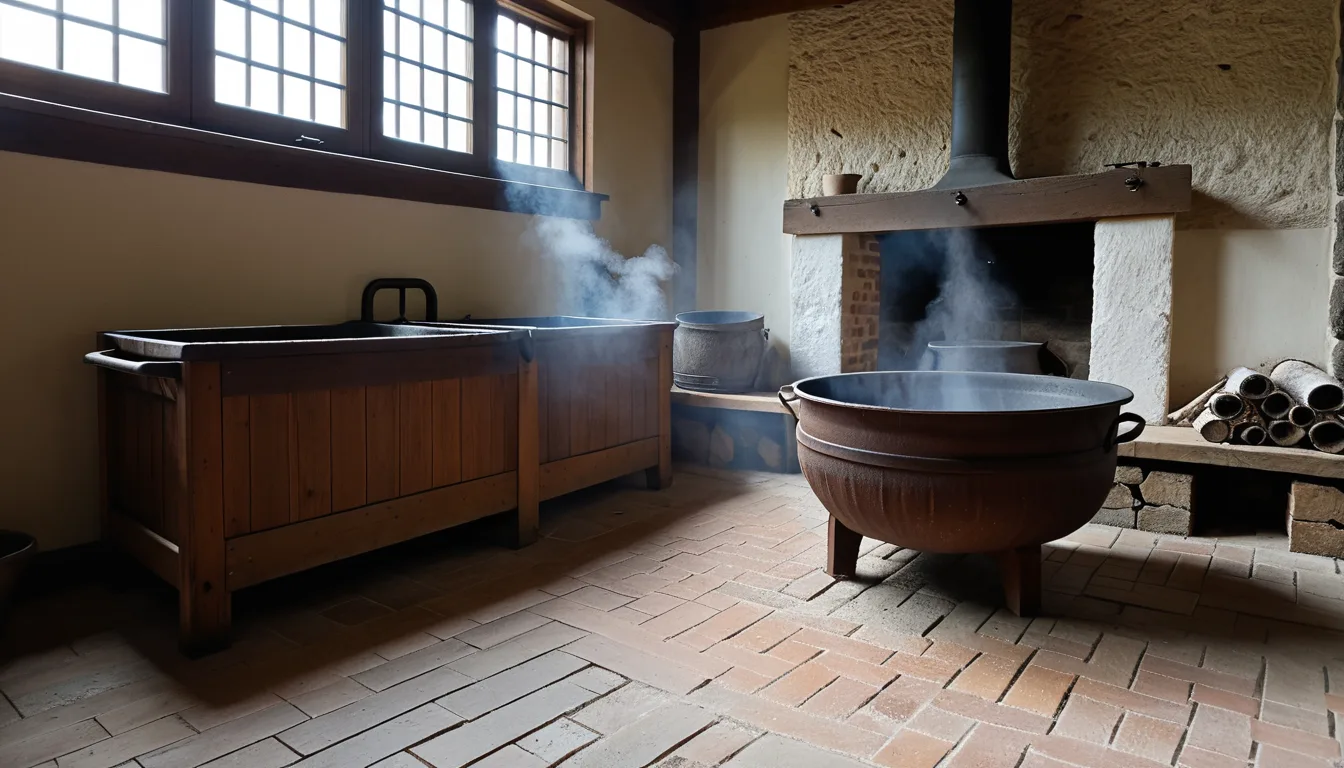
The "Hanjijang" entry in the Encyclopedia of Korean Culture describes the first stage of preparation: "First, good paper mulberry is cleanly stripped of its outer bark and dried; then about 40 kg at a time is soaked in water, washed clean and cut into roughly 1 m lengths." Both the weight handled and the cutting length are given as numbers. The entry continues: "It is then poured into a cauldron, lye is brought to a boil, the bark is added, and it is boiled for about three to four hours until thoroughly cooked."
The "Hanji" entry in the same encyclopedia describes the boiling a little differently: "The white bark is soaked in water until it swells, then water, lime and wood ash are added and it is boiled in a cauldron for about four hours to remove fats and woody matter." The purpose — stripping out fats and woody matter — is stated plainly. The two entries disagree on the boiling time and on the materials added, and the sources do not establish which account is standard.
Korea Heritage Service material turns the number of steps into a name: "Because the paper mulberry is cut, steamed, boiled, dried, stripped, boiled again, beaten, mixed evenly, couched and dried through ninety-nine rounds of handling, and the last person to touch it does so for the hundredth time, people of old also called hanji 'baekji (百紙)'." It can be seen as an expression that folds the number of handling steps into the name. Listing the whole sequence in one sentence also makes the flow of the work easy to follow: many hands touch the paper between cutting and drying, and the name preserves that.
Apmuljil at the screen frame and the single-frame method
The "Hanjijang" entry in the Encyclopedia of Korean Culture describes the couching motion: "Then, with the screen laid on the frame, the dispersed paper-mulberry fibers are scooped up with water from the front and let flow off to the back. This work is called 'apmuljil'." The key point is that the water is not left to settle but allowed to run off backwards. That flowing motion can be read as the process that builds the fibers up one layer at a time.
The same entry continues: "Two freshly couched sheets are laid crosswise on each other, a cord (a 'pillow') is set in place, and the cycle is repeated, so that more than 300 sheets are couched and stacked over a full day." Laying two sheets crosswise can be taken to mean that the layers do not all run in one direction. The English Wikipedia entry "Korean paper" likewise says traditional hanji is couched in several layers by the single-frame method, so that the fiber grain runs in several directions. Two different sources thus both describe a layered couching method.
The Encyclopedia of Korean Folk Culture gives the vat mixture as numbers: "The mixing ratio of bark to water is about 2:8, and the ratio of bark to dakpul is 2:3 or 2:4." The fact that dakpul is added is recorded together with these ratios. Korea Heritage Service material says that "hanji is completed on the basis of highly skilled technique and the artisan's long experience, with paper mulberry and hwangchokgyu (黃蜀葵) as its main materials," but does not say what role hwangchokgyu plays in the process. Nor do the sources establish the relationship between dakpul and hwangchokgyu.
What dochim does to paper
The "Hanjijang" entry in the Encyclopedia of Korean Culture describes the final stage: "The dried paper is sorted and graded, and then dochim (beating) is carried out as needed." Dochim is applied not to every sheet but as required, and the order is given as well: grading comes first.
The Encyclopedia of Korean Folk Culture calls dochim "a traditional paper-finishing technique that raises the density of the paper and smooths its surface." The English Wikipedia entry "Korean paper" describes it as beating the finished paper to compact the fibers and reduce ink bleed. Together the two sources give dochim three purposes — density, surface and ink bleed — and the compacting of the fibers can be seen as connected to the stage at which the paper is used.
Thinning a material down and then reworking it to change its properties turns up in other traditional crafts as well. No source treats the two crafts' processes as one and the same, and the comparison drawn here is limited to the repetition of handling.
Hanji on window lattices and paper from Jeonju
The English Wikipedia entry "Korean paper" says hanji is both breathable and insulating. The same entry says that in Korea hanji was traditionally pasted onto wooden doors, and an accompanying explanation notes that it stays cool in summer and warm in winter. The properties of the paper and its use on window lattices appear together in one passage.
The "Hanjijang" entry in the Encyclopedia of Korean Culture says that "paper from Jeonju in particular is renowned nationwide for its outstanding quality." Here a place name is attached to an assessment of the paper, but the passage does not say why Jeonju paper earned that reputation. Nor do the sources single out the local water or paper mulberry as a factor.
Paper for such a use would have to be thin and still resist tearing. No source, however, connects the use on window lattices directly to fiber length; the two facts appear separately, in different sources.
Washi, xuan paper and the record of Damjeong in 610
According to the "Hanji" entry in the Encyclopedia of Korean Culture, the Goguryeo monk Damjeong (曇徵) transmitted papermaking technique to Japan in 610 (the 32nd year of King Yeongyang). The Japanese Wikipedia entry "和紙" dates the transmission of papermaking from China to Japan to the 18th year of Empress Suiko — that is, 610 — and says it came by way of Goguryeo. Both sources give the same year. No account describing the route the technique travelled in greater detail is confirmed in the sources.
The names for the couching method also differ by country. The Encyclopedia of Korean Folk Culture says that "the traditional way of couching paper is heullimtteugi, while gadumtteugi was introduced from Japan." The Japanese Wikipedia entry "和紙" says that nagashizuki, Japan's own papermaking method, took definite shape with the establishment of the state papermaking works, the Kamiyain, in the Daidō era of 805–809. The same entry notes that although nagashizuki developed across East Asia, the Japanese and Chinese versions of the method differ. Similar names, then, do not mean identical motions.
The accounts of raw materials differ too. The Japanese Wikipedia entry "和紙" lists hemp, paper mulberry (kōzo), mitsumata and ganpi among the materials for washi, and says washi is described as having far longer fibers than Western paper, making it strong despite its thinness and comparatively long-lasting. It also states that xuan paper producers in Anhui province, China, blend up to 70 percent short rice-straw fiber and use yangdodeng rather than hwangchokgyu as a formation aid. The hanji sources list hwangchokgyu as a main material but never describe it as a formation aid, so the formation aids of the three papers cannot be lined up side by side.
Setting the three papers out item by item makes the limits of the record clear. Main materials, couching method, descriptions of the fiber and formation aids have been carried over only as far as the sources state them, and the table below is that summary. The Japanese Wikipedia entry "和紙" also notes that output of paper mulberry (kōzo), a raw material for washi, fell sharply from 3,170 tons in 1965 to 36 tons in 2019. Supply conditions for raw materials, in other words, are recorded differently in each country.
The name goryeoji and the Jojiseo's 81 papermakers
Korea Heritage Service material records the name used in China: "Korea's hanji was so renowned from the Goryeo period onward that the Chinese, too, called the finest paper 'goryeoji (高麗紙)'." The same material notes that Sun Mu (孫穆) of the Song dynasty, in the Gyerim yusa (鷄林類事), lavishly praised Goryeo's mulberry paper as white and lustrous. The "Hanjijang" entry in the Encyclopedia of Korean Culture adds that Su Dongpo (蘇東坡) of the Song dynasty also praised Goryeo-period paper. This can be taken to mean that records of such assessments survive in several sources.
There are records on the demand side as well. The "Hanji" entry in the Encyclopedia of Korean Culture notes that demand for hanji rose sharply during the Goryeo period as woodblock and metal-type printing developed. The English Wikipedia entry "Korean paper" describes the Jikji, printed on hanji in 1377, as the oldest surviving book printed with movable metal type. Accounts of paper and of printing turn up together in records from the same period.
In the Joseon period, paper fell to government offices. The Encyclopedia of Korean Culture states that the Jojiso was established in 1415 (the 15th year of King Taejong) and renamed the Jojiseo in 1466 (the 12th year of King Sejo). The Encyclopedia of Korean Folk Culture records that the Jojiseo was staffed with 81 jijang (papermakers), 2 mokjang, 8 yeomjang, 95 seonsangno and 60 dochimgun (paper beaters), and that under the Gyeongguk daejeon provincial artisans included 692 papermakers across 221 districts. Listing the dochimgun separately suggests dochim was treated as a job in its own right. The Encyclopedia of Korean Culture adds that in the 15th and 16th centuries, when paper mulberry ran short, mugwort stalks, wheat and barley straw and bamboo bark were used as mixed pulp stock.
The Encyclopedia of Korean Culture notes that hanjijang was designated a National Intangible Cultural Property (now National Intangible Heritage) in 2005, and Korea Heritage Service material gives the designation date as 23 September 2005. The English Wikipedia entry "Korean paper" states that as of 2009 there were 26 hanji workshops in operation, supplying artists, calligraphers, conservators and others. The sources consulted do not themselves say that hanji is used in cultural heritage conservation. The Japanese Wikipedia entry "和紙" says washi is used in heritage conservation around the world and is credited with a durability spoken of as "more than 1,000 years"; it adds that Tosa tengujoshi, known as the thinnest washi, repairs and reinforces old documents, paintings and other cultural property and is widely used by overseas museums and research institutions. The same entry records that the number of washi producers fell from more than 13,000 in 1941 to 207 in 2016, machine-made paper included.
| Category | Hanji | Washi (和紙) | Xuan paper (宣紙) |
|---|---|---|---|
| Main materials | Paper mulberry and hwangchokgyu (Korea Heritage Service hanjijang material) | Hemp, paper mulberry (kōzo), mitsumata, ganpi and others | Blends up to 70 percent short rice-straw fiber |
| Couching method | Traditionally heullimtteugi; gadumtteugi introduced from Japan | Nagashizuki, established with the founding of the Kamiyain, 805–809 | The Chinese heullimtteugi differs in method from the Japanese one |
| Description of the fiber | Bark fiber is long and bonds strongly | Described as having far longer fibers than Western paper | Low-viscosity mucilage suited to couching short fibers |
| Formation aid | Not stated in the sources | Not stated in the sources | Uses yangdodeng, not hwangchokgyu |
| Recorded finishing step | Dochim raises density and reduces ink bleed | Not stated in the sources | Not stated in the sources |
Related reading: Najeonchilgi: Why Korean Mother-of-Pearl Lacquerware Grinds Seashell Thin and Glues It On · Manggeon: The Korean Horsehair Headband That Showed a Man's Rank
In summary
The toughness of hanji is accounted for in three separate places. One is the material: paper-mulberry bark fiber is long and bonds strongly. The second is the process: apmuljil scoops water forward and lets it run off to the back, two sheets are laid crosswise, and several layers are couched with the single frame. The third is the finishing: dochim raises density and reduces ink bleed. Each of the three accounts appears in a different source, and no source gathers them into a single cause.
The names and the institutions deserve a reading too. The record that the paper was called gyerimji, goryeoji and joseonji in China and elsewhere, the dates of the Jojiso and the Jojiseo, and the head counts of papermakers and paper beaters are all set down in the literature. The accounts of washi and xuan paper differ on couching method, raw materials and formation aid. Readers who want to check the figures and dates for themselves can open the relevant entries in the Encyclopedia of Korean Culture, the Encyclopedia of Korean Folk Culture and the heritage portal.