The short answer: summer cloth woven from thread split with the teeth and joined by hand
Hansan mosi is a cloth made from ramie bark. Weavers split the bark into fine strands with their teeth, join the strands into thread and weave the thread on a loom. The Korea Heritage Service calls mosi an excellent summer cloth because it is crisp and does not cling to the body. Making the thread depends on human teeth and hands. This article is part 2 of a seven-part series.
Women in the Hansan area of South Chungcheong Province have passed the skill down. UNESCO describes mosi weaving as family work led by women. Village neighbors formed groups called "mosi dure" to share the hard labor. Hansan mosi weaving was designated National Intangible Cultural Heritage No. 14 in 1967. In 2011 it was inscribed on UNESCO's Representative List of the Intangible Cultural Heritage of Humanity.
Saengjeo in the 1469 Annals of King Yejong: splitting ramie with the front teeth
According to the Encyclopedia of Korean Culture, the plant was called "jeoma" before the Goryeo period and "mosi" from the Goryeo period on. Hansan mosi is said to have begun in the Baekje era, when people cultivated and wove wild jeoma from Mount Geonji. The same encyclopedia notes that the Annals of King Yejong for 1469, the first year of his reign, list saengjeo (生苧, raw ramie) from Hansan and Imcheon as local products. In 1751 the Silhak scholar Yi Jung-hwan (李重煥) mentioned "the ramie fields of Hansan and Imcheon" in his Taengniji (擇里志). According to the same encyclopedia, ramie is cut about three times a year: from late May to early June, in July and August, and from early to late October.
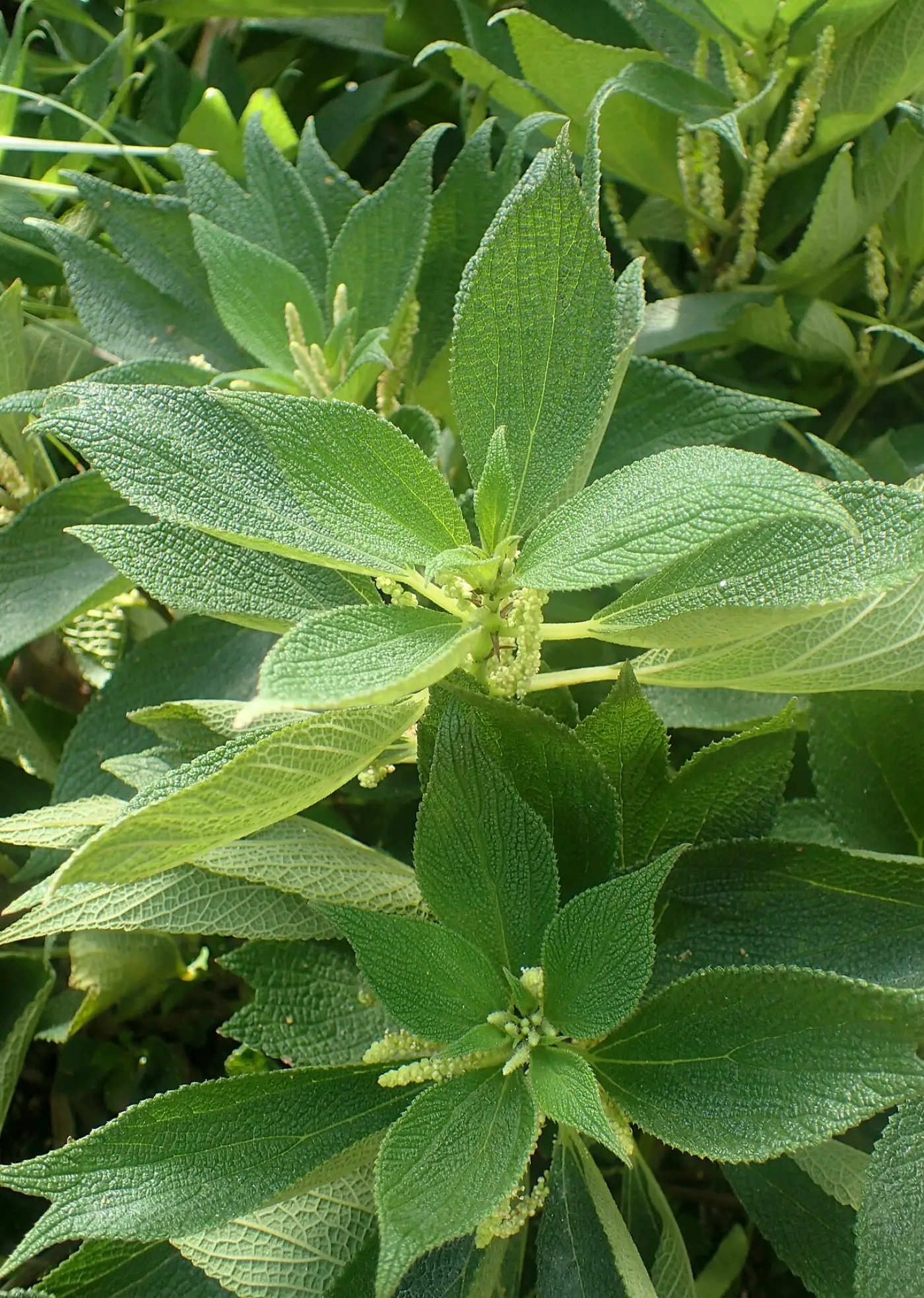
The National Heritage Portal, run by the Korea Heritage Service, lays out the process step by step. The steps are cultivation and harvest, making taemosi (raw ramie bark strips), splitting, joining, making skeins, warping, sizing, weaving and bleaching. To split the fiber, weavers soak taemosi in water and divide it into fine strands with their front teeth. Korea Heritage Service materials warn that "beginners' lips may crack and their tongues may even bleed." A Seoul Shinmun article reports that Hansan weavers split taemosi between their upper and lower teeth, using no knife or other tool.
The split strands are no more than 2 m long, so they must be joined into long thread. The Seoul Shinmun article describes how. Weavers lay the two ends on the knee, wet them with saliva and roll them together with the palm. In other words, Hansan mosi thread depends less on tools than on the weaver's teeth, knees and palms. So when you look at mosi, think first of the joins in the thread, not the texture of the cloth.
Underground looms and 7 to 15 sae: weaving in the Encyclopedia of Korean Culture
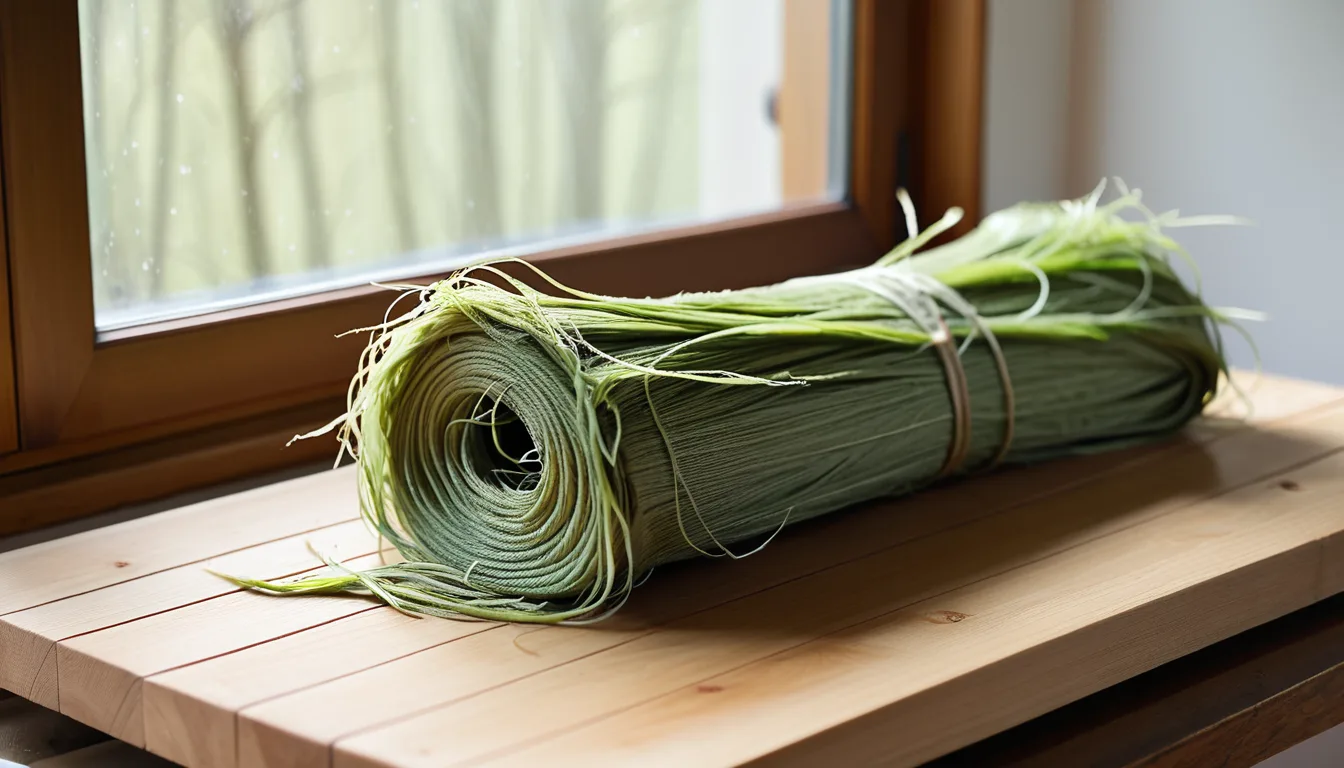
Mosi thread breaks easily when it dries out. The Encyclopedia of Korean Culture says weavers once set up their looms in pits dug into the ground. Today they hang plastic sheeting and keep the air humid with humidifiers or spray bottles. The Seoul Shinmun article adds that the doors must stay shut however hot it gets, so the weaving stays damp. KOCIS (Korean Culture and Information Service), part of the Ministry of Culture, Sports and Tourism, also covers mosi in its English webzine. It says weavers coat the thread with soybean paste to smooth the joins.
The Encyclopedia of Korean Culture explains that cloth density is measured in seung (升). One seung equals 80 warp threads. Korea Heritage Service materials say Hansan mosi is usually woven at 7 to 15 sae, and cloth of 10 sae or more is called semosi. One bolt usually takes two months, and the weaving alone takes about four to five days. The time varies with the thread count and the weaver's skill.
Put the two figures side by side, and the days at the loom turn out to be only part of the two months. The rest of the time, it seems, goes to the steps before and after weaving. And the move from pits to humidifiers shows that the underlying principle has not changed: keep the thread from drying out.
Ceremonial and mourning dress in the National Heritage Portal, and Japan's Echigo-jofu, inscribed in 2009
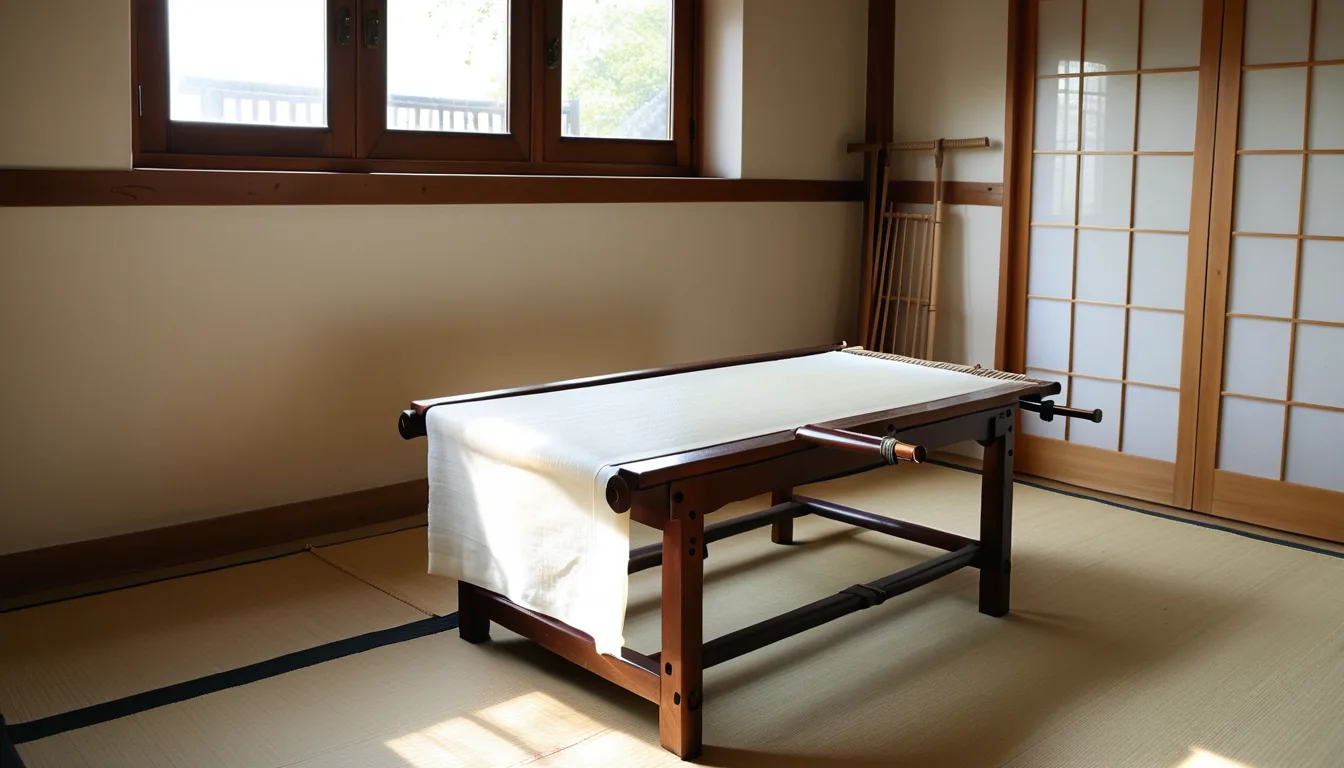
The National Heritage Portal says mosi was used for ceremonial dress, military uniforms, mourning clothes and many kinds of clothing worn by ordinary people. UNESCO's inscription decision likewise describes mosi as comfortable in the sweltering summer. The KOCIS webzine reports that families treasured mosi garments, handed them down and even used them as burial clothes. According to the same webzine, women did not throw away even the scraps. They made them into table covers, blinds and patchwork wrapping cloths (jogakbo).
Japan also weaves cloth from ramie. In 2009 UNESCO inscribed the techniques of making Ojiya-chijimi and Echigo-jofu, two ramie fabrics from Niigata Prefecture, on the Representative List. Japan was inscribed in 2009, Hansan in 2011. Japanese weavers split the fiber with their fingernails; Hansan weavers use their front teeth. To bleach the cloth, the Japanese lay it out wet on snow-covered fields for 10 to 20 days. The goal is the same in both countries: UNESCO notes that the Japanese fabric is also light and suited to Japan's hot, humid summers.
One record also compares prices with China. According to the Encyclopedia of Korean Culture, fine Goryeo ramie cloth sold in China during the Goryeo period for 1 nyang (1 nyang 2 jeon) of silver per bolt. Chinese-made cloth, by contrast, sold at 1 nyang 2 jeon of silver for two bolts. The records also suggest that the hand methods of splitting thread and of bleaching differed from region to region.
The "seven ramie places" of the 1910 Joseon Saneopji and the sole holder as of 2022
The Korea Heritage Service cites a passage from the Joseon Saneopji (朝鮮産業誌), a book published in 1910. The book groups seven counties together: Hansan, Seocheon, Hongsan, Biin, Imcheon, Jeongsan and Nampo. It says that "because weaving ramie is their main occupation, they are called the Jeopo Chilso (苧布七所, the seven ramie cloth places)."
Hansan and Imcheon are the same names that appear in the Annals of King Yejong and the Taengniji. The National Heritage Portal says Hansan mosi was first commercialized in the 18th century, in the late Joseon period. From then on, people wove mosi mainly for income. According to the Encyclopedia of Korean Culture, most women learned the skill from their mothers or mothers-in-law, starting at age 14 or 15. The mosi dure groups mentioned earlier formed mainly among relatives or village neighbors. The National Heritage Portal describes the dure as a way of building unity and harmony among families and neighbors.
More designations followed the national listing in 1967. In 1974 "Hansan semosi weaving" became South Chungcheong Province Intangible Cultural Heritage No. 1. The Encyclopedia of Korean Culture notes that holder Mun Jeong-ok died in 2016. That left Bang Yeon-ok as the only holder of Hansan mosi weaving as of 2022. UNESCO's inscription record says about 500 people in South Chungcheong Province worked in mosi weaving–related jobs at the time of inscription.
| Craft | Thread making | Feel and season | Official designation and inscription |
|---|---|---|---|
| Hansan mosi weaving (Hansan, South Chungcheong Province) | Water-soaked taemosi is split with the front teeth, then joined on the knee with saliva and rolled with the palm | Crisp and does not cling to the body; suited to hot, humid summers | National Intangible Cultural Heritage No. 14 in 1967; UNESCO Representative List in 2011 |
| Hansan semosi weaving (Hansan, South Chungcheong Province) | Thread from the same splitting and joining process, woven densely at 10 sae or more | Like other mosi, suited to hot, humid summers | South Chungcheong Province Intangible Cultural Heritage No. 1 in 1974 |
| Ojiya-chijimi and Echigo-jofu (Niigata Prefecture, Japan) | Ramie fiber is split with the fingernails and twisted into thread by hand | Light and patterned; suited to Japan's hot, humid summers | UNESCO Representative List in 2009 |
Conclusion
Hansan mosi, then, is a craft of thread before it is a cloth. Splitting with the front teeth and joining on the knee stand out even more clearly next to Japan's fingernail splitting. Hansan and Imcheon also appear again and again, from the Annals of King Yejong to the Joseon Saneopji. The open question is how one holder and about 500 workers will share the work of carrying the skill forward.
You can read the original texts on the Korea Heritage Service's National Heritage Portal, in the Encyclopedia of Korean Culture and on UNESCO's intangible heritage website. On the National Heritage Portal, start with the nine steps of the production process. On the UNESCO website, read the inscription descriptions for Hansan and for Japan's Echigo-jofu side by side.