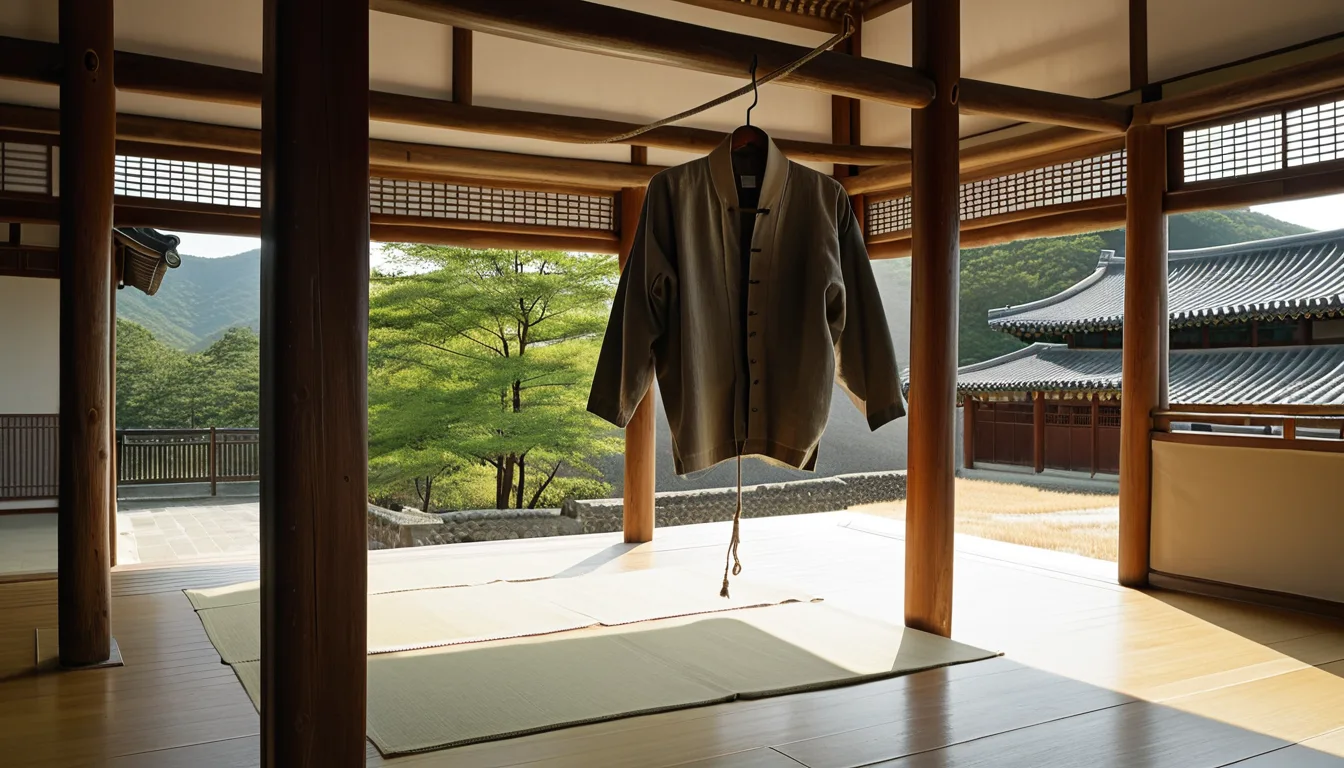
The short answer: cloth woven from hemp bast for summer clothes and mourning dress
Sambe is Korean hemp cloth, woven from thread made from hemp bast. In the Joseon era, commoners wore it in summer, and the chief mourner wore it as mourning dress. According to Seoul Metropolitan Government, hemp burial shrouds became a custom only after 1934. This is part 1 of a seven-part series.
The Korea Heritage Service (then the Cultural Heritage Administration) designated the whole process as National Intangible Cultural Heritage No. 140, 'Hemp Fabric Weaving.' The designation covers every step from the raw hemp plant to the finished cloth. To understand sambe, then, it arguably makes sense to look beyond the loom to the work done in the field and over the cauldron.
The Gokseong record: from sowing at Hansik to joining the fibers
The Encyclopedia of Korean Culture (韓國民族文化大百科) is published by the Academy of Korean Studies. Its entry on 'Gokseong's Dolsilnai' sets out the growing season. In Gokseong, hemp is sown in early April, around Hansik. It is harvested in early July, after Soseo, once the plants reach 2–2.5 m.
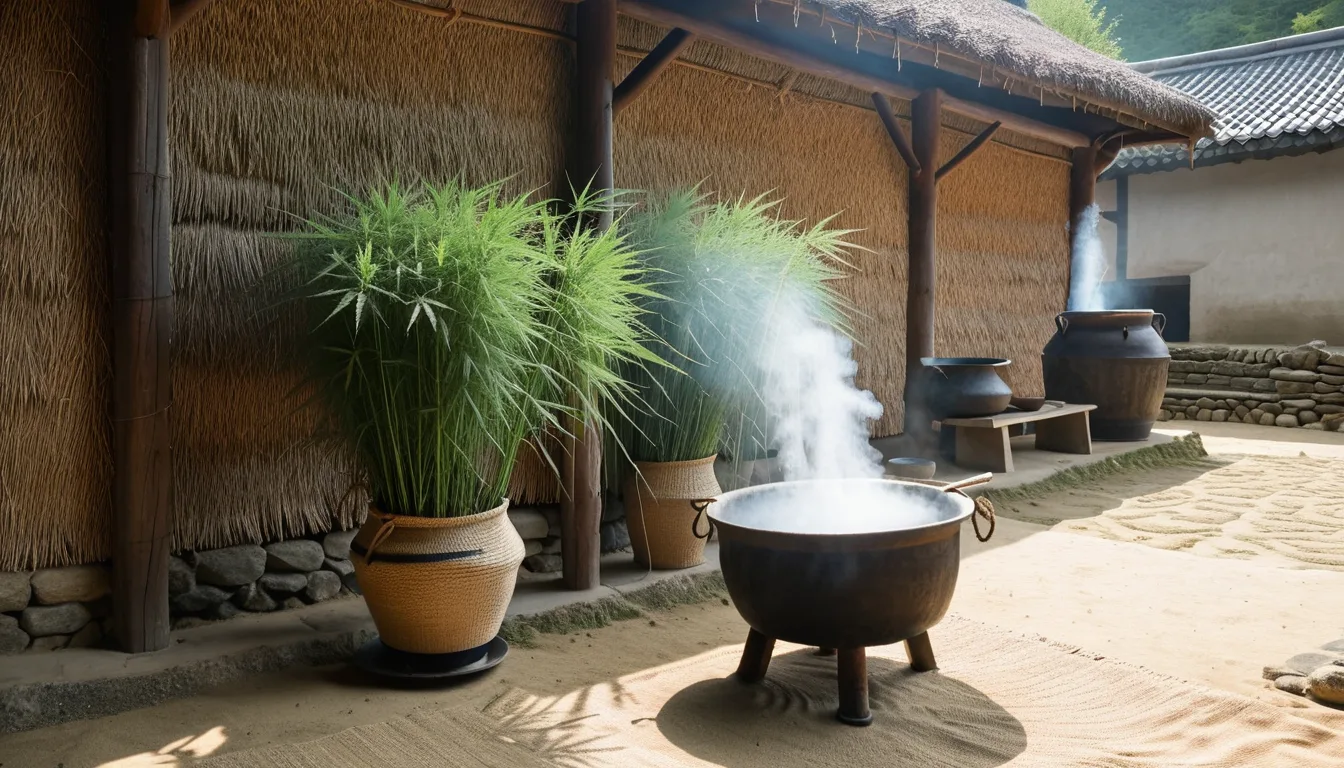
First, workers strip the leaves with a hemp knife and tie the stalks into bundles. They stand the bundles upright in a large cauldron, wrap them in a straw mat and steam them for about an hour. In the past, the hemp was steamed in a samgut, a stone-lined pit dug near a stream. The bast is peeled off before the steamed hemp cools. It is then sorted into top, middle and low grades. Splitting the dried bast into fine strands is called samjjaegi. Joining the split strands is called samsamgi.
Accounts of Andongpo (安東布), the hemp cloth of Andong in North Gyeongsang Province, follow the same order. The Korea Times describes harvesting the hemp, removing the leaves and steaming the stalks. The outer bark is then peeled off and dried. The article adds that the sandy soil of Geumso-ri in Andong drains well, which suits hemp. Both regions' records share the same backbone of 'steaming, peeling and drying.' This suggests that, whatever the region, the first stage of thread-making is the same.
Gokseong hemp dyed with gardenia: how it differs from Hansan and Japanese ramie
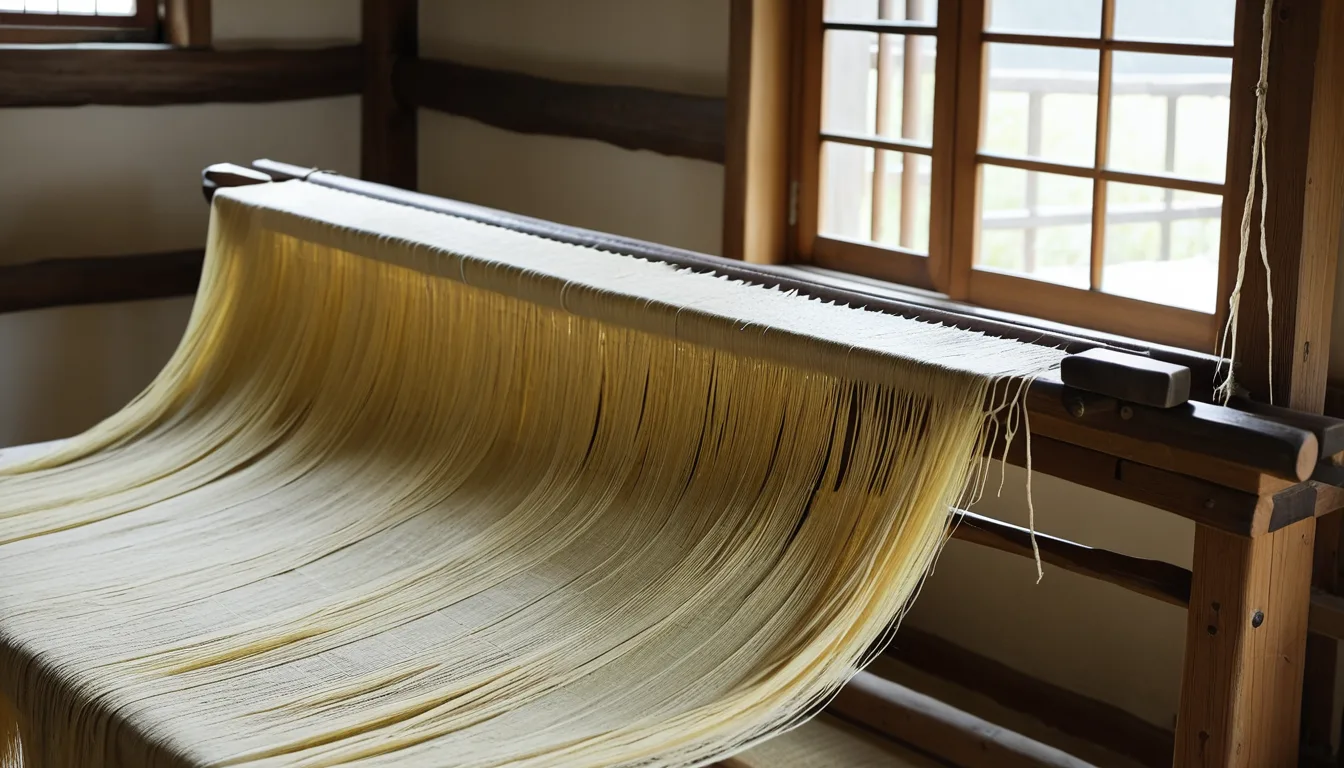
What sets Gokseong hemp apart is its color. The Encyclopedia of Korean Culture entry on Gokseong's Dolsilnai describes it this way: "Its distinctive feature is that the skeins of hemp thread are scoured and then dyed a pale yellow with gardenia water, and gardenia water is also mixed into the starch used to dress the warp before weaving."
The passage describes two steps. First, the skeins are dyed in gardenia water. Then gardenia water is mixed into the starch that dresses the warp. Gokseong hemp cloth is about 30–32 cm wide, and 35 cm at most. Using the same dye on both the thread and the starch suggests that the cloth's color is settled before weaving begins.
A point-by-point comparison with the ramie textiles in UNESCO's records shows the differences. Sambe is made from hemp. Hansan mosi, a fine ramie cloth, and Japan's Ojiya-chijimi and Echigo-jofu are made from ramie. For Hansan mosi, thread is spun from boiled and bleached fiber. For the Japanese ramie, the fiber is split with the fingernails and twisted by hand. Hansan mosi is woven on a traditional loom; the Japanese ramie, on a back-strap loom. Gokseong hemp gets its color from gardenia water. The Japanese ramie, by contrast, is bleached by spreading the wet cloth on snow-covered fields for 10–20 days. Even among summer fabrics, one tradition adds color while another takes it away.
A cloth worn since the Samhan period: thread counts, mourning dress and shrouds
The Korea Heritage Service explains that hemp cloth absorbs sweat and dries quickly. It also breathes well and conducts heat readily, so it feels cool to wear. The Korean-language material describes hemp as a cloth woven and worn since the Samhan period. The official English description, however, says Koreans have woven hemp cloth since 'at least' the Samhan period. Read side by side, the English wording leaves the starting point open.
The Korea Times notes that during the Joseon Dynasty (1392–1910), commoners' summer clothes were made from this cloth. The Korea Heritage Agency classifies hemp cloth by thread count, measured in sae. Nongpo of 4–5 sae was used for farmers' clothing or as sangpo for funerals. Jungpo was 6–7 sae. Sepo of 9–12 sae was cloth for the king and high officials. The late Kim Jeom-sun, a holder in Gokseong, wove all three well, including fine hemp of up to 12 sae. The same hemp cloth was worn by different people depending on its thread count.
In a Seoul Shinmun column, Jeong Jong-su writes that hemp was originally the chief mourner's dress. Children who had lost a parent wore it to mark themselves as 'sinners.' The same column notes that the Gukjo Oryeui (國朝五禮儀, Five Rites of the State), a ritual manual completed under King Seongjong of Joseon, prescribes shrouds made entirely of silk. The Ritual Standards (儀禮準則) were drawn up and promulgated in November 1934 by the Social Affairs Section of the Education Bureau of the Japanese Government-General of Korea. Seoul Metropolitan Government says the custom of hemp shrouds began with these Ritual Standards. Before that, it says, the deceased were dressed in the best clothes they had worn in life.
Hemp Fabric Weaving No. 140 and Gokseong's Dolsilnai: where to see them today
For Hemp Fabric Weaving, the Korea Heritage Service named no individual holders and recognized only a holder group. Its reasoning was that hemp cloth was a collective skill, produced and passed down through villagers' cooperation. The recognized holder group is based in the Andong area of North Gyeongsang Province. Andongpo was presented as tribute to the royal court in the Joseon period and is now a designated local specialty. The official English description likewise calls Andong-area hemp cloth tribute paid to the Joseon royal court.
Gokseong's Dolsilnai was designated National Intangible Cultural Heritage (now National Intangible Heritage) in 1970. The name combines 'Dolsil,' the old name for Seokgok, with 'nai,' meaning weaving. Gokseong hemp appears in the 'local products' section of the Yeojidoseo (輿地圖書), a mid-18th-century gazetteer. Gokseong hemp is also said to have been presented to the king as tribute from early on. Dolsilnai has since been merged into Hemp Fabric Weaving as one of its constituent skills, and its designation number, No. 32, has been retired.
The Korea Times says the hemp-weaving tradition began to disappear in the 1950s. Yang Nam-suk carried on Dolsilnai, and her designated craft was also changed to Hemp Fabric Weaving. Because of her advanced age, Yang became an honorary holder in 2020. The Korea Heritage Agency writes that the tradition has since become difficult to sustain. Together with the holder-group system, this shows that the craft depends on a community rather than a single person. The original texts are available from the Academy of Korean Studies' Encyclopedia of Korean Culture, the Korea Heritage Service website and UNESCO's Intangible Cultural Heritage website.
| Textile | Material | Thread and finishing | Season and use | Official records |
|---|---|---|---|---|
| Gokseong hemp (Dolsilnai) | Hemp | Thread made by splitting (samjjaegi) and joining (samsamgi) the bast; gardenia water used on the skeins and in the warp starch for a pale yellow color | Nongpo for farmers' clothing and funeral cloth; sepo for the king and high officials | Designated National Intangible Cultural Heritage in 1970; now merged into Hemp Fabric Weaving as a constituent skill |
| Andongpo | Hemp (grown in the sandy soil of Geumso-ri, Andong) | Leaves removed, stalks steamed, outer bark peeled and dried | Commoners' summer clothes in Joseon; mourning dress | Tribute to the Joseon royal court; designated local specialty; home region of the Hemp Fabric Weaving holder group |
| Hansan mosi | Ramie | Harvested, boiled and bleached, then spun and woven on a traditional loom | Sweltering summers; from formal and military dress to mourning clothes | National Intangible Cultural Heritage No. 14; inscribed on UNESCO's Representative List of the Intangible Cultural Heritage of Humanity in 2011 |
| Japan's Ojiya-chijimi and Echigo-jofu | Ramie | Split with the fingernails, twisted by hand, woven on a back-strap loom, then bleached on snow for 10–20 days | Light, patterned luxury fabric suited to Japan's hot, humid summers | Inscribed on UNESCO's Representative List of the Intangible Cultural Heritage of Humanity in 2009 |
Summing up
Following hemp cloth links the field, the cauldron, the loom and the funeral in a single thread. Gokseong's gardenia dye and Andong's tribute records show the same cloth taking on a different character in each region. The shroud records leave an open task: pinning down exactly which period the word 'tradition' refers to.
Some questions remain. The original Yeojidoseo should be checked for exactly how its 'local products' section describes Gokseong hemp. On site, it is worth comparing real cloth for differences in width and thread count. Later parts of the series cover other fabrics.