“Hundred-Touch Paper”: Ninety-Nine Touches by the Master, the Hundredth by the Reader
On a frosty winter morning in Uiryeong, Jeonju, or Gapyeong, steam rises outside while inside the paper mill the water in the wide wooden vat (jitong) is icy cold. Standing before the vat, the Hanjijang (韓紙匠, Master of Traditional Korean Paper, National Intangible Heritage No. 117) grasps a wooden screen frame suspended from the ceiling by a single cord. Dipping the fine bamboo mat into the milky bath of mulberry fibers, the master scoops a wave forward and spills it off the far edge, then rocks the next scoop briskly from left to right—cheolsseok, chwareureu. With that rhythmic wrist motion, a sheet of paper fifty microns thin is woven in water.
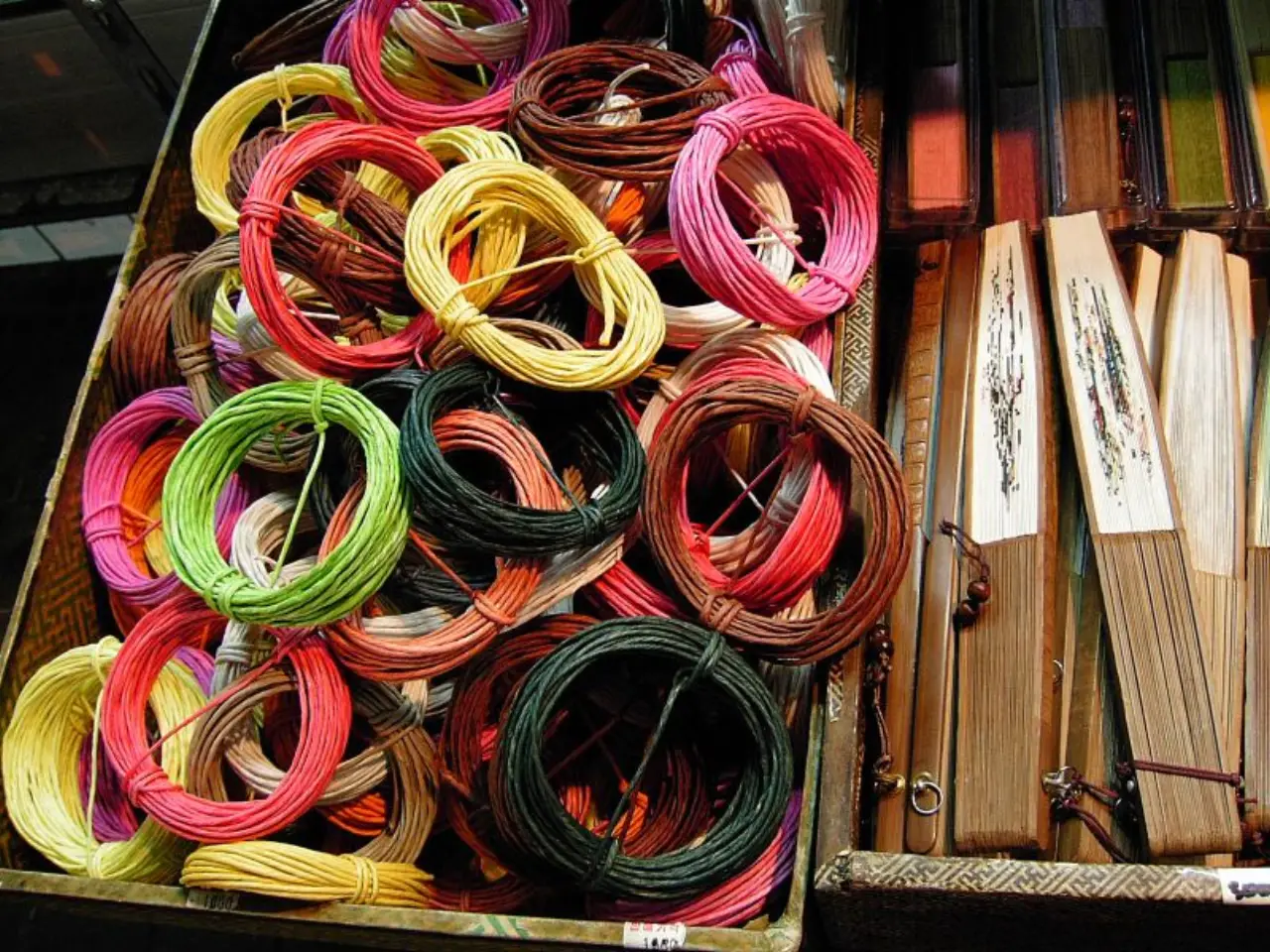
In Korea, traditional mulberry paper (Hanji) was affectionately called Baekji (百紙, “Hundred-Touch Paper”): from harvesting the mulberry branches in winter to beating the finished stack, the artisan’s hands touch the paper ninety-nine times, and the person who finally unfolds the sheet to write or paint completes the hundredth touch. It is this ninety-nine-step process that allowed Korea’s 8th-century Mugujeonggwang Great Dharani Sutra—the world’s oldest surviving woodblock print—and the Annals of the Joseon Dynasty to endure for over a millennium without crumbling.
Stages 1–3 — Winter Paper Mulberry, Natural Plant-Ash Lye, and Stone Beating
Why does Western wood-pulp paper turn brittle and yellow within a century while Korean Hanji lasts a thousand years? The answer begins with how the Hanjijang prepares the raw fiber.
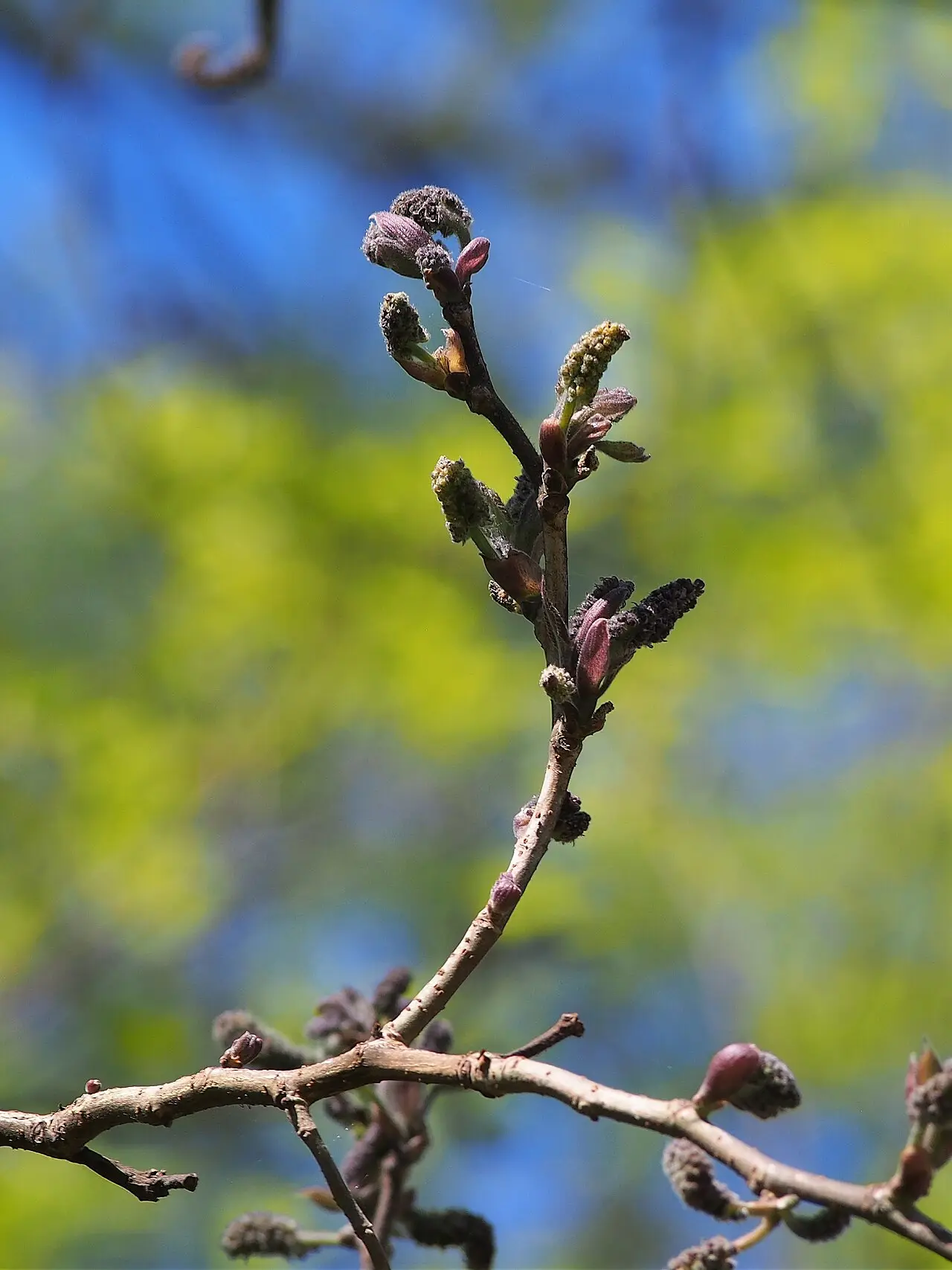
1. Steaming One-Year-Old Paper Mulberry & Scraping Baekpi
Between November and February, when cold weather makes the bast fibers densest, the Hanjijang harvests one-year-old branches of native Korean paper mulberry (Cham-daknamu, Broussonetia kazinoki). After steaming the bundled branches in a cauldron (dakmuji) to peel off the bark, the artisan uses a sharp knife to scrape away the dark outer rind and green middle layer by hand, leaving only the luminous white inner bast fiber known as baekpi (white bark).
2. Simmering in Natural Buckwheat- and Bean-Stalk Ash Lye
Modern industrial papermaking cooks wood chips in caustic soda and chlorine bleach, which severs cellulose chains and leaves acidic residues. By contrast, the Hanjijang burns buckwheat stalks, soybean stems, cotton stalks, or chestnut wood, leaches hot water through the ashes to collect a natural mild alkaline lye (pH 9–10), and simmers the white bark for several hours. This gentle alkaline bath dissolves non-fibrous lignin and pectin without damaging the long cellulose walls, yielding a finished paper with a stable neutral-to-mildly-alkaline pH of 7 to 8.
3. Pounding on Granite Instead of Cutting (Gohae)
After rinsing the boiled bark in clear stream water and bleaching it naturally in sunlight, the master lays the wet fibers on a thick granite slab (dakdol) and pounds them thousands of times with heavy oak mallets (dak-bangmangi). Rather than chopping fibers short with metal hollander blades, stone beating (gohae) bruises and fibrillates the 5 to 12 mm mulberry bast fibers while keeping their full length intact so they interlock like microscopic rope.
Stage 4 — Hibiscus Root Mucilage (Dakpul) and Korea’s Unique Oebal-tteugi
The beaten mulberry fibers are dispersed into a vat of cold water together with dakpul, the clear, viscous mucilage extracted in cold water from the roots of Sunset Hibiscus (Abelmoschus manihot / hwangchokgyu).
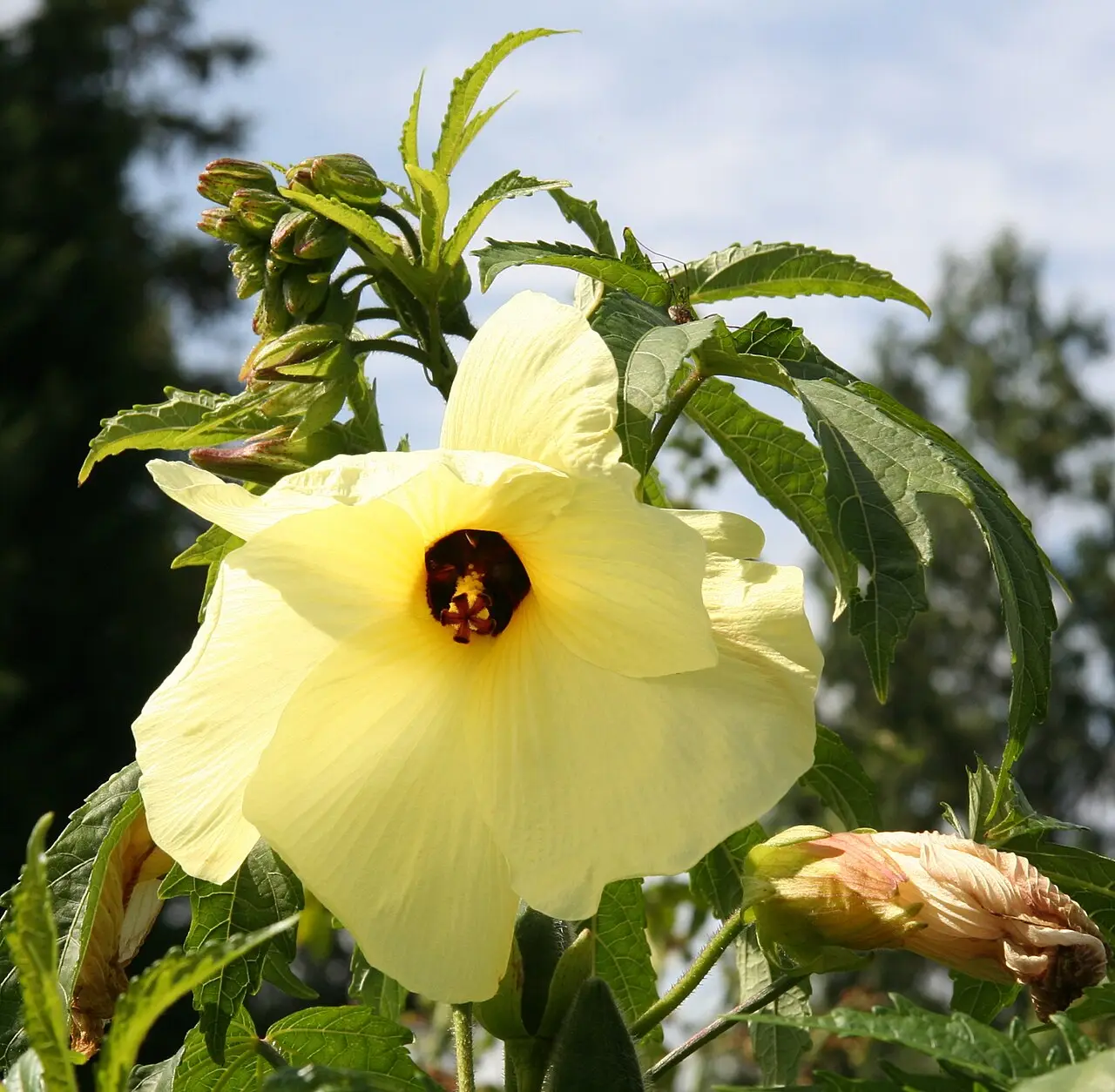
This natural plant mucilage performs two critical functions: it suspends the long mulberry fibers evenly in water so they never clump, and it slows drainage through the bamboo screen just enough for the artisan to steer the liquid wave—while also acting as a release agent so hundreds of wet sheets can be pressed in a stack and peeled apart one by one without sticking. Because hibiscus mucilage loses viscosity in warm temperatures, the finest traditional Hanji is always made in midwinter cold water.
Why Oebal-tteugi Weaves a Tear-Resistant Criss-Cross Web
Korea’s signature sheet-forming technique, Oebal-tteugi (single-cord flowing method), is unique in world papermaking. Instead of trapping water inside a four-walled box mould, the Hanjijang rests an unrimmed bamboo screen on a wooden frame tethered at only one center point. First, the master scoops fiber water at the front edge and sends it surging off the far edge (orienting fibers front-to-back); immediately, the master scoops again and rocks the wave from left to right (orienting fibers side-to-side).
When two such thin wet layers are couched together face-to-face into a single sheet, their fibers lock into a perpendicular criss-cross grid (井). As a result, traditional Hanji exhibits virtually identical tensile strength both lengthwise and crosswise—strong enough to be twisted into washable cordage (jiseung) or layered into historic arrow-proof paper armor (jigap).
Stage 5 — Dochim: Pounding Paper into Silk Under the Stamp Mill
After pressing out water overnight under stone weights and brushing each damp sheet onto heated or sunlit boards to dry, the Hanjijang performs Korea’s crowning finishing step: Dochim (搗砧, fulling by pounding).
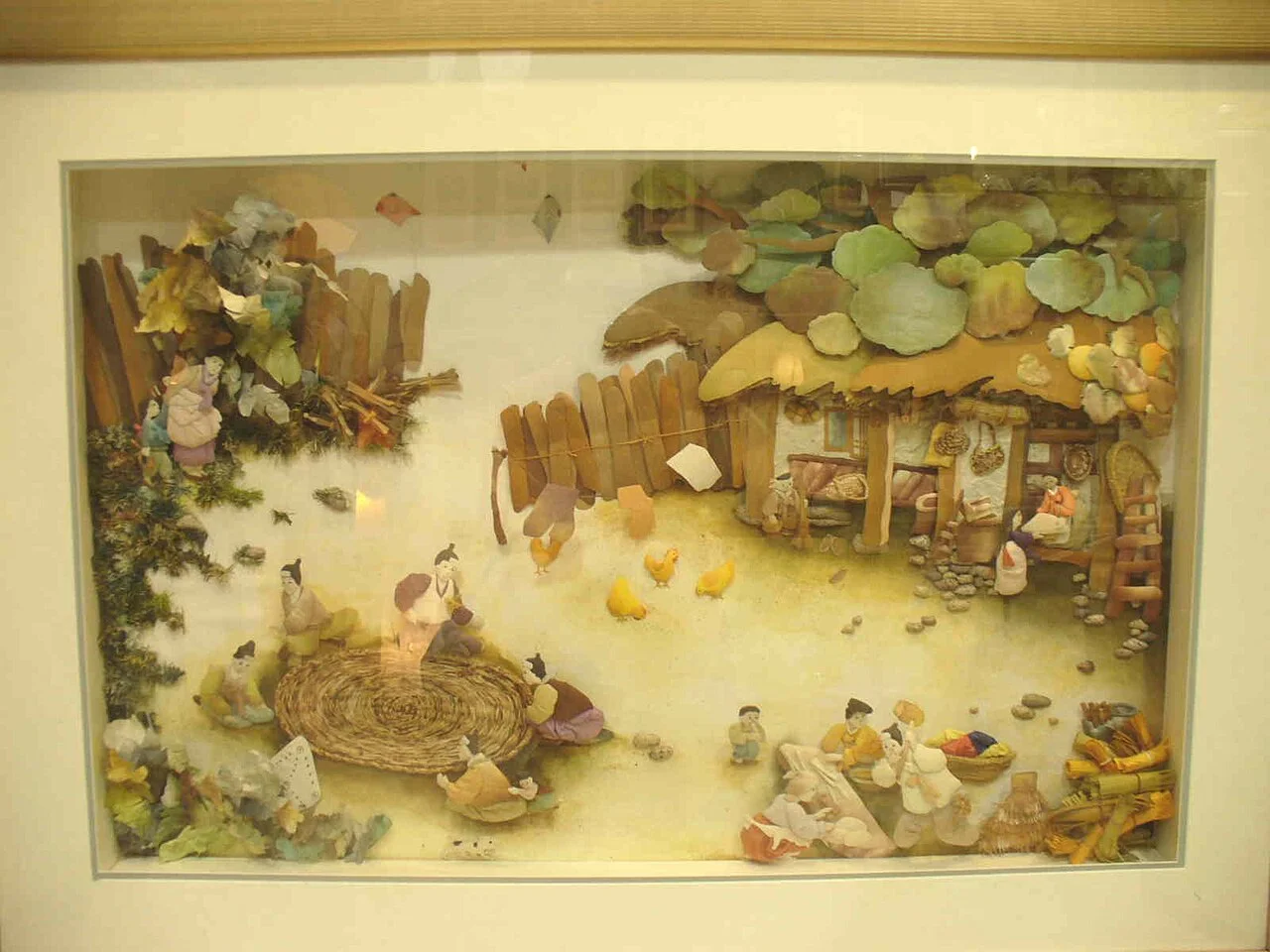

Hundreds of dried sheets are lightly misted with dilute rice-starch water, stacked into a pack, and placed beneath a heavy wooden or stone stamp mill (dochimgi) to be pounded hundreds of times. This rhythmic hammering compacts microscopic air pockets between the fibers, flattens surface fuzz, prevents calligraphy ink from feathering, and gives the paper a cool, silk-like sheen that scholars in Tang, Song, Ming, and Qing China prized as Goryeo-ji (Goryeo paper).
Chosen by the Louvre and the Vatican to Restore World Heritage
Today, hand-formed Korean Hanji is officially certified and used by conservation laboratories at the Louvre Museum in Paris and the Vatican Museums and Istituto Centrale per la Patologia degli Archivi e del Libro (ICPAL) in Rome to repair fragile medieval manuscripts, Leonardo da Vinci codices, and Renaissance frescoes. Born from winter mulberry bark, plant ash, cold mountain water, and ninety-nine touches of the Hanjijang’s hands, every sheet of Hanji breathes quietly across centuries.