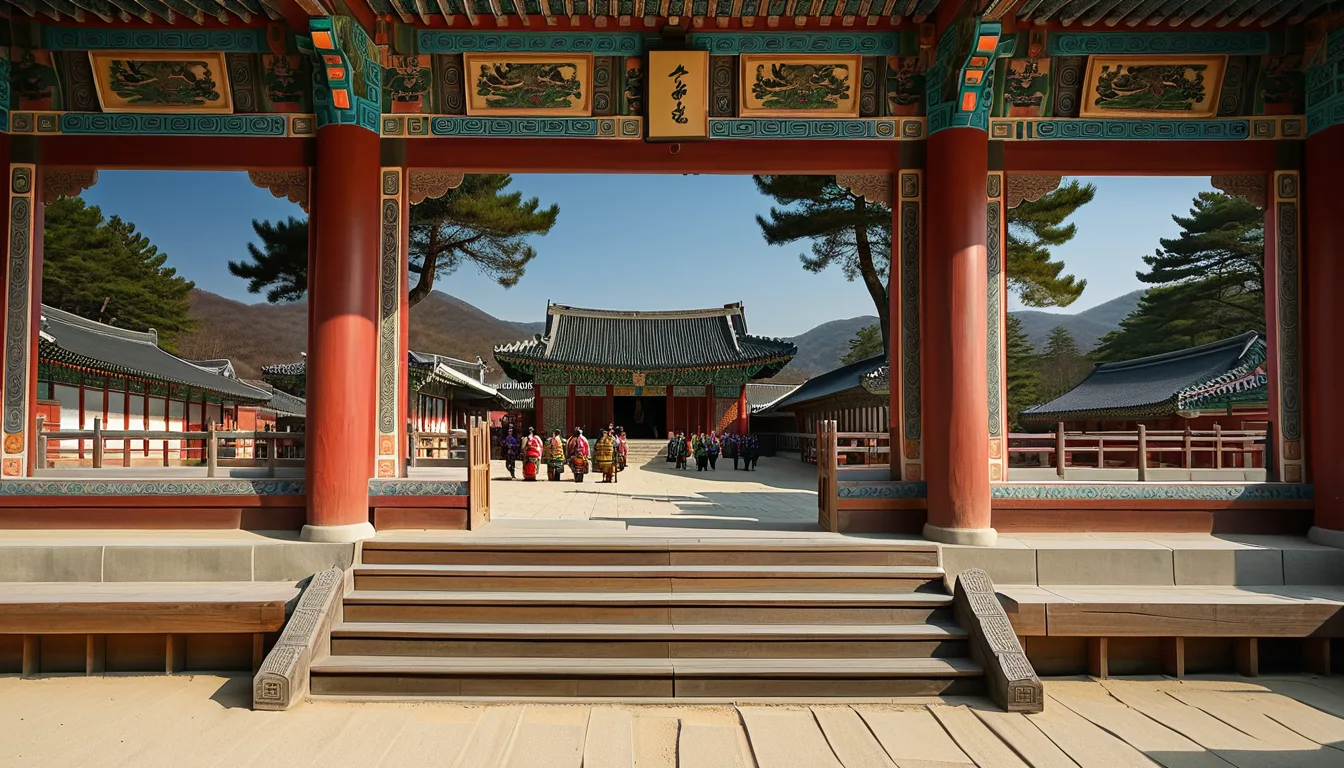
The short answer: the 1995 World Heritage listing is for the Janggyeong Panjeon halls
What joined the UNESCO World Heritage List in 1995 was a building: the Janggyeong Panjeon at Haeinsa Temple. The Tripitaka Koreana woodblocks were inscribed separately on the Memory of the World Register in 2007. The two listings cover different things. They sit on different lists and were decided at different meetings. This article is part 2 of a 17-part series.
The Janggyeong Panjeon is the building that houses the woodblocks. The Korea Heritage Service describes it as a structure built around the 15th century to keep the Tripitaka from decaying. The focus of the 1995 listing can therefore be seen as its architecture and method of preservation.
Two meetings: the halls in Berlin in 1995, the woodblocks in Pretoria in 2007
According to the Korea Heritage Service, the Janggyeong Panjeon at Haeinsa Temple in Hapcheon was inscribed on the UNESCO World Heritage List in 1995. The agency cites its value to the history of civilization, to the nation and to architectural history. A Seoul Shinmun article from December 1995 reported on the meeting that made the decision: the 19th session of the World Heritage Committee in Berlin, Germany. That year, the paper said, three Korean sites were recommended for listing. The other two were Seokguram Grotto and Bulguksa Temple and Jongmyo Shrine.
The woodblocks went onto a separate list. The Korea Heritage Service notes that they are inscribed on the Memory of the World Register as the "Printing Woodblocks of the Tripitaka Koreana and Miscellaneous Buddhist Scriptures." A 2007 report in The Korea Times says a meeting of UNESCO's International Advisory Committee made the decision. The committee met in Pretoria, South Africa, from June 11 to 15. A 2017 Seoul Shinmun article puts the total at 81,350 woodblocks. They average 3.5kg each and weigh 285 tonnes altogether.
Set side by side, the two listings differ on every point. One covers the Janggyeong Panjeon building, the other the woodblocks. One is World Heritage, the other Memory of the World. One dates from 1995, the other from 2007. One was decided in Berlin, the other in Pretoria. Yet the 1995 article's list of recommended sites also named the woodblocks, in the phrase "Tripitaka woodblocks and storage halls." That probably explains why the two listings are so easily remembered as one.
Criteria (iv) and (vi) as stated by the Korea Heritage Service, and the halls' standing as conservation science
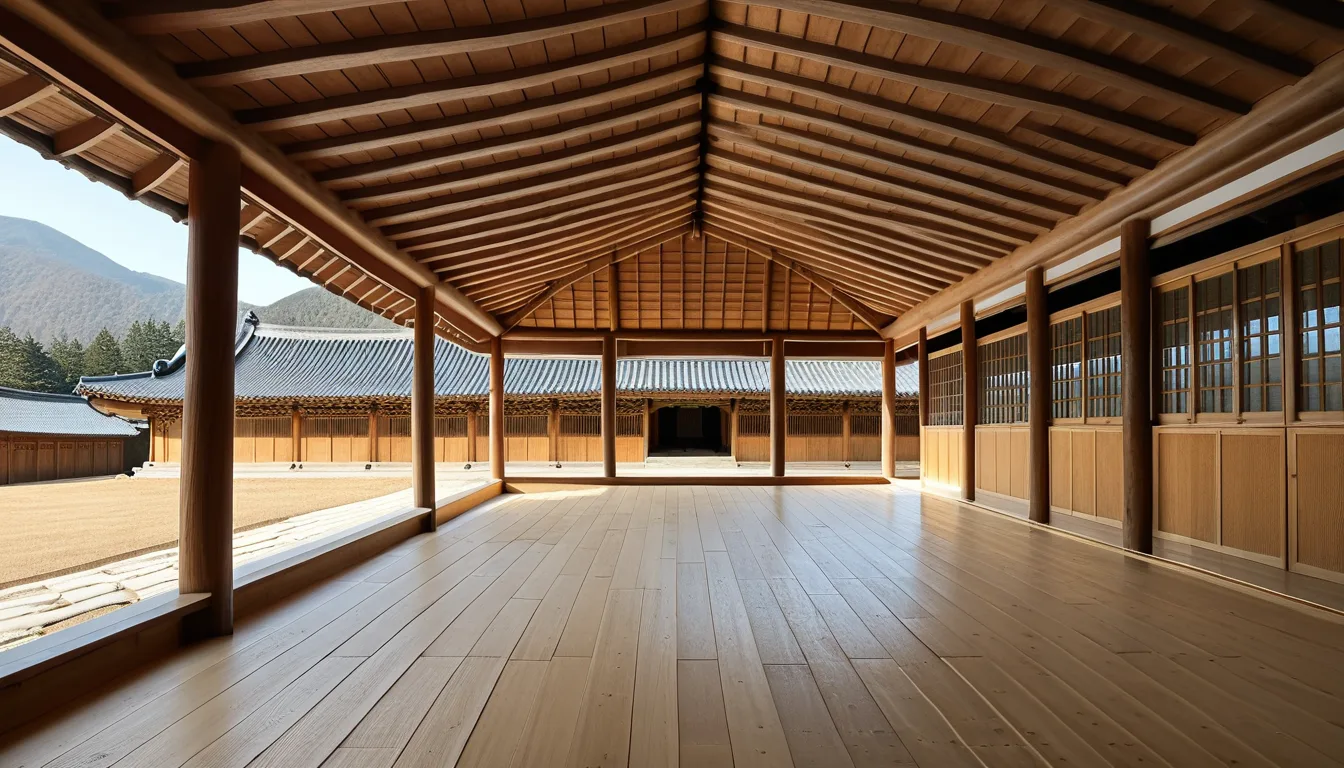
The Korea Heritage Service states that the Janggyeong Panjeon was inscribed under World Heritage criteria (iv) and (vi). It glosses criterion (iv) as "an architectural style that is a most characteristic example, representing important cultural, social, artistic, scientific, technological or industrial development."
Its description of the Janggyeong Panjeon includes this sentence: "The Janggyeong Panjeon, built around the 15th century to prevent the decay of the Tripitaka and keep it intact, is highly regarded as a product of conservation science that makes the fullest use of the natural environment."
The phrase "scientific, technological" in criterion (iv) can be read as connecting with the description of the halls as "a product of conservation science." The link shows that the value of the Janggyeong Panjeon is bound up with its job of protecting the woodblocks. The full text is available in the World Heritage section of the Korea Heritage Service website.
Uneven windows and charcoal-and-salt floors: what the encyclopedia and the Korea Heritage Service say
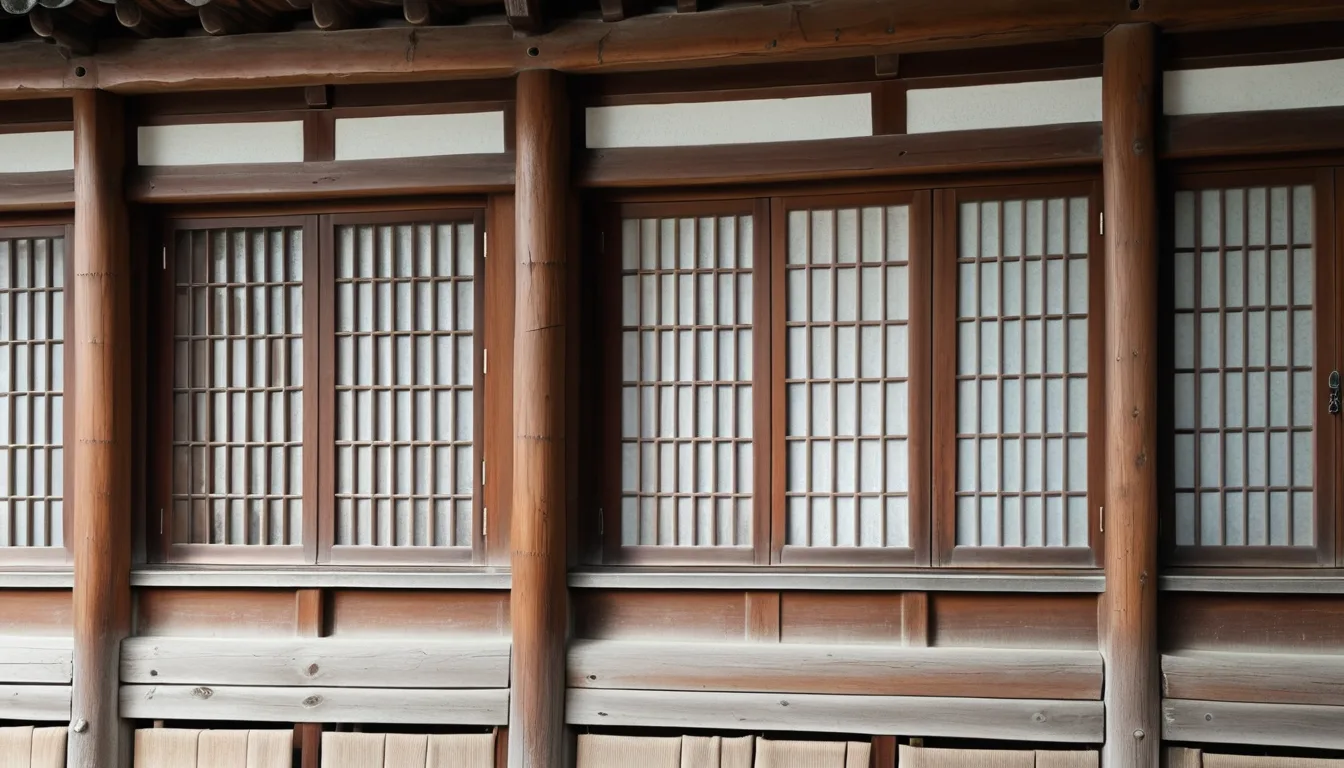
The Encyclopedia of Korean Culture, published by the Academy of Korean Studies, describes the Janggyeong Panjeon as buildings 15 bays wide and 2 bays deep under hipped roofs. Of the two halls, the southern one is the Sudarajang (修多羅藏) and the northern one the Beopbojeon (法寶殿). In each bay, the encyclopedia says, the south and north windows differ in size. So do the upper and lower windows. The Korea Heritage Service explains that this asymmetry between front and back windows controls the flow of air.
The two sources describe the floor slightly differently. The Korea Heritage Service says the floor was laid with layers of charcoal, lime, salt and red clay mixed in sequence. The encyclopedia says charcoal, lime powder and salt were layered with sand inside the earthen floor and tamped down. The encyclopedia also explains how the woodblocks are stored. Each stands upright on the shelves, held between end pieces about twice its thickness. This lets air circulate between the blocks.
Read together, the two sources suggest a division of labour. The windows handle airflow, the floor handles humidity, and the end pieces keep gaps between the woodblocks. The small differences in the lists of materials are a reminder to check the original texts rather than rely on a single source.
From Seonwonsa in 1318 to Haeinsa in 1398, and a bombing order in 1951
According to the Encyclopedia of Korean Culture, the Tripitaka woodblocks were moved in 1318 to Seonwonsa Temple (禪源寺) on Ganghwa Island. In 1398 they were moved again, to the Janggyeong Panjeon at Haeinsa. The encyclopedia attributes these moves to the frequent foreign invasions of the late Goryeo period. A 2017 Seoul Shinmun article reports that Japanese pirates landed on Ganghwa Island in 1360. They plundered Seonwonsa and other places, killing more than 300 monks and civilians. The same article notes two competing explanations for the move. One holds that it was meant to escape invasions. The other holds that it was a staged event to proclaim the legitimacy of the Joseon dynasty.
The encyclopedia also dates the building. The Janggyeong Panjeon was substantially rebuilt in the third year of King Sejo's reign (1457). In the 19th year of King Seongjong's reign (1488), according to records, the monk Hakjo (學祖) rebuilt it again with royal patronage and named it "Boandang." A 1995 Seoul Shinmun article reported the discovery of a roof tile inscribed with the year 1488, suggesting the building dates from the early Joseon period. Since the written records and the tile point to the same year, they can be seen as two separate lines of evidence for the date. The encyclopedia adds that the halls escaped damage during the Imjin War. They were repaired in 1622 and 1624.
The 2017 Seoul Shinmun article also recounts an episode from 1951. In August of that year, during an operation against communist guerrillas in the Jirisan mountains, Colonel Kim Young-hwan was ordered to bomb Haeinsa. He refused. The episode shows that the story of the Janggyeong Panjeon is about human judgement as well as building design.
| Item | Heritage category | Meeting that decided the listing | Designation in the 1995 Seoul Shinmun article |
|---|---|---|---|
| Janggyeong Panjeon, Haeinsa | World Heritage (cultural) | 19th session of the World Heritage Committee, Berlin, Germany, 1995 | Storage halls: National Treasure No. 52; Haeinsa: Historic and Scenic Site No. 5 |
| Printing Woodblocks of the Tripitaka Koreana and Miscellaneous Buddhist Scriptures | Memory of the World | UNESCO International Advisory Committee, Pretoria, South Africa, June 2007 | Tripitaka woodblocks: National Treasure No. 32 |
| Seokguram Grotto and Bulguksa Temple | World Heritage (cultural) | 19th session of the World Heritage Committee, Berlin, Germany, 1995 | Seokguram: National Treasure No. 24; Bulguksa: Historic and Scenic Site No. 1 |
| Jongmyo Shrine | World Heritage (cultural) | 19th session of the World Heritage Committee, Berlin, Germany, 1995 | Historic Site No. 125 |
Conclusion
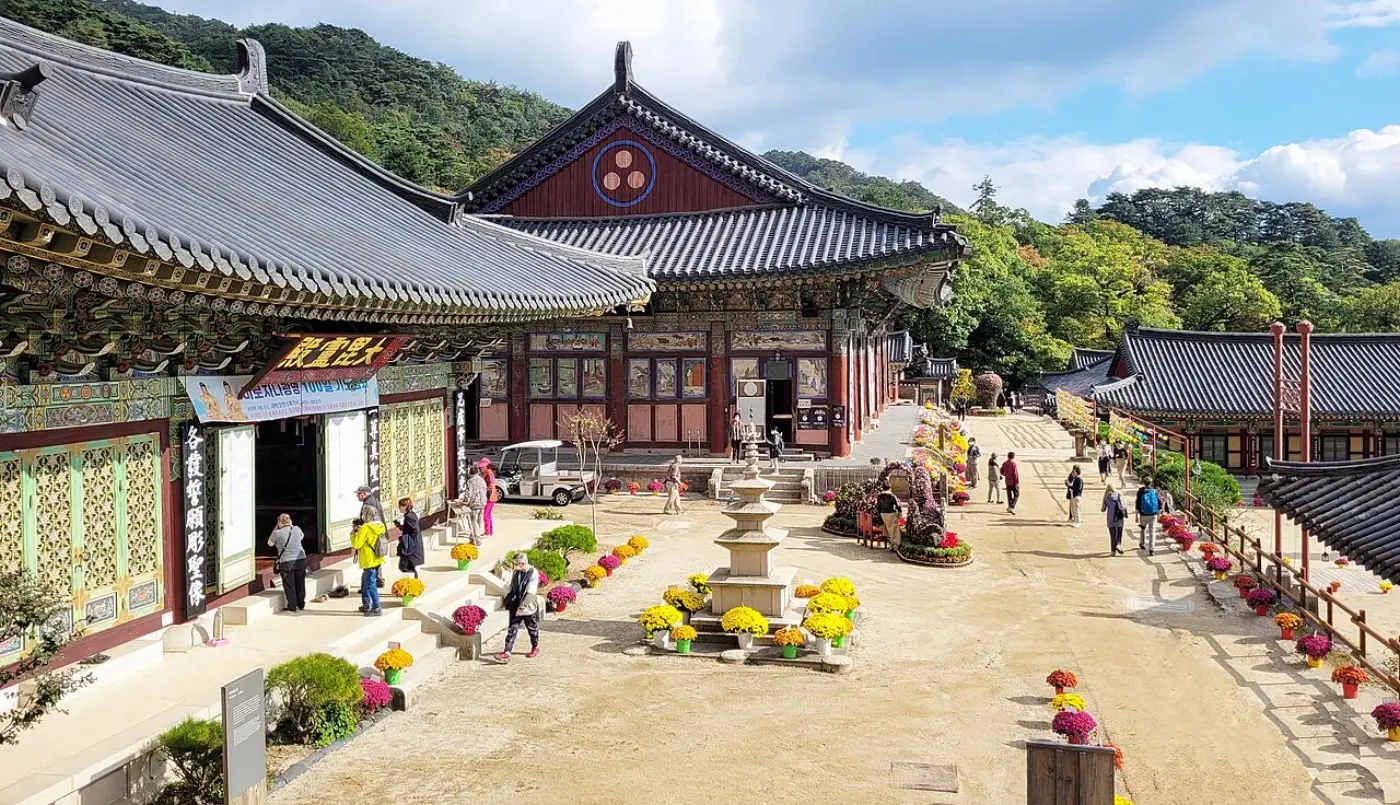
The sources above offer two ways of looking at the Janggyeong Panjeon. One is its preservation system of windows, floors and end pieces. The other is its documented history of moves, rebuilding and repairs. One question remains open. The woodblocks are recorded as arriving at Haeinsa in 1398, yet the rebuilding records date from 1457 and 1488. Reconciling the two needs a closer reading of the original texts.
On site, start by looking at the southern Sudarajang and the northern Beopbojeon side by side. Then notice how the window sizes vary from bay to bay. According to the Seoul Shinmun article, the outer wall of Haeinsa's Daejeokgwangjeon hall bears a mural known as the "Tripitaka Transfer Mural." It is thought to depict the woodblocks being carried from Gaepo to Haeinsa. Stand before it with the transfer records in mind, and you can trace the woodblocks' long journey.