How a 120 cm Horn Bow Reaches a Target 145 Meters Away
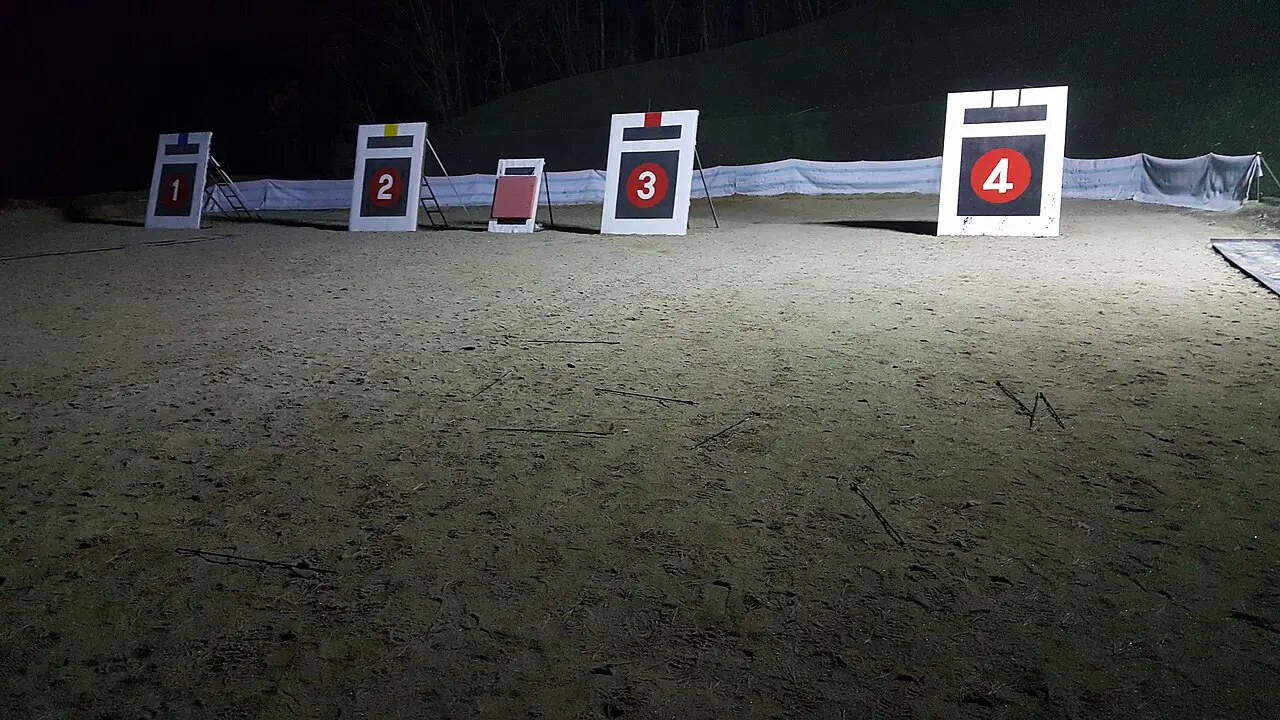
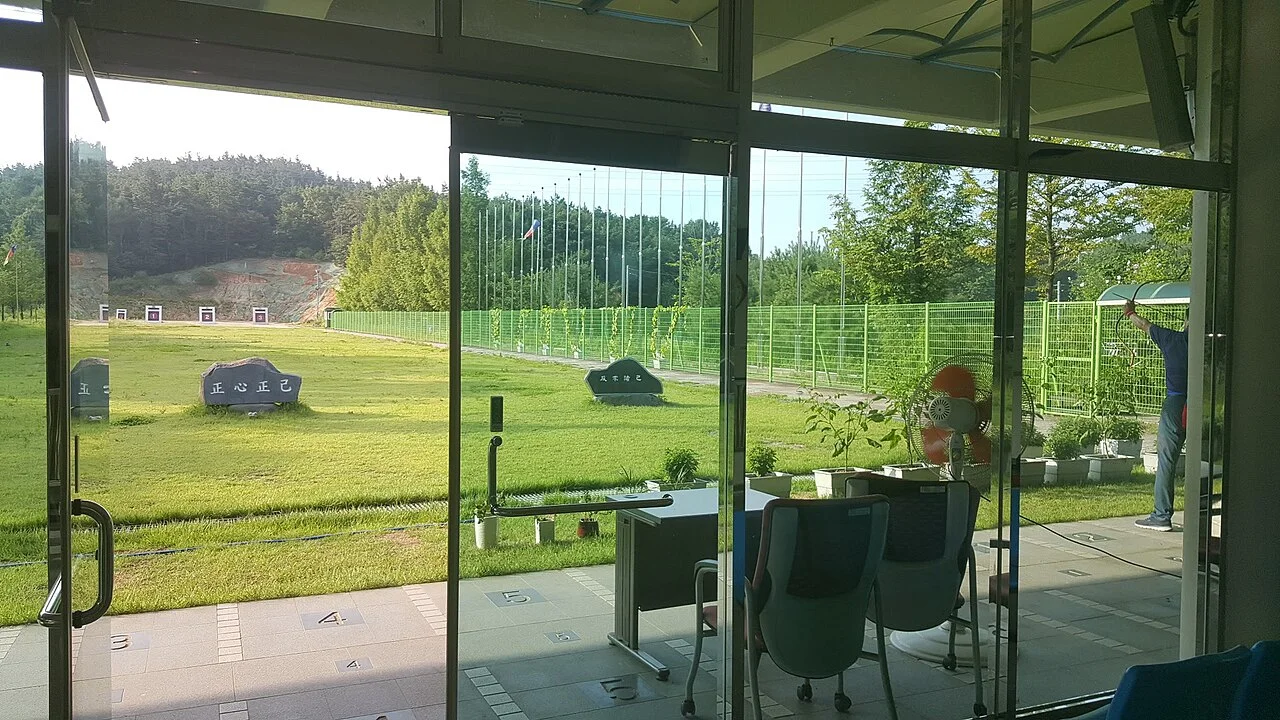
Stand on the shooting line (sadae) of a traditional Korean archery range (hwalteo) and the target across the field looks impossibly distant. Standard target distance in Korean traditional archery (Gukgung) is 145 meters—longer than a football field. Yet the bow held by the archer, the Gakgung (角弓, Korean horn bow), measures only 120 to 130 centimeters long. When unstrung, it curls backward into a compact ring no wider than a forearm; when bent in reverse, strung, and drawn to the thumb, it launches a bamboo arrow in a high, graceful arc that strikes the distant wooden target with a resounding crack.
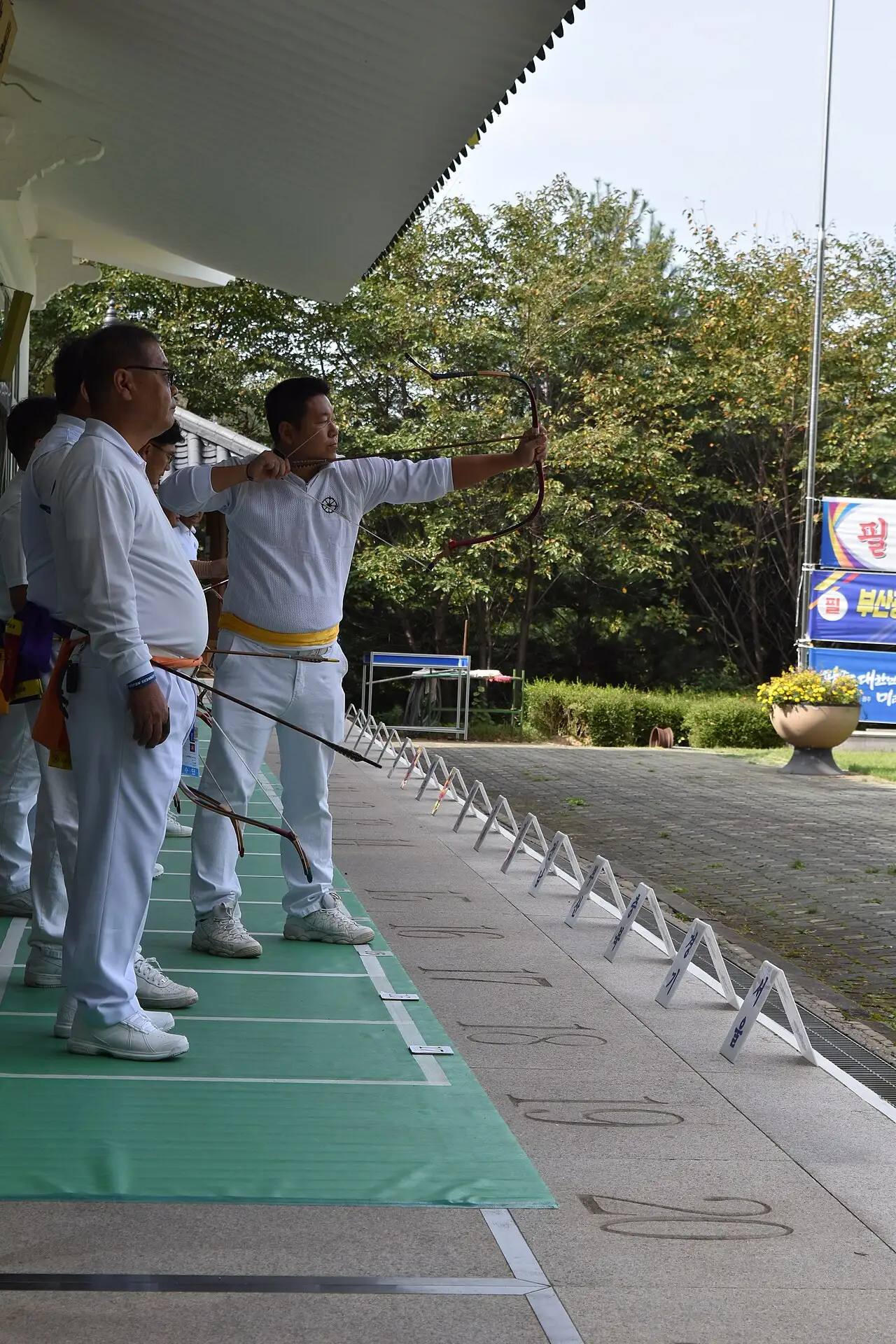
The artisans who engineer this pairing of bow and arrow hold the title of National Intangible Heritage No. 47, Gungsijang (弓矢匠). The designation unites two distinct masters: the Gungjang (弓匠, Bowyer), who builds the composite horn bow, and the Sijang (矢匠, Arrow-Maker), who crafts the traditional bamboo arrow (Juksi).
Part 1 — The Gungjang’s Workshop: Seven Natural Materials and Four Seasons
Unlike the English yew longbow or the Japanese bamboo yumi, which rely on long stave length to generate cast, the Korean Gakgung is an extreme reflex composite bow laminated from seven distinct plant and animal materials.
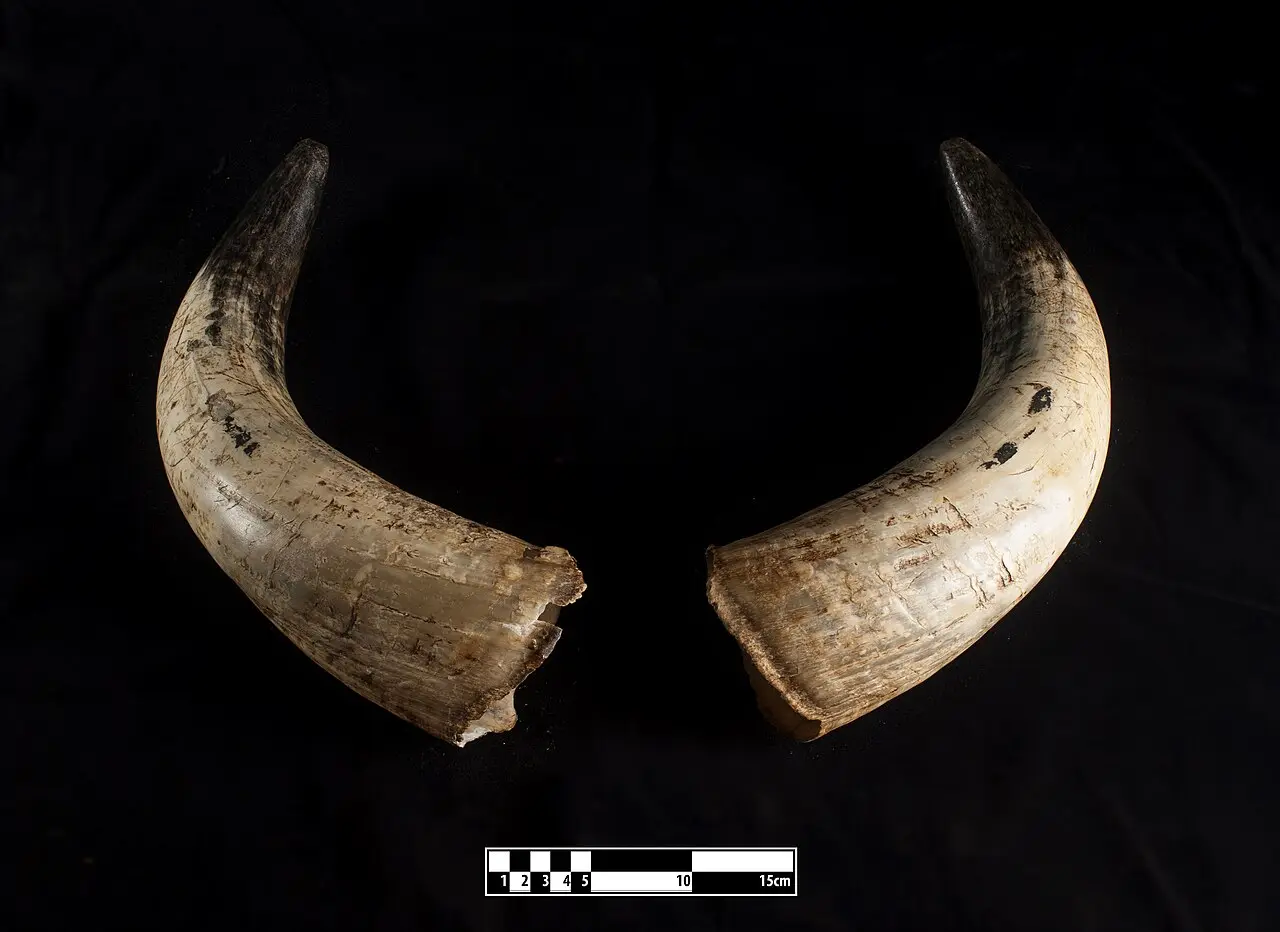
Mechanical Division of Labor Among the Seven Materials
- Timber Bamboo Core: Forms the flexible central spine of the working limbs.
- Mulberry Wood (Sangmok): Joined to both ends of the bamboo core via precision V-splices (yeonso-geori) to form the rigid outer ears (goja) that lever the bowstring.
- Oak Wood: Laminated at the center handle (jumtong) to prevent twisting at full draw.
- Water Buffalo Horn (Suugak): Glued to the inner belly (compression side) of the limbs; when the bow is drawn, the horn compresses and stores tremendous elastic return energy.
- Ox Back Sinew (Ugeun): Shredded into fine fibers and layered onto the outer back (tension side) of the bow, stretching like elastic cables so the wood and bamboo never snap under extreme bend.
- Croaker Swim-Bladder Glue (Eogyo): A pure collagen adhesive simmered from croaker fish bladders that bonds wood, bamboo, horn, and sinew without a single nail or synthetic resin.
- Birch Bark (Hwapi): Wrapped over the finished bow back to shield the moisture-sensitive sinew and fish glue from rain and humidity.
Inside the Bowyer’s Process: Roping the Horn and Combing the Sinew
Two operations define the Gungjang’s year: gakbu (horn bonding) and sim-noki (sinew backing). After heat-shaping the bamboo core and splicing on the mulberry tips and oak handle, the bowyer coats the belly and a pair of planed water buffalo horn strips with hot fish-bladder glue, then lash-binds them together using a long hemp rope (joseung) and wooden levers, throwing the artisan’s full body weight into every turn to squeeze out air pockets.
Next comes the ox sinew, which has been dried and pounded thousands of times on a smooth stone with a wooden mallet until it separates into silky white threads. Only when cold late-autumn and winter winds arrive—so the fish glue gels cleanly without spoiling—does the bowyer dip bundles of sinew into warm fish glue, lay them along the back of the bow, and comb them straight using a notched bamboo comb (simbit) and a heated smoothing iron (sim-indu). Applied in ten or more successive layers over weeks and cured inside a warm drying chamber (jeomhwajang), the sinew shrinks as it dries, pulling the bow into its dramatic reverse ring.
Finally, in spring or summer, the bowyer carefully uncurls the seasoned bow, warming the limbs over a low charcoal fire to balance limb symmetry and draw weight—a delicate tuning stage called haegung.
Part 2 — The Sijang’s Workshop: Straightening Bamboo with Fire and the Jodae
Even the finest Gakgung cannot hit a target 145 meters away without a perfectly balanced arrow. Crafted by the Sijang (Arrow-Maker), the Korean bamboo arrow (Juksi) weighs just 26 to 30 grams (7–8 don) yet passes through more than 130 hand steps.
Fire Straightening and Aerodynamic Precision
- Harvesting Two-Year-Old Coastal Bamboo (Haejangjuk): In winter, the Sijang selects dense, wind-hardened two-year-old arrow bamboo from Korea’s southern and eastern coasts, dries it, and shaves off the outer rind.
- Charcoal Heating & Lever Straightening (Jeoljabi & Hwajabi): Wild bamboo grows with slight bends at every node. Rotating the shaft over a small charcoal brazier until moisture steams and the lignin softens, the master slots the bamboo into a grooved wooden lever tool called a jodae, sighting down the shaft with one eye and flexing each node until the shaft runs dead straight.
- Bush-Clover Nock & Peach-Bark Wrapping: To prevent the bowstring from splitting the hollow bamboo at release, the Sijang carves a nock (oni) from tough bush-clover wood (ssari), glues it into the rear of the shaft with fish glue, and wraps the joint tightly in sinew and reddish peach-tree bark (dopi) before fitting a conical iron point to the front.
- Three-Feather Pheasant Fletching: The outer wing feathers of wild male ring-necked pheasants are trimmed and glued at exact 120-degree intervals. Because left-wing and right-wing feathers curve in opposite directions, all three feathers on a single arrow must come from the same wing side so the arrow spins smoothly in flight like a rifled bullet.
Where Bowyer and Arrow-Maker Meet Across 145 Meters
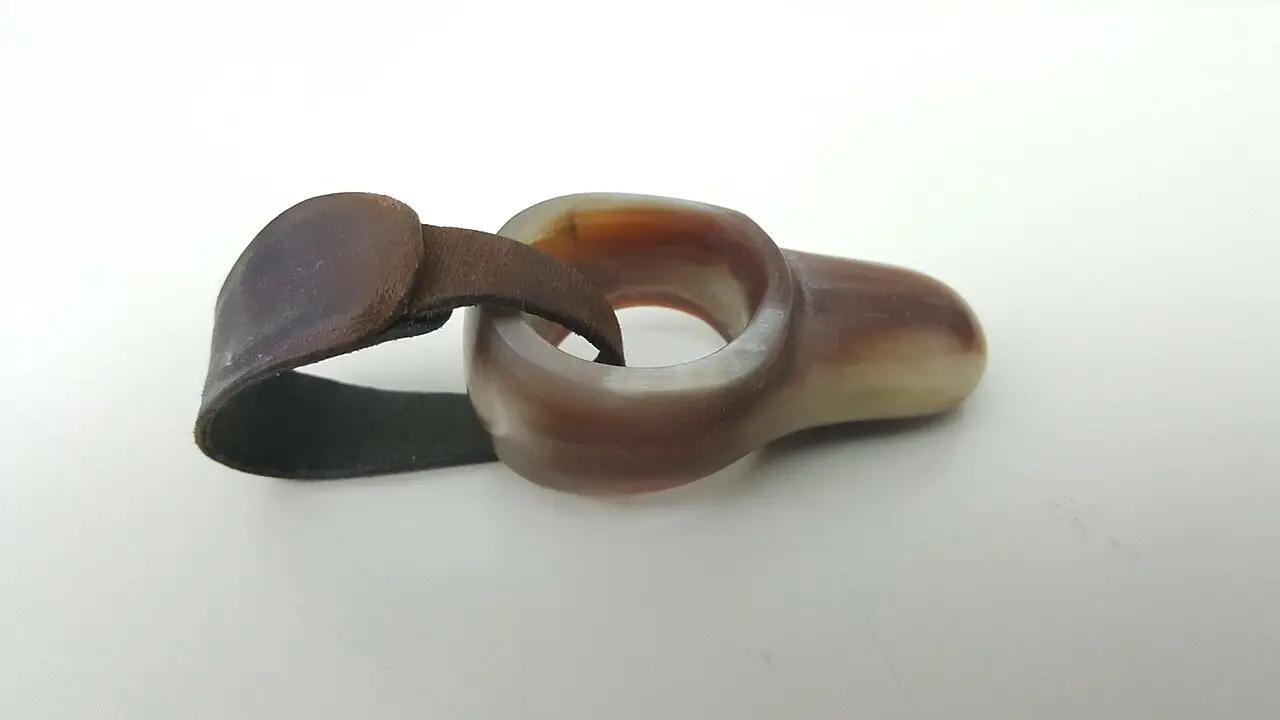
When an archer slips a horn thumb ring (suggakji) onto the thumb, nocks a heat-straightened bamboo Juksi, and draws a year-cured Gakgung, two master crafts merge into a single flight path. Built without a gram of fiberglass or synthetic epoxy, the work of the Gungsijang stands as a masterpiece of pre-modern bio-composite engineering.