1. The Structural Causes of Language Loss: Institutional Coercion, Not Individual Choice
In 2016, the UN Permanent Forum on Indigenous Issues stated that 40 per cent of the world's estimated 6,700 languages were in danger of disappearing. Most of them were Indigenous languages (IDIL 2022–2032). UNESCO gives a similar picture. It estimates that over 7,000 languages are spoken today, and that up to 1,500 are at risk of falling silent before the close of this century (UNESCO).
Yet it is misleading to describe this loss as a natural byproduct of modernization. It is just as misleading to blame families for failing to pass on their mother tongues. Both views hide the historical reality. Sociolinguistic research shows what really drives language shift, meaning the move from an ancestral language to a dominant regional or global one. The causes are colonial assimilation, compulsory schooling, territorial displacement and legal disenfranchisement.
Residential schools are the clearest example. Throughout the 19th and 20th centuries, residential school systems were imposed on a wide scale in the United States, Canada, Australia, New Zealand and elsewhere. They forcibly uprooted languages. Every time children spoke their mother tongue, they faced physical punishment and psychological deprivation.
Institutions also recognized only the dominant language (English, French, Spanish and so on) as a legitimate means of communication in public administration and the courts. These barriers forced indigenous parents into a tragic choice. They suppressed their own mother tongue so that their children could avoid social stigma and discrimination and have a chance of economic survival.
Language revitalization, therefore, is in no sense about satisfying personal cultural taste or nostalgia. It is a question of justice. It means restoring the fundamental rights and the linguistic human rights of communities destroyed by state violence and discriminatory institutions.
2. The Trap of Speaker-Count Statistics and Multidimensional Vitality Assessment
The most common mistake in diagnosing an endangered language is to fixate on a single figure: the 'number of speakers'. Imagine a language with 50,000 or even 100,000 speakers. Suppose all of them are in their sixties or older, and parents have completely stopped passing it on to infants and adolescents at home. Then the statistic is an illusion, and the language will fall abruptly silent within a single generation.
The reverse is also true. A language with only a few hundred speakers can still be a living language with strong powers of reproduction. This happens when small children share their daily lives in it at home and in kindergarten. It also happens when the language is the main tool of communication in the village community.
In 2003, a UNESCO expert group published a document called Language Vitality and Endangerment (UNESCO Ad Hoc Expert Group on Endangered Languages). It lists intergenerational language transmission, or passing a language from one generation to the next, as Factor 1. It calls this the most commonly used factor in evaluating a language's vitality.
However, the document stresses that no single factor should be used alone. Transmission is assessed alongside several other factors. These include the absolute number of speakers and the proportion of speakers in the total population. They also include trends in existing domains of use, such as the home, schools and public life, and the language's response to new domains and media.
Indigenous scholars are also increasingly challenging labels such as “extinct” that outsiders apply. Documented materials, rememberers and ancestral identity may still survive. When they do, indigenous communities see their heritage as a “sleeping language.” Revitalization then becomes a deliberate process of reawakening.

This framework shows that two languages with the same number of speakers can be in very different situations. It suggests that, when assessing an endangered language, we need to ask not only how many people speak it but also whether children are inheriting it.
3. The Evolution of International Norms: UN General Assembly Resolution 74/135 and the International Decade of Indigenous Languages
The year 2019 was the International Year of Indigenous Languages. Afterwards, international bodies recognized that a single commemorative year could not reverse centuries of linguistic erosion. On December 18, 2019, the United Nations General Assembly adopted Resolution A/RES/74/135. It proclaimed 2022–2032 the International Decade of Indigenous Languages.
One legal distinction is critical. The UN General Assembly proclaimed the International Decade. It then invited UNESCO to act as the lead agency, working with the Department of Economic and Social Affairs (DESA) and other relevant agencies. This work is to be done within existing resources. The resolution is a non-binding General Assembly resolution. It invites Member States to consider establishing national mechanisms with adequate funding (Paragraph 25).
The official text of Paragraph 24 of UN General Assembly Resolution A/RES/74/135 declares:
“24. Proclaims the period 2022–2032 as the International Decade of Indigenous Languages, to draw attention to the critical loss of indigenous languages and the urgent need to preserve, revitalize and promote indigenous languages and to take urgent steps at the national and international levels, and invites the United Nations Educational, Scientific and Cultural Organization to serve as the lead agency for the International Decade, in collaboration with the Department of Economic and Social Affairs of the Secretariat and other relevant agencies, within existing resources;”
The Global Action Plan for the Decade is not a binding treaty. It sets no legal mandate or deadline for states. According to the IDIL 2022–2032 portal, it is a strategic framework. It guides the activities of UN-system entities, national governments, Indigenous peoples' organizations, civil society and academia.
The Global Action Plan outlines ten interlinked thematic areas. They include inclusive education, digital empowerment, healthcare and public administration. Their purpose is to broaden the everyday, practical use of Indigenous languages. They also help achieve the objectives set out in the UN Declaration on the Rights of Indigenous Peoples (UNDRIP).
The resolution itself imposes no obligations. It only “invites Member States to consider establishing national mechanisms with adequate funding” for the Decade, in partnership with Indigenous peoples (A/RES/74/135, para. 25).
Distinguishing the body that proclaimed the Decade from its lead agency makes clear that the Decade sets a direction, while building institutions is left to each country. The differences among New Zealand, Wales and Jeju discussed below can be read within this framework.
4. New Zealand's Māori Language Act 2016: Official-Language Status and a Dual Governance System
New Zealand's revival of Te Reo Māori, the Māori language, is a model example of how laws can evolve over time. It began at the grassroots in 1982, when the first Te Kōhanga Reo opened. These “language nests” are immersion preschools (Te Kōhanga Reo National Trust). Community advocacy then led to the Māori Language Act 1987. Section 3 of that Act first declared Māori an official language. In 2016, the New Zealand Parliament enacted Te Ture mō Te Reo Māori 2016 (Māori Language Act 2016), which replaced the 1987 law.
Section 5 of the Māori Language Act 2016 states that “The Māori language is an official language of New Zealand.” This reaffirms the official-language status first granted in 1987. The Act also makes 'active partnership' between the Crown and iwi and Māori a principle of interpretation (Section 8(2)(i)).
In addition, the Act sets up a dual governance system with two strategies running in parallel. The Crown-side strategy, Maihi Karauna, is issued by the Minister (Section 10). The Māori-side strategy, Maihi Māori, is developed by Te Mātāwai (Section 11). Te Mātāwai is the independent statutory body that acts on behalf of iwi and Māori:
- Te Taura Whiri i te Reo Māori (Māori Language Commission): Continued as an autonomous Crown entity under Section 37, its statutory functions under Section 40 include taking the lead in co-ordinating the implementation of the Maihi Karauna (the Crown's strategy issued by the Minister under Section 10), promoting te reo Māori as a living language, and granting certificates of competency such as translator and interpreter qualifications (agency profile).
- Te Mātāwai: Established under Section 17 as an independent statutory entity, it acts on behalf of iwi and Māori (Section 18). Under Section 20, its 13 members are appointed as follows: 7 by regional iwi clusters, 4 by Te Reo Tukutuku clusters representing Māori-language organisations, and 2 by the Minister on behalf of the Crown. It develops and approves the Maihi Māori strategy (Section 11) and administers programmes to implement it (Section 19), with Crown funding administered under an annual purchase agreement agreed with the Minister (Section 24).
Under this system, the Crown does not design language policy alone. The law gives Te Mātāwai the job of developing the Māori-side language strategy and running related programmes. Te Mātāwai has 13 members, and 11 of them are appointed by the iwi clusters and the Te Reo Tukutuku cluster (Section 20). This is a leading example of a key point: community participation is central to reviving an indigenous language.
There is a tension, however. Te Mātāwai's budget goes through parliamentary scrutiny every year, under a purchase agreement made with the Minister. As a result, its financial autonomy and government oversight must be continuously balanced against each other.
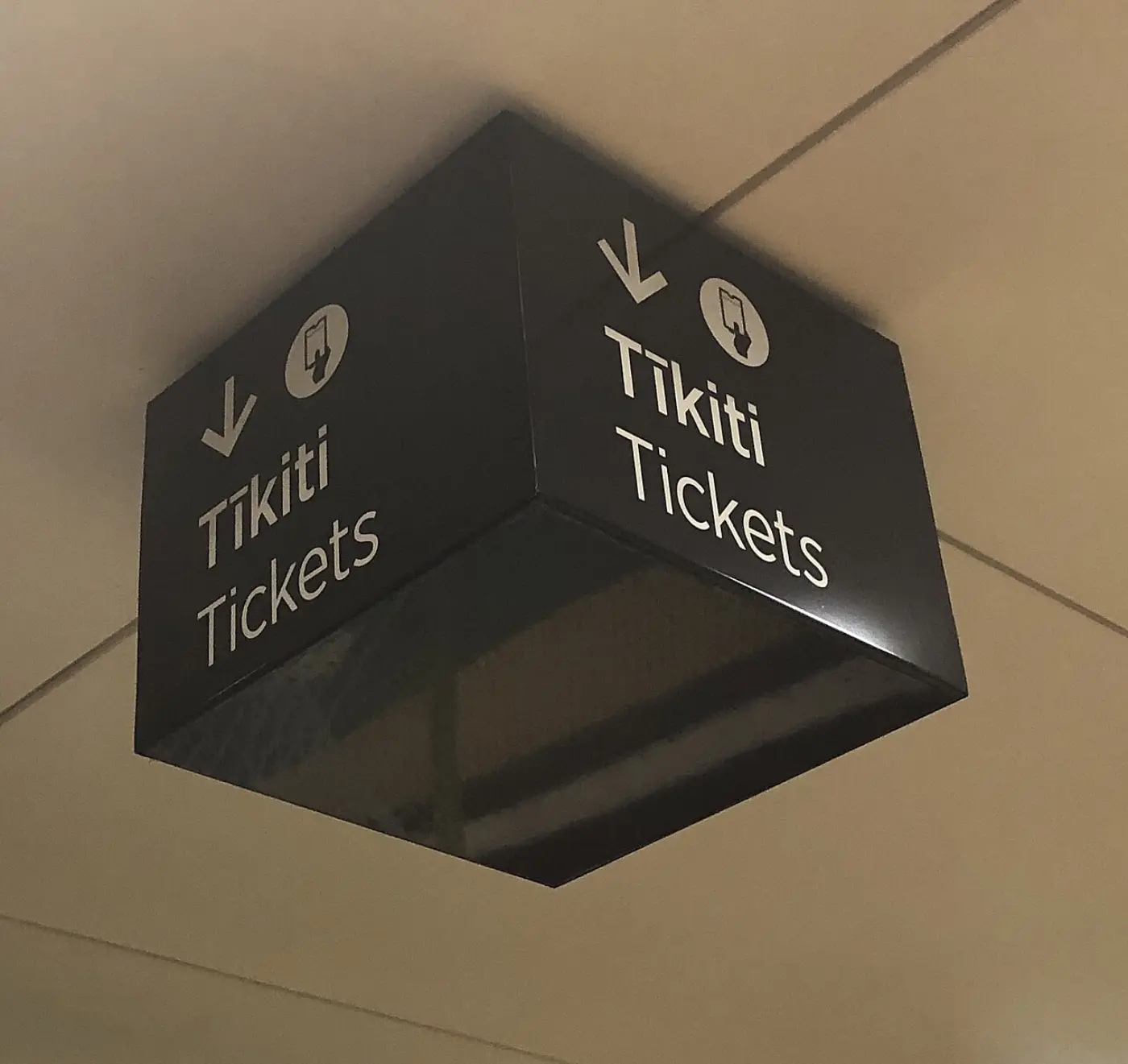
This case shows that declaring a language official and deciding who plans its future are separate questions. The 2016 Act can be read as filling the status granted in 1987 with a concrete governance design.
5. The Welsh Language Measure 2011 and the Government of Wales Act 2006: Public-Service Duties and Legal Equality
In the United Kingdom, Wales offers one of the most detailed legal models for a minority language. It is set out in the Welsh Language (Wales) Measure 2011 and the Government of Wales Act 2006. Alongside these laws, the Welsh Government has set a target of one million Welsh speakers by 2050 (Cymraeg 2050).
The challenge remains serious, however. According to the 2021 Census, an estimated 538,300 usual residents of Wales aged three and over (17.8%) reported speaking Welsh. That was a decline from 562,000 (19.0%) in 2011. The legal framework rests on two complementary pillars.
The first pillar is the Welsh Language (Wales) Measure 2011. It put the language's status on an explicit legal footing. Section 1 states that “The Welsh language has official status in Wales.” Statutory duties give this status legal effect within Wales. Section 2 creates the office of Welsh Language Commissioner. Section 3 sets the Commissioner's principal aim: “to promote and facilitate the use of the Welsh language.”
The Commissioner is a corporation sole (Schedule 1) and is independent of the Crown. Appeals are heard by a separate body, the Welsh Language Tribunal.
Parts 4 and 5 of the Measure explain how the duties work. The Welsh Ministers specify Welsh Language Standards by regulations (Section 26). The Commissioner then issues compliance notices that impose duties on public bodies (Section 44). In August 2025, the standards were extended to two water companies, Dŵr Cymru and Hafren Dyfrdwy (Nation.Cymru).
The second pillar is the **Government of Wales Act 2006 (2006 c. 32)**. It enforces bilingualism at the constitutional level of Welsh devolution. Section 35 was substituted in 2012 by the National Assembly for Wales (Official Languages) Act 2012. It designates English and Welsh as official languages of Senedd Cymru. It also requires the two languages to be treated on a basis of equality in the conduct of Senedd proceedings.
In addition, Section 156 covers Assembly Measures and Acts enacted in both languages. Their English and Welsh texts are “to be treated for all purposes as being of equal standing.” For Acts receiving Royal Assent on or after 1 January 2020, section 5 of the Legislation (Wales) Act 2019 is the governing provision.
The devolved power to make laws on language grew step by step. Schedule 5 Field 20 as enacted was an empty heading. In 2010, S.I. 2010/245 inserted Matter 20.1. This provided the power under which the 2011 Measure was passed. Today, this competence is governed by Section 108A.
The Welsh case shows that a declaration of official status becomes a concrete duty when it is tied to enforcement mechanisms such as the Commissioner, the Standards and the Tribunal. Yet the fact that speaker numbers fell even after these mechanisms were in place suggests that legal institutions and a language's vitality need to be assessed separately.
6. Korea's Framework Act on the Korean Language and the Jeju Language Ordinance: Writing Regional-Language Preservation into Law, and Its Practical Limits
South Korea's laws have likewise evolved to recognize regional linguistic heritage. Article 4, Paragraph 1 of the national Framework Act on Korean Language provides the following. This is the official English translation by the Korea Legislation Research Institute:
“The State and local governments shall actively respond to the changing environment for using languages and endeavor for the development and preservation of the Korean language by, for example, enhancing the people's Korean language aptitude and preserving local dialects.”
This national law set a baseline principle for preserving regional languages. However, it is worded as a duty to make efforts (노력하여야 한다), not a binding mandate. Practical action came from local legislation. Citing Article 4 of the Framework Act, Jeju Special Self-Governing Province enacted the Jeju Language Preservation and Promotion Ordinance on 27 September 2007 (Ordinance No. 280).
In December 2010, UNESCO listed the Jeju language (Jejueo) as critically endangered. After that, the province amended the ordinance in April 2011 (Ordinance No. 719). Repeated revisions then expanded its administrative framework. The current version is Ordinance No. 3919, amended on 19 March 2025.
Among Korea's local laws, the Jeju ordinance gives minority language preservation its most systematic, concrete form. It writes specific steps into law. Article 4 calls for five-year basic plans for developing the Jeju language. Article 8 establishes the Jeju Language Preservation and Promotion Committee. Article 11-2 sets a standard orthography and language norms for the Jeju language.
Article 11-3, added in 2017, covers cultural and tourism information signs and tourist guidebooks installed or published by Jeju Special Self-Governing Province. These must carry the Jeju language alongside Korean. Article 16 establishes the Jeju Language Week. The ordinance currently in force is Jeju Special Self-Governing Province Ordinance No. 3919, partially amended on 19 March 2025.
Compared with the Māori or Welsh legislation, however, Korea's regional language law still has limits. It has no clause mandating full immersion education in schools. It has no independent Commissioner with power to compel public bodies to comply with language standards. Its structure for securing stable funding is also weak.

In Wales, the Standards are applied to organisations through the Commissioner's compliance notices and have been extended to non-public bodies. Set side by side with this, the Jeju obligation to include Jeju language reveals a clear difference: it covers only signs and guides that the province itself installs or publishes.
7. The Separation of Documentation from Revitalization, and Data Sovereignty
Generative artificial intelligence (AI) and large language models (LLMs) are developing explosively. This opens unprecedented opportunities for endangered languages, but it also raises ethical challenges. Here, language researchers and policymakers must strictly separate two things: 'language documentation' and 'language revitalization'. They are different in kind.
Dictionaries, grammars and high-resolution audio and video recordings can be stored permanently on cloud servers. This creates a precious record of a language. But a database asleep on a server does not, by itself, produce new child speakers. Documentation is preservation work. Revitalization is a living social practice. It makes the language breathe through the mouths of children at home, in the alleyways and in the classroom.
Big data, open data and AI training are increasing the secondary use of indigenous language materials. This makes the debate over **Indigenous Data Sovereignty** all the more important. Under this idea, indigenous peoples assert rights and interests in data about themselves, their communities and their territories.
One key framework is the **CARE Principles**: Collective Benefit, Authority to Control, Responsibility and Ethics. They were drafted on 8 November 2018 at a workshop in Gaborone, Botswana. The drafters were the International Indigenous Data Sovereignty Interest Group under the Research Data Alliance (RDA). The Global Indigenous Data Alliance (GIDA) approved and published them in September 2019. They are not legally binding prohibitions but governance principles. They complement the FAIR principles, which emphasize opening data. The CARE Principles urge that indigenous data be used for the community's collective benefit and under its control.
Indigenous language materials contain unique ecological knowledge and oral traditions. These must be protected from unauthorized commercialization by outsiders. Rights of access to the data, and of participation in its governance, must be closely negotiated with the indigenous communities concerned.
Read alongside the 'intergenerational language transmission' criterion discussed earlier, it becomes clear that documentation alone cannot restore a language's vitality. The debate over data sovereignty shows that the earlier view of revitalization as a question of rights extends to documentary materials as well.
8. The Common Lessons of the Four Institutions: An Ecosystem Linking Law and Everyday Life
These four institutional experiments range from the UN General Assembly's International Decade resolution to the laws and ordinances of New Zealand, Wales and Korea. Together, they point to three clear common denominators in what it takes to bring disappearing languages back to life:
- Statutory Recognition is Foundational: Absent de jure official language status, indigenous and regional languages cannot successfully compete for state budgetary allocations or judicial accommodations. Māori holds official language status under Section 5 of the Māori Language Act 2016, and Welsh holds statutory official status within Wales under Section 1 of the Welsh Language (Wales) Measure 2011, given practical legal effect through enforceable duties on public bodies and the office of the Welsh Language Commissioner.
- Community Co-Governance is Indispensable: As demonstrated by Te Mātāwai under New Zealand’s 2016 Act, policy formulation and resource allocation must reside directly with indigenous speakers rather than detached bureaucratic ministries.
- Interconnected Domains of Daily Use: School instruction remains ineffective if graduates encounter institutional barriers in healthcare, courts, civic administration, and digital software. Legislation must systematically secure public domains of use to sustain the daily utility of the language.
In the end, keeping a language alive is not an antiquarian exercise of collecting bygone words and storing them in an archive. It is the work of guaranteeing institutional rights and space for people living today. With these, they can plan and live out their futures on the basis of their own identity and distinctive worldview, without social disadvantage.