The short answer
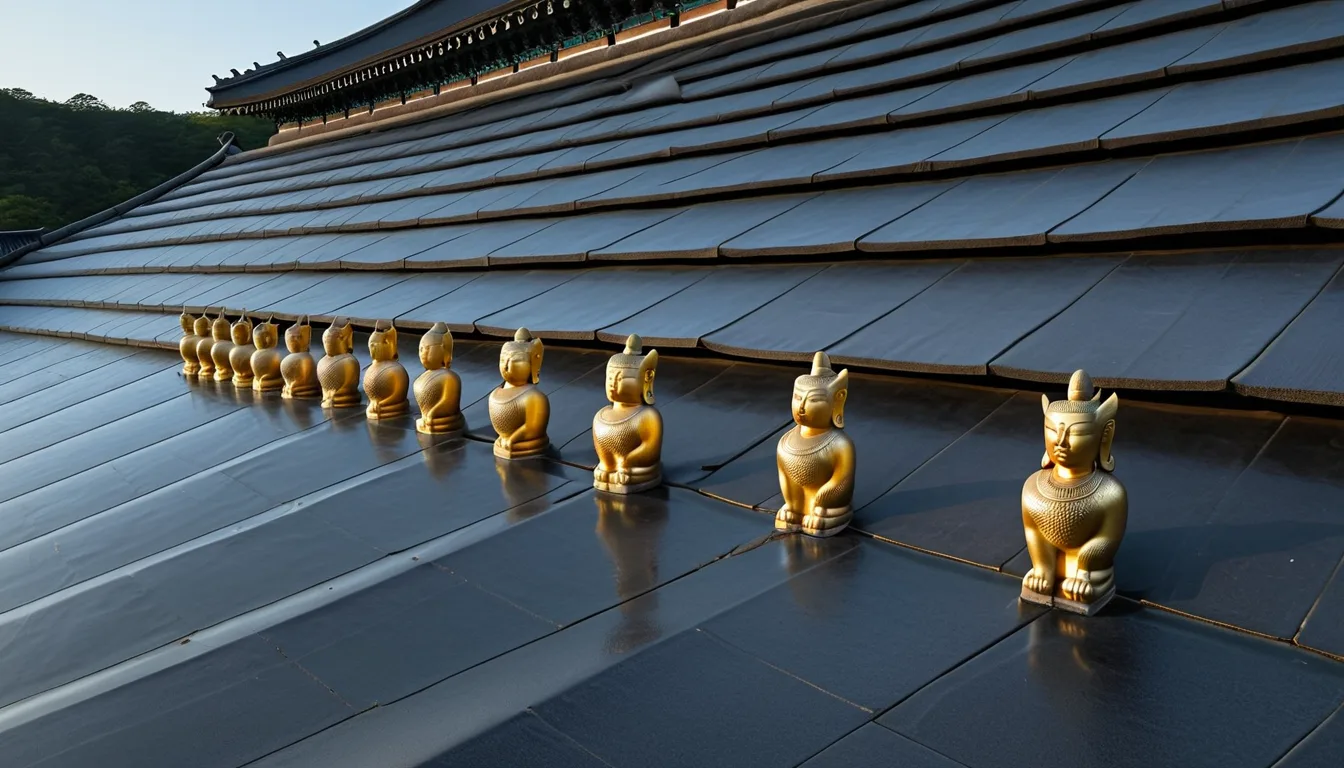
Japsang (雜像) are decorative roof tiles set on the hip ridges of palace halls and gate towers. The Encyclopedia of Korean Culture cites the Joseon Dogyosa (朝鮮道敎史, A History of Korean Taoism) and calls them the ten deity figures (神像). They are said to depict characters from the novel Journey to the West (西遊記) and earth deities (土神). Their purpose is said to be warding off sal (煞), or malign influences.
Japsang did not go on just any roof. Korea Heritage Service materials limit them to palaces, the capital's city gates, Jongmyo Shrine, Seonggyungwan and a few other sites. Private houses, Buddhist temples, seowon academies and local hyanggyo schools had none. This article looks at the names and number of japsang and where they were installed. It also compares them with the Chinese jishou (脊兽).
The Joseon Dogyosa: where japsang sit and why
The Encyclopedia of Korean Culture's entry on japsang quotes the Joseon Dogyosa. That book defines japsang as "ten deity figures (神像) placed on the hip ridges of palace halls and gate towers." On their purpose, it says they are "said to ward off sal (煞)." The closing "said to" signals that the author is passing on a received explanation.
The first word to notice in this definition is "hip ridge." Korea Heritage Service materials explain that yongdu, chwidu and chimi ornaments sit at the two ends of a palace's main roof ridge. Japsang sit with yongdu on the hip ridges or the descending ridges. In other words, japsang belong to the hip and descending ridges, not the ends of the main ridge. This distinction keeps several kinds of roof ornament from being lumped together under one name.
Korea Heritage Service materials give decorative roof tiles two kinds of meaning. One is decorative: the tiles display a building's authority and dignity. The other is "a magical meaning of warding off disaster and evil spirits." The Joseon Dogyosa passage mentions only the second, warding off sal.
Read side by side, the two sources suggest that japsang both adorned and protected. They do not show which meaning came first. The word sal, however, turns up again among the names of the ten figures.
Eou yadam: the ten names
Eou yadam (於于野談) is the text the Encyclopedia of Korean Culture cites for the names of the ten figures. It describes the occasion on which a newly appointed official (新任官) first greeted his seniors. The newcomer had to recite the names of the ten deity figures on the palace gate tower. In the text's words, he was "accepted only after reciting them ten times in a single breath."
The first five names are Daedang Sabu (大唐師傅), Son Haengja (孫行者), Jeo Palgye (猪八戒), Sa Hwasang (沙和尙) and Ma Hwasang (麻和尙). The last five are Samsal Bosal (三煞菩薩), Igu-ryong (二口龍), Cheonsangap (穿山甲), Igwibak (二鬼朴) and Natodu (羅土頭).
The anecdote shows that the names of the japsang were part of a welcoming ritual in official society. The one-breath requirement suggests that officials were expected to know them. The Joseon Dogyosa said the ten figures depicted characters from Journey to the West and earth deities. These sources do not, however, sort the ten names one by one into characters and earth deities.
The sixth name, Samsal Bosal, comes with a separate gloss for samsal. Korea Heritage Service materials explain samsal as sesal (歲煞), geopsal (劫煞), jaesal (災煞) and the like, which they say means "inauspicious directions afflicted by sal." The gloss uses the same word as the Joseon Dogyosa's statement that japsang ward off sal. Even a single figure's name, then, can be seen to carry the idea of dealing with sal.
How many japsang: the Gunggwol yeonggeon uigwe and the Sangwado
Two kinds of record speak to the number of japsang. The first is the Gunggwol yeonggeon uigwe, royal protocols for palace construction, which the Encyclopedia of Korean Culture cites. They record 112, 168 and 148 japsang brought in at once for Gyeonghuigung, Changgyeonggung and Changdeokgung respectively. The uigwe used 箇 and 介 as the counting unit.
On surviving buildings, japsang are counted per side of the roof. Sungnyemun (崇禮門, 1448) has 9, and Junghwajeon (中和殿, 1906) at Deoksugung has 10. The encyclopedia puts it this way: "the number placed on one side of a roof varies, from 4 to 11." Korea Heritage Service materials trace this to the length of the tiled ridge: according to them, the number rises or falls with the ridge's length, and the minimum is 3 jwa.
Korea Heritage Service materials also cite the Sangwado, a document held by the Korean Spiritual Culture Institute. It places japsang in order, starting with Daedang Sabu at the end of the ridge and moving upward. On numbers, it says: "Three jwa is usually the basic number, and beyond that they are installed in odd numbers such as 5, 7 and 9."
The Sangwado's odd-number rule does not always match real buildings. Junghwajeon's 10 is an even number, and the 4-to-11 range includes even numbers too. The mismatch shows that a document's standard and the figures on the roof need to be read separately. These sources do not explain why even numbers occur. Meanwhile, the three-digit totals in the uigwe suggest that japsang went on many roofs within a single palace.
Where japsang were installed: the Korea Heritage Service's list
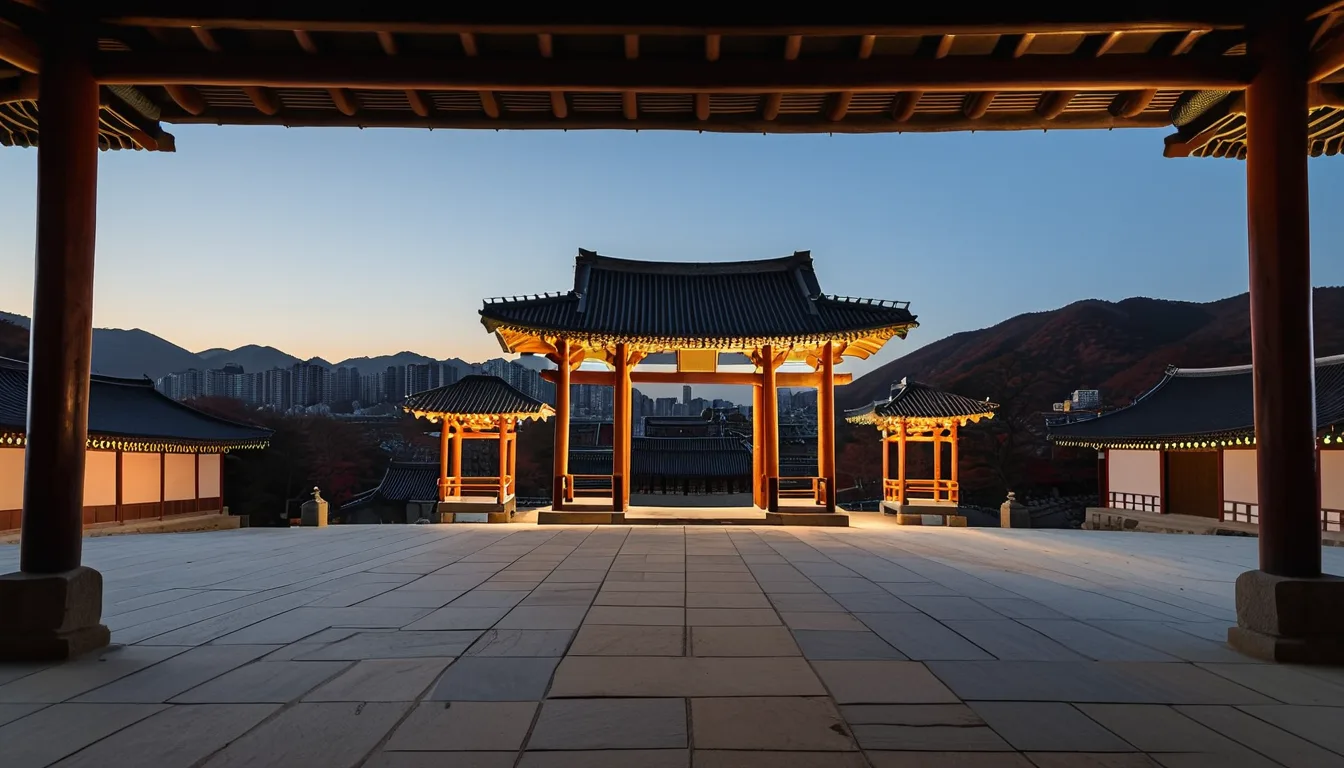
Korea Heritage Service materials list the buildings that carried japsang. They include a palace's main hall, the king's sleeping quarters, the palace's main gate and pavilions within the palace grounds. The list also covers the capital's city gates, the jeongjagak shrines at royal and queens' tombs, Jongmyo, Seonggyungwan and Dongmyo. The materials add that "japsang were not installed on private houses, Buddhist temples, seowon academies, local hyanggyo schools and the like."
The same source draws a conclusion from this restriction: "Together with chwidu, chimi and yongdu, japsang became symbols of the royal palace." The sentence treats the narrow range of installation as the basis for their symbolic status. It does not say why their use was limited to palace-related buildings in the first place.
Read alongside the link between decorative roof tiles and authority noted earlier, this points to one interpretation: japsang marked a building as tied to the royal house or the capital. The list includes Seonggyungwan but leaves out seowon and local hyanggyo. That contrast suggests japsang helped signal a building's standing from the roof.
Chinese jishou: origin and function in Chinese Wikipedia's '脊兽' entry
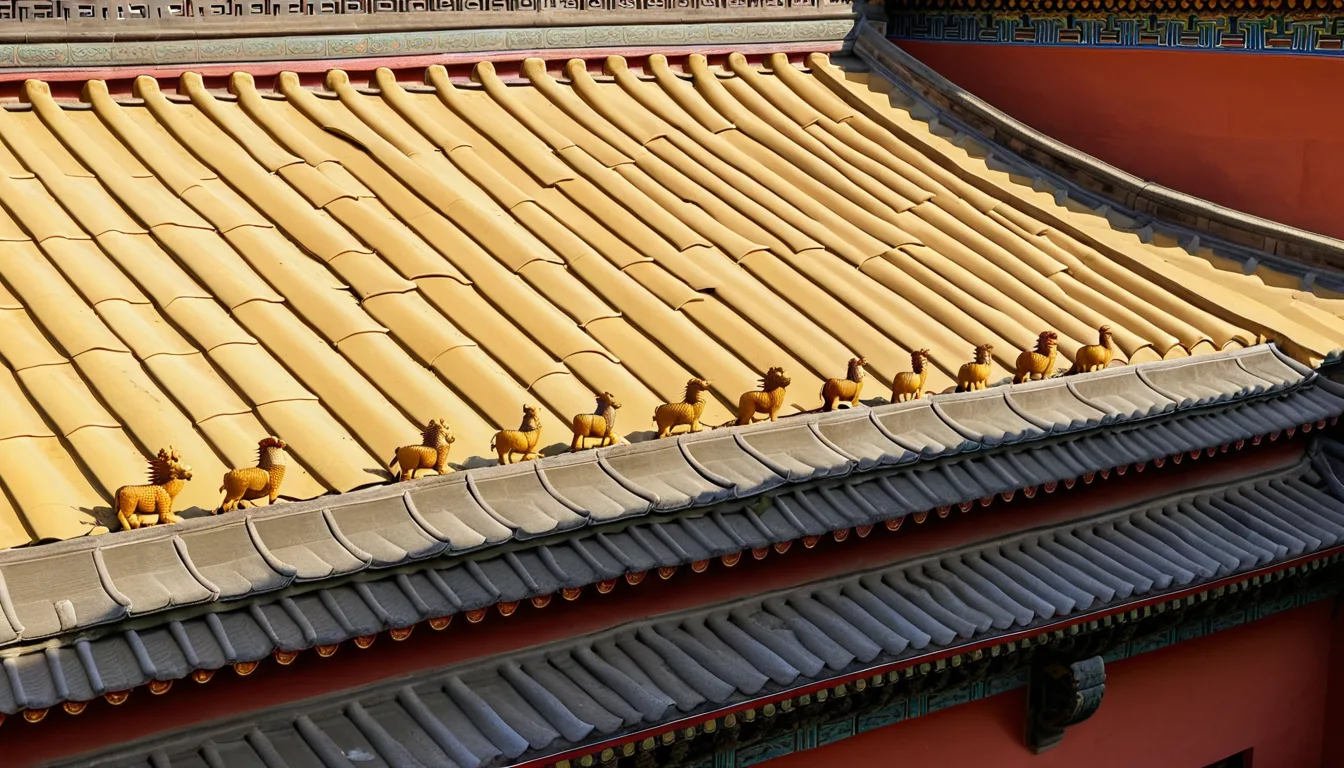
Chinese roof ornaments go by the collective name jishou (脊兽). Chinese Wikipedia's '脊兽' entry traces their origin to three kinds of Tang-dynasty (唐代) tile: chiwei (鸱尾), shoumianwa (兽面瓦) and qiaotou tongwa (翘头筒瓦). Of these, it says, the qiaotou tongwa developed into the dunshou (蹲兽), also known as the xianren zoushou (仙人走兽).
The same entry traces the first function of jishou to practical use. It states: "其功能最初是为了保护木栓和铁钉" — "their function was originally to protect the wooden pegs and iron nails." The entry explains that this protection meant keeping out leaks and preventing rust.
Jishou later took on a decorative function and a strict meaning of rank. Their number and form are said to have been strictly limited by a building's rank. Their placement also differed from ridge to ridge. Wenshou (吻兽) or wangshou (望兽) sat on the main ridge (正脊), chuishou (垂兽) on the vertical ridges (垂脊) and qiangshou (戗兽) on the angled ridges (戗脊). The figures at the edge of the ridge are the xianren zoushou.
Korean sources explain japsang in terms of magic against sal and a building's authority. Chinese Wikipedia describes a progression from parts that protected nails to ornaments and markers of rank. The two accounts can be read as looking at ornaments in similar positions from different angles. The sources used here cannot confirm whether Korean japsang also served such a practical purpose.
Korea and China compared: the Encyclopedia of Korean Culture and English Wikipedia
First, the front of the procession differs. The Encyclopedia of Korean Culture notes that China has an immortal figure plus ten zoushou (running-beast) figures. These are the dragon, phoenix, lion, qilin, heavenly horse, sea horse, fish, haechi, hou and monkey, eleven in all with the immortal. Of the Korean figures, the encyclopedia says that "there is no immortal figure or Xuanzang (Daedang Sabu) figure at all, and the Sun Wukong figure is placed at the very front."
This passage gains weight when read against the Sangwado's order discussed above. The Sangwado puts Daedang Sabu first at the end of the ridge. Yet the Korean figures surviving from the 19th century onward lack that first figure. The arrangement in the documents, in short, differs from the figures that survive.
Second, the basis for the count differs. English Wikipedia's 'Imperial roof decoration' entry says the Chinese beasts usually come in odd numbers. Their number is said to indicate the importance of the business conducted in the building, up to a maximum of nine. The Hall of Supreme Harmony (Taihedian) added a tenth figure, the Hangshi (行什), and in imperial times it is said to have been the only building to have one. Chinese sources tie the number to the weight of a building's business; Korean sources tie it to the length of the ridge.
Third, the scope of permitted use differs slightly. The same English entry explains that only official buildings such as palaces, government offices and some temples could use such ornaments. Korean sources exclude temples. Fourth, the surviving material dates from different periods. Chinese material on these figures is thought to date from the late 9th century under the Liao (遼代), and the figures were popular under the Ming and Qing. In Korea, only figures from the 19th century onward survive.
Who made japsang: the Gyeongguk daejeon and Sungnyemun
A record also survives of who made japsang. According to Korea Heritage Service materials, the Gyeongguk daejeon (National Code) assigned four japsang-jang (japsang makers) to the Waseo, the office of roof tiles. The same record lists 40 tile makers (wajang). In the source's words, "with 40 tile makers, the trades were distinguished."
This suggests that japsang were made within the office that handled roof tiles. That fits with Korea Heritage Service materials classing japsang as decorative roof tiles.
The Encyclopedia of Korean Culture also gives the figures' sizes. The Sun Wukong figure is about 40㎝ tall, and the others are 28–32㎝. As noted above, the Sun Wukong figure leads the procession on Korean roofs. Since only the first figure is larger, the lead position seems to have been set apart within the procession.
Korea Heritage Service materials estimate the date from the japsang of Sungnyemun: "It can be assumed that japsang came to be installed in the Joseon period." The sentence is phrased as a conjecture, not a firm statement. The Sungnyemun building dates from 1448, yet only Korean japsang from the 19th century onward are said to survive. The date of a building and the date of the japsang on its roof should therefore be kept apart. Finally, the sources used for this article could not confirm the story linking japsang to the word eocheoguni.
| Text | Where it is cited | Passage used here | How it differs from the other texts |
|---|---|---|---|
| Joseon Dogyosa | Quoted in the Encyclopedia of Korean Culture's entry on japsang | The ten deity figures depict characters from Journey to the West and earth deities, and ward off sal | States the purpose, but the quoted passage names no individual figures |
| Eou yadam | Quoted in the Encyclopedia of Korean Culture's entry on japsang | The anecdote of new officials reciting the ten figures' names, and the ten names themselves | Gives names and order but no rule on numbers |
| Gunggwol yeonggeon uigwe | Quoted in the Encyclopedia of Korean Culture's entry on japsang | 112, 168 and 148 brought in at once for Gyeonghuigung, Changgyeonggung and Changdeokgung | Records the total brought into a whole palace, not the number per roof side |
| Sangwado | Held by the Korean Spiritual Culture Institute; quoted in Korea Heritage Service materials | An order starting with Daedang Sabu; 3 jwa as the base, with odd-numbered installation | Conflicts with the 4–11 found on real roofs and with Junghwajeon's 10 |
| Gyeongguk daejeon | Quoted in Korea Heritage Service materials | 4 japsang makers attached to the Waseo, alongside 40 tile makers | Records the makers, not the japsang themselves |
Related reading: Why Tuho Was Called Not Play but an Instrument for Ordering the Mind · Gakgung: How Korea's Traditional Horn Bow Differs From Other Traditional Bows
Summing up
Reading japsang means moving back and forth between texts and roofs. Eou yadam left the names; the Sangwado, the order and the odd-number rule; the uigwe, the numbers brought in. On real roofs the count varies from 4 to 11. The first place goes not to Daedang Sabu but to a Sun Wukong figure. These gaps show that no single scheme explains japsang. Comparison with Chinese jishou also shows that each country explained ornaments in similar positions in its own way.
Comparing the ten names in literary records and the order in the Sangwado against the surviving figures on palace roofs makes these historical shifts clear. Reading primary sources such as the uigwe and the Sangwado alongside the actual roofs offers a fuller view of how japsang were made and placed.