The short answer
Tuho (投壺) is a game in which players throw arrows into a jar. The Encyclopedia of Korean Culture defines it this way: "Tuho (投壺) is a game using man-made equipment in which adult men and women set a jar [壺] at a fixed distance in the first lunar month and compete by throwing arrows." Two phrases in that definition matter: "adult men and women" and "the first lunar month." It is not described as a children's game, nor as one played at any time of year.
The origins lead back to Chinese ritual. The Chinese Wikipedia entry 投壺 states, "投壺來源於射禮" — tuho came from archery etiquette. The Encyclopedia of Korean Folk Culture calls tuho a means needed for ordering the mind and quotes Seongjong on it: "Tuho is not jesting and play but an instrument for ordering the mind."
The game belonged to the palace and to aristocratic households, and Joseon records preserve a rite established as a royal occasion. Later accounts say the etiquette was simplified as tuho spread as an ordinary pastime. What follows covers the equipment and scoring rules, the Joseon royal records, the shift into a seasonal game, and the differences between the Chinese and Japanese records.
Tuho in the Book of Rites and the Zuo Commentary
The Chinese Wikipedia entry 投壺 traces the basis of tuho to archery etiquette and gives three reasons why it came to stand in for archery. First, the yard was not wide enough to set up a target. Second, there were too many guests to supply with bows and pair off. Third, some guests were poor shots. Arrows and a jar therefore took the place of bows and targets, entertaining the guests while they practised proper manners.
Tuho is an old game. The Encyclopedia of Korean Folk Culture puts it this way: "Tuho (投壺) was a game played mainly in the palace and in aristocratic households, and it is a traditional game old enough that the method of tuho appears in the Book of Rites (禮記)." In other words, the Book of Rites contains rules for tuho. The same encyclopedia presumes that tuho began before China's Han dynasty, and notes that the Zuo Commentary on the Spring and Autumn Annals (春秋左傳) confirms a game of tuho played by the lord of Jin and the lord of Qi while drinking.
The English Wikipedia entry Pitch-pot dates the rise of tuho to China's Spring and Autumn and Warring States period and suggests it grew out of a pastime of archers and soldiers at leisure. Since that passage is offered as a supposition, it is better not to read it as settled. The same entry describes elaborate rules and ceremony: host and guest had to defer to each other three times before play could begin. The Chinese Wikipedia entry 投壺 describes the same procedure.
The Chinese passage reads: "投壺遊戲的禮節繁瑣,投壺之前,主客之間要請讓三次才能進行。" The etiquette of tuho was so involved that host and guest had to invite and defer three times before starting — opening the session took longer than the throwing. The Encyclopedia of Korean Folk Culture places the point of tuho alongside archery: "Just as archery was encouraged as a means of cultivating virtue, tuho too was a means needed for ordering the mind." That sentence makes tuho a tool of conduct rather than of competition.
The History of Goryeo and Yejong's 1116 tuho manual
Chinese histories explain how far back tuho goes in Korea. The Encyclopedia of Korean Culture states: "According to Chinese records such as the Old Book of Tang (舊唐書), the Book of Zhou (周書), the History of the Northern Dynasties (北史) and the Book of Sui (隨書), tuho existed in Goguryeo and Baekje, from which we know that this game was already played in the Three Kingdoms period." Four histories are cited together, and the presence of tuho in Goguryeo and Baekje serves as the evidence. Silla does not appear in that sentence.
The Goryeo record comes from the History of Goryeo (高麗史). In the Goryeo period, the Encyclopedia of Korean Culture says, tuho was enjoyed mainly as a court entertainment among the royal family and the aristocracy. The Encyclopedia of Korean Folk Culture adds that during Yejong's reign the Song dynasty sent tuho equipment to Korea, and that the scholars of the Bomungak were then given tuho rites and illustrations and encouraged to take up the game. Rites and pictures, notably, arrived along with the equipment.
One record carries a date. The Encyclopedia of Korean Folk Culture quotes a record from the reign of Goryeo's Yejong (1116): "Tuho had been discontinued for some time, and as it is now to be played, he ordered that an illustrated manual be compiled." The passage opens with a lapse: tuho had been dormant for a while. It can be read as meaning that reviving the game called for a manual, and the form specified — a manual with illustrations — is noted as well.
The Joseon records show where the game was used. In the Joseon period, according to the Encyclopedia of Korean Culture, tuho was played as entertainment for the royal family and high court officials, and at social occasions such as banquets honouring the elderly (敬老宴) and the reception of guests. The game, in short, sat within the programme of a feast.
The jar measurements in Sima Guang's Tuho gyeokbeom
One book describing tuho equipment survives: the Tuho gyeokbeom (投壺格範). The Encyclopedia of Korean Culture treats it this way: "Sima Guang's (司馬光) Tuho gyeokbeom (投壺格範) contains an explanation of the game's equipment and the method of play, but today that equipment and method of play cannot be known in detail." The title and author are known; the contents cannot be confirmed closely. That is the caution to carry into any discussion of tuho.
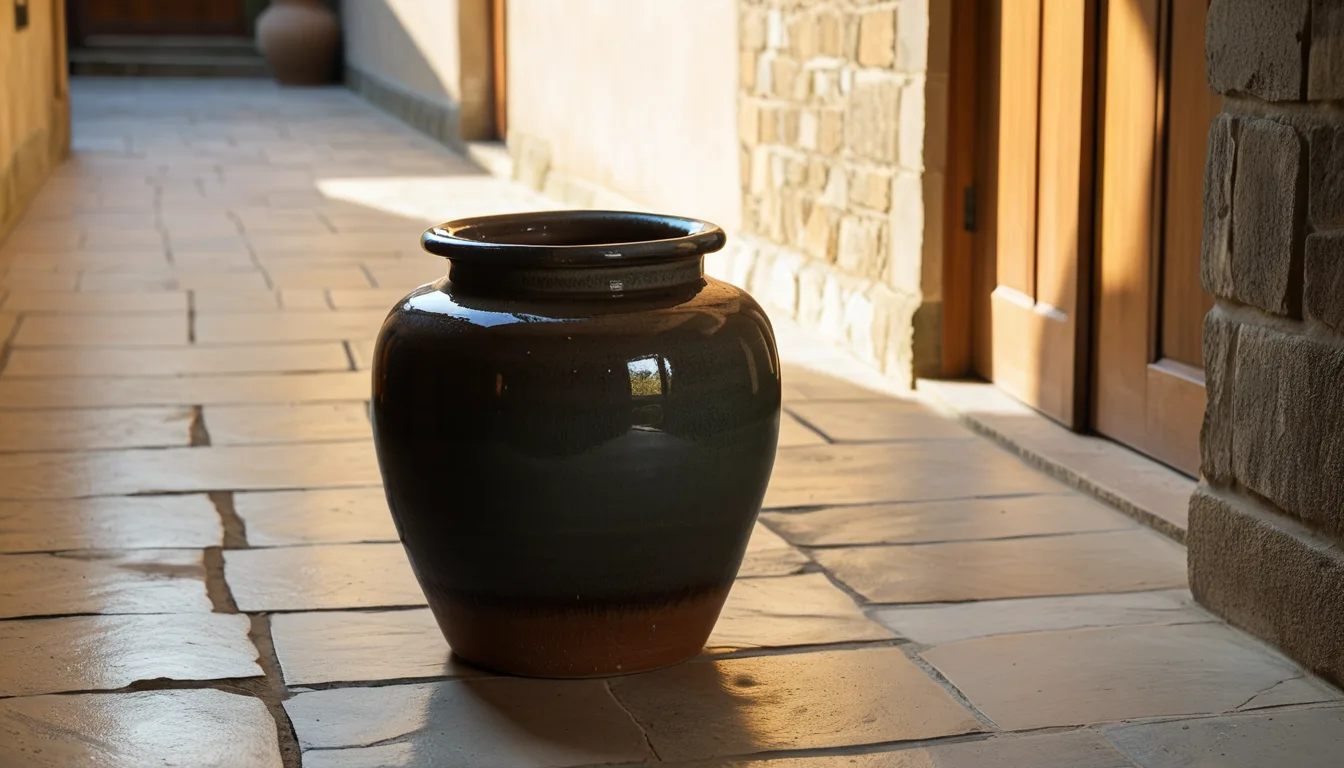
The Encyclopedia of Korean Folk Culture supplies more of the Tuho gyeokbeom's measurements: "The tuho jar has a mouth 3 chi [寸] in diameter, the ears [耳] are 1 chi in diameter, and the height is 1 ja [尺]. The inside of the jar is filled with red beans." With a mouth of 3 chi and ears of 1 chi, the ears are the narrower target and the harder one to hit. The red beans packed inside the jar belong to the same description.
The same encyclopedia gives the distance and the number of arrows. The jar stands about two and a half arrow lengths from where the thrower sits, and twelve arrows are used; an arrow that lands in the jar without a miss counts as sang (上), and the first side to reach 120 wins. Another account in the same encyclopedia describes an eared jar set on the lawn of a wide yard or in a main hall, with the players dividing into east and west teams and throwing their arrows from about ten paces away.
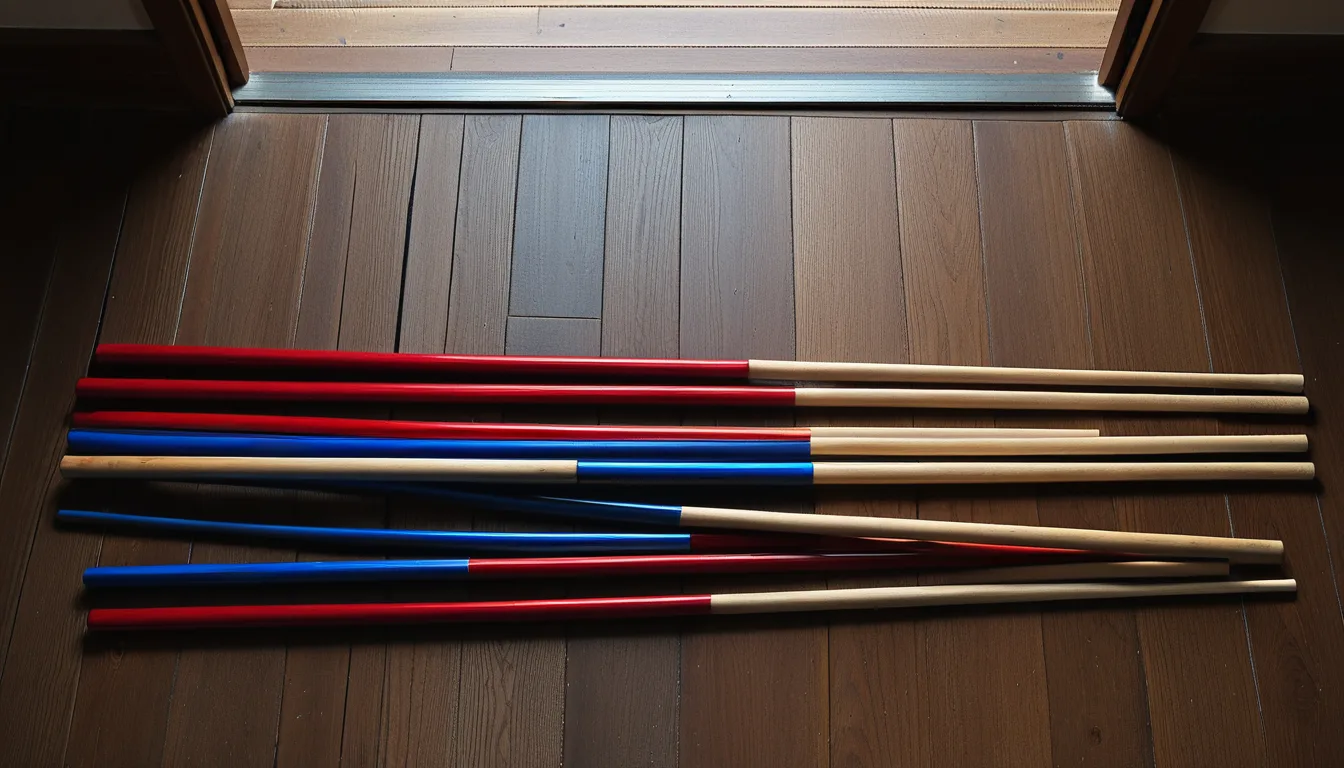
Jar measurements differ from record to record. Another account in the Encyclopedia of Korean Folk Culture gives the diameter of the jar's mouth as 5 chi, 4 chi or 2 chi, notes that the ears came in various sizes and kinds, and describes play as a contest between two sets of arrows, blue and red. The Chinese Wikipedia entry 投壺 describes a jar with a body 5 chi long, a neck 7 chi long, an overall height of 1 ja 2 chi, and a mouth 2.5 chi across. The original tuho entries can be read directly in the online editions of the Encyclopedia of Korean Culture and the Encyclopedia of Korean Folk Culture. No single standard measurement can be stated.
Scoring in the Tuho singeok and the loser's penalty drink
The Japanese Wikipedia entry 投壺 reports the rules of the Tuho singeok (投壺新格). The jar is 1 ja high with a mouth 3 chi across. On each side is a hole 1 chi in diameter, called an ear, two in all. The arrows are 2 ja 4 chi long, and twelve are used. The throwing line stands 6 ja away, 2.5 times the length of an arrow. This book has a different title from the Tuho gyeokbeom described above, and whether the two titles refer to the same book cannot be confirmed from these sources alone.
The scoring is comparatively clear. A successful first arrow scores 10 points, and an arrow in an ear scores 20. From the second arrow on, each consecutive success scores 5. Sinking all twelve wins the match outright; otherwise the first side to reach a total of 120 points wins.
Under these rules an ear is worth twice the mouth, so the narrower hole carried the higher value. The Encyclopedia of Korean Culture sketches the same structure briefly: players throw arrows into the body of the jar or into an ear, and the score follows from how many land. Awarding points for consecutive successes measures sustained skill rather than a single piece of luck.
Penalties were part of the rules too. The English Wikipedia entry Pitch-pot says that each time an arrow failed to go in, the loser, called bulseung (不承), had to drink, and that, to discourage gambling, the loser could choose to sing instead of taking the penalty drink. In the Chinese Wikipedia entry 投壺, the master of ceremonies tallied the totals after four throws and announced the result, and the penalty drink was declared by the gamnyein (監禮人). The outcome was decided as a best of three, and once the gamnyein named the winner everyone raised a cup in celebration.
Seongjong's tuho rite and the 1518 record under Jungjong
The Joseon court made tuho a rite. The Encyclopedia of Korean Folk Culture records that the tuho rite (投壺儀) was established and promoted in the tenth year of Seongjong (成宗). Tuho became a regular fixture among court events, the same encyclopedia says, and it was to be performed every year at the banquets for elder statesmen and the gatherings of senior officials held on the third day of the third month or the ninth day of the ninth month. The game had entered the calendar as an event with its own dates and settings.
Seongjong's own words survive. The Encyclopedia of Korean Folk Culture records the king saying of tuho, "Tuho is not jesting and play but an instrument for ordering the mind." The sentence places tuho between amusement and conduct, and it reads like language used in the game's defence.
Rewards are on record as well. On 11 March 1482 (Seongjong 13), the same encyclopedia says, Seongjong told his chief ministers that the ancients had set their minds straight through tuho. The top scorer received a colt, and the rest each received one bow. Giving bows as prizes shows how closely tuho and archery stood together.
A record from Jungjong's reign survives too. The Encyclopedia of Korean Folk Culture quotes the Jungjong-era account: "Members of the royal clan who could not shoot a bow were made to play tuho, and the crown prince enjoyed tuho too." Putting poor archers to tuho shows the relationship with archery once again. The English Wikipedia entry Pitch-pot says that in the fifteenth century the Joseon court revived tuho in the palace and presented it as a product of Confucianism, and that in 1518 Jungjong defended tuho against criticism, reaffirming its dignity and its Confucian meaning.
Tuho on the 1,000-won banknote
There was a fixed circle of people who played tuho. The Encyclopedia of Korean Folk Culture entry states: "In the Joseon period it flourished mainly at court, and it was a game of the yangban." The players, it adds, observed proper manners. Ordinary people could not take it up, the entry says, since the equipment was hard to obtain and the procedure complicated. What matters is that both the equipment and the procedure are given as barriers.
Later the picture changed. The Encyclopedia of Korean Culture says that in some cases the game took the form of a wager on money and goods. The Encyclopedia of Korean Folk Culture describes the shift this way: "As it became popular as an ordinary game, the Confucian etiquette that tuho embodied was largely simplified or disappeared." Little seems to have remained of inviting and deferring three times. The same game was played in different settings under different rules.
Its place as a seasonal game is in the records as well. The Encyclopedia of Korean Culture defines tuho as a game played by adult men and women in the first lunar month, while the Encyclopedia of Korean Folk Culture records the banquets for elder statesmen and the gatherings of senior officials on the third day of the third month and the ninth day of the ninth month. The first month, the third day of the third month and the ninth day of the ninth month all appear together — a game recorded alongside particular days of the year.
Tuho also appears in modern records. The Encyclopedia of Korean Folk Culture calls it a representative folk game, prominent enough to appear on the 1,000-won banknote. The English Wikipedia entry Pitch-pot dates its appearance on the 1,000-won note from 1983 to 2002, and says tuho was dropped from the new 1,000-won note first issued on 22 January 2007. Both the years it appeared and the point at which it was removed are on record.
Han-dynasty changes in China and Tanaka Kōnan's Japanese tuho
In China tuho carried on for a long time. The English Wikipedia entry Pitch-pot says it first became popular among the upper classes, then spread to other classes and remained popular in China until the end of the Qing dynasty. The equipment changed along the way: the Chinese Wikipedia entry 投壺 calls the Han-dynasty method of tuho much improved over that of the Spring and Autumn and Warring States period.
The passage reads: "原來的投壺是在壺中裝滿紅小豆,使投入的箭桿不會躍出" — originally the jar was packed with red beans so that an arrow that went in would not bounce back out. This is the same arrangement as the Tuho gyeokbeom's "the inside of the jar is filled with red beans," quoted above. In the Han dynasty, the same entry says, the beans were left out and bamboo arrows used instead, so that the arrows would spring back out. Whether or not the jar was packed decided the character of the game.
The scoring was revised as well. The Japanese Wikipedia entry 投壺 says that before Sima Guang an arrow coming to rest on top of the jar earned a bonus score, and that the Tuho singeok abolished it. The revision cut the number of scoring categories; the reason for it cannot be confirmed from this source. The same entry states, "日本ではあまり投壺は行われなかった。" — tuho was not much played in Japan — and notes that as Confucian learning flourished in the Edo period, some people began to take an interest in it.
The Japanese record preserves one name. The Japanese Wikipedia entry 投壺 says that in the late eighteenth century the scholar Tanaka Kōnan (田中江南) revised tuho in a Japanese style and that it was played for a time but did not last. The Chinese Wikipedia entry 投壺, meanwhile, says that Japanese Games records more than 38 kinds of jar alone. The two accounts point in opposite directions, and which is closer to the reality cannot be confirmed from these sources alone.
Point by point, the three strands of record differ as follows. On origins, Chinese Wikipedia points to archery etiquette, English Wikipedia to an emergence in the Spring and Autumn and Warring States period. On the jar, the Tuho gyeokbeom gives a mouth 3 chi across, Chinese Wikipedia 2.5 chi, and another account in the Encyclopedia of Korean Folk Culture 5 chi, 4 chi or 2 chi. On deciding the match, the Tuho gyeokbeom and the Tuho singeok have the first side to 120 points win, while Chinese Wikipedia describes a best of three. On penalties, English Wikipedia gives the loser's drink and song, while Chinese Wikipedia has the gamnyein declare the penalty drink. As for transmission, the records say the game continued in China until the end of the Qing dynasty and was not much played in Japan.
| Record | Jar | Arrows | Deciding the match and distance |
|---|---|---|---|
| Tuho gyeokbeom (Encyclopedia of Korean Folk Culture) | Mouth 3 chi across, ears 1 chi across, height 1 ja, filled inside with red beans | 12 arrows | Two and a half arrow lengths from where the thrower sits; first to reach 120 wins |
| Tuho singeok (Japanese Wikipedia) | Height 1 ja, mouth 3 chi across, ear holes 1 chi across on either side | 12 arrows, each 2 ja 4 chi long | 6 ja away, 2.5 times the arrow's length; first to 120 points, or all 12 arrows in |
| Chinese Wikipedia 投壺 | Body 5 chi long, neck 7 chi long, overall height 1 ja 2 chi, mouth 2.5 chi across | Not confirmed | Totals tallied after four throws; best of three |
| Another account in the Encyclopedia of Korean Folk Culture | Mouth 5 chi, 4 chi or 2 chi across; ears of various sizes and kinds | Two kinds, blue arrows and red arrows | Teams divided east and west, throwing from about ten paces |
Related reading: Jangdo: why did it come to be called the knife of chastity? · Najeonchilgi: Why Korean Mother-of-Pearl Lacquerware Grinds Seashell Thin and Glues It On
Summary
Tuho is a game of throwing arrows into a jar, and the records root it in archery etiquette. In Joseon it was played in the palace and in aristocratic households, and the tuho rite was established in the tenth year of Seongjong's reign. Seongjong called tuho an instrument for ordering the mind. Game and etiquette occupied the same ground.
The equipment and the scoring differ from record to record. The Tuho gyeokbeom gives a jar with a mouth 3 chi across and a distance of two and a half arrow lengths; the Tuho singeok gives 10 points for the first arrow and 20 for an ear. Whether the two titles refer to the same book cannot be confirmed from these sources alone. As tuho became popular as an ordinary pastime, the records say, its Confucian etiquette was largely simplified or disappeared. When reading about tuho, it helps to establish first which record's tuho is meant.