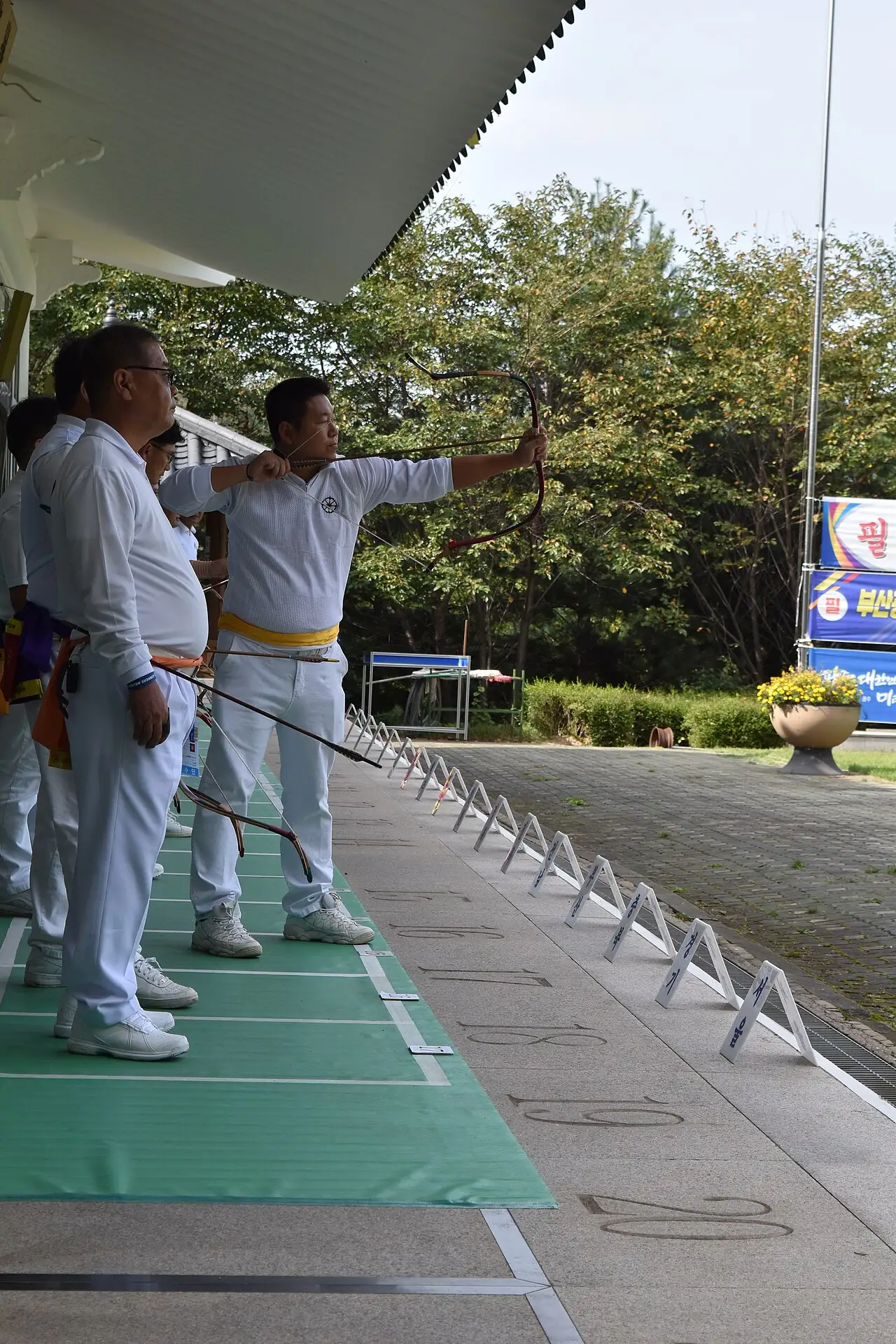
The short answer: the gakgung is a short bow and a layered composite bow
Korea's gakgung (角弓) is classified as a short bow, with a limb span of no more than 2m, and as a composite bow built from water buffalo horn, ox sinew and bamboo. The Encyclopedia of Korean Culture records it as both a short bow and a composite bow, and records the Japanese bow as a long bow of plain wood. Mongolian bows and the equipment used in traditional Turkish archery are also recorded as using horn and sinew, and the English longbow is recorded as a bow made from a single piece of yew.
The differences between these bows can therefore be seen as differences of material, length and systems of transmission. These sources alone make it hard to judge which bow is better. This comparison relies only on the figures recorded in the documents and the official designation records.
Six materials and four months of work: the Encyclopedia of Korean Culture on the gakgung
The Encyclopedia of Korean Culture lists six materials for the gakgung: water buffalo horn, ox sinew, bamboo, strips of mulberry wood, isinglass glue made from croaker swim bladders, and birch bark (樺皮). The same entry says a single bow takes about four months to make, and gives October through March of the following year as the best window for the work, because animal glues such as croaker isinglass will not bond in humid, warm weather. The same approach — reading a material's character by separating its ingredients from how it is made — appears in our piece on why hanji does not tear easily, read through its materials and its making.
Korean History On-line, from the National Institute of Korean History, records that the gakgung and the pyeonjeon (片箭) developed considerably in the early Joseon period. In 1488 the Ming envoy Dong Yue (董越) came to Joseon and assessed Joseon's birch-bark bow (樺皮弓); the same source notes that this bow was slightly shorter than the Chinese type but that the force with which its arrows flew was extremely strong. The pyeonjeon was a small arrow shot from a wooden tube called a tonga, and the same source says it flew more than 1,000 paces to strike an enemy. Under King Sejong, it adds, training in the pyeonjeon was banned in the Hamgyeong-do region.
The Encyclopedia of Korean Culture treats separately a gakgung handed down as King Gojong's personal bow. It measures 124㎝ in overall length, with an ogeum width of 3㎝. The tiger-tail mottling that occasionally appears along the back ridge of the water buffalo horn is called homi, and a gakgung made with horn plates showing homi was rated the better bow. Oral tradition holds that the bowyer Jang Mun-hwan (張文煥) made the bow and presented it to the court; it was designated an Important Folklore Material in 1976. On the National Heritage Portal, gungsijang carries a designation date of 13 September 1971 and archery 30 July 2020.
The Japanese bow: a long bow of plain wood in the Encyclopedia of Korean Culture
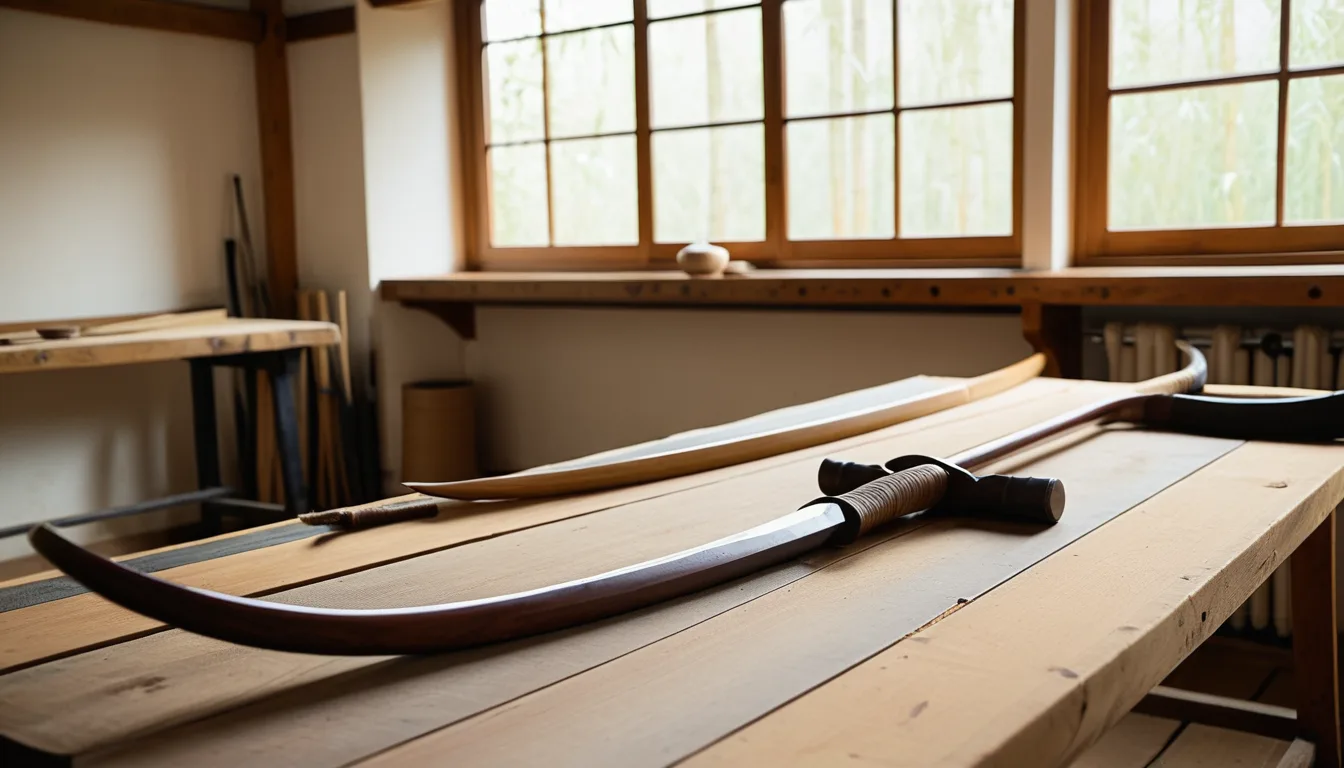
The 'Bow' entry in the Encyclopedia of Korean Culture divides bows into long bows and short bows. Long bows have a limb span of 2m or more and were used mainly by peoples of forest and coastal regions, while short bows usually span 2m or less and were used by Korea, Mongolia and other steppe peoples. The classification passage in the same entry reads: "Our gakgung (角弓) is both a short bow and a composite bow; its performance is outstanding and its range is long. The Japanese bow, by contrast, is a long bow, a bow of plain wood, and its range is short." That sentence can be seen as both a classification and a judgement by a single encyclopedia.
No source giving figures for the length of the Japanese bow or the position of its grip could be confirmed for this article, so the specific length and structure of the Japanese bow remain unconfirmed. The All Nippon Kyudo Federation (全日本弓道連盟) posts competition results on its website, among them the 77th Emperor's Cup All Japan Men's Kyudo Championship and the 59th Empress's Cup All Japan Women's Kyudo Championship. Those postings can be seen as a record that kyudo competitions continue in Japan.
Naadam and the Mongolian bow: a 2010 UNESCO inscription and six months to a year of work
Naadam takes place across Mongolia every year from 11 to 13 July. According to the UNESCO intangible heritage site, the festival centres on three sports — horse racing, wrestling and archery — and was inscribed on the Representative List of the Intangible Cultural Heritage of Humanity at the committee's fifth session in 2010, under nomination file number 00395. The same description calls Naadam inseparably linked to the nomadic civilization of the Mongols. The three sports have traditionally been passed on through family instruction at home, and structured training courses have recently appeared for wrestling and archery.
A contribution to culture360, run by the Asia-Europe Foundation, says Mongolian archers shoot with horn bows made from natural materials such as wood, horn and sinew, and that a single horn bow takes six months to a year to make. In cold weather the bow grows stronger and stiffer; in warm weather it softens and the chance of hitting the target drops. Male archers shoot from 45m in Buriad archery and from 75m in Khalkha archery, and in competitions held inside Mongolia adult archers must use only horn bows and arrows made in Mongolia.
Turkish archery and the English longbow: a UNESCO decision and 172 bows from the Mary Rose
Decision 14.COM 10.B.38 of the UNESCO intangible heritage committee deals with traditional Turkish archery, which Türkiye nominated for the Representative List as file no. 01367. The decision notes several disciplines, performed both on foot and on horseback, and lists the equipment materials as wood grown in specific highland climates, organic glues, horn, sinew, silk and leather. The practice entered Türkiye's national inventory of intangible cultural heritage in 2014, with many provinces added in 2018. The committee decided to inscribe traditional Turkish archery on the Representative List.
Material from the Mary Rose Trust describes the longbows recovered from the Mary Rose. Of the 250 recorded as carried on board, 172 were recovered, along with more than 2,000 complete arrows and roughly 7,000 fragments. Every longbow was made from a single piece of yew and includes the boundary between heartwood and sapwood. Lengths range from 1,839mm to 2,113mm, and estimated draw weights fall between 65 and 175 pounds, clustering most heavily around 110 pounds.
Set side by side under the same headings, the four cases show where they diverge. On materials, the Korean gakgung uses water buffalo horn, ox sinew, bamboo, strips of mulberry wood, croaker isinglass glue and birch bark; the Mongolian bow uses wood, horn and sinew; Turkish archery equipment adds silk and leather to those; and the English longbow comes from a single piece of yew. On length, the surviving gakgung measures 124㎝, while the Mary Rose longbows are recorded at 1,839 to 2,113mm. On records, gungsijang was designated in 1971, Naadam was inscribed in 2010, and Turkish archery entered the national inventory in 2014.
| Bow | Main materials | Length and classification | Key record |
|---|---|---|---|
| Korean gakgung | Water buffalo horn, ox sinew, bamboo, strips of mulberry wood, croaker isinglass glue, birch bark | Short bow (limb span 2m or less), composite bow; surviving bow of King Gojong 124㎝ | Gungsijang designated 13 September 1971; archery designated 30 July 2020 |
| Japanese bow | Not confirmed | Classified as a long bow of plain wood (Encyclopedia of Korean Culture) | All Nippon Kyudo Federation posts results of the 77th Emperor's Cup and 59th Empress's Cup championships |
| Mongolian bow | Wood, horn, sinew | Not confirmed | Naadam inscribed on the UNESCO Representative List in 2010, file no. 00395 |
| Turkish bow | Highland wood, organic glues, horn, sinew, silk, leather | Not confirmed | Entered the national inventory in 2014; inscription decided in Decision 14.COM 10.B.38 |
| English longbow | A single piece of yew | 1,839mm–2,113mm | 172 longbows from the Mary Rose, estimated draw weights 65–175 pounds |
In summary
The gakgung is recorded as a short bow and as a composite bow built from layered materials. Dong Yue's assessment of 1488 and the classification in the Encyclopedia of Korean Culture both note its short length alongside its strong force. Bows in other countries are recorded with different materials, lengths and systems of transmission, and these sources offer little basis for reading those differences as a ranking.
The original texts are available in the Encyclopedia of Korean Culture, published by the Academy of Korean Studies, and on Korean History On-line from the National Institute of Korean History. Designation records sit on the National Heritage Portal of the Korea Heritage Service, inscription records on the UNESCO intangible heritage site, and the material on the Mary Rose longbows on the Mary Rose Trust website.