1. Introduction: The Limits of the Western Two-Field 'First/Last Name' Form and the Diversity of the World's Names
Whenever users sign up for an overseas website or book a plane ticket on a foreign airline's web page, countless people around the world hit the same vexing barrier. Two rectangular blank boxes sit at the center of the screen, as if nothing could be more natural: "First Name (Given Name)" and "Last Name (Family Name / Surname)."
Developers and system planners seem to believe that these two boxes alone can perfectly digitize the identity of every human being on Earth. Yet this two-field form is only the product of an extremely narrow cultural bias. It forcibly imposes the geographic and historical customs of Anglophone societies and parts of Western Europe on all eight billion people in the world.
In reality, across the countless languages and societies of this planet, a person's name can never be reduced to a simple pair: "one personal name" and "one family name." For thousands of years, hundreds of millions of people in East Asia have placed the family name ahead of the personal name. In doing so, they declare the continuity of the lineage first. In Iceland, in northern Europe, fixed hereditary family names passed down across generations do not exist at all. Instead, the final word changes with each generation, according to the parent's name.
The Spanish- and Portuguese-speaking worlds have established compound surname systems. In these systems, children legally inherit and combine the surnames of both father and mother. Furthermore, in Indonesia, Myanmar, and many parts of South Asia, tens of millions of people hold a "mononym." They have no concept of a surname at all and prove their public identity for a lifetime with a single word.
The moment a name is forced into the Western two-box form, serious data distortion and administrative tragedy follow. A Spanish-speaking passenger's second surname may be arbitrarily classified as a "middle name" and dropped from the ticket. A Korean passenger's surname and given name may be reversed, and boarding refused at the airport check-in counter.
An Indonesian traveler with no surname may meet a website error message insisting that the surname field cannot be left blank. The traveler is forced to invent a fake surname. As a result, the official record in the passport and the data in the computer system do not match. This can even lead to detention at immigration control. Writing and respecting another person's name accurately is not a matter of mere etiquette. It is a core task of the global data engineering that guarantees cross-border movement and legal rights.
2. ICAO Doc 9303 and Machine-Readable Passports: Primary vs. Secondary Identifiers
In international travel across borders, the passport is the final legal document proving a passenger's identity. Automated e-Gates at border checkpoints and airline check-in systems can read passports issued by the governments of more than 190 countries within a single second. The reason is "Doc 9303 (Machine Readable Travel Documents)," an international standard. It was established by the International Civil Aviation Organization (ICAO), a United Nations agency.
Part 3 of ICAO Doc 9303 is titled "Specifications Common to all MRTDs" (machine readable travel documents). It shows just how sophisticated and culturally neutral an engineering compromise the standard's designers achieved. Their goal was to accommodate the world's heterogeneous naming systems.
A passport's biographical data page is divided into two broad areas. The first is the "Visual Inspection Zone (VIZ)," which the human eye can read. The second is the "Machine Readable Zone (MRZ)": two lines printed at the bottom in the fixed-width OCR-B font. They are printed this way so that an optical character reader (OCR) can scan them.
ICAO judged that the culturally biased terms "Surname" and "First Name" were not suitable as a machine-reading standard for passports worldwide. Instead, the standard uses two mathematical, functional concepts throughout: the **"Primary Identifier"** and the **"Secondary Identifier."**
The second line of an MRZ is 44 characters long. In it, the issuing state encodes the holder's name in a fixed order. The Primary Identifier comes first, followed by a double chevron delimiter (<<), and then the Secondary Identifier. In a typical Western or Korean passport, the surname works as the Primary Identifier and the given names as the Secondary Identifier (e.g., HONG<<GILDONG).
However, ICAO grants sovereign issuing authorities absolute discretion over what counts as the Primary Identifier. In some jurisdictions, names cannot be subdivided. There, the issuing government may encode the person's entire legal name as the Primary Identifier, with no double chevrons or Secondary Identifier. This leads to the paramount rule for international travel. Bookings must match the precise string sequence of the passport's MRZ, not assumptions based on local colloquialisms.
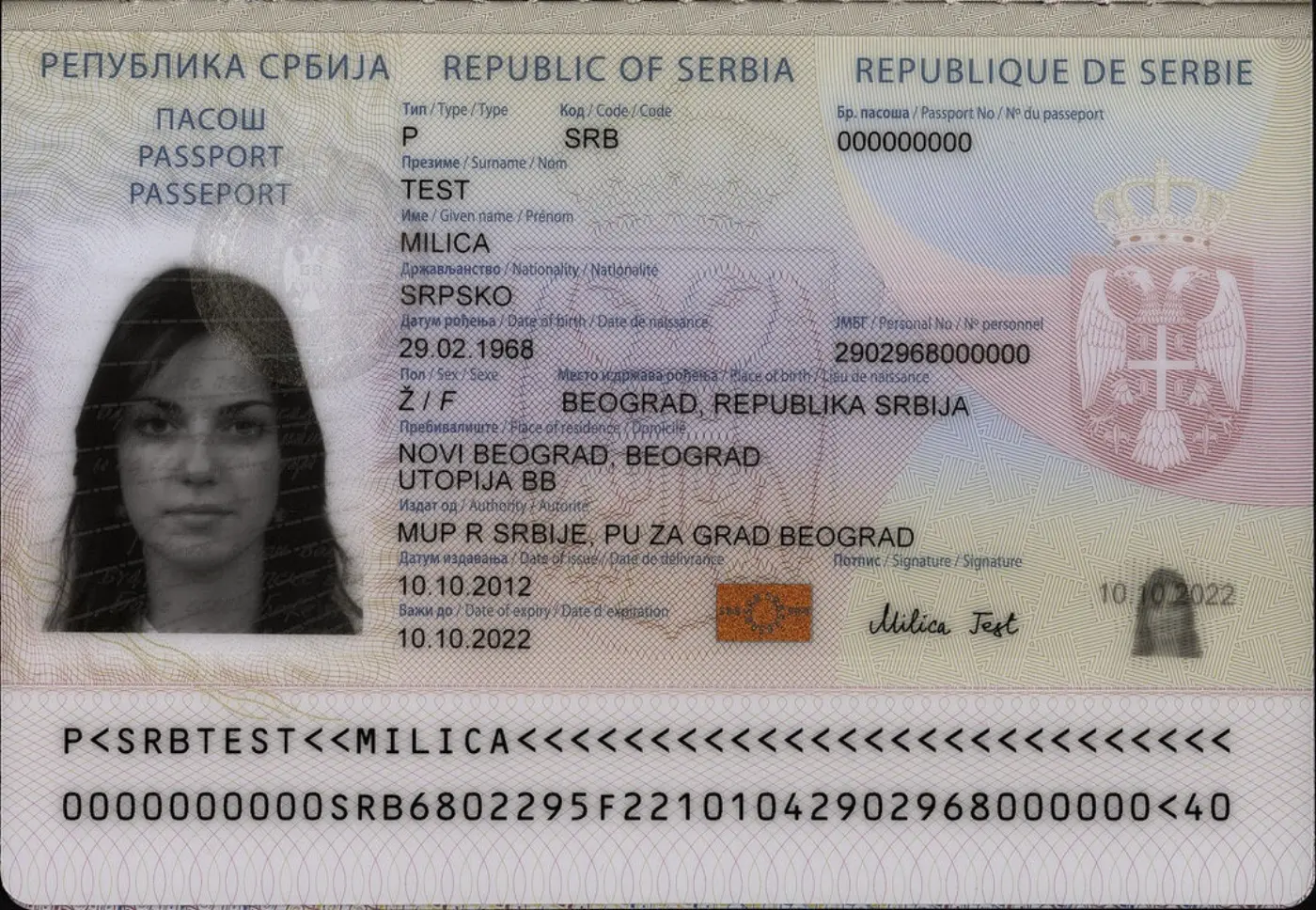
This shows that even the international passport standard does not assume a 'surname' and a 'first name.' The two-box web form can be read as narrower than the passport specification itself.
3. East Asian Family-First Conventions: China, Korea, Vietnam, and Legal Frameworks
Korea, China, and Vietnam in East Asia have been deeply influenced by Confucian ideas of kinship. These ideas put bloodline and the continuity of ancestors ahead of the individual's independent existence. In this region, the family name (姓) always comes before the given name (名), which identifies the individual. Hungary is the only country in the European-language sphere that keeps the family-name-first "Eastern name order" (Keleti névsorrend). Together with Hungary, East Asia forms the largest family-name-first region on the world map of personal names.
In the Republic of Korea, names are governed by the 「Act on the Registration of Family Relations」, under the Ministry of Government Legislation, and by the Supreme Court's Family Relations Registration Rules. The family relations register is the official public ledger. The surname (姓) and ancestral seat (本) recorded in it are the absolute criteria certifying lineal identity. The surname and the given name are registered as clearly separate elements.
The Ministry of Foreign Affairs' practical passport-issuance guidelines follow the same pattern. A romanized name must place the surname first in capital letters, followed by a comma or a single space, and then the given name. When a Korean given name has two syllables (e.g., Gil-dong), the rule is to insert a hyphen between them (GIL-DONG) or write them as one word (GILDONG). This prevents a disaster: Western computer systems arbitrarily mistaking the second syllable (DONG) for a middle name and cutting it off.
Vietnam presents an even more delicate, multi-layered naming anatomy. A Vietnamese name typically has three or four components: the family name (Họ), the middle marker (Tên đệm), and the main personal name (Tên chính). Take the name "Nguyễn Văn Đức." The clan surname is the first element, "Nguyễn." The middle element, "Văn," is traditionally a marker of sex or generational rank. The unique name identifying the individual is the last element, "Đức."
Here a very important cultural and administrative paradox arises. Documents are sorted by the surname Nguyễn. Yet in everyday conversation, at work, and on formal occasions, people are not addressed politely by surname, as in the West. The polite form is not "Mr. Nguyễn" but "Mr. Đức," using the personal name.
The reason is that more than 40% of Vietnam's population shares the surname Nguyễn, so the surname cannot identify an individual. Addressing people by applying only a Western formal manual, without this background knowledge, causes serious diplomatic and business discourtesy.
The Vietnamese case shows that the name used for sorting and the name used to address someone can differ. It can be read alongside the W3C's advice to provide separate fields for a sort name and a preferred form of address.
4. Nordic Patronymics and Matronymics: Iceland's Naming Committee and a Society Without Fixed Surnames
Iceland belongs to the Western European cultural sphere. Yet it is the one country there that thoroughly rejects the Anglo-American system of fixed surnames. It preserves the traditions of the ancient Viking age perfectly in modern law. About 90% of Iceland's population has no hereditary family name passed down across generations at all.
Instead, the country maintains in law a system of "patronymics" and "matronymics." The father's or mother's given name is put into the grammatical genitive. Then a suffix is added: "-son" (meaning son) for a son, and "-dóttir" (meaning daughter) for a daughter.
Under this unique institution, one sees a remarkable spectacle: four family members living under one roof can all have different final names. Suppose, for example, that a man named Jón Einarsson and a woman named Guðrún Matthíasdóttir marry and have a son and a daughter. Because the father is Jón, the son's name becomes Arnar Jónsson (Jón's son). The daughter's name becomes Katrín Jónsdóttir (Jón's daughter).
The final words of the four family members — Einarsson, Matthíasdóttir, Jónsson, and Jónsdóttir — are all different. If the parents agreed to follow the mother's name instead, the son would be Guðrúnarson and the daughter Guðrúnardóttir.
These elements are not hereditary surnames but statements of parentage. So treating the final word as an Anglophone "last name" is a mistake. Calling someone "Mr. Jónsson" amounts to addressing not that person but his father. In Iceland, every official administrative network, every banking computer system, and even the national telephone directory alphabetize strictly by a person's first name — the given name.
The Icelandic Naming Committee (Mannanafnanefnd) operates under the National Registry of Iceland (Þjóðskrá Íslands). It rigorously examines whether a newborn's name satisfies the grammatical case inflections native to Icelandic (nominative, accusative, dative, genitive). Only approved names are entered in the legal register.
Moreover, the Gender Autonomy Act was enacted in 2019, and this progressive legislation is already in force. Under it, citizens registered as non-binary may legally choose the neutral suffix "-bur" (child) instead of "-son" or "-dóttir."
In Iceland, the last word is not a name the family shares. Even within Europe, then, the assumption that 'last name = family name' does not hold.
5. Hispanic and Lusophone Double Surnames: Paternal and Maternal Inheritance
Spain and most Latin American countries, as well as Portugal and Brazil, form a cultural sphere descended from the Iberian Peninsula. Across this sphere, strict law institutionalizes a "double surname" system (Apellidos). The surnames of both parents are combined in the official full name, so that neither side of the family is excluded. This is one of the most frequent causes of data corruption in the Western two-field form.
Spain's Civil Registry Law (Ley 20/2011 del Registro Civil) sets out the rule in Article 53. Every Spanish citizen receives two surnames at birth, in this order. The first is the father's first surname (Primer Apellido, the paternal surname). The second is the mother's first surname (Segundo Apellido, the maternal surname).
For instance, the official legal name of the famous painter Pablo Picasso is Pablo Ruiz Picasso. "Ruiz" is his father's surname, and "Picasso" is his mother's. In the past, the paternal surname had to come first. The 2011 revision of the law established the principle of gender equality. It allows the mother's surname to be placed first when the parents so agree.
A typical tragedy occurs when this system collides with Anglo-American computer networks. The system recognizes the second surname, the maternal one (e.g., Picasso), as the single "last name." It then arbitrarily classifies the first surname, the paternal one (e.g., Ruiz), as a trivial "middle name" and drops it. Conversely, some systems take the first of the two space-separated surnames to be a given name, and so mangle the full name.
To cope with this, many Spanish-speaking scholars and diplomats resort to a stopgap. When registering with foreign academic journals or international organizations, they hyphenate the two surnames into "Ruiz-Picasso."
The Lusophone (Portuguese-speaking) system of Portugal and Brazil, meanwhile, is the exact reverse of the Spanish one. The maternal surname comes first and the paternal surname last. The final surname therefore serves as the true representative family name. Even within the same Iberian cultural sphere, the order is completely reversed depending on each country's law.
The final surname is the maternal one in the Spanish-speaking world but the paternal one in the Lusophone world. This shows that a surname's role cannot be inferred from its position alone.
6. Mononyms and Compound Patronymic Systems in Southeast and South Asia: Indonesia, Myanmar, and South India
The arrogance of the Western two-box form is exposed most brutally when it meets societies in which surnames simply do not exist. Indonesia is the world's fourth most populous nation, with 280 million people. Among the Javanese, the country's largest ethnic group, tens of millions of people traditionally use a "mononym": a single word with no surname. Sukarno, Indonesia's founding president, signed official state documents all his life with a single name and no surname. So did Suharto, the second president, who held power for more than three decades.
In Myanmar (Burma), too, the overwhelming majority of the population uses names without clan surnames. Examples include "U Thant," who served as UN Secretary-General, and "Aung San Suu Kyi." "U" is an honorific meaning an elder. Aung San Suu Kyi is merely a combination of syllables from the names of her parents and grandparents, not an inherited surname.
South India, the Dravidian-language region that includes Tamil Nadu, also uses a distinctive abbreviated patronymic system. The region passed through a social movement that rejected hereditary surnames as a residue of caste discrimination and abolished them. People there now record their names on official documents in the form "initial of ancestral village + initial of father's name + personal name."
Consider the legal name of the chess world champion "Viswanathan Anand." "Anand" is his own personal name, and "Viswanathan" is his father's name. By Western convention, he is "Mr. Anand" and never "Mr. Viswanathan."
Most visa computer systems and airline reservation systems in the United States, Canada, and Europe, however, are rigid. They are coded so that they will not advance to the next step if either the "First Name" or the "Last Name" field is null. As a result, two U.S. systems have persisted in a violent practice for decades: the operating guidelines of the U.S. Social Security Administration (POMS RM 10212.001) and the State Department's visa systems. They forcibly fill the name fields of single-name holders with **"FNU (First Name Unknown)"** or **"LNU (Last Name Unknown)."**
The consequence is tragic. The official driver's licenses and social security cards of countless Indonesian students and immigrants bear the bizarre string "FNU Sukarno" instead of their real names. This leaves them at an administrative disadvantage for life.
By contrast, some advanced administrative agencies do better. Singapore's Immigration & Checkpoints Authority (ICA) manages a multicultural citizenry: ethnic Chinese, Malays with bin/binte patronymics, and Indians. It has designed its database schemas flexibly enough to preserve single names and community-specific notations perfectly on national identity cards. This is a milestone that digital administrations worldwide should emulate.

The ICAO specification allows the whole name to be recorded with no secondary identifier. The FNU practice can therefore be read as a problem rooted not in passports but in database designs that force two fields.
7. Engineering Digital Forms: W3C Guidelines and Unicode CLDR Person Names
The World Wide Web Consortium (W3C) is the body that sets the standards of web technology. Its Internationalization (i18n) Working Group set out to put an end to this worldwide confusion and destruction of data. Long ago, it published a monumental official technical guideline entitled **"Personal names around the world."** W3C strongly recommends the following clear principles to software architects and web designers around the world.
First, scrap entirely any design that forces a required form to be split into two fields, "First Name" and "Last Name." Instead, provide a single **"Full Name"** input field. Let users enter the order and the spacing themselves, in full. They can follow their own cultural customs and the official form shown in their passport. This is the only solution that blocks data loss at its source.
Second, a system may absolutely require sorting by surname, for alphabetical ordering or database indexing. If so, it should provide a separate secondary field in addition to the full name, labelled **"Sort As / Name to sort by."** Users themselves can then designate the word on which sorting is based.
Third, do not hardcode Western template code such as "Dear [First Name]" or "Dear Mr. [Last Name]" when the system automatically generates emails or notices for customers. Instead, the international standard is to provide a dedicated field for forms of address at the sign-up stage: **"What should we call you? (Preferred Name / What should we call you?)"**
Alongside this, the Unicode Consortium has set its own standard. The consortium standardizes the world's scripts and the multilingual processing of software. Through its **"CLDR (Common Locale Data Repository) Person Names"** project, it has established an algorithmic standard for combining and formatting name elements by language and locale.
When designing databases, system engineers must as a matter of course provide full UTF-8 Unicode support. That way, apostrophes in Irish names (O'Connor), hyphens in French names (Jean-Luc), and accent marks in Hispanic names (José, Peña) are not rejected as "special character errors." When software fails to embrace the diversity of the real world, the resulting cost is passed on in full. It falls on innocent users as inconvenience and on society as a cost.
The W3C's three recommendations can be read as answers to the cases discussed earlier. A single full-name field accommodates double surnames and mononyms, while separate fields handle differences in sorting and forms of address.
8. In Closing: Three Basic Principles to Observe When Handling Other People's Names
A name is not a mere bundle of text data. It is the core of a person's most intimate and dignified identity. A person is given a name at birth by ancestors and parents, then refines it over a lifetime within the society and the laws to which they belong. Individuals living in a globalized modern society, and companies that operate global systems, must take three practical principles to heart when they encounter another person's name.
The first principle is **"never arbitrarily change the original order or spelling."** Another person's name may not fit Western conventions. Even so, you must not reverse the order of its words on intuition, or arbitrarily shorten a surname in the middle into a middle name. The same applies when writing a Korean person's name on a foreign document. Official administration must preserve exactly the original form the person has stated. The only exception is an order that person voluntarily used on an English résumé.
The second principle is **"an absolute match with the machine readable zone (MRZ) of international travel documents and official identity papers."** When issuing an air ticket for travel abroad or applying for a visa, do not use a portal site's English-name converter. Do not use the English nickname you normally use, either. Instead, transcribe the spelling and order printed in the 44-character MRZ line, without a single character of error. That line sits at the bottom of the biographical data page of the passport you hold.
For holders of a single name, rules for handling blank fields differ from airline to airline. For example, one airline may ask you to enter the full name in the surname field and then repeat the same name in the given-name field. So check the airline's official ticketing manual in advance.
The third principle is **"do not guess at forms of address and pronunciation — ask the person directly."** The habit of attaching the final word of a name to Western titles such as Mr. or Ms. can be a serious discourtesy. This is true for Icelanders, Vietnamese, Indians, and Arabs. At multicultural business meetings and in international cooperation, first ask politely: "When addressing you on formal occasions, what title and name would be most respectful and most comfortable for you?" This is the finest business etiquette there is. It demonstrates genuine global citizenship and mutual respect.