1. What Changes After Inscription, and What Does Not
News that a site has joined the UNESCO World Heritage List is usually reported as the site “coming under international protection.” The official questions and answers of the UNESCO World Heritage Centre put it far more carefully. An inscribed site “is the property of the country on whose territory it is located,” although protecting it for future generations is considered to be in the interest of the international community. Article 4 of the 1972 World Heritage Convention likewise states that the duty of identifying, protecting, and transmitting the heritage “belongs primarily to that State,” and Article 6.1 respects the sovereignty of States Parties while affirming that such heritage “constitutes a world heritage for whose protection it is the duty of the international community as a whole to co-operate.”
So what does change? The World Heritage Centre describes the first effect of inscription as awareness. The prestige that comes with inscription raises awareness of heritage preservation among citizens and governments, and greater awareness raises the overall level of protection and conservation. Added to that is eligibility for financial assistance and expert advice from the World Heritage Committee. Inscription, in other words, is not an event that changes who manages a site. It is closer to a promise a country makes before the world to protect its own heritage to an international standard.
2. Outstanding Universal Value and the Ten Criteria
Article 1 of the Convention defines cultural heritage as monuments, groups of buildings, and sites of “outstanding universal value from the point of view of history, art or science,” and Article 2 defines natural heritage as natural features, geological and physiographical formations, and natural sites of outstanding universal value “from the point of view of science, conservation or natural beauty.” According to the World Heritage Centre, a site must possess this Outstanding Universal Value and meet at least one of ten criteria, as well as the relevant conditions of integrity and authenticity and requirements for protection and management.
Criteria (i) to (vi) are cultural. They ask whether a site is a masterpiece showing human creative genius (i); exhibits an important interchange of human values in the development of architecture, technology, monumental arts, town planning, or landscape design (ii); is unique evidence of a living or vanished civilization (iii); is an outstanding example of architecture, technology, or landscape illustrating a significant stage in human history (iv); is an outstanding example of traditional settlement or land use, especially one that has become vulnerable to irreversible change (v); or is directly associated with events, traditions, ideas, beliefs, or artistic works of outstanding universal significance (vi). Criteria (vii) to (x) are natural: superlative natural phenomena or exceptional natural beauty (vii), a geological record showing major stages of the Earth’s history (viii), outstanding examples of ecological and biological processes (ix), and habitats important for the conservation of biodiversity (x). The Centre’s questions and answers add that the criteria are regularly revised by the Committee and reflect the evolution of the World Heritage concept itself.
These criteria appear verbatim in inscription decisions. The Korea Heritage Service’s national heritage portal explains that Jeju Volcanic Island and Lava Tubes, inscribed in 2007, was listed under criteria (vii) and (viii) and comprises Hallasan Natural Reserve, Seongsan Ilchulbong, and the Geomunoreum Lava Tube System. People often say “Jeju Island is a World Heritage site,” but the official property is a serial property defined by those components.
3. The Road to the List: From Tentative List to Committee Decision
Inscription is a process in which a State nominates and the Committee decides. In explaining what the World Heritage Fund can support, the Centre’s questions and answers note that “properties on national Tentative Lists” may also receive assistance, but only for the preparation of a nomination file — and that Tentative List is where every inscription begins. A State Party first places a candidate on its Tentative List, then submits a nomination file, which is evaluated by the Advisory Bodies before the World Heritage Committee, meeting annually, decides whether to inscribe.
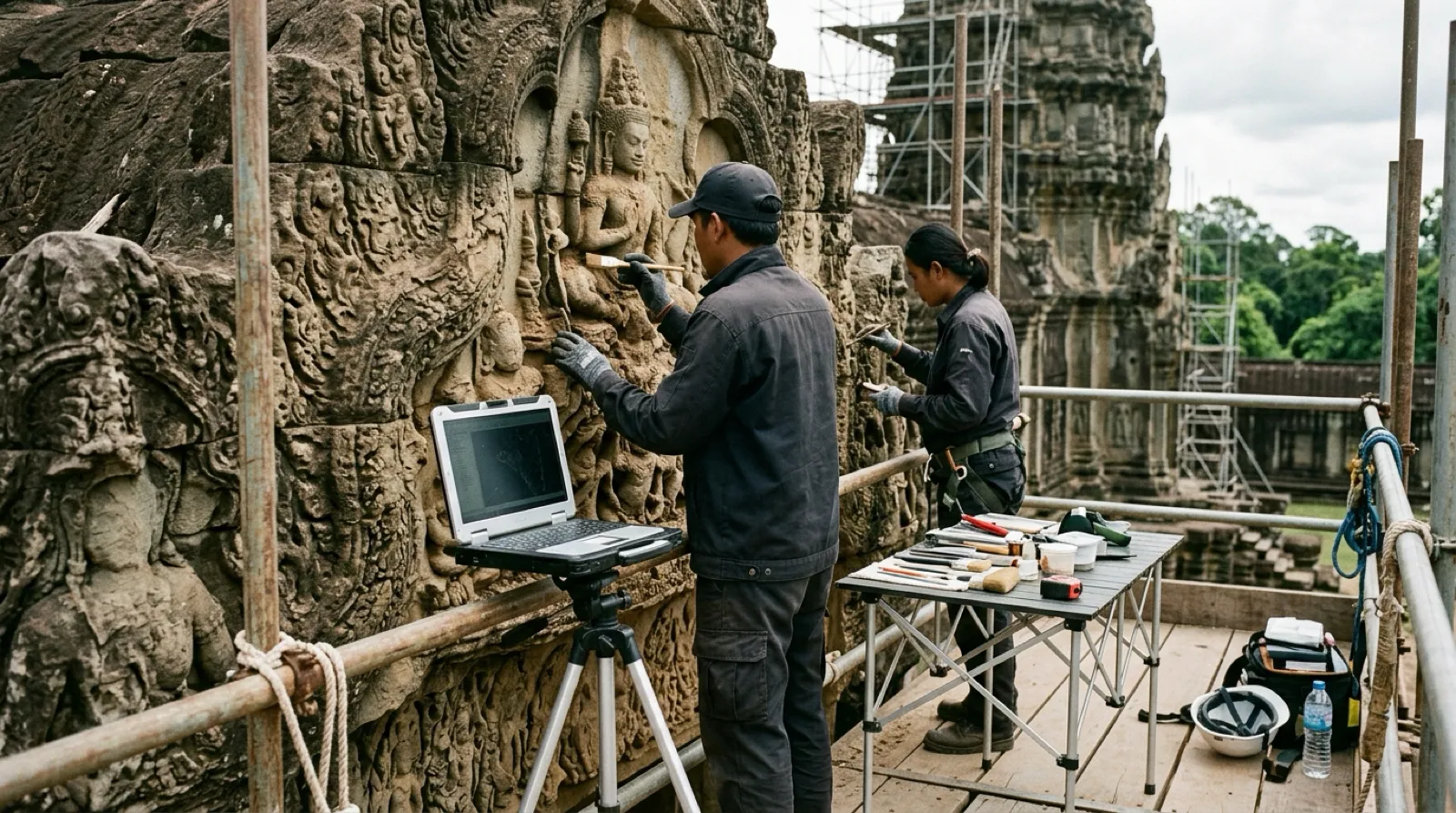
The road can be long. According to the Korean government’s policy briefing, the Petroglyphs along the Bangucheon Stream in Ulsan were placed on the Tentative List in 2010 and inscribed fifteen years later, on 12 July 2025, at the 47th session of the World Heritage Committee held in Paris, France. The Committee assessed the petroglyphs as a masterpiece whose “realistic images and unique composition, drawn on the basis of exceptional powers of observation,” show the artistry of the people who lived on the Korean Peninsula, yet it also recommended that progress on the Sayeon Dam works, which relate to the flooding problem, be reported to the World Heritage Centre. Inscription came with homework attached. Korea now has 17 World Heritage properties: 15 cultural and 2 natural.
Scale matters too. UNESCO announced that the 47th session inscribed 26 new properties, bringing the World Heritage List to 1,248 properties in 170 countries. At the same session, three African sites were removed from the List of World Heritage in Danger. The List grows every year while the condition of what is already on it is continuously reviewed. It is a living document.
4. Money Does Not Arrive Automatically: How the World Heritage Fund Works
Article 15 of the Convention establishes the World Heritage Fund from compulsory and voluntary contributions of States Parties, gifts, and other resources. The Centre explains that the Fund provides international assistance for preparatory assistance for nominations, training activities, technical cooperation, emergency assistance, and promotional and educational activities. The rules on who may receive it are explicit. All States Parties are eligible in principle, “but they must have paid their dues to the World Heritage Fund,” and individuals, foundations, intergovernmental organizations, and NGOs are not eligible to submit requests.
Priorities and approvals are also fixed. Priority goes to the most threatened properties, especially those on the List of World Heritage in Danger, and assistance falls into three categories: emergency assistance, conservation and management assistance, and preparatory assistance. The approving authority depends on the amount: the Director of the World Heritage Centre for requests of US$5,000 or less, the Chairperson of the Committee for US$5,001 to US$30,000 (up to US$75,000 for emergency requests), and the World Heritage Committee above those thresholds. Contrary to the common belief that inscription equals a grant, the Fund is a scheme of application, eligibility, assessment, and approval, and projects concerning intangible heritage or artistic creation are directed to separate funds.
5. Warning and Last Resort: The Danger List and Deletion
Article 11.4 of the Convention requires the Committee to keep a List of World Heritage in Danger for properties threatened by serious and specific dangers such as accelerated deterioration, armed conflict, natural disasters, or abandonment. This list is a warning and a basis for support, not a punishment. As seen above, the Fund prioritizes Danger-listed properties, and in 2025 the Committee removed three properties, in Madagascar, Egypt, and Libya, from the Danger List. Properties go on and come off it. It is a management tool.
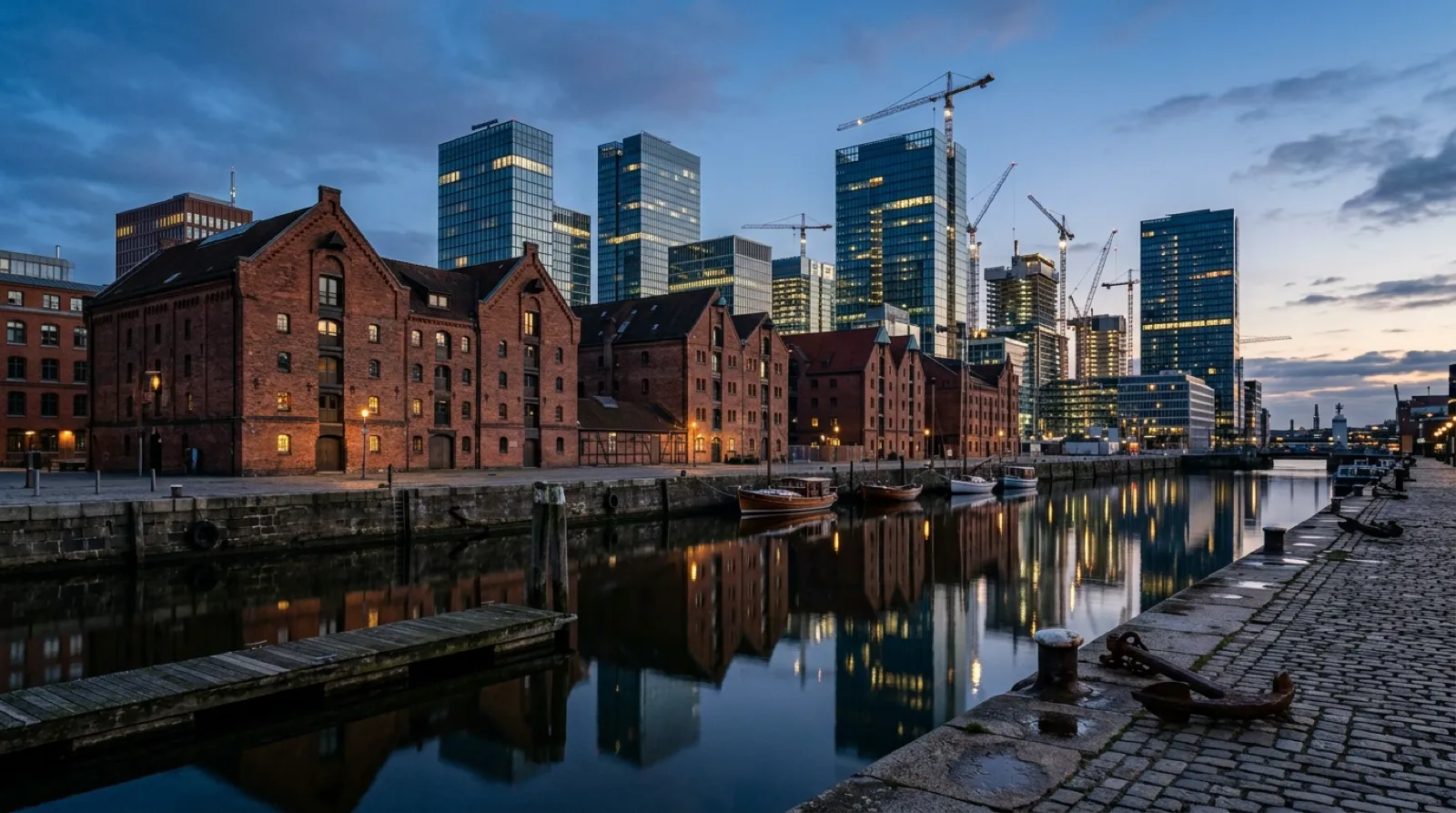
Deletion is a separate and far rarer procedure. Paragraph 176 of the Operational Guidelines, cited in the Centre’s questions and answers, provides that the Committee may delete a property from the List when there is evidence that it “has irretrievably lost the characteristics which determined its inscription,” and requires that beforehand the Secretariat inform the State Party concerned and transmit the State Party’s comments to the Committee. According to UN News, only three deletions have taken place so far: the Arabian Oryx Sanctuary in Oman in 2007, the Dresden Elbe Valley in Germany in 2009, and Liverpool – Maritime Mercantile City in the United Kingdom on 21 July 2021. Liverpool was inscribed in 2004, and from 2012 concerns were raised that waterfront development plans were harmful to the property’s authenticity and integrity; the Committee decided on deletion on the grounds of “the irreversible loss of attributes conveying outstanding universal value.” In Dresden the cause was the construction of the Waldschlösschen bridge across the valley. War or development does not trigger automatic deletion. It is a decision taken only when, after warnings and requests for corrective action, the Committee formally finds that the basis for inscription is gone.
6. On-Site Rules Are Set by Site Managers, Not by UNESCO
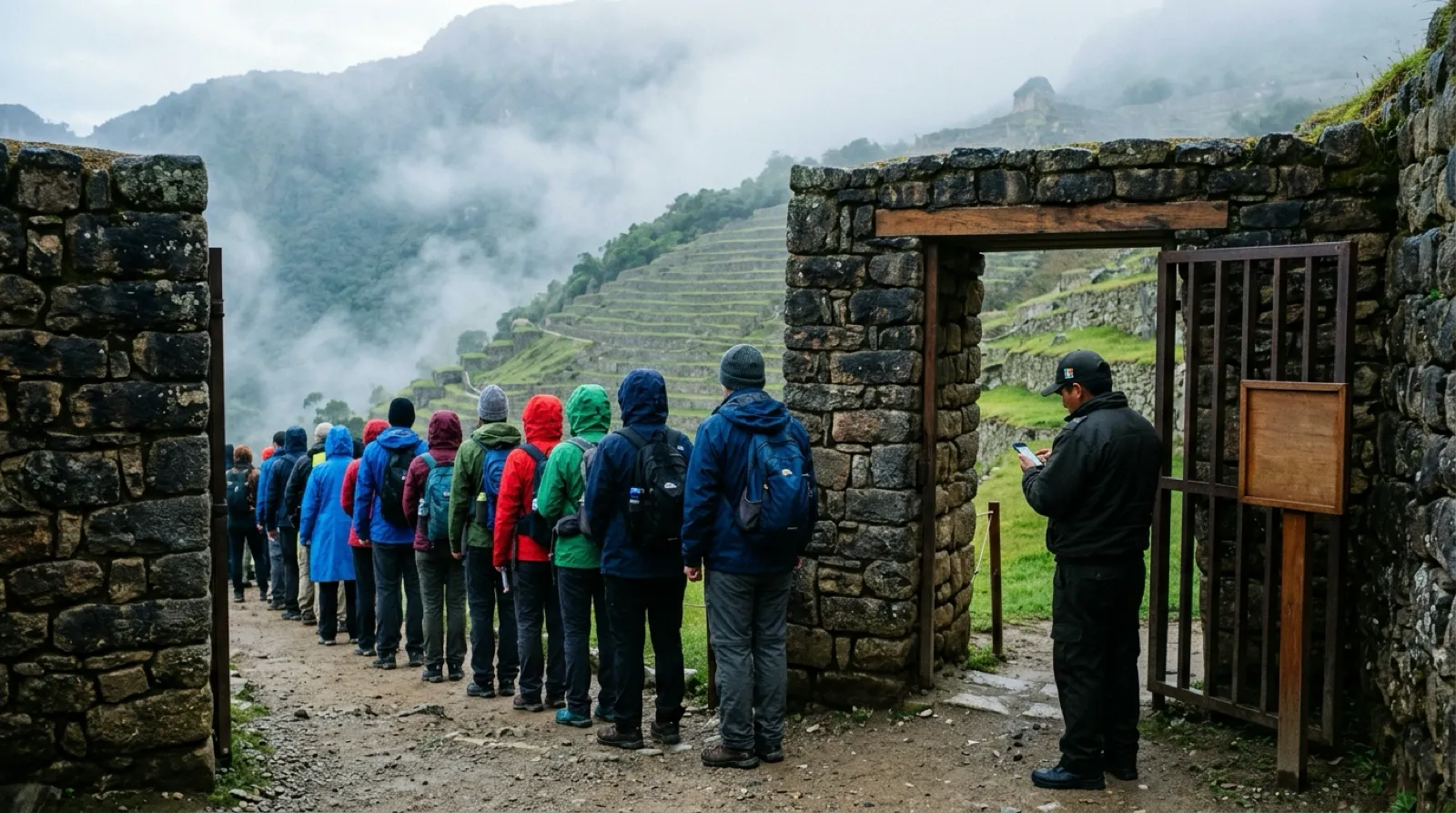
The rules visitors must follow at a World Heritage property are not set uniformly by UNESCO. Each State Party and its site management authority sets them, which is why they differ from site to site. Peru illustrates this well. According to the Cusco office of Peru’s Ministry of Culture, Ministerial Resolution No. 000404-2024-MC set the maximum daily capacity of Machu Picchu for 2025 at 5,600 visitors in high season and 4,500 visitors otherwise, with the high-season dates spelled out: 1 January, 17 to 20 April, 19 June to 2 November, and 30 to 31 December. Visits are governed by the protocol for managing visits to the Inca city of Machu Picchu approved by Ministerial Resolution No. 000207-2024-MC, and tickets are sold through the government’s official platform, Tu Boleto. You cannot buy that ticket on a UNESCO website.
Angkor in Cambodia goes into even more detail. The Angkor Visitor Code of Conduct, developed by the APSARA National Authority, which has been responsible for conserving Angkor since 1995, prohibits shorts and skirts above the knee and bare shoulders in sacred places, and strictly prohibits touching carvings, sitting on or leaning against fragile structures, moving or taking artifacts, and graffiti. Backpacks, umbrellas with sharp tips, tripods, and high heels are discouraged inside the temples; visitors should ask permission before photographing monks, and women should not touch or stand too close to them. Angkor has been a smoke-free site since 2012, and the code also asks visitors to donate to a recognized charity instead of giving candy or money to children. None of these detailed rules appears anywhere in the UNESCO Convention. They were set on site, and they must be checked on site.
7. Three Principles for a Responsible Visit
First, look for the site’s official management authority instead of searching for “UNESCO rules.” Reservations, visitor caps, dress codes, photography, drones, and trail access differ by country and by property and change from year to year. Just as Machu Picchu’s capacity is set by ministerial resolution each year, the most accurate information is the management authority’s latest notice.
Second, use official channels only for tickets, guides, and donations. UNESCO does not sell tickets or certify guides, and a seller or fundraiser that leads with the word “UNESCO” is not automatically authorized. The Angkor code’s advice to donate to recognized charities rather than hand money to children rests on the same logic.
Third, you can speak up. The World Heritage Centre says it expects citizens to play an active role in protecting heritage, and that anyone with a concern about a particular site may contact the UNESCO National Commission of the country concerned or the World Heritage Centre. Inscription is a promise a country makes before the world, and watching whether that promise is kept belongs to everyone, visitors included.
Sources
- UNESCO — Convention Concerning the Protection of the World Cultural and Natural Heritage (1972) (Accessed: 2026-09-07)
- UNESCO World Heritage Centre (Q&A) — Who owns a site once it’s inscribed on the World Heritage List? (Accessed: 2026-09-07)
- UNESCO World Heritage Centre (Q&A) — What does it mean for a site to be inscribed on the World Heritage List? (Accessed: 2026-09-07)
- UNESCO World Heritage Centre (Q&A) — Criteria (World Heritage) (Accessed: 2026-09-07)
- UNESCO World Heritage Centre (Q&A) — How is the Fund used? (Accessed: 2026-09-07)
- UNESCO World Heritage Centre (Q&A) — Who can apply for International Assistance under the World Heritage Fund? (Accessed: 2026-09-07)
- UNESCO World Heritage Centre (Q&A) — Which projects can be funded under the World Heritage Fund? (Accessed: 2026-09-07)
- UNESCO World Heritage Centre (Q&A) — Who approves International Assistance requests under the World Heritage Fund? (Accessed: 2026-09-07)
- UNESCO World Heritage Centre (Q&A) — Can a site be delisted from the World Heritage List? (Accessed: 2026-09-07)
- UNESCO World Heritage Centre (Q&A) — Where can I send a letter of concern about a threat to a World Heritage site? (Accessed: 2026-09-07)
- UNESCO — UNESCO World Heritage: 26 new sites inscribed (2025) (Accessed: 2026-09-07)
- UN News — Liverpool’s historic waterfront removed from World Heritage List (Accessed: 2026-09-07)
- Korea.kr (Korean government policy briefing) — 반구천 암각화, 한국 17번째 유네스코 세계유산 등재 (Bangucheon petroglyphs become Korea’s 17th World Heritage site) (Accessed: 2026-09-07)
- Korea Heritage Service, National Heritage Portal — 한국의 세계유산 (World Heritage in Korea) (Accessed: 2026-09-07)
- Korea Heritage Service, National Heritage Portal — 제주 화산섬과 용암동굴 (Jeju Volcanic Island and Lava Tubes) (Accessed: 2026-09-07)
- Ministry of Culture of Peru, Cusco office — Ministerio de Cultura establece aforo para temporada alta en Machupicchu en 2025 (Accessed: 2026-09-07)
- Angkor Enterprise / APSARA National Authority — Angkor Visitor Code of Conduct (Accessed: 2026-09-07)