Lighter Than an Egg: The 40-Gram Architecture of the Korean Gat
Hold a traditional Korean Gat (also called Heungnip, the black scholar’s hat of the Joseon dynasty) in your palm and two things immediately surprise you. First, when held up to the light, its black mesh is so finely woven that the landscape shimmers through like a dark veil. Second, despite its wide, sweeping brim and tall cylindrical crown, the entire hat weighs just 35 to 45 grams—lighter than a single chicken egg. Yet this featherweight structure neither collapses in the wind nor loses its curve in the rain. Even more remarkably, no single artisan makes a Gat alone: it is born from the relay of three distinct master workshops.
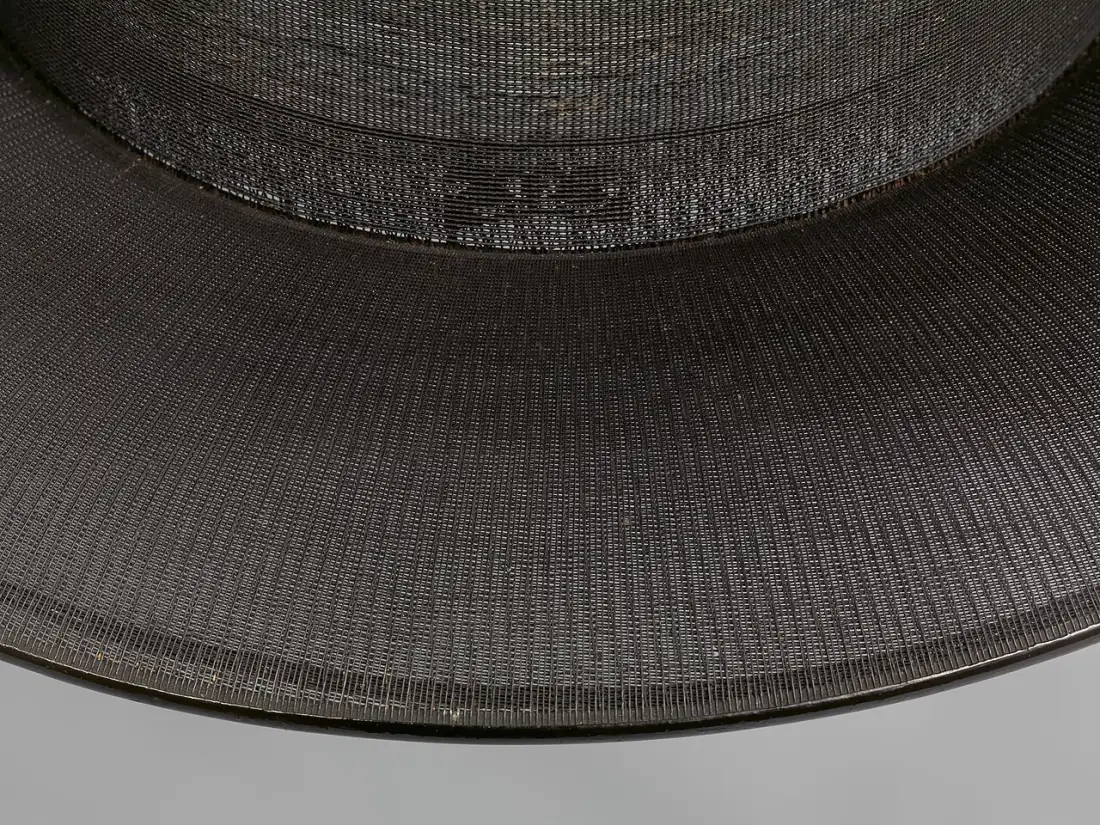
Designated as National Intangible Heritage No. 4, Gatil (Horsehair Hat Making) is divided among three specialized masters: the Chongmojajang (Crown Weaver), who weaves the cylindrical upper crown from horsehair; the Yangtaejang (Brim Weaver), who weaves the wide circular brim from hair-thin bamboo filaments; and the Ipjajang (Assembler and Finisher), who unites the two parts, sculpts the arch with a hot iron, and coats the hat in raw silk, pine-soot ink, and natural lacquer. Historically, Jeju Island—blessed with native ponies and supple timber bamboo—was the premier center for weaving crowns and brims, while assembly workshops flourished in Tongyeong, Yecheon, and Seoul.
Stage 1 — Chongmojajang: Weaving Horsehair Over a Wooden Block
The upper cylinder of the Gat, called the chongmoja (or daeu), encloses the scholar’s topknot (sangtu). Inside the Chongmojajang’s workshop, the artisan sits with a bell-shaped wooden form called a mojagol clamped firmly between the knees, interlacing glossy strands of horse tail and mane hair one by one.
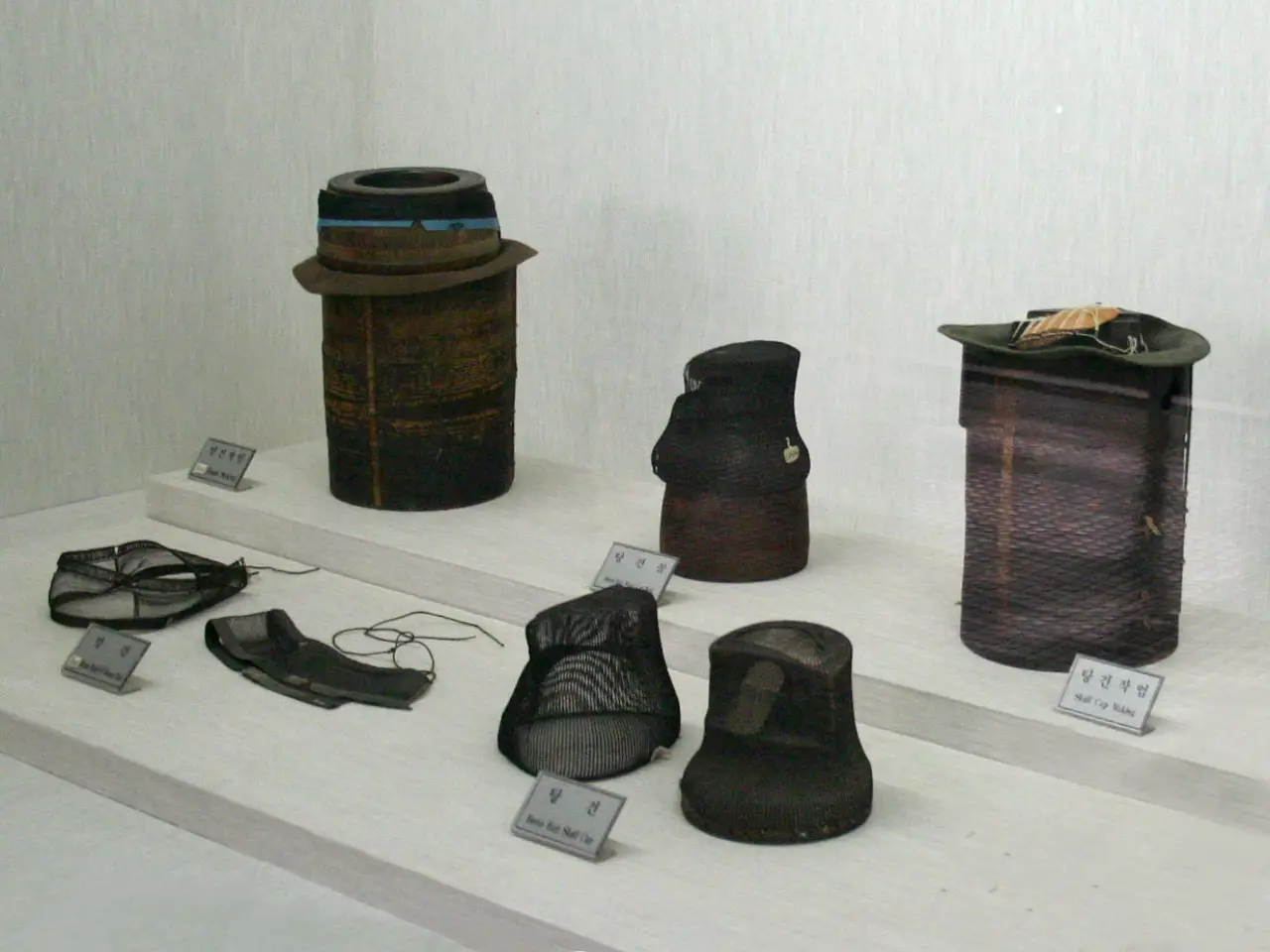
Tools and Process of the Crown Weaver
- Sorting Horsehair & Setting Radial Warps: Long, resilient horsehairs of uniform thickness are selected and anchored radially from the crown apex down the sides of the wooden block.
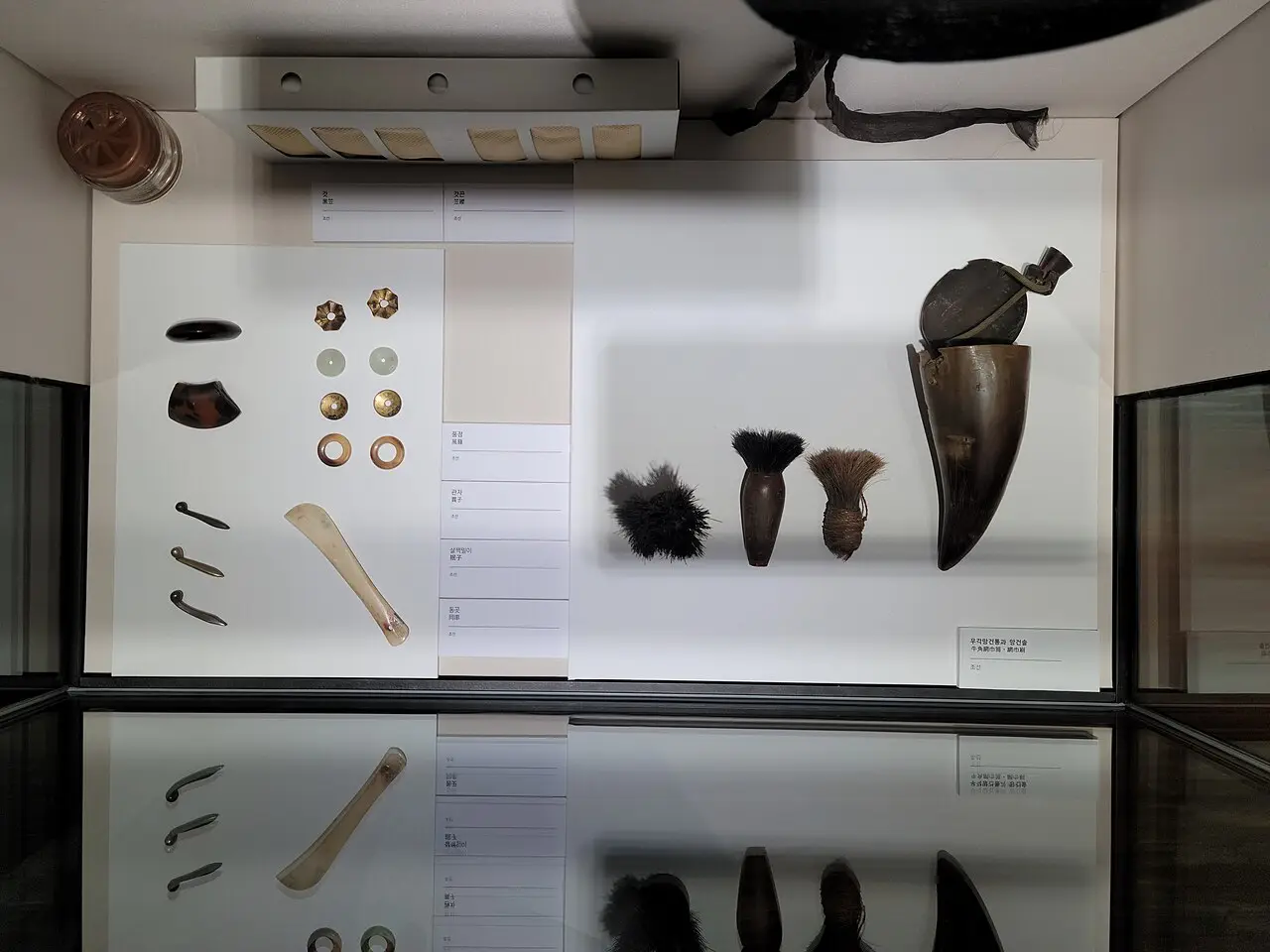
- Ox-Horn Thimble (Ssweppul) & Bamboo Needle: Wearing a carved ox-horn thimble on the finger, the artisan uses a pointed bamboo needle to interlace weft horsehairs spirally through the vertical warps in a tight twill mesh.
- Boiling and Setting the Protein Fiber: Once woven to the base of the wooden mold, the horsehair crown—still fitted on the wooden block—is boiled in water and dried in the shade. Heat and moisture permanently set the keratin protein of the horsehair so the cylinder retains its crisp bell silhouette once removed from the mold.
Stage 2 — Yangtaejang: Splitting Bamboo Thinner Than Hair on the Knee
Of all stages in Gatil, weaving the wide flat brim—the yangtae—demands the most extreme visual acuity and patience. Watching a Yangtaejang transform rigid bamboo culms into a gossamer disc feels closer to alchemy than carpentry.
How Bamboo Becomes 0.1 mm Threads (Dae-ori)
- Shaving Bamboo & The Pinhole Draw-Plate (Joreumpan): The artisan harvests straight one-to-two-year-old bamboo, peels the supple layer between the green outer skin and inner pith into paper-thin ribbons, and splits them into fine strands with a front knife (apkal). Each strand is then pulled through a microscopic hole punched in a steel plate called a joreumpan, shaving the bamboo into a uniform 0.1 mm filament (dae-ori) thinner than a human hair.
- Fingernail Weaving on a Knee Pad: Resting a round wooden board and leather pad on one knee, the Yangtaejang radiates hundreds of warp bamboo filaments and weaves concentric weft filaments outward, adding diagonal bracing threads (sagaengi). Because the artisan lifts every single warp filament with the tip of the right thumbnail, veteran weavers develop a permanent tiny groove in their thumbnail.
- A Draft-Free Room and Constant Moisture: Hair-thin bamboo filaments dry out and snap in seconds if exposed to wind. Even in midsummer, the Yangtaejang works behind closed doors, repeatedly moistening the bamboo threads with water as the translucent disc grows millimeter by millimeter.
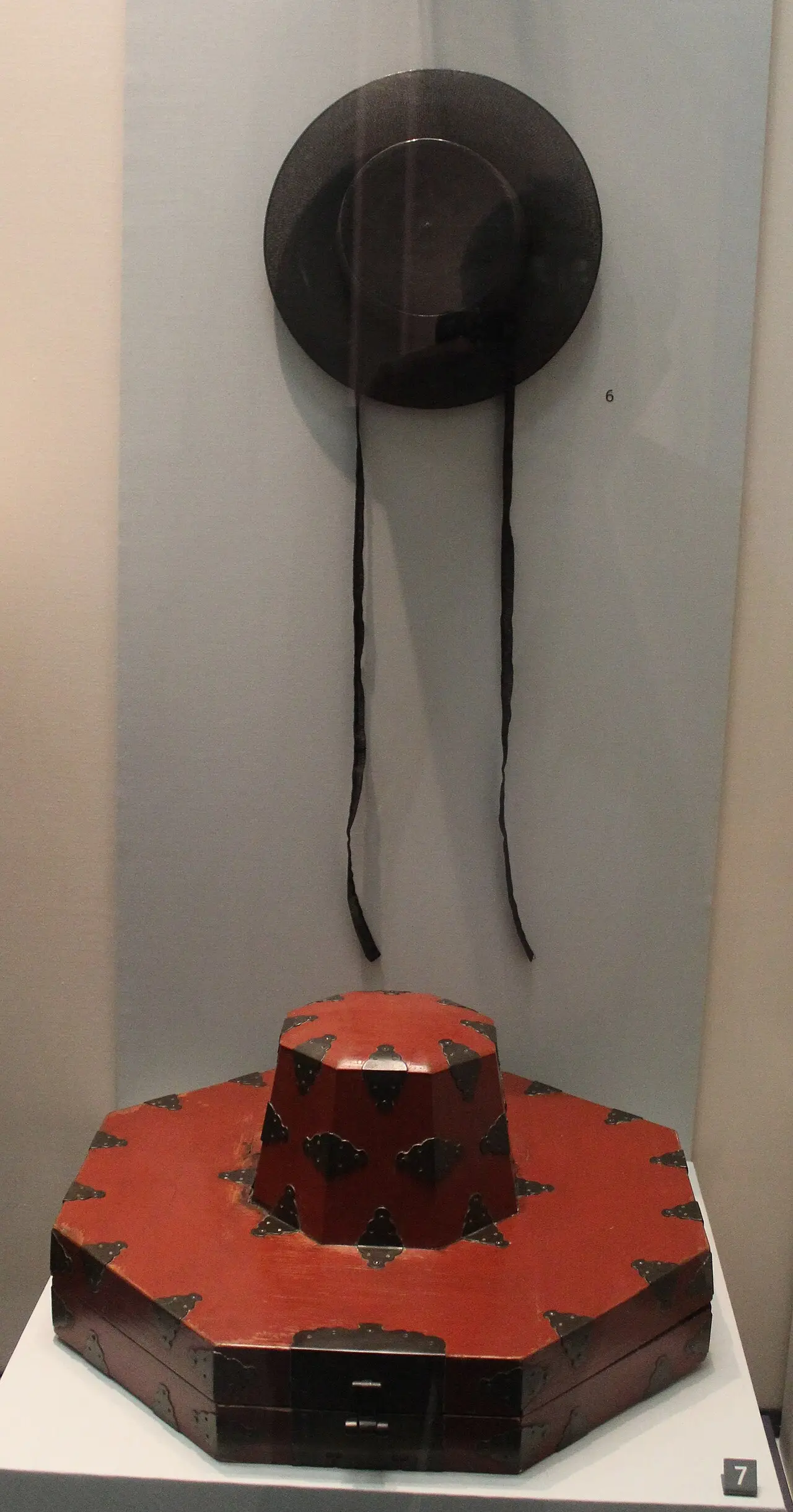
Stage 3 — Ipjajang: Sculpting Curves with Fire, Silk, Ink, and Lacquer
The horsehair cylinder from the Chongmojajang and the flat bamboo disc from the Yangtaejang are still pale, unfinished components. The master who unites them into a black Gat is the Ipjajang. At the center of the Ipjajang’s workshop sits a glowing charcoal brazier bristling with heated iron tools.
Five Finishing Steps of the Ipjajang
- Joining Crown and Brim: The lower rim of the horsehair crown is fitted into the inner ring of the bamboo brim and bonded using warm croaker fish-bladder glue (eogyo) and a heated iron.
- Hot-Iron Arch Sculpting (Teujip-japgi): Touching a sizzling iron from the charcoal brazier to water so it hisses with steam, the master presses and draws the flat bamboo brim hundreds of times. Guided by cheek-level heat sensing, the iron’s warmth softens the bamboo lignin and glue just enough to sculpt the signature sweeping curve of the Gat brim.
- Raw Silk Lamination (Hwaju-bareugi): Cobweb-sheer raw silk gauze (hwaju) is laminated over both the horsehair crown and bamboo brim with fish glue, reinforcing the fine mesh against tearing.
- Pine-Soot Ink Coating (Meokchil): Fine pine-soot ink mixed with fish glue is brushed evenly over the silk-covered frame and dried repeatedly until the hat takes on a deep matte black tone.
- Waterproof Lacquering & Hat Strings (Ottchil & Gatkkeun): Finally, a thin coat of refined natural lacquer seals the hat against rain and humidity, a split-bamboo rim ring (yeongja) is bound to the outer edge, and ornamental amber, jade, or silk hat strings (gatkkeun) complete the silhouette.
A Translucent Silhouette That Captivated the World
Sparked by global interest in Korean historical dramas and museum exhibitions, fashion historians and contemporary designers around the world now study the Joseon Gat as a triumph of lightweight structural design. Where the boiled horsehair of the Chongmojajang, the 0.1 mm bamboo threads of the Yangtaejang, and the glowing iron of the Ipjajang meet, forty grams of black moonlight come into being.