Before dawn mist clears from the foundry yard, blue flames exceeding 1,200°C rise from the charcoal furnace, marking the start of another day for a holder of Yugijang (유기장, Brassware Making, designated Important Intangible Cultural Property No. 77 on June 1, 1983). An ingot alloyed with 78% copper and 22% tin contains so much tin that striking it cold at room temperature shatters it like glass. Heating this demanding alloy to a glowing red and hammering it thousands of times in coordinated rhythm to form unbreakable bowls and resonant gongs is the art of Bangjja Yugi (방짜유기, hand-forged high-tin bronze). Below, we step inside the Yugijang forge to examine the tools, team choreography, and six-stage process that turn molten bronze into golden tableware and percussion instruments.
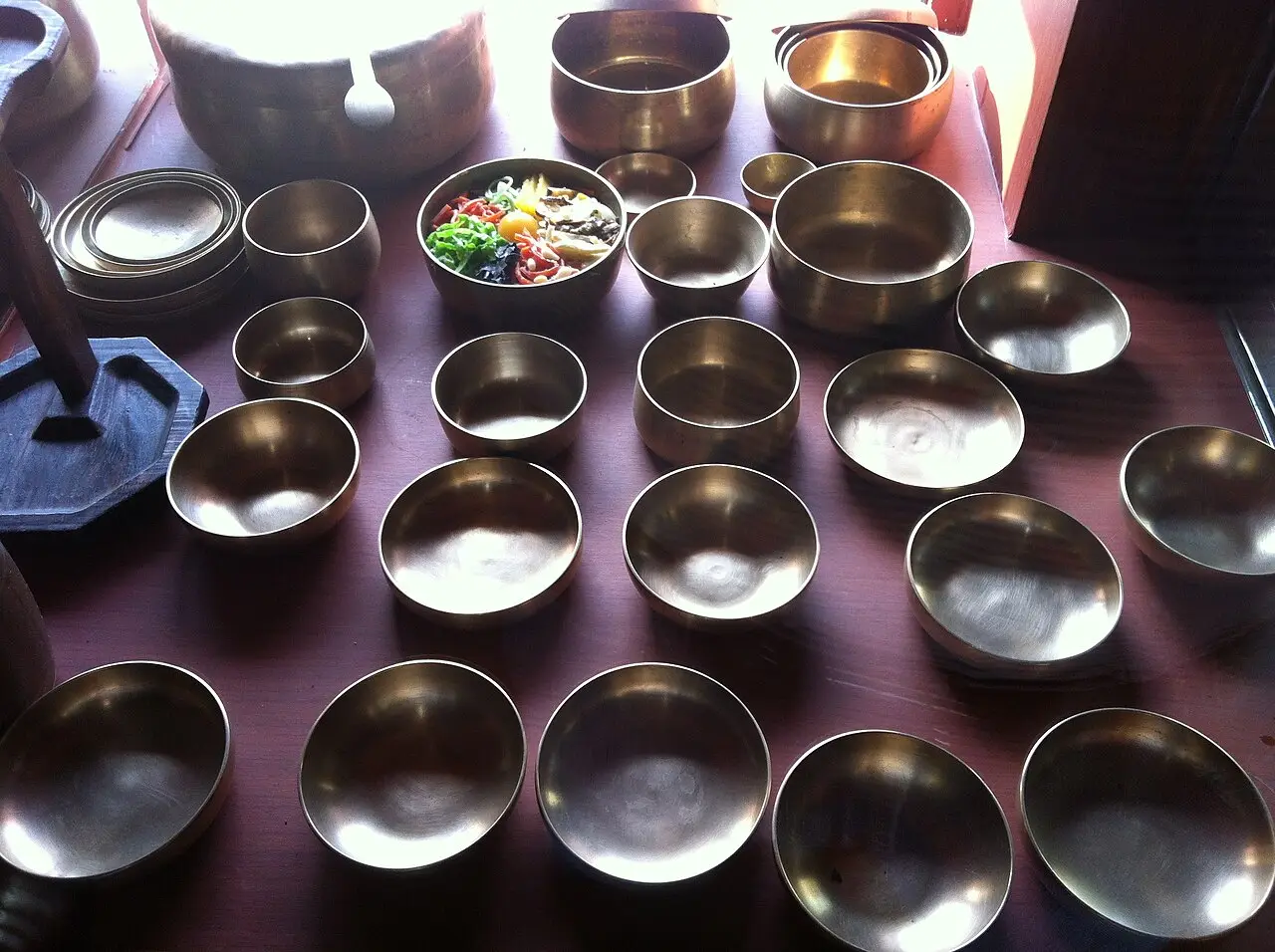
Why Does Bangjja Yugi Insist on a Strict 78% Copper to 22% Tin Ratio?
According to the Korea Heritage Service (KHS) official registry for Yugijang, traditional Korean brassware is classified into three technical lineages: Bangjja (hand-forged high-tin bronze), Jumul (molten casting in molds), and Ban-bangjja (casting followed by hammering). Whereas ordinary bronze or brass keeps tin near 10% or substitutes zinc for easier cold working, Bangjja Yugi strictly combines 78% copper and 22% tin (roughly a 4:1 mass ratio).
At 22% tin, the alloy is brittle at room temperature and cracks under a hammer. Yet when heated into the 600–800°C red-heat window, its crystalline microstructure shifts into ductile beta and gamma phases, allowing artisans to stretch the metal into thin, curved vessel walls without fracturing. Without digital pyrometers, the master artisan reads the exact forging window from the glow of the charcoal fire and the color of the heated metal disc.
National Intangible Heritage Yugijang — Alloying, Hammering, Quenching & Lathe Scraping (K-ASMR)
Official K-Heritage Channel documentary capturing the sounds and visuals of melting copper and tin in a crucible, rhythmic multi-person hammering (mejil), cold-water quenching, and scraping golden luster on a traditional lathe.
Watch workshop video on YouTube →Inside the Forge: The 6 Stages of a Yugijang Workshop
A Bangjja forge is never a solo studio. It operates as a tightly synchronized crew of five to seven artisans led by the Daejang (대장, master smith and tongs holder), working alongside three or four Ap-mekkun (앞메꾼, front striker smiths), the Bul-daejang (불대장, furnace and bellows tender), and the Gajil-kkun (가질꾼, lathe scraper and polisher).
Stage 1: Melting (Yonghae) and Pouring the Baduk Disc
Pure copper and tin are weighed to the exact 78:22 ratio and melted inside a refractory clay crucible over a charcoal furnace at over 1,200°C. Skimming off surface slag with a long iron ladle, the master pours the molten alloy into shallow circular hollows carved into a flat stone slab. As it solidifies, it forms a thick, flat round ingot called a baduk (바둑)—named after its resemblance to a Go stone—whose weight matches the exact vessel to be forged.
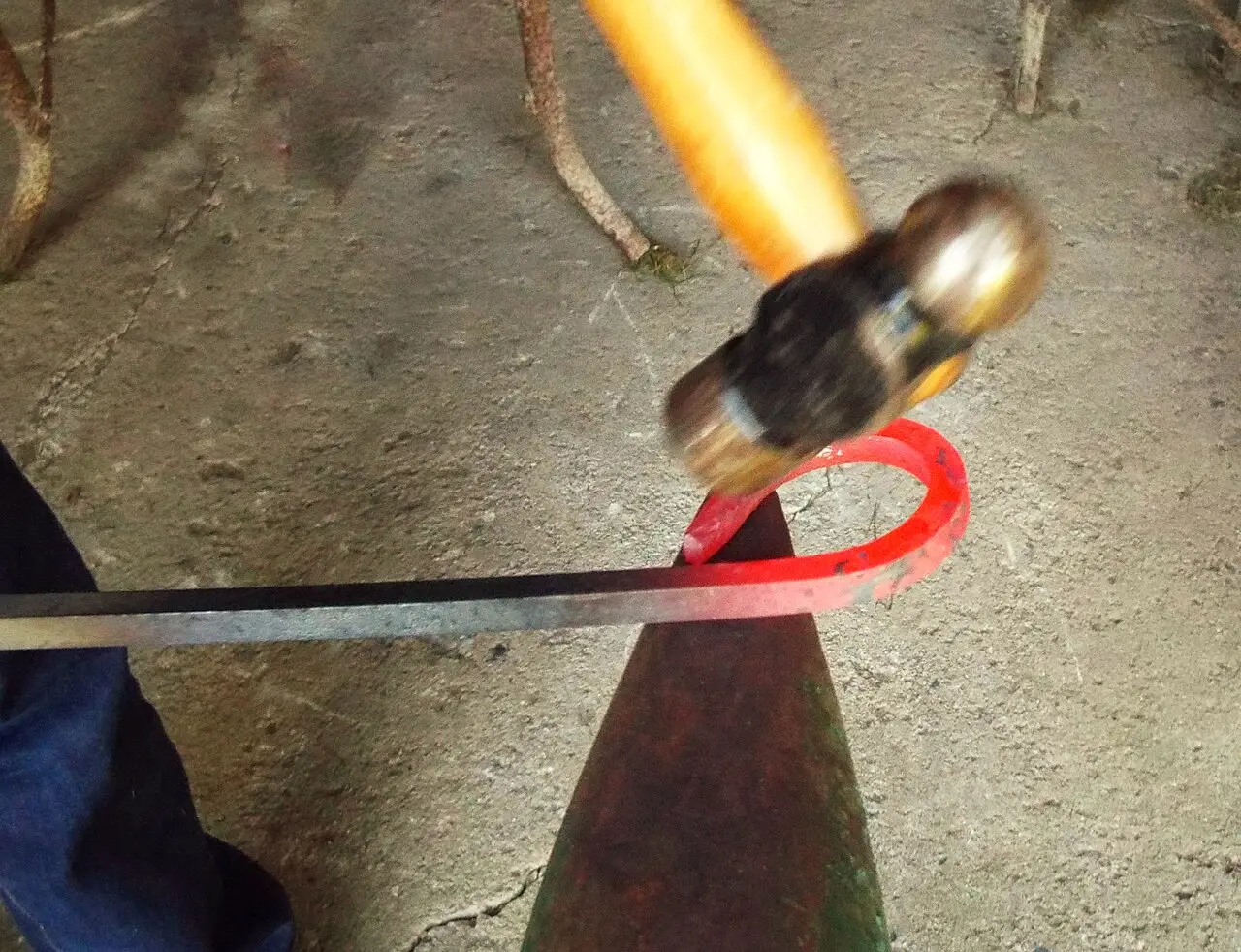
Stage 2: Nepimjil and Ugimjil (Mejil) — Synchronized Multi-Hammer Forging
Once the baduk ingot is reheated to 700–800°C, the master grips it with long iron tongs on the stone-anchored anvil (dokme). When the master taps a specific spot with a small guide hammer, three or four strikers standing opposite in two parallel lines swing heavy iron hammers down in rapid, alternating succession.
- Nepimjil (Spreading): Hammering the thick round baduk outward from the center into a wide, flat circular sheet.
- Gyeop-mejil & Ugimjil (Stacked Cupping): Because a single thin sheet loses heat too quickly and tears easily, the master stacks three to eight heated sheets together into a bundle, reheating and hammering them simultaneously with round-nosed cupping hammers (ugim-mangchi) to raise the curved walls and rim of the bowls.
- Ejipgi (Edge Trimming): If a microscopic hairline crack appears along the rim during forging, the master immediately shears or chisels out a small crescent around the flaw so the crack cannot propagate inward.
[Shorts] Hammered, Cooled, Straightened — Bangjja Yugi Forging & Quenching in 60 Seconds
A concise YouTube Shorts clip showing the glowing bronze sheet being hammered, plunged into cold water for quenching, and trued with a hammer.
Watch workshop video on YouTube →Stage 3: Damgeumjil (Quenching) — Rapid Cooling for Toughness
Unlike carbon steel—which becomes hard and brittle when quenched in cold water—high-tin bronze behaves in the opposite way. Reheating the forged vessel to 700–800°C and plunging it immediately into a vat of cold water locks the high-temperature ductile phase in place at room temperature, giving Bangjja brassware its signature toughness and clear, bell-like ring.
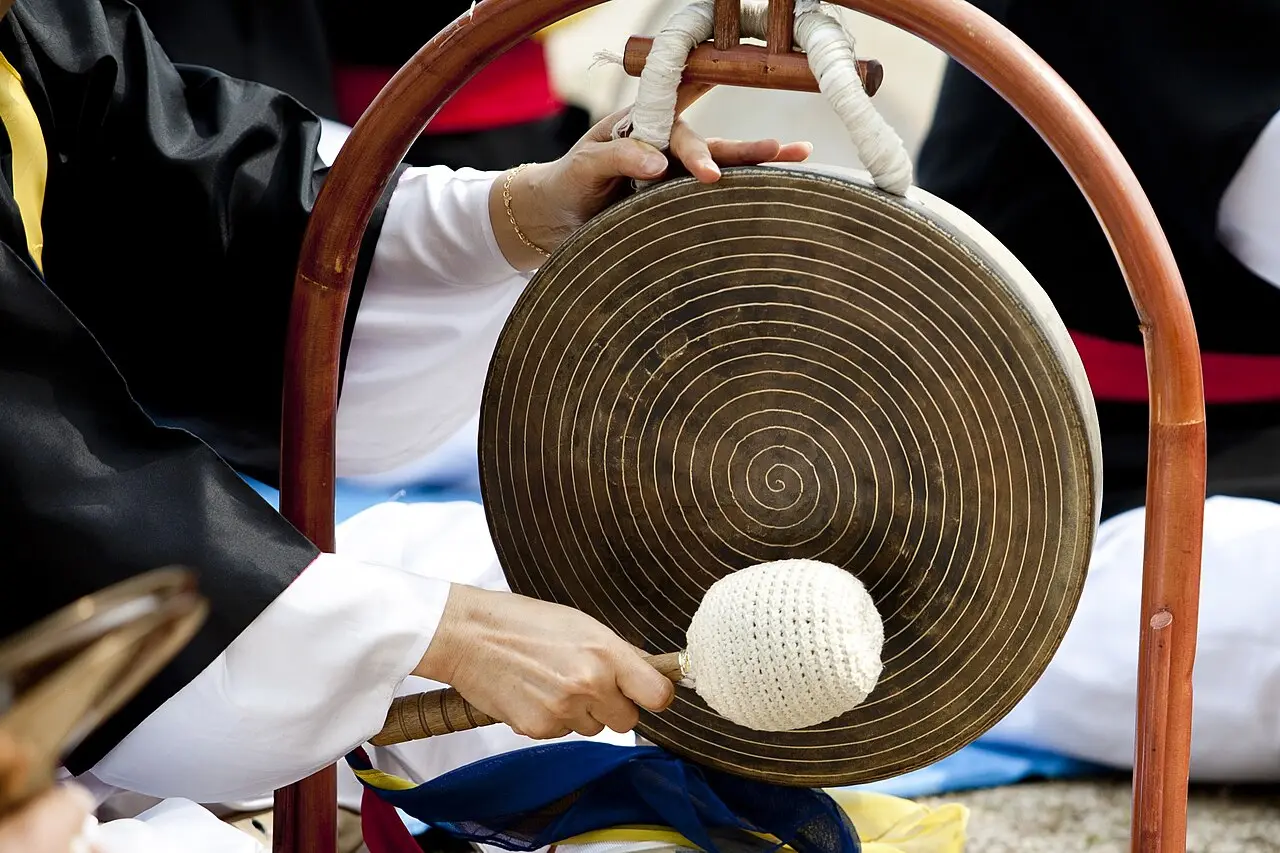
Stage 4: Byeoreumjil and Gajil (Lathe Scraping) — Revealing the Golden Luster
Emerging from the quenching vat, the bowl is coated in jet-black oxide scale. After cold-hammering the vessel true (byeoreumjil), the artisan mounts it onto a rotating wooden chuck lathe (gajil-teul). Pressing a curved, razor-sharp steel scraper (gajil-kal) against the spinning metal, the artisan peels away thin ribbons of black oxide until the warm golden interior and exterior shine through.
Full Workshop Documentary — Forging Korea's Bangjja Brassware Across a Thousand Years
An in-depth documentary following master Yugijang artisans through the 1,200°C furnace pour, multi-person hammering, quenching, lathe scraping, and acoustic tuning of traditional gongs.
Watch workshop video on YouTube →The Yugijang's Specialized Toolkit
- Crucible (Dogani) & Stone Mold (Badukpan): Refractory crucibles withstanding 1,200°C+ and carved stone slabs for casting the initial round ingots.
- Anvil (Dokme) & Forge Tongs (Bul-jipge): Deeply bedded iron anvils and long-jawed tongs shaped to grip stacked bowls at precise angles.
- Nemo-mangchi, Ugim-mangchi & Godori-mangchi: Square-faced hammers for spreading flat ingots, round-nosed cupping hammers for raising vessel walls, and small finishing hammers for shaping foot rings and rims.
- Gajil-teul & Gajil-kal: The rotary lathe chuck and crescent-tipped steel hand scrapers used to shave off black oxide scale and cut concentric acoustic grooves.
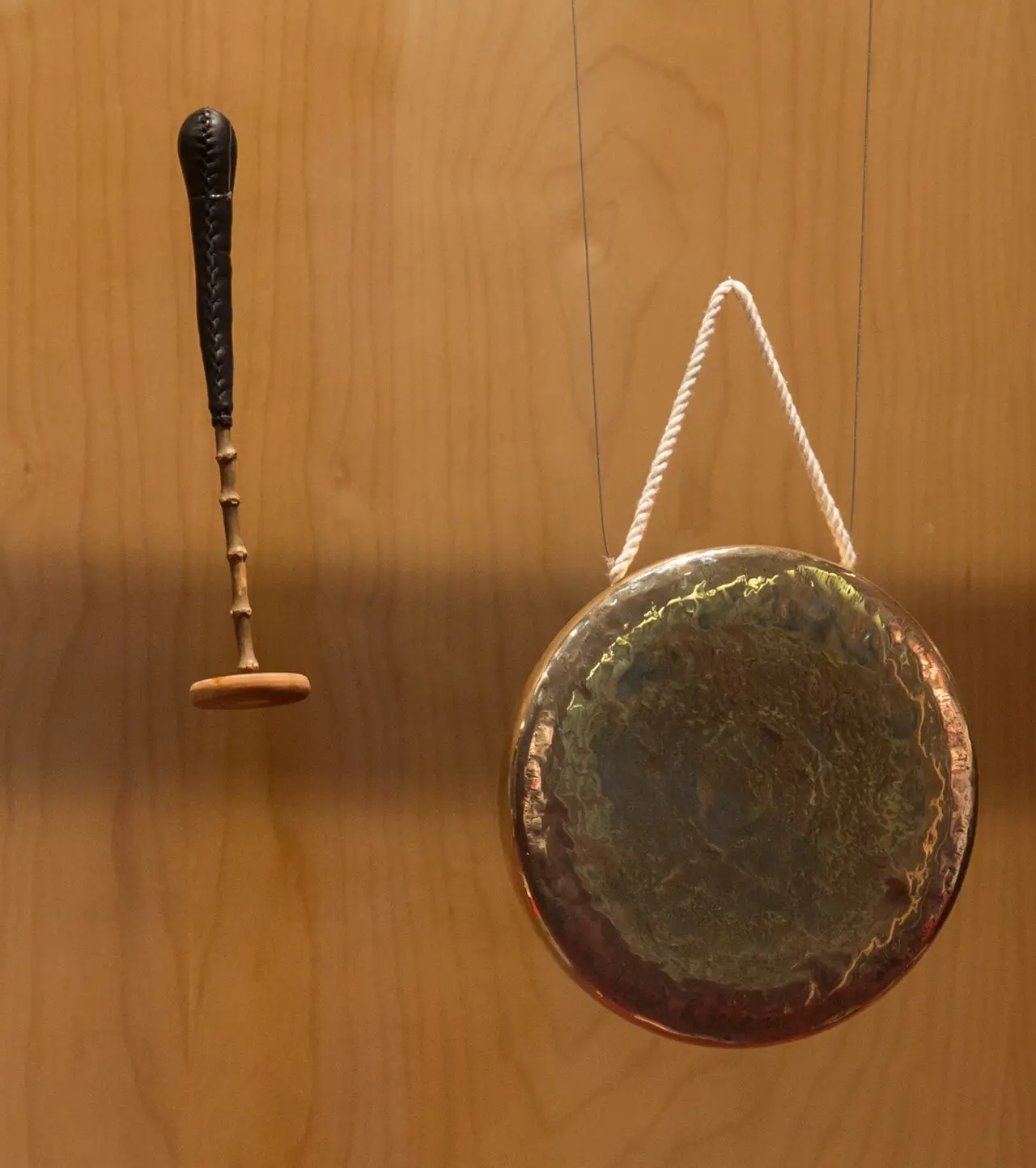
What the Yugijang Makes: From Royal Bansanggi Tableware to Jing and Kkwaenggwari Gongs
- Jing (Large Gong) & Kkwaenggwari (Hand Gong) — Voicing the Metal: Traditional Korean percussion instruments can only achieve their resonant overtones through Bangjja forging; cast gongs crack under a mallet. Artisans leave the dark, hand-hammered oxide skin intact on the inner face while scraping concentric rings on the outer face, finishing with ureum-japgi (acoustic voicing)—tapping specific spots with a hammer while listening to the beat frequency until the pitch and decay stabilize.
- Bansanggi Tableware & Sujeo (Spoon and Chopsticks): Full formal dining sets (rice bowls, soup bowls, side dishes, lidded warmers, and spoons/chopsticks) are scraped smooth across every surface. High thermal retention keeps hot soup steaming and cold dishes chilled, while trace copper ions naturally inhibit foodborne bacteria.
[Cultural Heritage I Love] Yugijang Episode — Thermal Retention & Culinary Uses of Bangjja Tableware
A K-Heritage Channel feature exploring how hand-forged Bangjja brassware is crafted and why chefs prize its heat retention and antibacterial qualities on modern tables.
Watch workshop video on YouTube →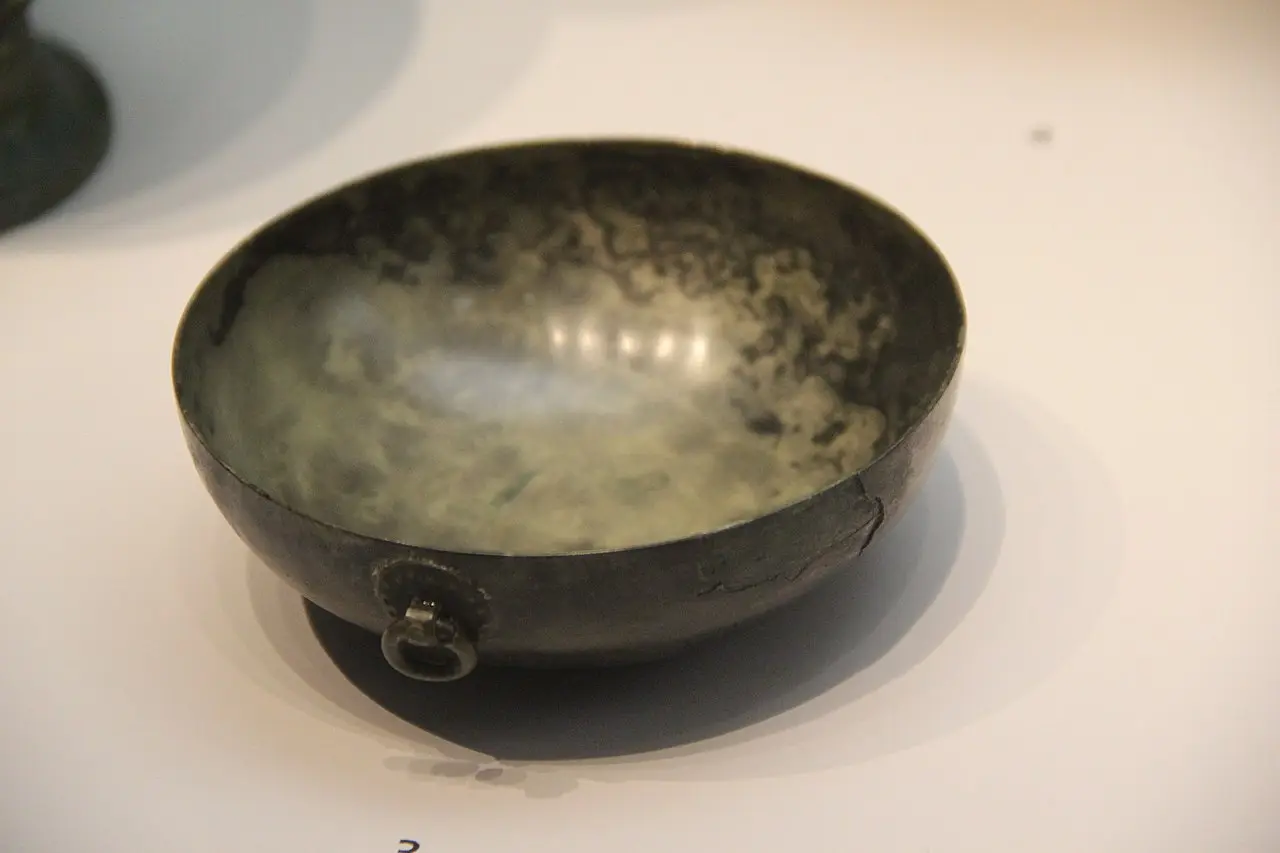
Comparing the Three Lineages: Bangjja, Jumul, and Ban-bangjja
Korea's Yugijang heritage preserves all three regional methods: northern Bangjja (originally centered in Napcheong, Pyeonganbuk-do), central Jumul casting (famous in Anseong, Gyeonggi-do, origin of the Korean idiom Anseong-matchum for a custom-made fit), and southern Ban-bangjja (practiced in Suncheon and Boseong). In Part 2 of this series, we visit the woodworking studio of the Somokjang (Master of Traditional Wooden Furniture), who joins seasoned timber without a single iron nail.