In a quiet woodworking studio where dozens of wooden handplanes and chisels line the wall and fragrant wood shavings carpet the floor, a holder of Somokjang (소목장, Traditional Woodcraft and Joinery, designated Important Intangible Cultural Property No. 55 on January 30, 1975) builds furniture designed to last centuries without a single iron nail. While the Yugijang covered in Part 1 tames molten bronze at 1,200°C with heavy hammers, the Somokjang masters the living breathing cycle of timber across Korea’s humid monsoon summers and dry, floor-heated (ondol) winters. Below, we step beside the Somokjang’s low workbench to examine the hand tools, joinery geometry, and five-stage workflow behind Korea’s iconic wooden furniture.
Why Does the Somokjang Reject Iron Nails in Favor of Joinery and Bamboo Pegs?
According to the Korea Heritage Service (KHS) official registry for Somokjang, traditional Korean woodworking divides into Daemokjang (대목장, master timber framers of palaces and temples) and Somokjang (소목장, master cabinetmakers of indoor furniture and lattice doors/windows).
Avoiding iron nails is a matter of structural physics rather than mere custom. Even after felling, wood expands during Korea’s damp summer monsoon and contracts in winter inside rooms heated by ondol underfloor flues. Iron nails rust when exposed to wood moisture and tannins, loosening their grip and splitting the surrounding grain. Instead, the Somokjang interlocks timber through precision gyeolgu (결구, mortise-and-tenon and dovetail joinery), securing critical joints with sanji (산지, roasted bamboo pegs)—which expand and contract at the same rate as the timber—and natural croaker air-bladder glue (burepul).
[K-ASMR / Full Ver.] Somokjang: Making a Traditional Sabangtakja (Four-Sided Shelf)
Official K-Heritage Channel documentary capturing every stage of building a Sabangtakja: scribing layout lines with a marking gauge, sawing, chiseling mortises, pull-planing, and tapping joints together with a wooden mallet.
Watch workshop video on YouTube →Inside the Studio: The 5 Stages of a Somokjang's Work
Stage 1: Multi-Year Natural Seasoning and Matching Wood Species to Each Part
A Somokjang’s work begins five to ten years before a plane touches the board. Raw logs are exposed to rain and wind to leach out sap, then air-dried in the shade for five to ten years until internal warping stabilizes. Every furniture component is assigned a specific native tree species:
- Posts & Load-Bearing Frames: Dense, strong-grained hardwoods such as zelkova (neutinamu), oak, pear wood, and red pine.
- Floating Panels (Alpan) & Door Faces: Lightweight, dimensionally stable woods with expressive grain such as paulownia (odongnamu), black persimmon (meokgamnamu), pagoda tree, and ginkgo.
- Drawer Interiors & Backboards: Insect-resistant, moisture-regulating paulownia and pine.
Stage 2: Mareumjil (Layout & Scribing) — Marking to 0.1 mm with Ink Line and Geumugae
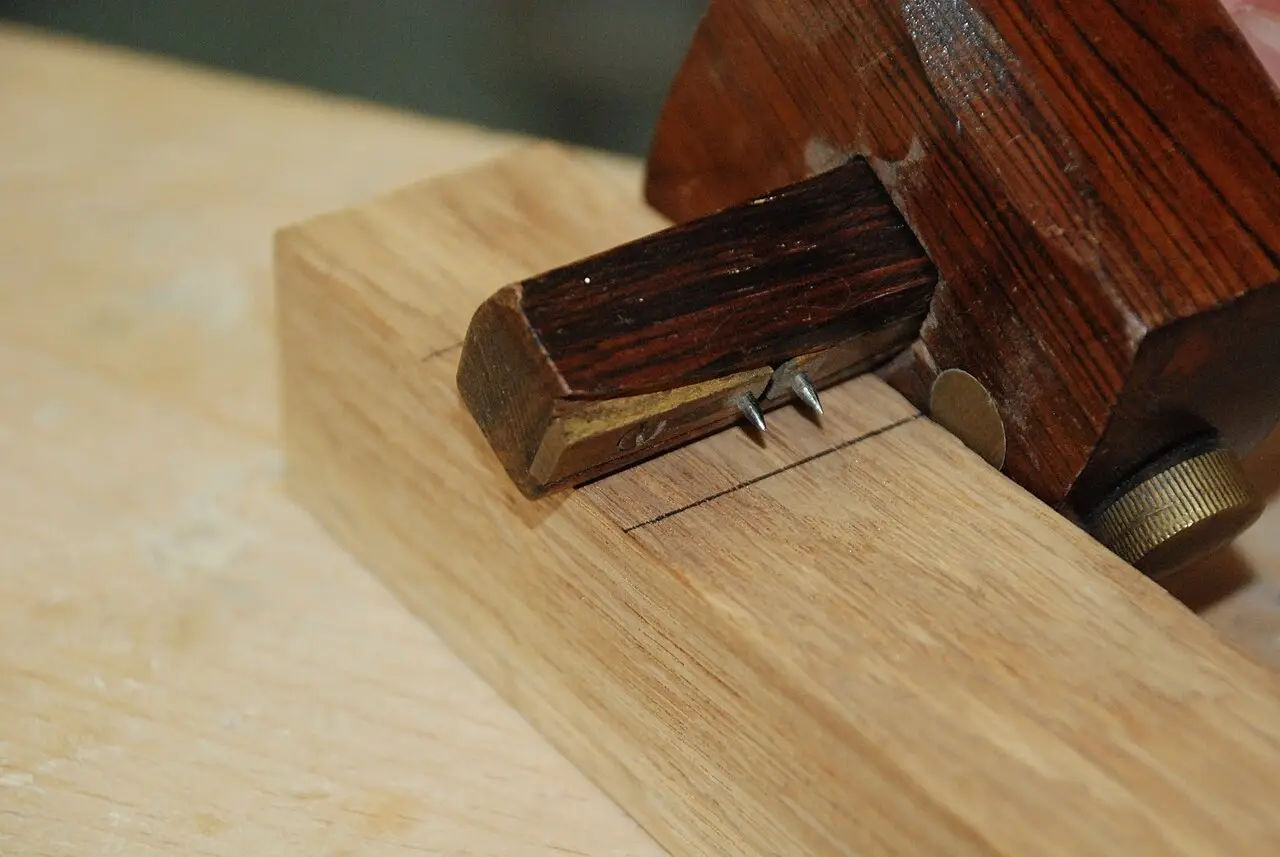
During mareumjil (layout), the artisan snaps straight reference lines with an ink pot and bamboo ink knife (meoktong and meokkal), then scribes exact mortise and tenon widths using a geumugae (traditional marking gauge). Pressed tight against the board’s reference face and pulled toward the body, the gauge’s twin steel pins score crisp parallel lines that guide the chisel blade.
Stage 3: Sawing and Chiseling Joinery (Jangbu, Jumeokjang, Sagae, and Floating Panels)
Cutting on the pull stroke with a thin-kerf handsaw and paring with beveled chisels, the Somokjang selects from dozens of specialized joints:
- Jangbu-matchum (Through, Blind & Mitered Mortise-and-Tenon): Rectangular tenons cut on horizontal rails lock into mortises chiseled through slender vertical posts.
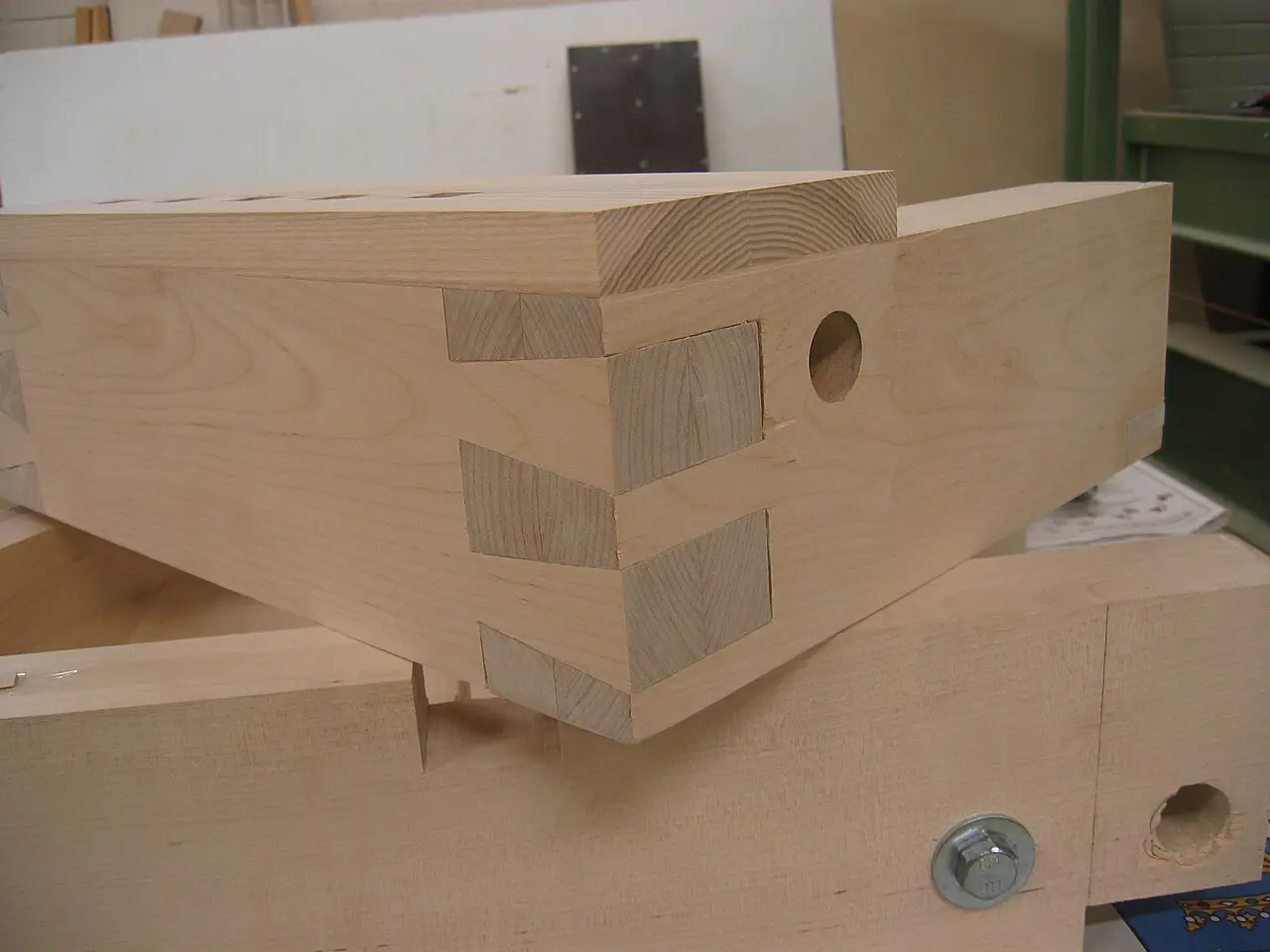
- Jumeokjang & Jebichori-matchum (Fist & Swallowtail Dovetails): Trapezoidal tails flare wider at the tip than at the neck, mechanically preventing drawer fronts from pulling loose even after centuries of daily opening.
- Sagae-matchum (Box-Finger Corner Joinery): Multiple square fingers interlock at right angles along the corners of heavy storage chests (bandaji and gwe).
- Uli-gojupan (Floating Tongue-and-Groove Panel Construction): Wide wooden panels are never glued rigidly to the outer frame; instead, their beveled tongues sit freely inside deep grooves routed along the inner edges of the rails. When summer humidity swells the panel, it expands safely into the hidden groove without cracking the frame.
[Shorts] Why the Opening Is Cut Narrower — How Trapezoidal Dovetail Joinery Locks Tight
A close-up YouTube Shorts demonstration showing how a flared dovetail tenon slides into its socket to form an unyielding mechanical lock without nails.
Watch workshop video on YouTube →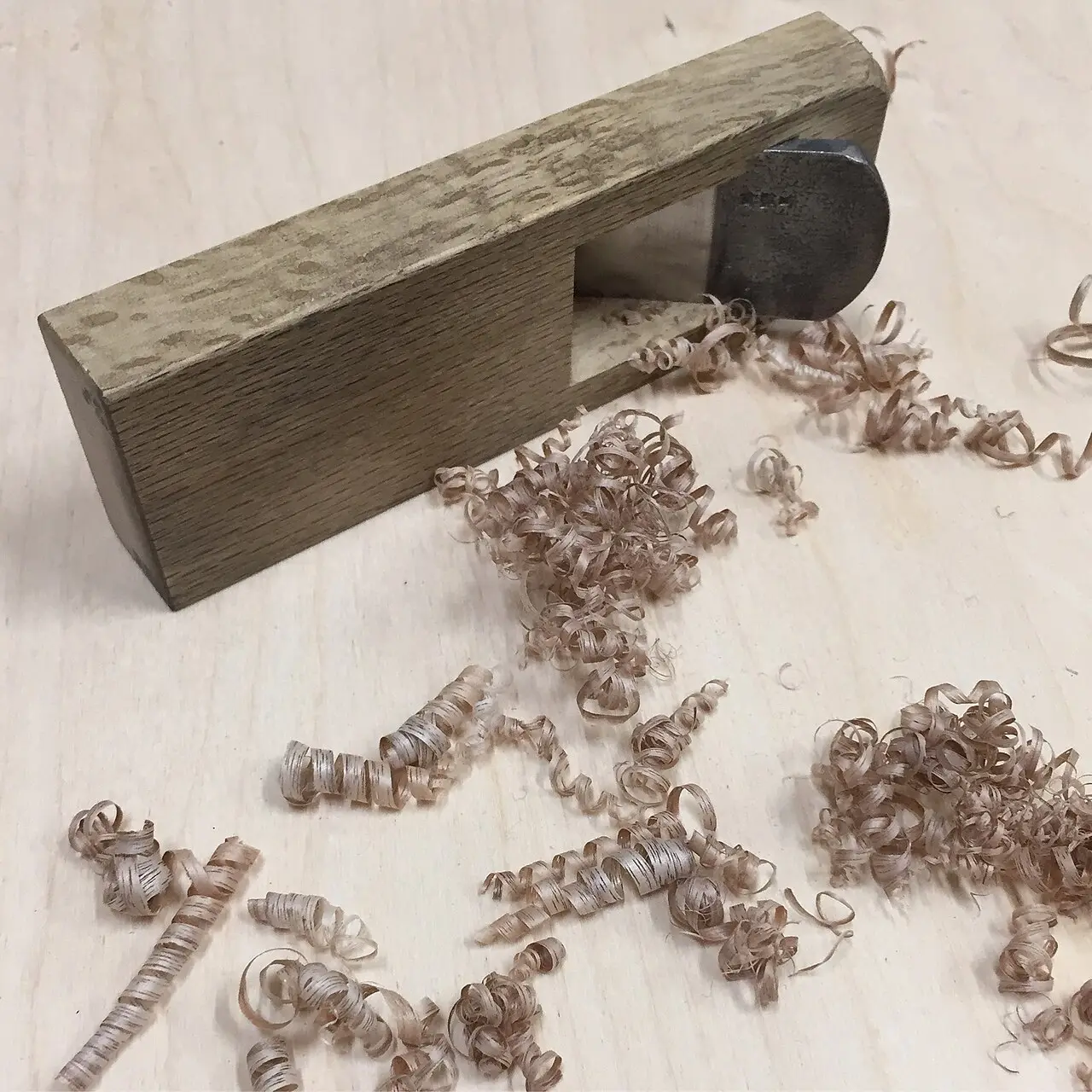
Stage 4: Pull-Planing — Shaving Silk-Thin Ribbons with 40 to 80 Specialized Planes
Unlike Western bench planes pushed away from the body, Korean wooden handplanes (daepae, fitted with a crosswise handle bar through an oak body) are pulled toward the artisan while seated or braced at a low angled planing board. A single Somokjang maintains 40 to 80 planes: roughing planes (chobeol-daepae), smoothing planes that peel translucent ribbons and leave a natural sheen without clogging wood pores, groove planes (gugae-daepae), and profile molding planes (byeontang-daepae and golmiri-daepae) for lattice window ribs.
Somokjang Workshop — Shaping Lattice Ribs with a Specialized Molding Plane (Golmiri-daepae)
Watch a master Somokjang tune and pull a specialized profile plane to carve crisp grooves and beads along traditional window and cabinet ribs.
Watch workshop video on YouTube →Stage 5: Dry-Fitting, Burepul Assembly, Nakdong Scorching, and Metal Fittings
After a dry assembly check, joints are coated with warm croaker air-bladder glue (burepul), tapped home with a wooden mallet, and pinned with bamboo pegs (sanji). For paulownia panels, the artisan often applies nakdong-beop (낙동법)—pressing a red-hot iron over the board and brushing away the softer charred earlywood with a rice-straw brush so the raised winter grain stands out in dramatic relief—before finishing with raw perilla oil, camellia oil, beeswax, or raw lacquer and mounting forged iron or white-brass hardware (jangseok).
Somokjang Workshop — Assembling a Wanja Lattice Door Without Iron Nails
A step-by-step demonstration of fitting dozens of half-lapped and mitered wooden lattice strips together into a traditional geometric window grid.
Watch workshop video on YouTube →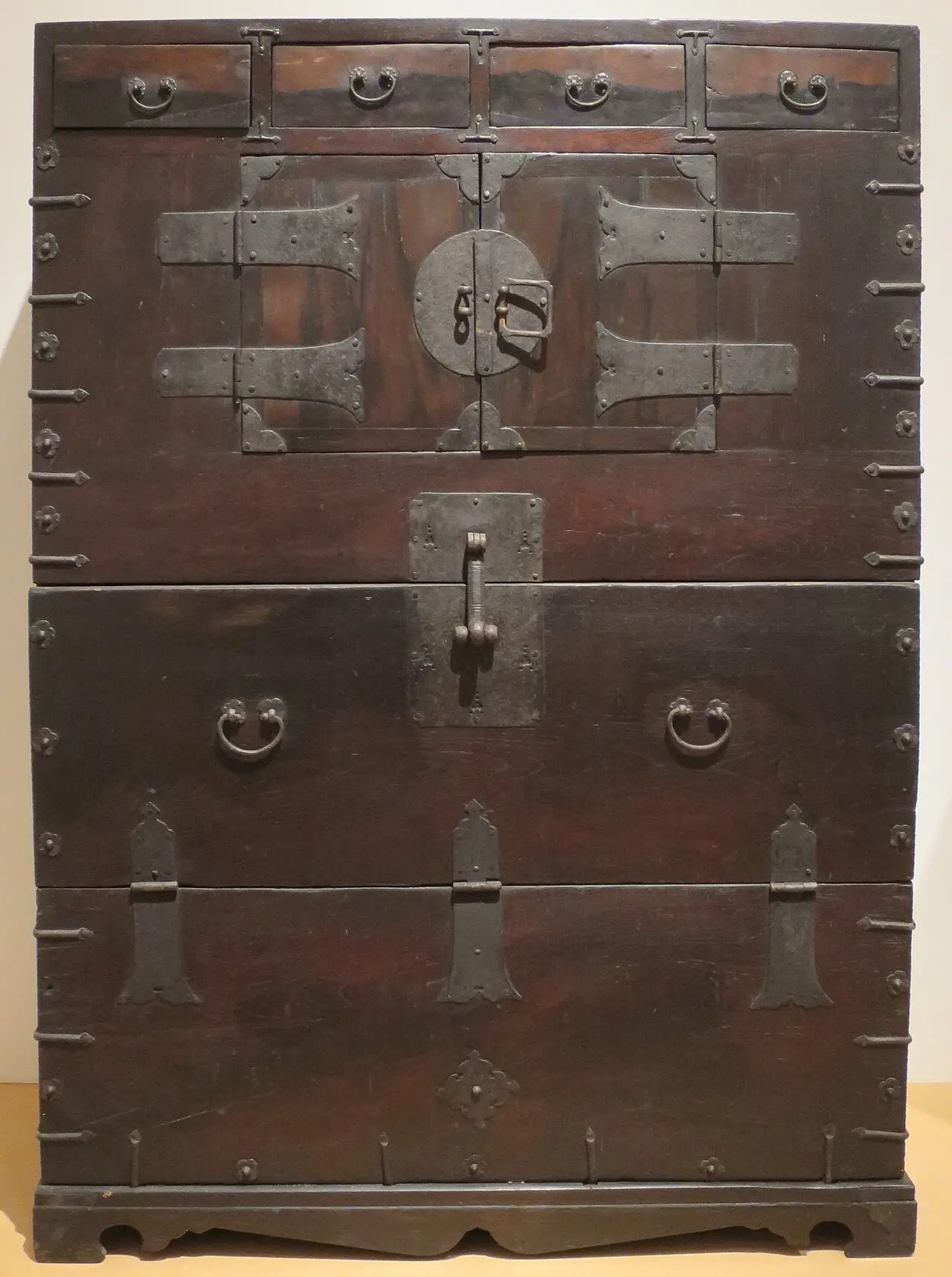
Signature Objects Crafted by the Somokjang
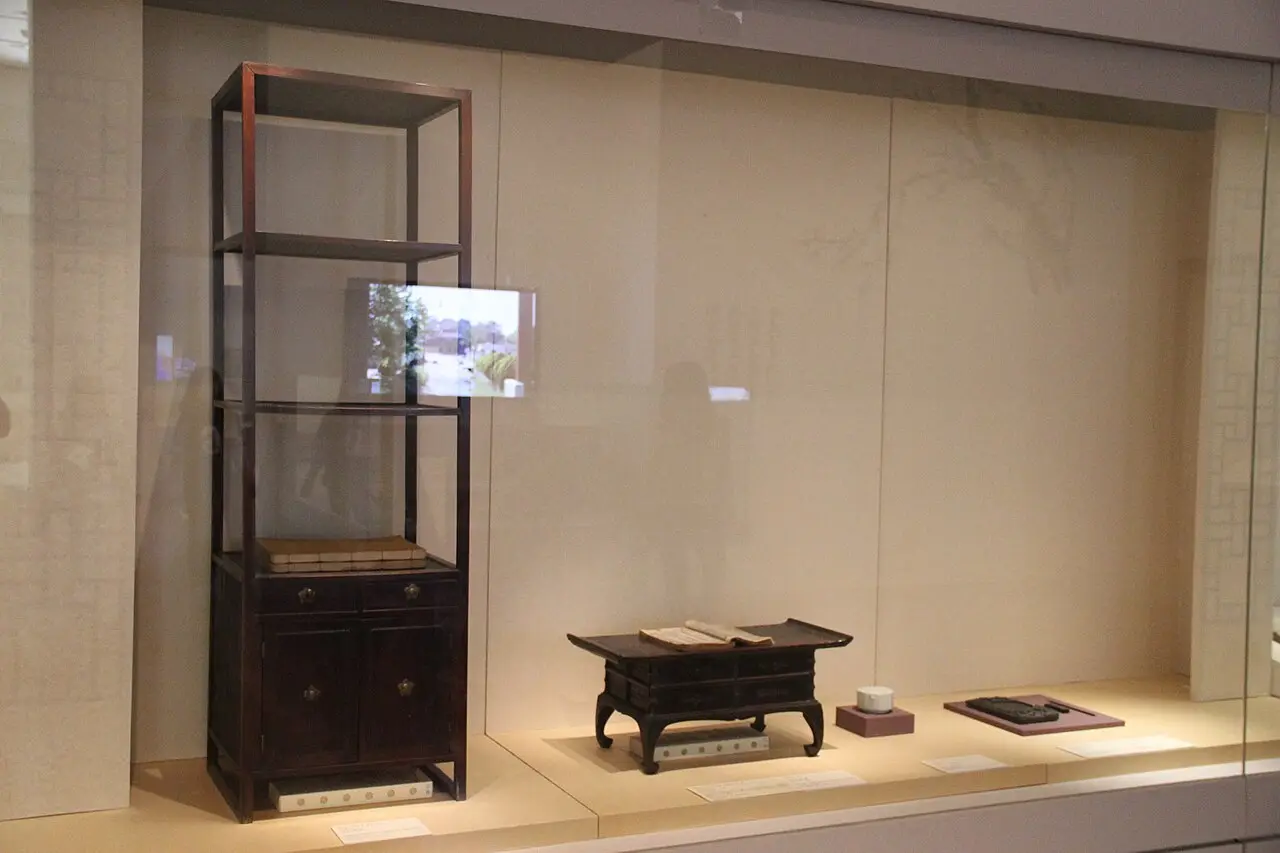
- Sabangtakja (Four-Sided Open Etagere): The pinnacle of Joseon scholar’s room (sarangbang) aesthetics. Open on all four sides with pencil-thin square posts and three to five shelves joined by blind mitered mortises, it displays books and porcelain without visually crowding a low-ceilinged room.
- Bandaji (Half-Flap Storage Chest): A sturdy chest whose upper front half hinges downward for easy access while seated on the floor. Built with thick zelkova or pine boards and reinforced with distinctive regional iron or brass hinges (from Jeonju, Ganghwa, Bakcheon, or Namwon).
- Soban (Individual Dining Tray-Table): Lightweight portable tables—such as straight-legged Najuban, carved-apron Tongyeongban, and openwork-panel Haejuban—engineered to carry full meals from the kitchen to the heated floor room without racking.
Continuing the Series
In Part 3 of this series, we visit the studio of the Najeonjang (Master of Mother-of-Pearl Inlay), who takes the wooden frames built by the Somokjang and adorns them with iridescent abalone shell cut to 0.1 mm thickness.