The Whisper of a Hair-Thin Fret-Saw in a Quiet Lacquer Workshop
Step inside a traditional mother-of-pearl workshop in Tongyeong or Seoul and the first sound that greets you is a rhythmic, delicate rasp—sagak, sagak, sagak. Resting on a V-notched wooden support called a jebichori is a sheet of southern Korean abalone shell ground thinner than heavy paper, just 0.1 to 0.2 millimeters thick. Wearing magnifying lenses, the Najeonjang (螺鈿匠, Master of Mother-of-Pearl Inlay, National Intangible Heritage) holds a bow fret-saw with a hair-thin steel blade perpendicular to the shell, cutting out the petals of a chrysanthemum and individual feathers of a crane’s wing. Even a slight tremor of the fingers would shatter the nacre, so the artisan breathes in measured cadence with every stroke of the saw.
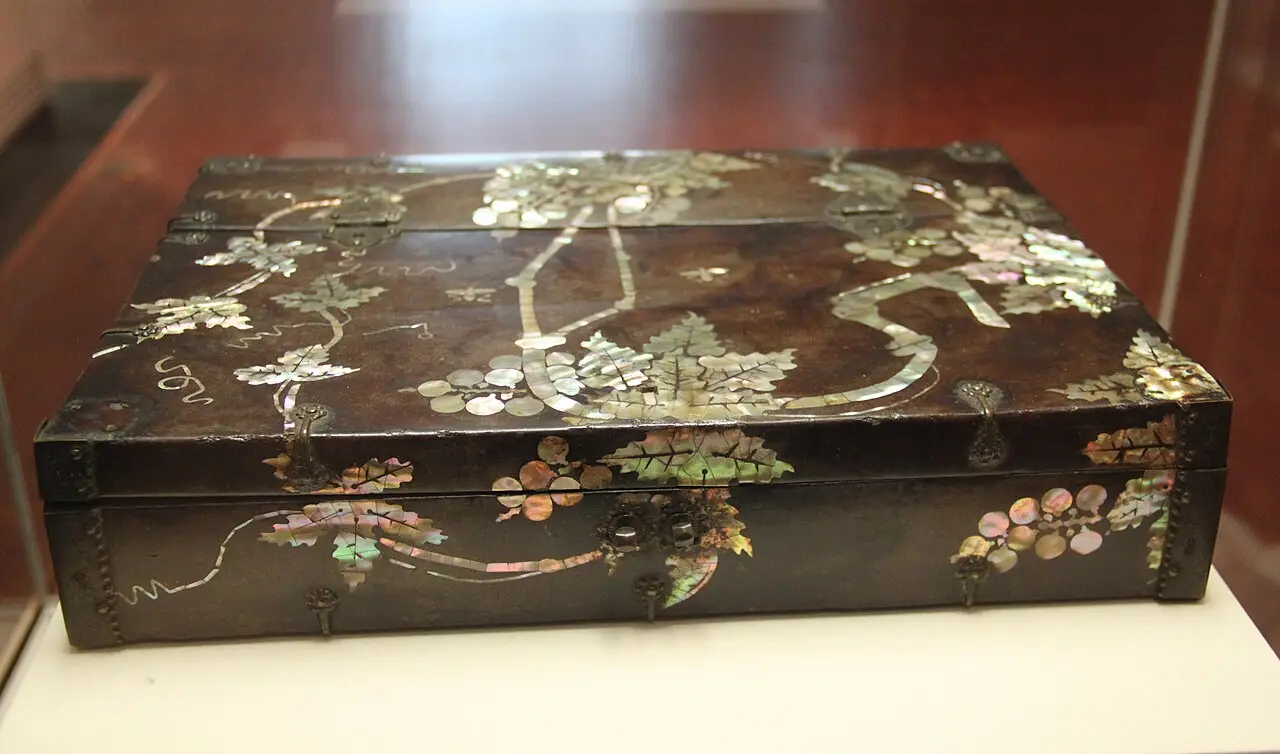
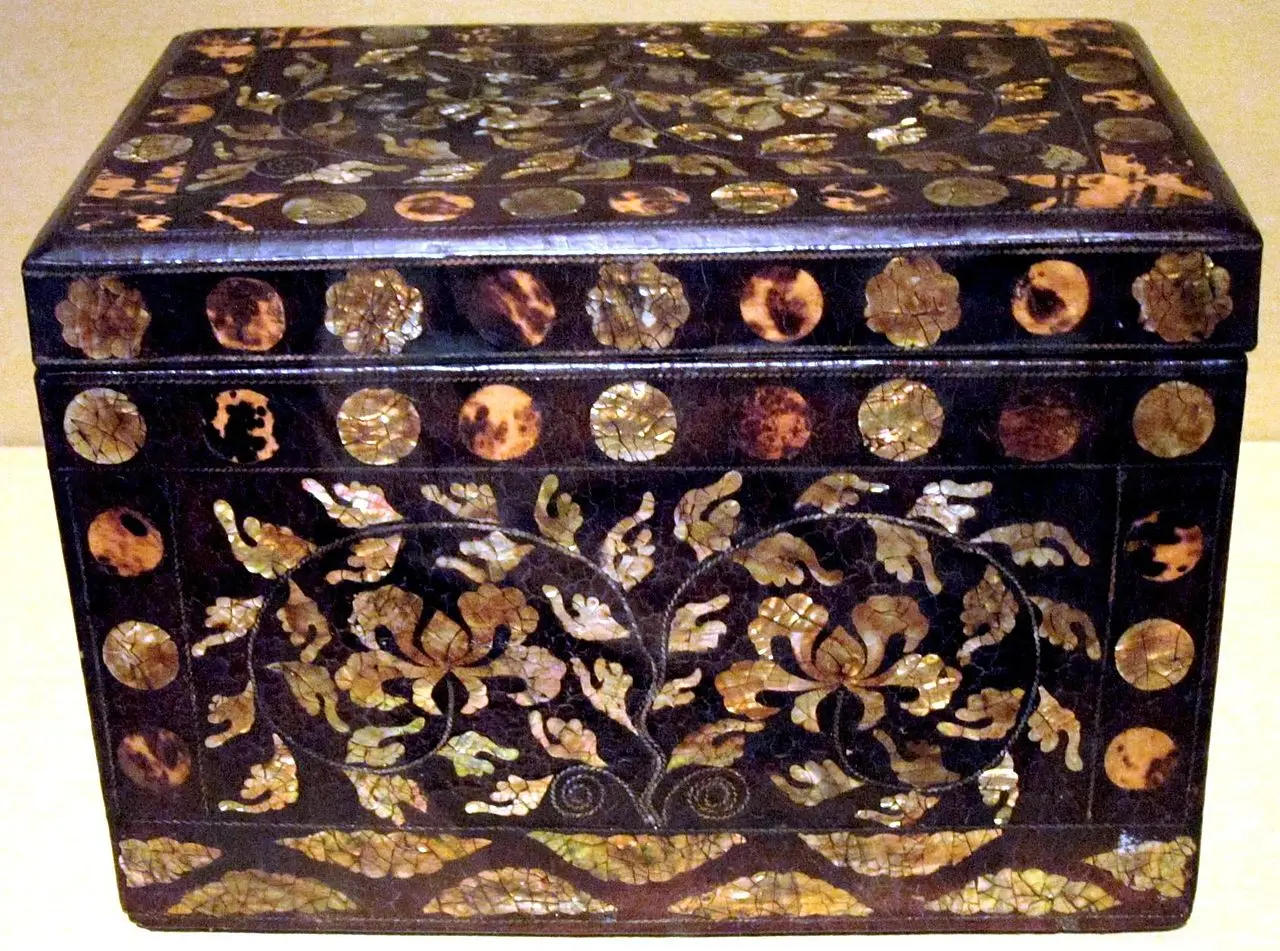
The term Najeon (螺鈿) combines the characters for spiral shell and ornamental inlay, referring to the craft of embedding thin nacre into wood or metal surfaces. Paired with Ottchil—the natural sap of the East Asian lacquer tree—it becomes Najeonchilgi (mother-of-pearl lacquerware). From 12th-century Goryeo Buddhist sutra boxes to Joseon bridal chests, the undimming rainbow luster of Korean lacquerware is born from thirty to forty painstaking stages of handwork.
Nanometer Optics: Why Southern Korean Abalone Glows Like a Prism
The colors of Najeonchilgi contain not a single drop of pigment. Abalone shells (Haliotis discus hannai and Haliotis gigantea) harvested from the cold, fast-flowing waters off Korea’s southern coast and Jeju Island build an inner nacre (mother-of-pearl) layer composed of microscopic calcium carbonate (aragonite) platelets stacked in alternating nanometer-thin sheets with organic conchiolin protein.
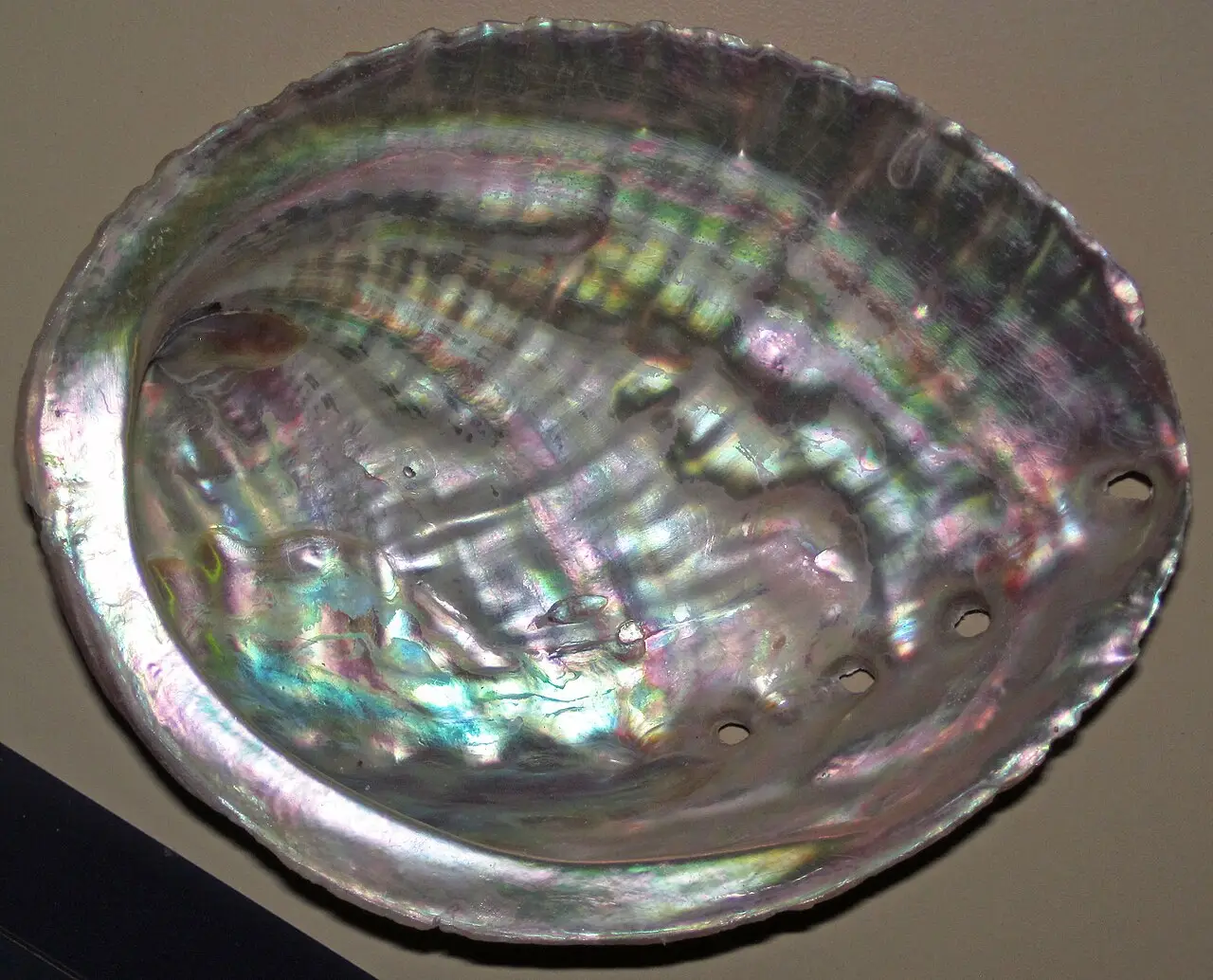
The Najeonjang grinds away the rough outer calcareous crust against rotary stones and whetstones under running water until only the most luminous inner nacre remains. When light enters this 0.1 mm translucent sheet, constructive interference between the microscopic mineral layers refracts emerald greens, cobalt blues, violets, and rose pinks that shift with every change in viewing angle.
Two Pillars of the Craft: Curved Jureumjil and Linear Kkeuneumjil
Inside the workshop, mother-of-pearl inlay divides into two distinct technical disciplines: Jureumjil (fretwork cutting) and Kkeuneumjil (linear strip snapping). Because their tools and hand movements differ fundamentally, Korea’s Cultural Heritage Administration designates separate master holders for each technique.
1. Jureumjil: Sawing Pictorial Curves and Incising Fine Details
In Jureumjil, the artisan glues a paper drawing onto a stack of five to eight thin shell sheets bonded with animal hide glue. Resting the stack on the V-notched jebichori, the master saws along the drawn lines to produce identical blossoms, clouds, phoenixes, or pine needles, then separates the layers in hot water. To bring petals and feathers to life, the artisan uses a sharp needle or burin to engrave hair-fine lines into the shell surface—a technique called mojo (hair-line incising)—into which black lacquer later settles like ink in an etching.
2. Kkeuneumjil: Snapping Tens of Thousands of Hairline Shell Threads
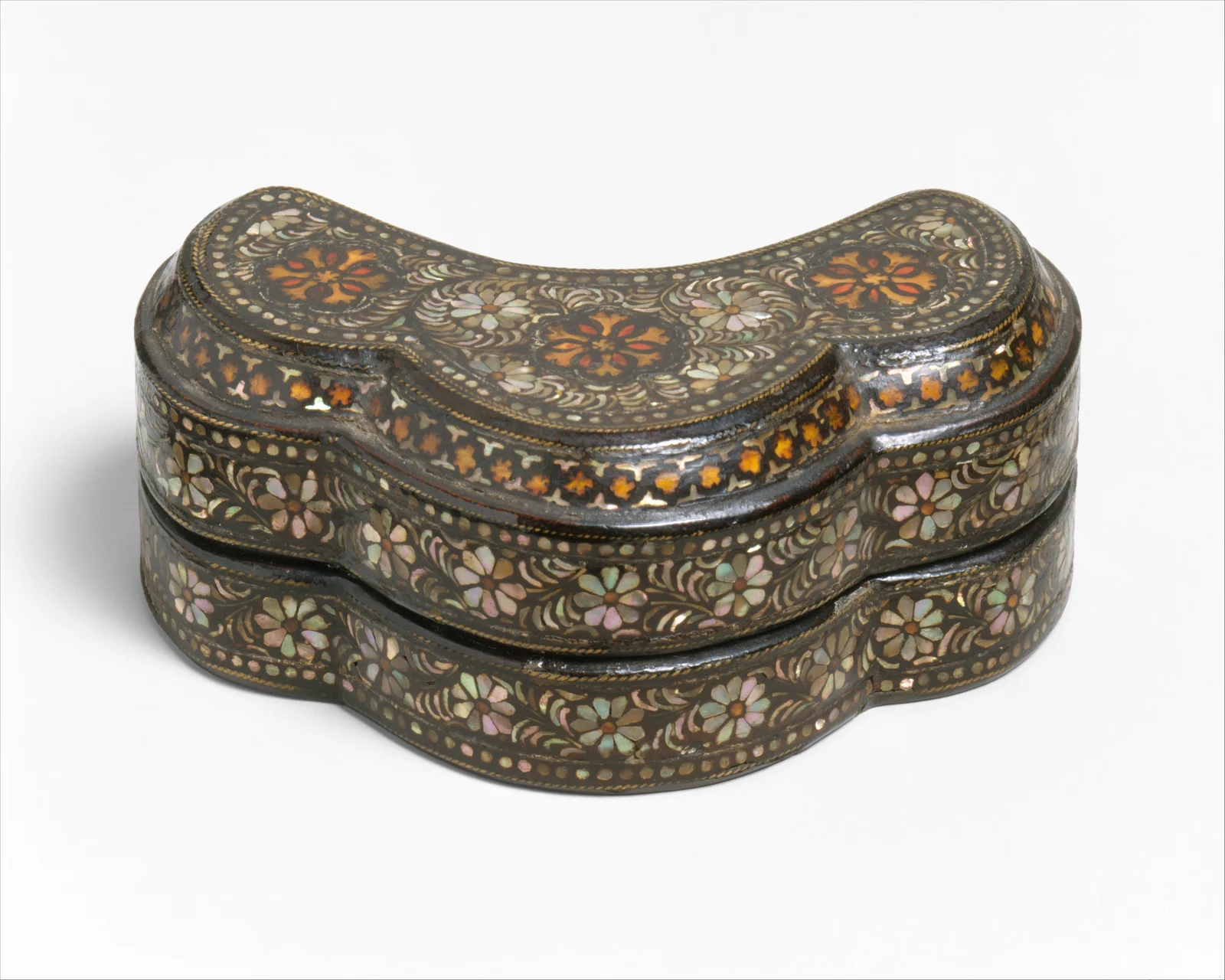
Kkeuneumjil begins by slicing a flat sheet of mother-of-pearl into long, thread-like strips called sangsa, measuring just 0.5 to 1.0 mm wide. After brushing warm fish-bladder glue onto the lacquered wood surface, the master feeds the shell thread with the left hand while holding a curved tip knife called a sangsakal in the right hand, snapping and pressing 1–2 mm segments in rapid succession—tok, tok, tok.
Whether laying out endless hexagonal tortoiseshell lattices (gwigapmun), interlocking fret patterns (wanjamun), or the jagged ridges of a mountain landscape, tens of thousands of tiny shell segments align with mathematical precision. Adjusting the angle of each micro-segment so that a grid appears perfectly straight across the curved shoulder of a vase or domed lid requires decades of tactile memory.
Anatomy of a Najeonchilgi Object: A Multi-Layer Composite of Wood, Hemp, Clay, Lacquer, and Shell
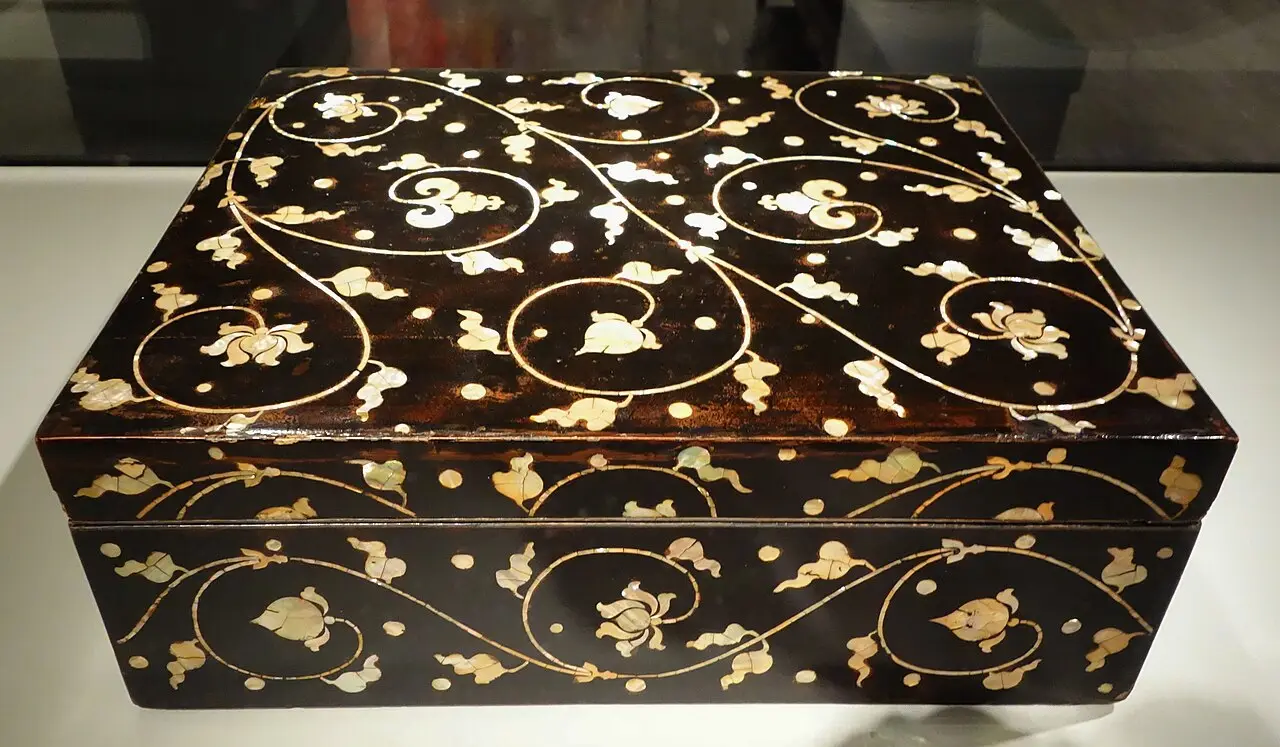
Examine a cross-section of a traditional Korean mother-of-pearl chest and you discover a sophisticated composite structure engineered to survive centuries of seasonal humidity changes.
- Preparing the Wood Core (Baekgol): Seasoned pine, linden, or paulownia joinery crafted by a Somokjang is smoothed, and all joints and grain pores are sealed with raw lacquer paste.
- Hemp Cloth Wrapping (Be-bareugi): Hemp or ramie fabric is laminated over the entire wooden core using a mixture of raw lacquer and rice paste (hochil), preventing the wood from splitting or warping.
- Earth Priming & Wet-Stone Leveling (Golhoe): Multiple coats of raw lacquer mixed with finely sifted clay and ground roof-tile powder fill the fabric weave, each layer cured in a humidified cabinet and ground flat with wet whetstones.
- Fish-Glue Bonding & Hot Ironing: Warm eogyo (croaker swim-bladder glue) is brushed onto the primed surface, the cut shell is positioned, and a heated metal iron is glided over the shell to melt and instantly set the glue flat against the substrate before hot water washes away any residue.
- Lacquer Embedding & Scraping Back (Jagae-bakgi): Thin raw lacquer seals the shell edges, followed by thick black middle coats (jungchil) that bury the motifs completely. Once cured, the artisan delicately scrapes and grinds away the lacquer film covering the shell with charcoal and fine whetstones until the nacre re-emerges flush with the surrounding lacquer.
- Final Coat & Palm Polishing (Sangchil & Gwangnaegi): After the final translucent coat of refined lacquer cures, the master rubs the surface thousands of times with the bare palm using soybean oil and calcined deer-antler powder (chibun) to draw out a deep, mirror-like gloss.
Carrying Thousand-Year Light into Contemporary Design
Once reserved for royal document chests, scholar’s writing tables, and heirloom wedding wardrobes, Najeonchilgi is today expanding into architectural wall panels, luxury watch dials, fountain pens, and bespoke audio enclosures. Through thirty coats of tree sap and tens of thousands of knife snaps, Korea’s Najeonjang masters continue to turn the quiet depths of the southern sea into enduring light.