The short answer: a secondary palace west of the capital, cut down under Japanese rule
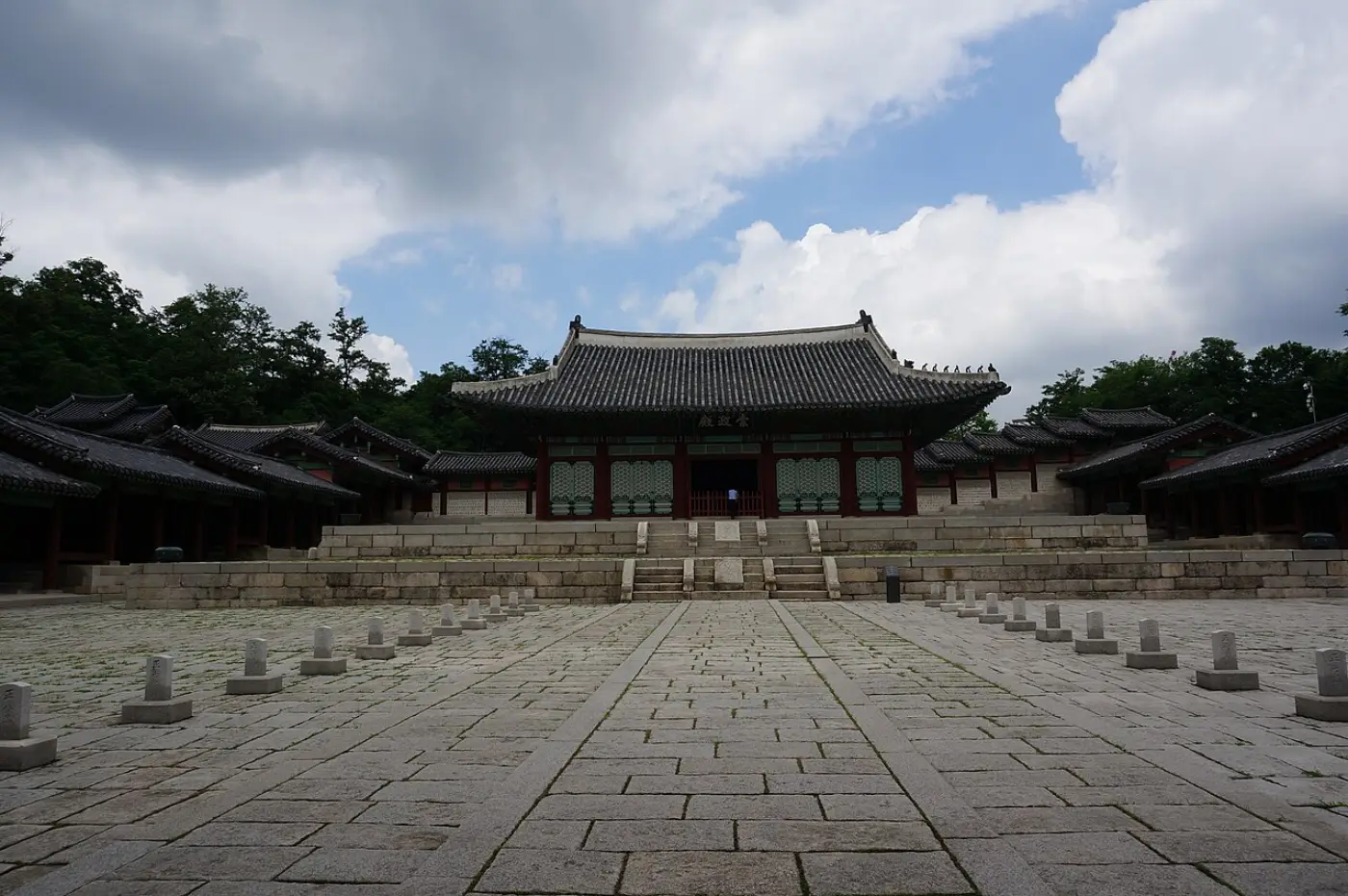
Gyeonghuigung (慶熙宮) was a secondary palace (igung, 離宮) of the Joseon dynasty. It was known as Seogwol (西闕), the Western Palace, because it stood on the west side of the capital. Its grounds are small today because the palace precinct was destroyed and reduced during the Japanese colonial period. King Gwanghaegun built the palace, and its original name was Gyeongdeokgung (慶德宮). This article is part 5 of a seven-part series.
Sources measure the palace's original size in different units. The Academy of Korean Studies' Encyclopedia of Korean Culture puts it at more than 70,000 pyeong. English-language material from the Korea Heritage Service (then the Cultural Heritage Administration) gives about 231,000㎡. The Seoul Metropolitan Government began a restoration project in 1987, and the Seoul Museum of History now manages the site. The Gyeonghuigung that visitors see today can be seen as a partial revival of the old palace.
Founding and renaming: Gyeongdeokgung in 1617, Gyeonghuigung in 1760
The National Institute of Korean History says King Gwanghaegun built Gyeongdeokgung in 1617, his ninth year on the throne. He was prompted by a geomancer's claim that a royal aura (wanggi, 王氣) lay over the former private residence (jamjeo, 潛邸) of Wonjong (元宗), the biological father of King Injo. The Korea Heritage Service's English material dates the founding to 1616, Gwanghaegun's eighth year. It says the palace was renamed Gyeonghuigung in 1760, the 36th year of King Yeongjo.
The Encyclopedia of Korean Culture says the palace had as many as 1,500 kan (bays) at its founding. They included the main throne hall, the crown prince's quarters, royal sleeping quarters, various detached halls and quarters for palace women. The Korea Heritage Service's Royal Palaces and Tombs Center explains the name Seogwol in its introduction to Gyeonghuigung: "When Gyeongdeokgung was built, it was called Seogwol (西闕) because it stood on the west side of the capital."
It is worth noting that the two institutions' founding years are one year apart. Any date you quote should therefore name the institution behind it. The name Seogwol can be read as describing the palace's position within the capital.
Decline: from the 1829 fire to the removal of Sungjeongjeon in 1926
The Encyclopedia of Korean Culture says a major fire broke out in 1829, the 29th year of King Sunjo. It burned about half the main halls, including Hoesangjeon (會祥殿), Yungbokjeon (隆福殿) and Heungjeongdang (興政堂). In 1865, the second year of King Gojong, work began on rebuilding Gyeongbokgung. According to the Royal Palaces and Tombs Center, most of Gyeonghuigung's halls were then used to restore Gyeongbokgung. The National Institute of Korean History adds that paving bricks and stones (jeonseok, 磚石) and stair stones were pulled from the courtyards to rebuild Gwanghwamun.
According to the Encyclopedia of Korean Culture, a middle school run by the Japanese Residency-General opened on the west side of the palace in 1907. The palace became state property in 1910, and Gyeongseong Middle School was built on the site in 1915. The encyclopedia's entry on the Gyeonghuigung site says most of the existing buildings were demolished in 1907. The terrain was also heavily altered: high ground was cut away to fill low ground. The Korea Heritage Service's English material says the forced demolitions of 1907–1910 stripped the palace of its status as a royal palace.
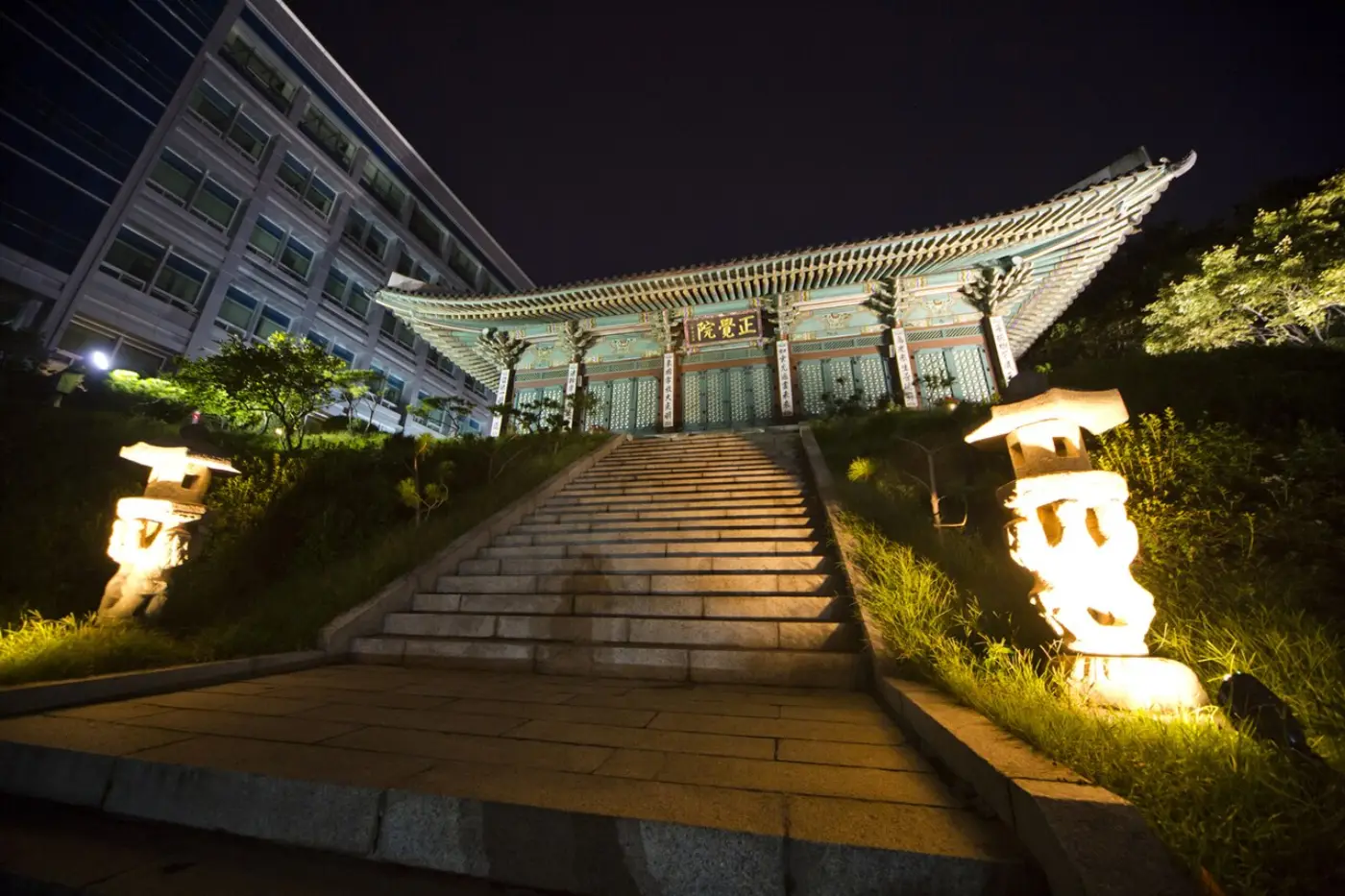
The main throne hall, Sungjeongjeon, was moved to Jogyesa Temple in 1926. According to Dongguk University, it was moved to the university's campus in 1976, where it serves as a Buddhist dharma hall. It was named Jeonggakwon in February 1977 and is Seoul Tangible Cultural Heritage No. 20. This history separates the original throne hall from the Sungjeongjeon rebuilt on the palace site. It also shows that the palace lost its form over several periods.
Return and restoration: Heunghwamun's travels and excavations since 1985
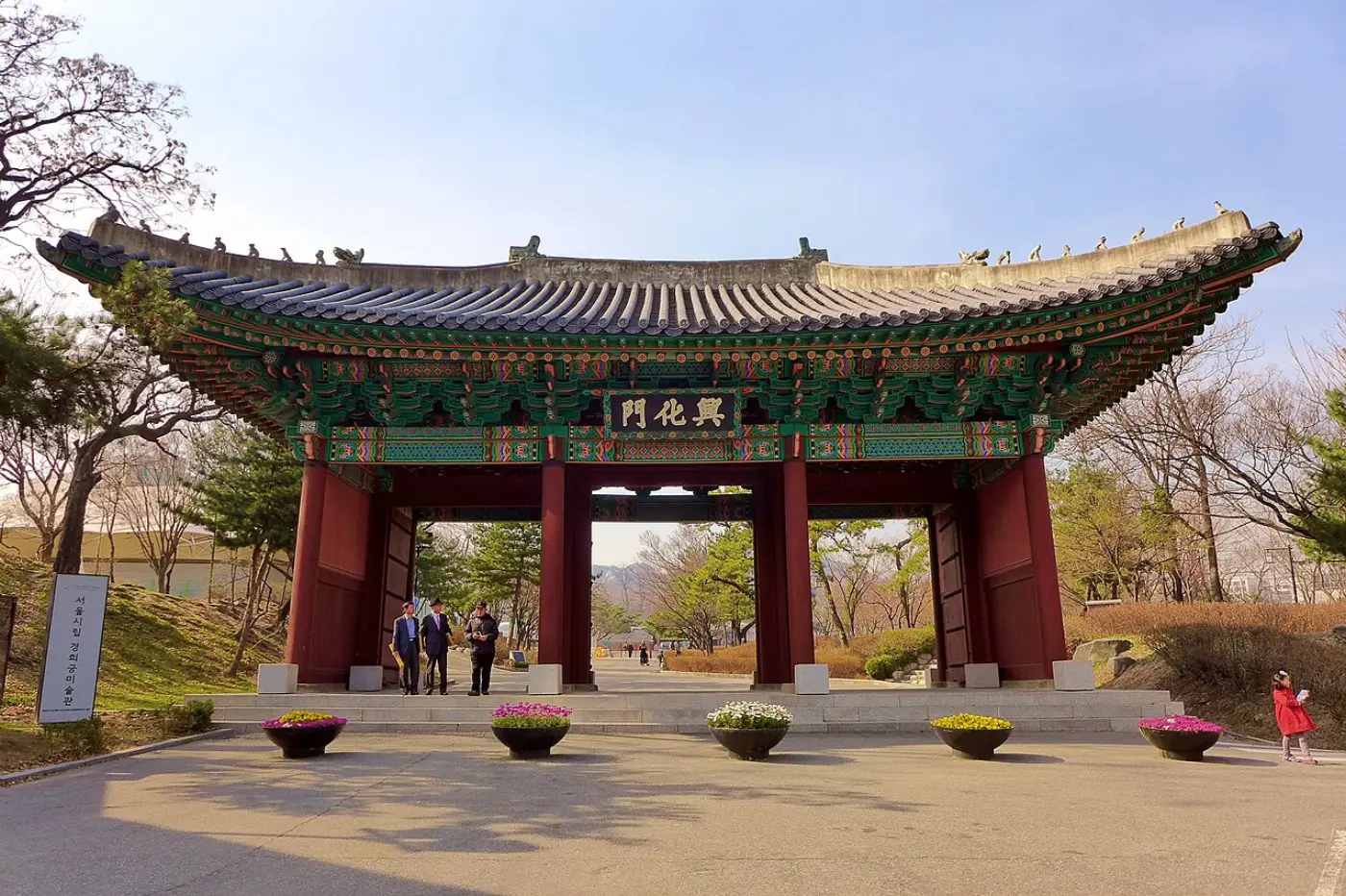
The Encyclopedia of Korean Culture says the main gate, Heunghwamun, was built in 1618 and that the original structure has survived intact. In 1932 the Japanese took it to serve as the main gate of Bangmunsa (博文寺); the National Institute of Korean History gives the year as 1931. The institute describes Bangmunsa as a temple built in honor of Ito Hirobumi and says the gate was renamed Gyeongchunmun. After liberation, when the Shilla Hotel was built, the gate became the hotel's main entrance.
Heunghwamun returned to the palace under the Gyeonghuigung restoration plan. Because the Salvation Army building stood on its original site, the gate was placed about 100 m to the west, where Gaeyangmun (開陽門) had once stood. The encyclopedia's Gyeonghuigung entry dates its return to 1988, while its entry on the Gyeonghuigung site gives 1987. According to one story, the calligraphy on the gate's signboard glowed even at night, so Gyeonghuigung came to be called "Yajugae Daegwol" (夜照峴大闕). Heunghwamun's journey shows that sources can disagree even on the dates for a single gate.
The Seoul Metropolitan Government drew up a "Plan for Restoring the Gyeonghuigung Site and Creating a Historic Park for Citizens." Under it, the city carried out seven rounds of excavation from 1985. The aim was to locate Sungjeongjeon, Sungjeongmun and the north, south, east and west corridors. Restoration followed: Sungjeongjeon in 1991, Jajeongjeon and the corridors in 1998, and the Taeryeongjeon compound in 2000. The Seoul Museum of History's English guide says the palace has been open to the public since 2002. Read this restoration alongside the series' article on Changgyeonggung.
The palace where King Yeongjo often stayed: walking past Sungjeongjeon, Taeryeongjeon and Seoam
According to the National Institute of Korean History, ten kings, from Injo to Cheoljong, stayed at this palace. King Sukjong was born in Hoesangjeon and lived here for 13 years. King Yeongjo frequently moved his residence to Gyeonghuigung from 1760, his 36th year on the throne. The institute states: "Both kings died at Gyeonghuigung; Sukjong passed away in Yungbokjeon (隆福殿), and Yeongjo in Jipgyeongdang (集慶堂)." Placed side by side, the records reveal an overlap. Yeongjo began staying here often in 1760, the same year the palace was renamed.
The Seoul Museum of History says Taeryeongjeon was renovated in 1744, Yeongjo's 20th year, to house the king's royal portrait. After Yeongjo's death, it also served as a spirit hall for his mourning rites. Three kings, Gyeongjong, Jeongjo and Heonjong, held their enthronement ceremonies in Sungjeongjeon. The rock Seoam was originally called Wangam (王巖, "King's Rock"). Popular legend holds that this name was why Gwanghaegun built the palace. In 1708, the 34th year of his reign, King Sukjong renamed it Seoam. He had the two characters "瑞巖" carved into it in his own hand. The museum's own guide presents the Wangam story as legend.
A walk from Heunghwamun to Sungjeongjeon, Jajeongjeon and then Taeryeongjeon follows the order of restoration. Geumcheongyo Bridge was built in 1619, Gwanghaegun's 11th year, but the Japanese buried it. The Seoul Metropolitan Government restored it using old stonework excavated in 2001. The Korea Heritage Service's English material describes a stone embankment about 100 m long along the north of the site. Dragon heads and cloud patterns are carved into its stone stairs. As you look up at the eaves of the halls, the article on dancheong painting on palace buildings makes a good companion. The original texts are available on the Korea Heritage Service Royal Palaces and Tombs Center website, in the Encyclopedia of Korean Culture and on the Seoul Museum of History website.
| Year | Event | Source institution |
|---|---|---|
| 1617 (9th year of Gwanghaegun) | King Gwanghaegun builds Gyeongdeokgung | National Institute of Korean History |
| 1760 (36th year of Yeongjo) | Gyeongdeokgung is renamed Gyeonghuigung | Korea Heritage Service (then Cultural Heritage Administration) |
| 1865 (2nd year of Gojong) | Most halls are used to rebuild Gyeongbokgung | Royal Palaces and Tombs Center, Korea Heritage Service |
| 1907 | A Japanese Residency-General middle school opens on the palace's west side | Academy of Korean Studies |
| 1915 | Gyeongseong Middle School is built on the palace site | Academy of Korean Studies |
| 1987 | The Seoul Metropolitan Government begins a restoration project | Royal Palaces and Tombs Center, Korea Heritage Service |
Summary
Gyeonghuigung's history layers founding, renaming, fire, relocation, demolition and restoration onto a single site. Sungjeongjeon and Heunghwamun on the palace grounds were put in place during the same restoration period, but their histories differ. The original Sungjeongjeon stands at Dongguk University. The original Heunghwamun passed through several places before returning to the palace.
Some questions remain open. Institutions disagree by one year on the founding date and on the year Heunghwamun was moved. On site, the stone structures are worth noticing too, not just the halls: the northern embankment, Seoam and Geumcheongyo Bridge. When reading the original sources, check which year each institution gives for the same event.