1. The short answer and what follows
The 2026 Ebola outbreak is caused by the Bundibugyo virus, and on 17 May the WHO Director-General determined that it constitutes a Public Health Emergency of International Concern (PHEIC). According to the European Centre for Disease Prevention and Control (ECDC), the DR Congo had 9,704 confirmed cases and 4,687 related deaths as of 21 October, and WHO has said there are currently no approved treatments or vaccines for the Bundibugyo virus. The figures in this article are ECDC counts as of 21 October 2026 and are still changing. The ECDC notes that the outbreak has been ongoing in the DR Congo since May 2026. Although the WHO Director-General declared a PHEIC, he said the outbreak does not meet the criteria for a pandemic emergency.
At a briefing on 20 May, the WHO Director-General said this was the first time a PHEIC had been declared before an Emergency Committee was convened. With even the declaration breaking precedent, it is natural to ask what makes this Ebola outbreak different. This article first uses WHO material to explain what Ebola is and how its symptoms and transmission are described. It then turns to ECDC data on the current situation, explains why this outbreak is so difficult, and sets out the international and Korean responses before closing with the author's own interpretation.
2. What Ebola is: three viruses in the WHO fact sheet and an average fatality rate of about 50%
In its Ebola fact sheet (24 April 2025 edition), WHO describes Ebola virus disease as a severe, often fatal illness in humans. It names three viruses known to cause large outbreaks: Ebola virus, Sudan virus and Bundibugyo virus. The WHO Regional Office for Africa adds that the genus Orthoebolavirus contains six species, of which three (Bundibugyo, Sudan and Zaire) have caused large outbreaks in the past. Taken together, the two sources suggest that "Ebola" is less the name of a single virus than an umbrella term for a disease caused by several.
WHO puts the average case fatality rate at around 50%, noting that it has varied from 25% to 90% in past outbreaks. The first outbreaks occurred in 1976: according to WHO, Sudan virus disease broke out in Nzara, in what is now South Sudan, at the same time as Ebola virus disease in Yambuku, in what is now the DR Congo. The WHO Regional Office for Africa describes the 2014–2016 West African outbreak as the largest and most complex on record. Giving both an average and a range shows that the fatality rate is better understood as a value that can differ from outbreak to outbreak than as a single number.
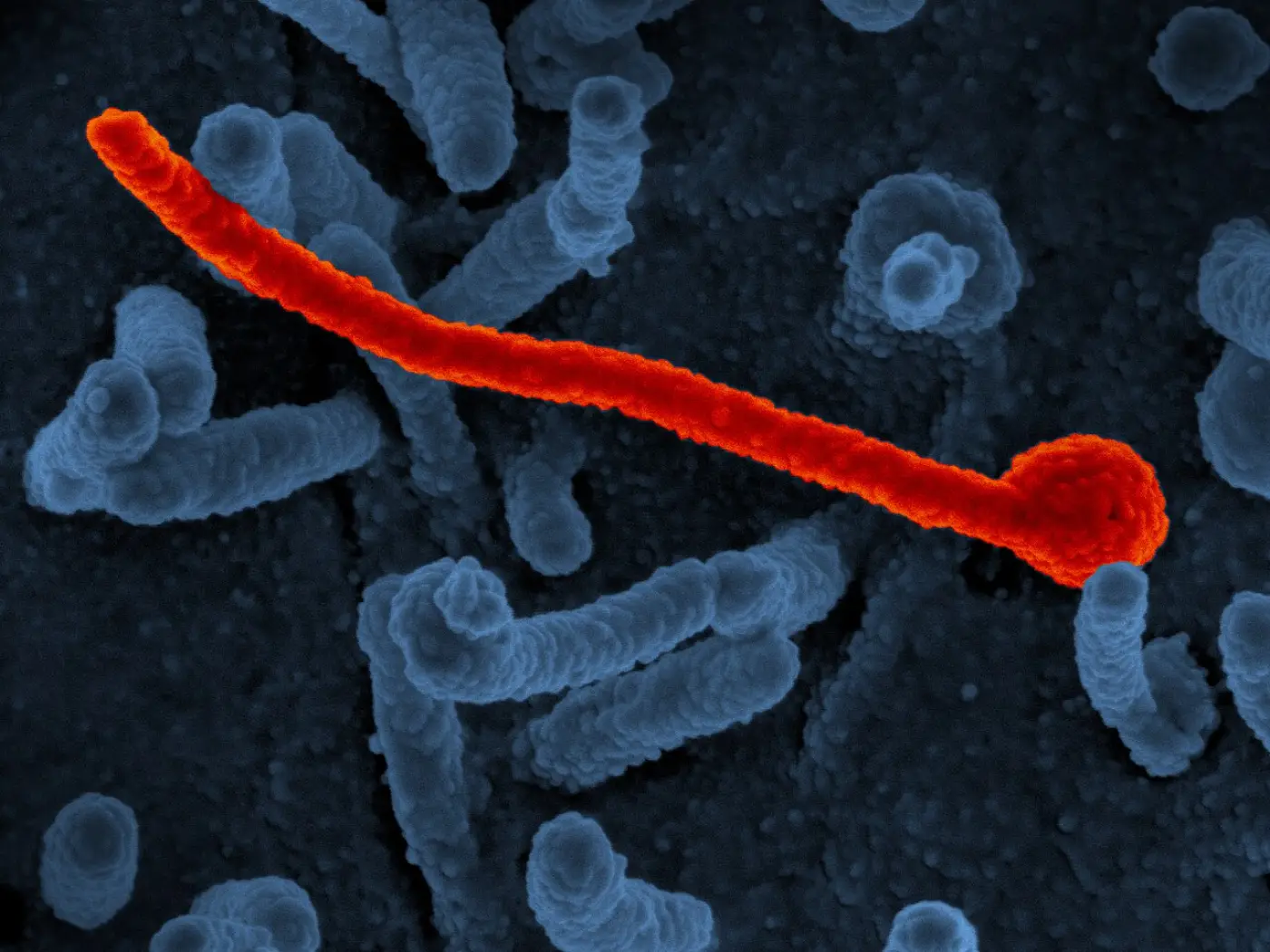
3. Symptoms and course: a 2–21-day incubation period, according to WHO, and early supportive care
WHO and its Regional Office for Africa both give the incubation period, from infection to the onset of symptoms, as 2 to 21 days. In press coverage, the KDCA said symptoms appear 2 to 21 days after infection, with an average of 8 to 10 days. According to WHO, symptoms can be sudden and include fever, fatigue, malaise, muscle pain, headache and sore throat. These are followed by vomiting, diarrhoea, abdominal pain, rash and symptoms of impaired kidney and liver function. The 21-day upper limit is worth remembering, because it is the same figure used for monitoring contacts and for post-arrival symptom checks, both discussed in the section on response measures below.
The WHO Regional Office for Africa's description of symptoms largely overlaps with the fact sheet, but it adds that some patients experience internal and external bleeding, such as oozing from the gums or blood in the stool. Note that bleeding does not appear among the initial symptoms here; it is listed among later symptoms, and only "in some cases". WHO says that early intensive supportive care, including rehydration and treatment of symptoms, improves survival, and the Regional Office likewise states that oral or intravenous rehydration and treatment of specific symptoms improve survival. That both sources stress "early" and "supportive" care suggests that reaching medical care quickly matters even for a virus with no approved treatment.
4. How it spreads: direct contact and funeral rites, as described by WHO
According to WHO, human-to-human transmission occurs when the blood or body fluids of a person who is sick with or has died from Ebola come into direct contact with broken skin or mucous membranes. WHO adds that burial ceremonies involving direct contact with the body of the deceased can also contribute to transmission. The WHO Regional Office for Africa says the virus passes to people from wild animals such as fruit bats, porcupines and non-human primates. It then spreads through direct contact with the blood, secretions or body fluids of infected people, and with bedding or clothing contaminated by these fluids.
WHO explains that people cannot spread the disease before symptoms appear and remain infectious as long as the virus is in their blood; the Regional Office for Africa says the same. The KDCA has said that when cases occur in Africa, transmission can take place among family members caring for patients, people attending funerals and health workers treating patients. All three agencies point to direct contact and to scenes of caregiving, funerals and clinical care, which fits with the emphasis that the response measures discussed below place on contact tracing, safe burials and protective equipment for health workers. The point that the disease does not spread before symptoms appear also ties in with the KDCA's advice to report symptoms immediately.
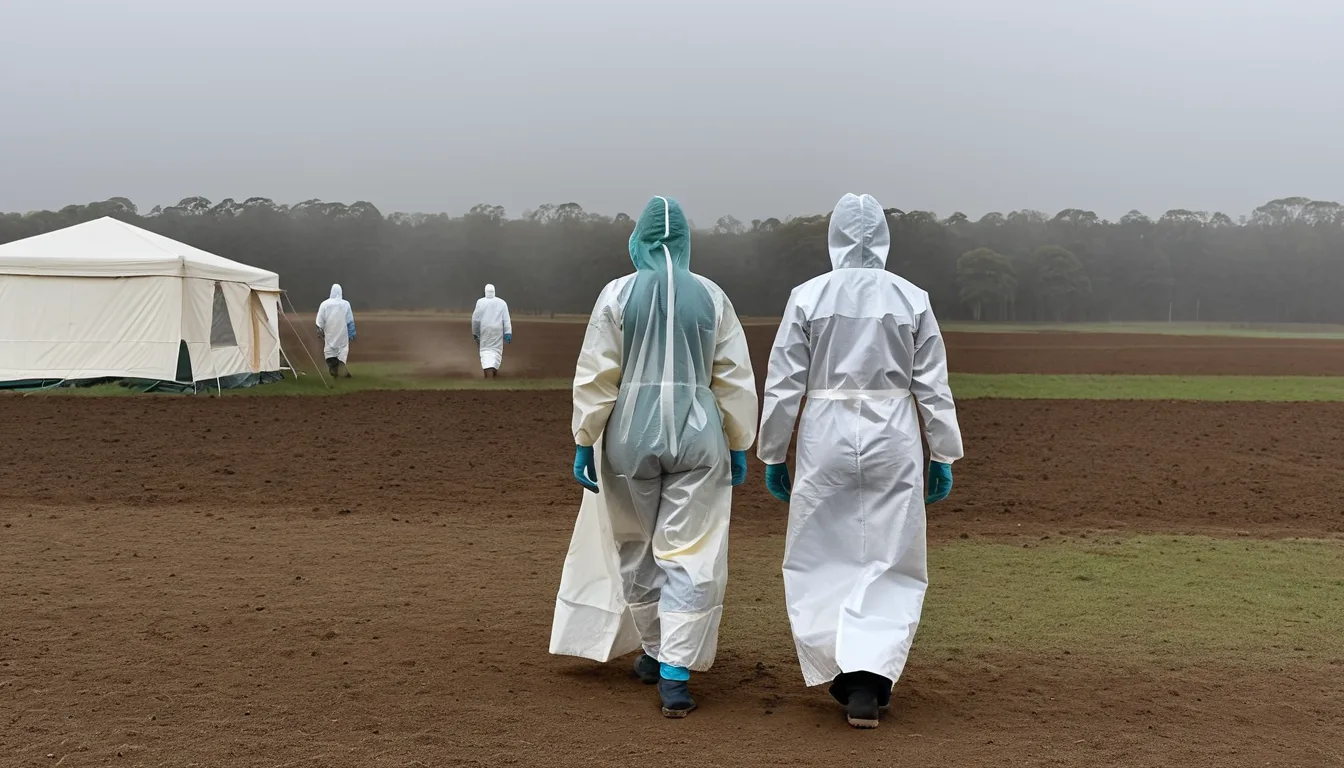
5. The current situation: 9,704 confirmed cases across 8 provinces as of 21 October 2026 (ECDC)
According to the ECDC, as of 21 October 2026 (data up to 20 October), the DR Congo had reported 9,704 confirmed cases and 4,687 related deaths. The same source says eight provinces have been affected since the outbreak began: Ituri, North Kivu, South Kivu, Tshopo, Haut-Uélé, Bas-Uélé, Sud-Ubangi and Nord-Ubangi. In the early stages, on 20 May, the WHO Director-General reported 51 confirmed cases in Ituri and North Kivu provinces, about 600 suspected cases and 139 suspected deaths. A WHO update dated 24 May, cited in press coverage of a KDCA announcement, put suspected cases in Ituri, North Kivu and South Kivu at more than 900. Comparing three provinces in May with eight in October suggests the affected area has widened, but confirmed and suspected cases are separate counts and should not be conflated.
As of 20 May, Uganda had informed WHO that two people arriving from the DR Congo had been confirmed in the capital, Kampala, one of whom died; the ECDC now reports that the outbreak in Uganda has ended. According to the ECDC, cases were also reported in Kenya and Nigeria in October 2026. As of 22 October, Kenya had 9 confirmed cases, including 1 death, all linked to the first case. The Nigerian case, a person with a travel history to Uganda, developed symptoms on 7 October and tested positive on 20 October. The ECDC says four cases have been medically evacuated to or imported into the EU/EEA since May, but assesses the likelihood of infection for people living in the EU/EEA as very low.
Risk levels are given here in WHO's own wording. On 20 May, WHO assessed the risk as high at the national and regional levels and low at the global level; as of 22 May, the WHO Secretariat rated the risk as "very high" for the DR Congo, "high" for Uganda, "high" for the region and "low" for all other countries. Press coverage of the KDCA announcement reported this as the DR Congo's risk level being raised from "high" to "very high". Because the risk assessments date from May while the case counts are from October, it is important to check the date attached to each figure.
6. Why this outbreak is harder: no vaccine or treatment, as WHO stated in May 2026
The WHO fact sheet explains that approved vaccines and treatments exist only for Ebola virus, while those for the other viruses are still in development. The WHO Regional Office for Africa notes that in late 2020 the US Food and Drug Administration (FDA) approved two monoclonal antibody treatments for Zaire ebolavirus infection. In its 22 May statement, WHO said there are currently no approved treatments or vaccines for the Bundibugyo virus; clinical trials of candidate treatments are under consideration and work is under way to speed up the evaluation of candidate vaccines, but controlling the outbreak depends on scaling up public health measures. The fact that the tools available differ depending on which virus lies behind the name "Ebola" can be read as the key to understanding this outbreak.
Conditions on the ground are also a factor. The WHO Emergency Committee acknowledged that the outbreak is taking place in one of the most difficult operating environments, and the temporary recommendations state that the GeneXpert platform cannot detect the Bundibugyo virus. On 20 May, the WHO Director-General said deaths among health workers had been reported, indicating healthcare-associated transmission. He also said that conflict in Ituri province has intensified since late 2025, newly displacing more than 100,000 people, and that the area is a mining zone with heavy population movement, which raises the risk of further spread. Together, these accounts show that the response is shaped not only by the nature of the virus but also by testing tools, healthcare conditions and population movement.

7. Layers of response: WHO's temporary recommendations of 22 May 2026 and the KDCA's priority quarantine for five countries
The WHO fact sheet says outbreak control relies on a package of interventions: intensive supportive care for patients, infection prevention and control, surveillance and contact tracing, testing, safe and dignified burials, vaccination where applicable, and social mobilisation, with community engagement identified as key to control. The temporary recommendations of 22 May called for a list of all contacts of confirmed and probable cases to be maintained, with each contact monitored for 21 days from the last exposure, and for large-scale trust-building and community engagement in partnership with religious and traditional leaders, among others. The same recommendations advised against suspending flights or waterway traffic to and from affected countries and against refusing entry, while stating that symptomatic travellers should not be allowed to travel unless as part of an appropriate medical evacuation. On 20 May, the WHO Director-General said an additional US$3.4 million had been released from the emergency fund, bringing the total to US$3.9 million.
On 26 May 2026, the KDCA added Ethiopia and Rwanda to its list of priority quarantine countries, expanding the priority quarantine areas to five countries, including the DR Congo, Uganda and South Sudan. Under KDCA guidance, all travellers arriving in Korea who have visited or stayed in these areas must report their health status to a quarantine officer through Q-CODE or a health questionnaire, monitor themselves for symptoms for 21 days after arrival, and call 1339 or contact a public health centre immediately if suspected symptoms such as fever or abdominal pain appear. Health workers were told they must wear personal protective equipment, including gloves and N95-equivalent masks, when treating suspected patients, and the agency said it is operating a 24-hour rapid response system linking central and local governments. According to the same report, Korea's Ministry of Foreign Affairs imposed a travel ban on Ituri province in the DR Congo from 2 p.m. on 22 May.
Broken down into layers, the structure looks like this: individuals report their health status and monitor symptoms for 21 days; medical institutions use protective equipment and infection control; the state handles quarantine and rapid response; and international cooperation covers contact tracing, trust-building and funding. This structure reflects both the direct-contact pattern of transmission described earlier and the absence of vaccines and treatments. However, it is important to distinguish WHO's temporary recommendations, which advised against suspending travel or refusing entry, from separate measures taken by the Korean government, such as the Foreign Ministry's travel ban on Ituri province.
| Virus | Approved vaccine/treatment (WHO) | Key facts in the sources |
|---|---|---|
| Ebola virus (called Zaire by the WHO Regional Office for Africa) | Yes: the only virus with an approved vaccine and treatment | First outbreak in 1976 in Yambuku, in what is now the DR Congo; in late 2020 the US FDA approved two monoclonal antibody treatments |
| Sudan virus | No: in development | First outbreak, as Sudan virus disease, in 1976 in Nzara, in what is now South Sudan |
| Bundibugyo virus | No: clinical trials of candidate treatments under consideration; evaluation of candidate vaccines being accelerated | Cause of the 2026 outbreak; according to WHO's temporary recommendations, cannot be detected on the GeneXpert platform |
8. In sum: three ways to read the 2026 Ebola outbreak
First, this outbreak can be read as showing that even under the single name "Ebola", the available tools depend on the virus. As noted above, approved vaccines and treatments exist only for Ebola virus, and none yet exists for the Bundibugyo virus. WHO's statement that outbreak control depends on scaling up public health measures is also tied to this difference. In this sense, it is arguably hard to apply the phrase "Ebola vaccine" directly to this outbreak.
Second, the sources as a whole suggest that individual behaviour alone is not enough. WHO's intervention package combines patient care, surveillance and contact tracing, safe and dignified burials, and social mobilisation, and the temporary recommendations call for trust-building in partnership with local leaders. Where conflict, population movement and limited testing equipment overlap, community trust can be seen as the condition that makes surveillance and tracing possible. Read side by side, these sources suggest that individual caution, infection control in medical institutions, national quarantine and international cooperation must all work together.
Third, what readers can do is fairly clear. Checking figures together with their dates, as with the ECDC count of 21 October, and reading risk levels in WHO's exact wording are good ways to avoid confusion. As of 22 May, the WHO Secretariat rated the risk for all other countries as "low", and the ECDC assessed the likelihood of infection for people living in the EU/EEA as "very low". If you have visited an affected area, follow KDCA guidance: report your health status on arrival, watch for symptoms for 21 days, and contact 1339 or a public health centre if suspected symptoms appear. This guidance is as reported on 26 May, so check the latest advice with the KDCA.
Related reading: Suwon Hwaseong Was Restored—So How Did It Become a UNESCO World Heritage Site? (5/17) · How Did One or Two Sentences in the Shanhaijing Become Long Myths? (2/3)