The short answer: a fortress rebuilt from records became World Heritage
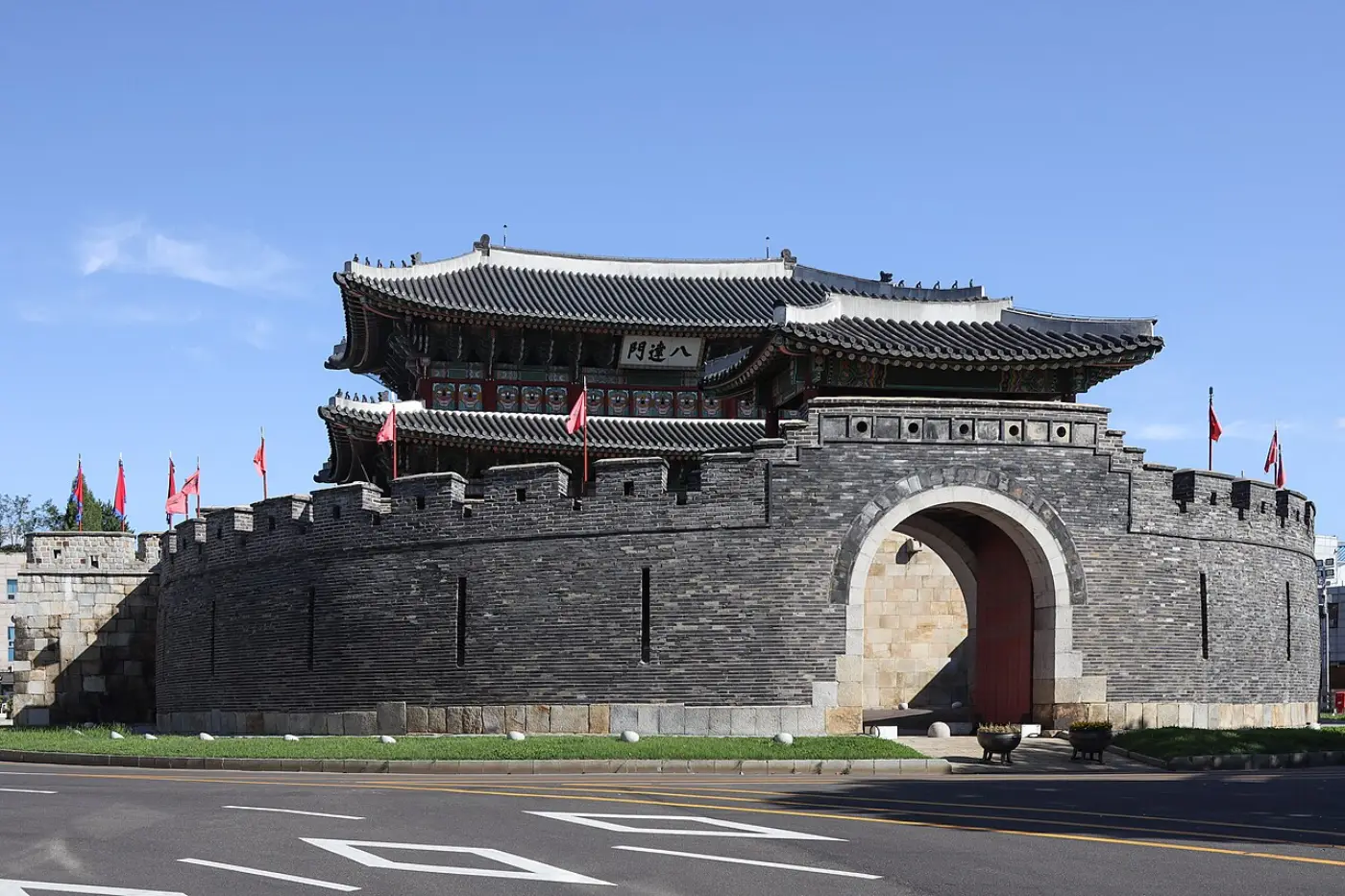
Suwon Hwaseong (華城) joined the UNESCO World Heritage List in December 1997. During the inscription process, critics pointed to a weakness: sections destroyed in the Korean War had been restored in modern times. According to the online newspaper Pressian, the mood shifted once the Hwaseong Seongyeok Uigwe (華城城役儀軌), the official record of the fortress's construction, was made public. This is Part 5 of a 17-part series.
Construction began in January 1794 and ended in September 1796. The Hwaseong Seongyeok Uigwe was published in 1801, after the work was finished. The Korea Heritage Service says the walls were repaired and restored in 1975–1979 following this uigwe. Hwaseong can therefore be seen as a heritage site best understood by reading the fortress and the book describing it together.
The December 1997 inscription and criteria (ii) and (iii), according to the Korea Heritage Service
The National Heritage Portal, run by the Korea Heritage Service, states that Hwaseong was inscribed as a UNESCO World Cultural Heritage site in December 1997, under "World Heritage criteria (ii), (iii)." The Ministry of Culture, Sports and Tourism cites the same criteria, (II) and (III). Pressian gives the date as December 6, 1997. It says the designation came at the 21st session of the UNESCO World Heritage Committee, though the article calls that meeting a "general assembly."
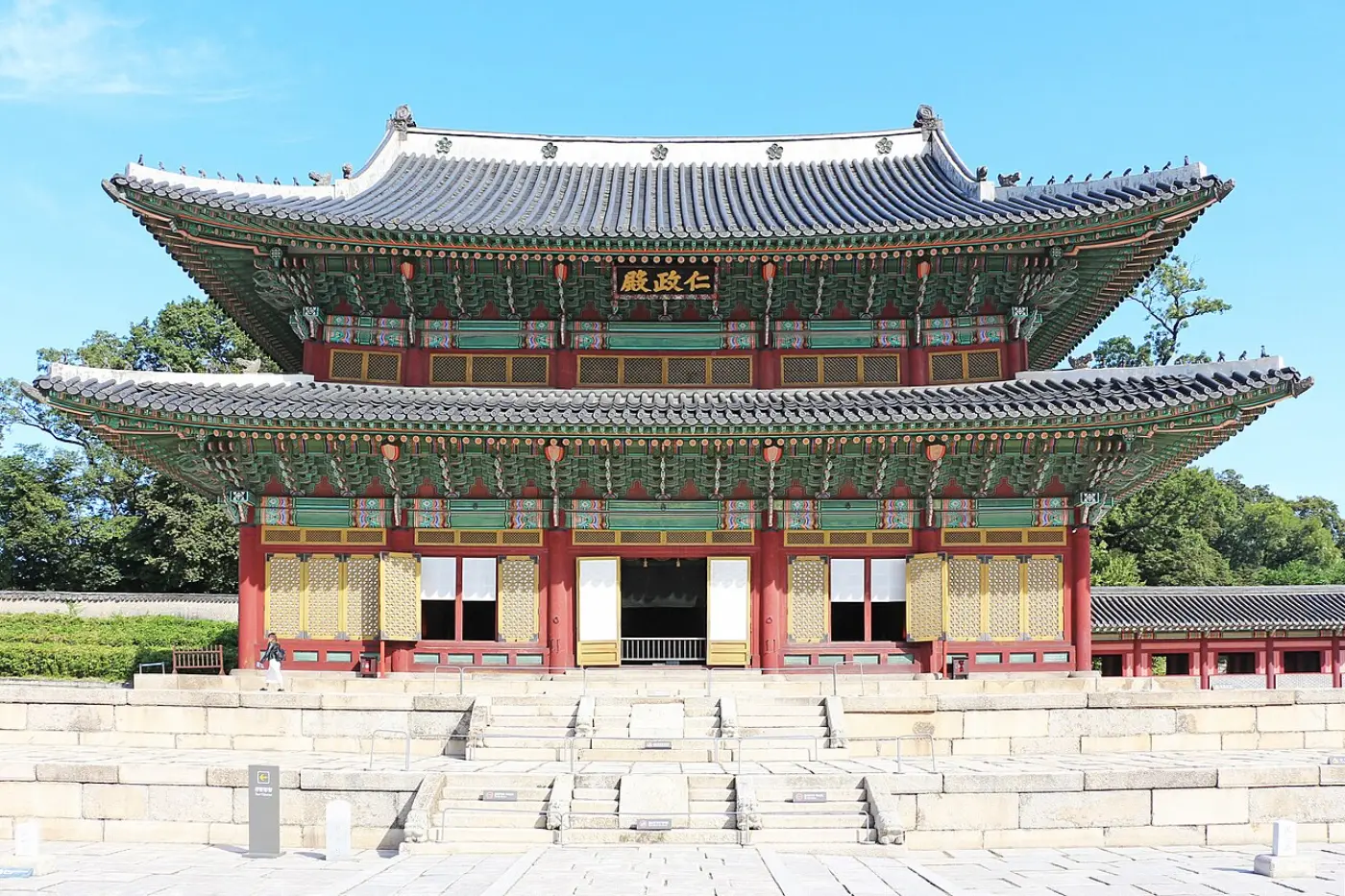
The National Archives of Korea notes that Hwaseong was listed at the same time as Changdeokgung Palace. Part 4 of this series covered how Changdeokgung became World Heritage. It matters that two government bodies give the same criteria numbers. Readers can reasonably remember them as a single official figure rather than one that varies from agency to agency.
Figures for the fortress's size vary slightly between sources. The Korea Heritage Service gives a circumference of 5,744m and an area of 130ha. It describes Hwaseong as a pyeongsanseong, a fortress built partly on flat ground and partly on a hill, with level land to the east and Paldalsan Mountain to the west. The Encyclopedia of Korean Culture puts the total length of the walls at about 5.4km. That, it adds, was longer than the 4km Jeong Yak-yong first envisioned. Gyeonggi Province's English-language guide says the 5.7km walls encircle downtown Suwon. Anyone citing figures for Hwaseong should therefore say which institution they come from.
The 1997 ICOMOS evaluation and the restoration debate
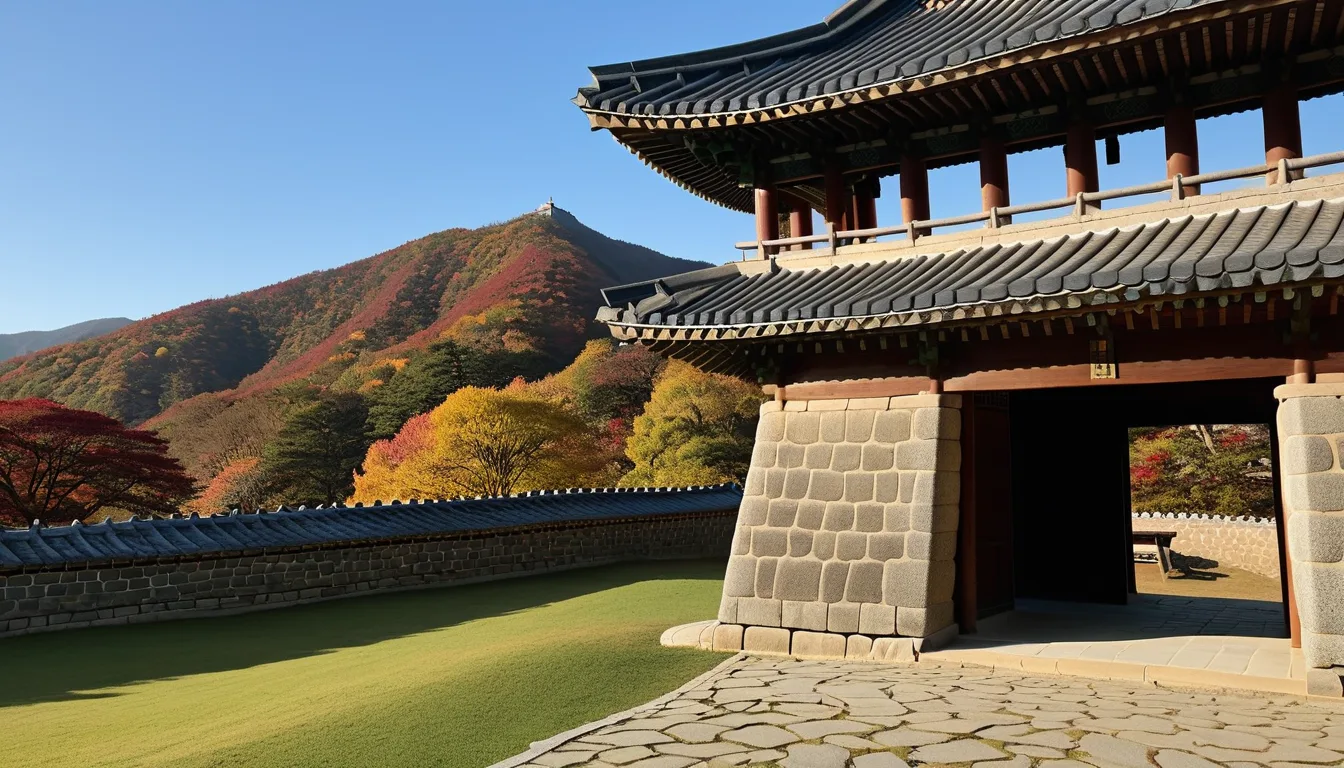
According to the National Archives of Korea, a team from the International Council on Monuments and Sites (ICOMOS) evaluated Hwaseong on site in April 1997. The Archives' Suwon Hwaseong page quotes the team as saying: 'Although its history is only 200 years old, no two of the fortress's structures are alike; each has its own distinct artistic value.'
Pressian also reports the organization's assessment: "Hwaseong is a leading example of 18th-century military architecture, combining the features of European and East Asian fortress-building techniques." This quotation comes secondhand through the article. It should be kept distinct from a direct quotation of the evaluation document itself. The two quotations also stress different things. One praises the distinct form of each structure; the other praises the combination of construction techniques.
The same article describes the weaknesses raised during the inscription process. Janganmun Gate and other structures were badly damaged during the Korean War. Because these had been restored in modern times, the article says, many felt Hwaseong had lost value as a historic site. According to the article, the late Sim Jae-deok, then mayor of Suwon, disclosed the Hwaseong Seongyeok Uigwe to UNESCO in 1997, and the mood changed afterward. The episode can be read as showing that the debate shifted from whether the fortress had been restored to what the restoration was based on.
The 1789 move to Hyeollyungwon and King Jeongjo's 1795 procession to Hwaseong
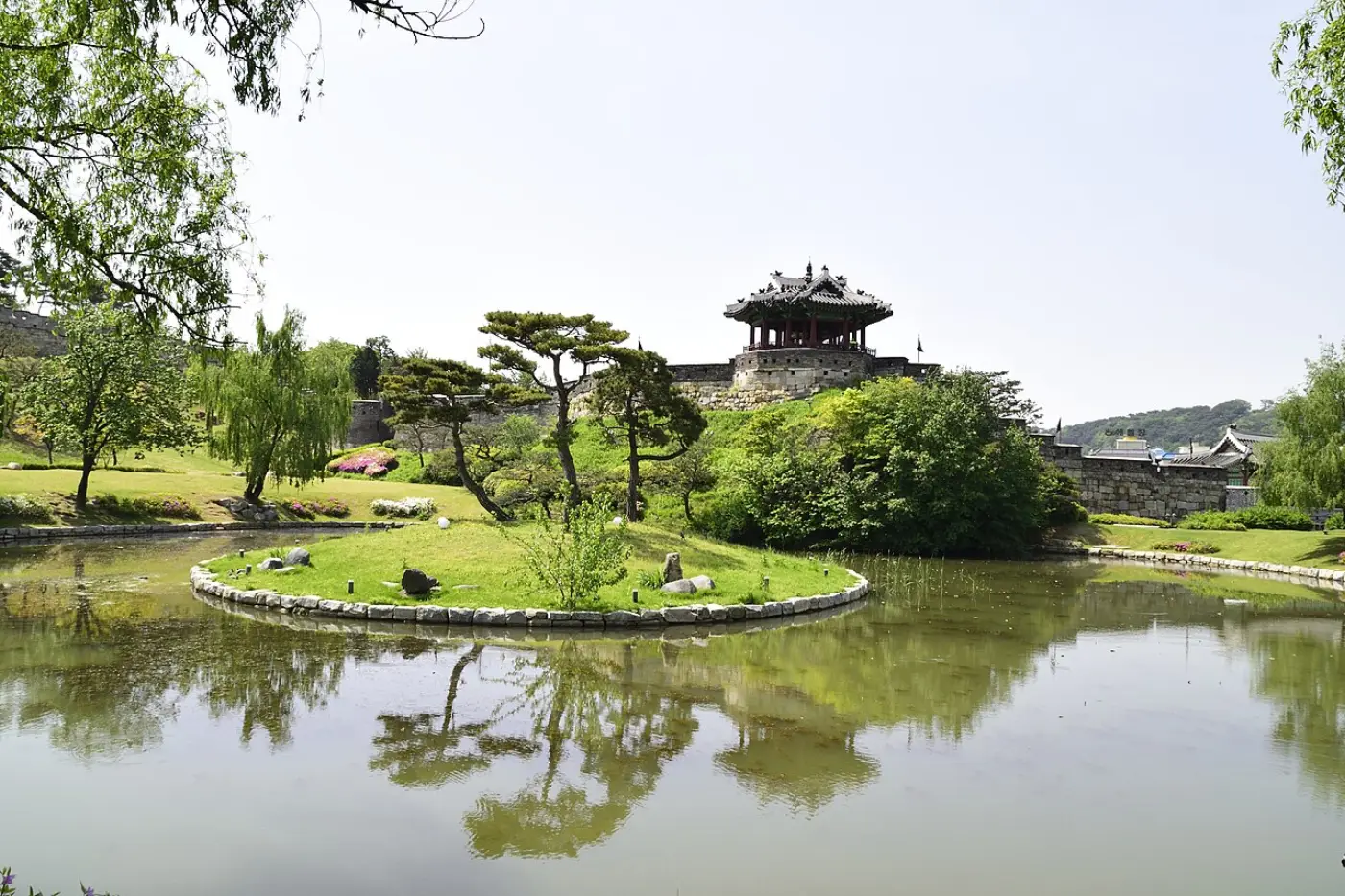
According to the Encyclopedia of Korean Culture, King Jeongjo moved the tomb of his father, Crown Prince Sado, in 1789, the 13th year of his reign. The tomb, originally called Yeongu-won (永祐園), was relocated to Hwasan and renamed Hyeollyungwon. The Suwon Dohobu, Suwon's local government office, had stood at Hwasan for several hundred years. The Korea Heritage Service writes that Jo Sim-tae directed the 1794–1796 construction mentioned above. Builders devised new devices to move and lay large blocks of stone, such as the geojunggi (a lifting crane) and the nokno (a pulley hoist).
According to the National Archives of Korea, King Jeongjo set out from Changdeokgung Palace on the morning of the ninth day of the intercalary second month of 1795. Hwaseong lay about 40km away by the routes of the day. Gyeonggi Province's guide says Jeongjo stayed at Hwaseong Haenggung (行宮), a temporary royal residence, when he visited his father's tomb. Pressian reports that Jeongjo held a celebration of Lady Hyegyeong's 60th birthday at Hwaseong in 1795.
The National Archives of Korea writes that Jeongjo had the entire eight-day procession recorded in detail in the Wonhaeng Eulmyo Jeongni Uigwe. Thanks to this record, King Jeongjo's Royal Tomb Procession was re-enacted along its full route in 2017. A journal published by the National Museum of Korea explains that uigwe list the participants in an event and the kinds of supplies it required. Their doseol (圖說), or illustrated sections, depict objects, buildings and the arrangement of personnel. This case shows that records of building the fortress and records of the events held there survived separately. Hwaseong can therefore be read as a place where both the buildings and the ceremonies were brought back to life through records.
Damage under Japanese rule and in the Korean War, and the 1975–1979 restoration following the Hwaseong Seongyeok Uigwe
According to the Ministry of Culture, Sports and Tourism, Hwaseong was severely damaged during the Japanese colonial period and the Korean War. Changnyongmun, the east gate, collapsed and left no trace. The National Archives of Korea adds that the Japanese Government-General of Korea demolished Hwaseong Haenggung in 1923. It then built Jahye Hospital, a Western-style medical facility, on the site of Bongsudang hall inside the palace grounds. The government began restoring Hwaseong Haenggung in 1996. Restoring its 44 buildings with 577 bays cost 87.9 billion won.
The National Heritage Portal's guide to Hwaseong describes the restoration of the walls this way: "Following the Hwaseong Seongyeok Uigwe (1801), published after construction, it was repaired and restored (1975–1979) mostly to its appearance at the time of construction, and remains so today." The guide explains that the uigwe contains the construction plan, regulations and building methods. It also records the personal details of the workers mobilized and the origin and use of materials. The budget, wage calculations, construction machinery, material-processing methods and a daily construction log are recorded in detail as well.
The Korea Heritage Service also notes the limits. The fortress's bricks and the buildings' roof tiles were made with distinctive methods that are hard to reproduce with today's technology, and this has become a problem in repair work. Drawings and process records, in other words, do not automatically bring back the techniques for making materials. Set beside the inscription debate above, Hwaseong's restoration can be read as involving both problems the records solved and problems that remain.
| Item | Type | Key dates | Role in the Hwaseong story |
|---|---|---|---|
| Suwon Hwaseong | UNESCO World Heritage site (criteria ii, iii) | Construction began January 1794, completed September 1796; inscribed December 1997 | A pyeongsanseong spanning flat ground to the east and Paldalsan Mountain to the west |
| Changdeokgung Palace | UNESCO World Heritage site | Inscribed December 1997 | Listed together with Hwaseong; starting point of King Jeongjo's 1795 procession |
| Hwaseong Seongyeok Uigwe | Construction record (uigwe) | Published 1801 | Basis for the 1975–1979 repair and restoration of the walls |
| Wonhaeng Eulmyo Jeongni Uigwe | Procession record (uigwe) | Record of the eight-day procession of 1795 | Basis for the 2017 full-route re-enactment of King Jeongjo's Royal Tomb Procession |
| Hwaseong Haenggung | Temporary royal residence | Demolished 1923; restoration began 1996 | Where Jeongjo stayed when visiting his father's tomb; 44 buildings with 577 bays restored |
Summary: compare the records with what stands on site
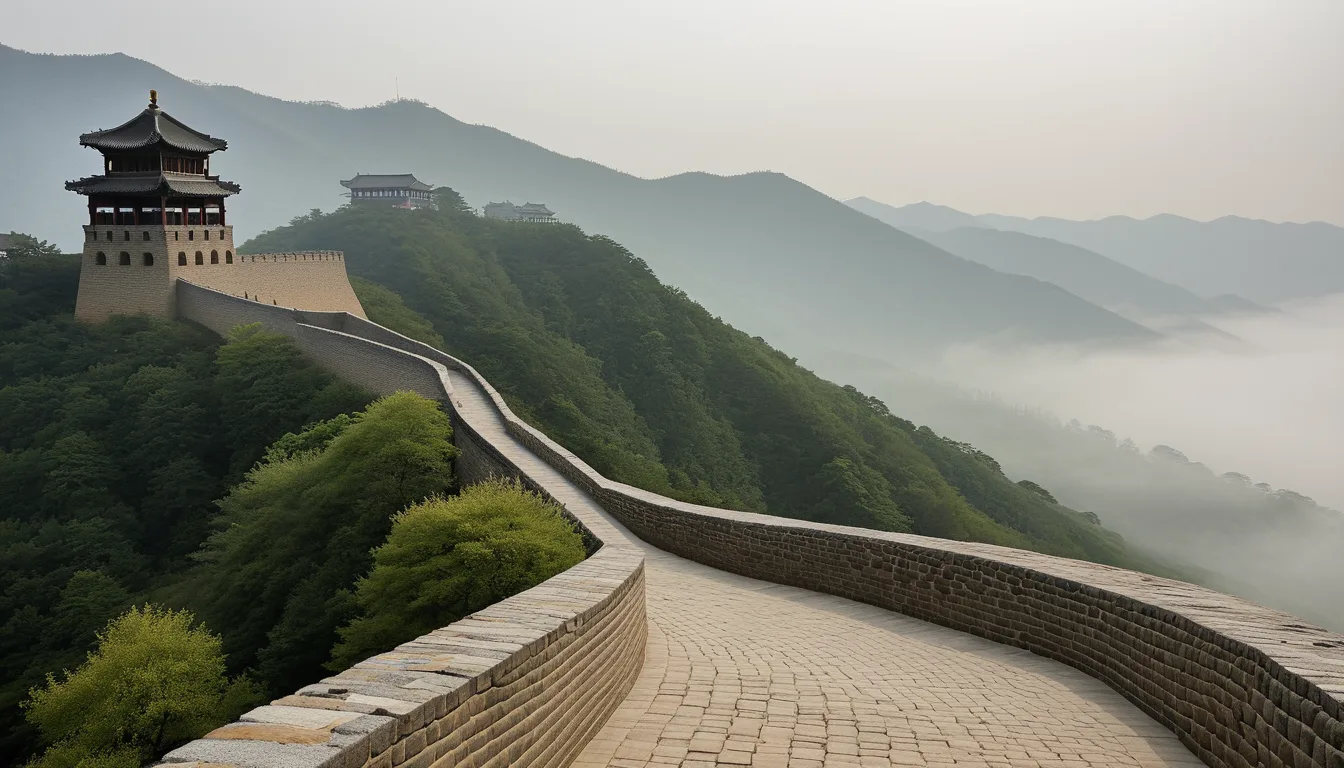
Hwaseong can be read as a case in which records became the basis for rebuilding physical structures. Yet challenges such as the bricks and roof tiles cannot be solved by records alone. On site, Changnyongmun on the east side is a good place to start. According to the National Archives of Korea, it was badly damaged in the Korean War and restored to its former appearance in 1975. The Encyclopedia of Korean Culture says the walls are built of stone and stand about 4–6m high, depending on the terrain. Buildings were not usually erected on secret gates (ammun), it adds, but the Southwest Secret Gate alone was given a posa, or guard post.
The Ministry of Culture, Sports and Tourism describes Seobuk Gongsimdon, the Northwest Observation Tower, as a defensive structure. It is a three-story brick tower equipped with gunpowder weapons and topped with a pavilion. Seeing the stone walls and the brick structures side by side shows why the bricks discussed above matter. Readers who want the original texts can start with the National Archives of Korea's Suwon Hwaseong page and the World Heritage guide on the National Heritage Portal. According to the National Museum of Korea's journal, the city of Suwon and the Gyeonggi Cultural Foundation have translated the Hwaseong Seongyeok Uigwe. With that translation, questions raised in front of the walls can be checked against the records.