The short answer: the coldest period, not the coldest year
The studies behind this article do not name a single coldest year for Joseon. Instead, they treat the 17th century as the peak, or height, of the Little Ice Age. The lowest temperature ever observed on Earth is -89.2°C, measured at Vostok in Antarctica on 21 July 1983. The World Meteorological Organization (WMO) lists this value as the world record low. Kim So-ra (2022) studied the spread of ondol floor heating in the 17th-century Joseon capital. Jeon Je-hun (2024) used big-data methods to analyze the vocabulary of the Annals of the Joseon Dynasty.
The two answers differ in kind. Joseon's answer comes from written records and researchers' analysis. Earth's comes from a reading taken at a single station. In my view, keeping this difference in mind lets us separate the different meanings of 'coldest'. This article moves from 17th-century Joseon to the 1816 'Year Without a Summer', then to modern observation and preparing for today's cold waves.
Dating the Little Ice Age: the Kyunghyang Shinmun review and the Encyclopedia of Korean Culture
Sources differ slightly on when the Little Ice Age began and ended. A book review in the Kyunghyang Shinmun newspaper uses the term 'little glacial age'. This article treats it as meaning the same thing as the Little Ice Age. The review defines it this way: 'In Earth's history, in which glacial and interglacial periods recur cyclically, the little glacial age refers roughly to AD 1300 to 1850.' On this reading, the Little Ice Age is a long climatic period lasting several centuries.
The 'Climate Change' entry in the Encyclopedia of Korean Culture (hereafter 'the encyclopedia') takes Europe as its reference point and dates the start to the 13th century: 'From the 13th century, temperatures gradually fell in Europe as well, and "Little Ice Age" conditions continued until the 19th century.' For the Korean peninsula, it identifies three periods of sharp cooling: 'The climate of the Korean peninsula in this period was similar to Europe's, with temperatures falling sharply between the mid-16th and mid-17th centuries, in the early 18th century and in the 19th century.' The same entry links the 17th and 18th centuries to the Maunder minimum. This was a period of weak solar activity, when the number of sunspots fell sharply.
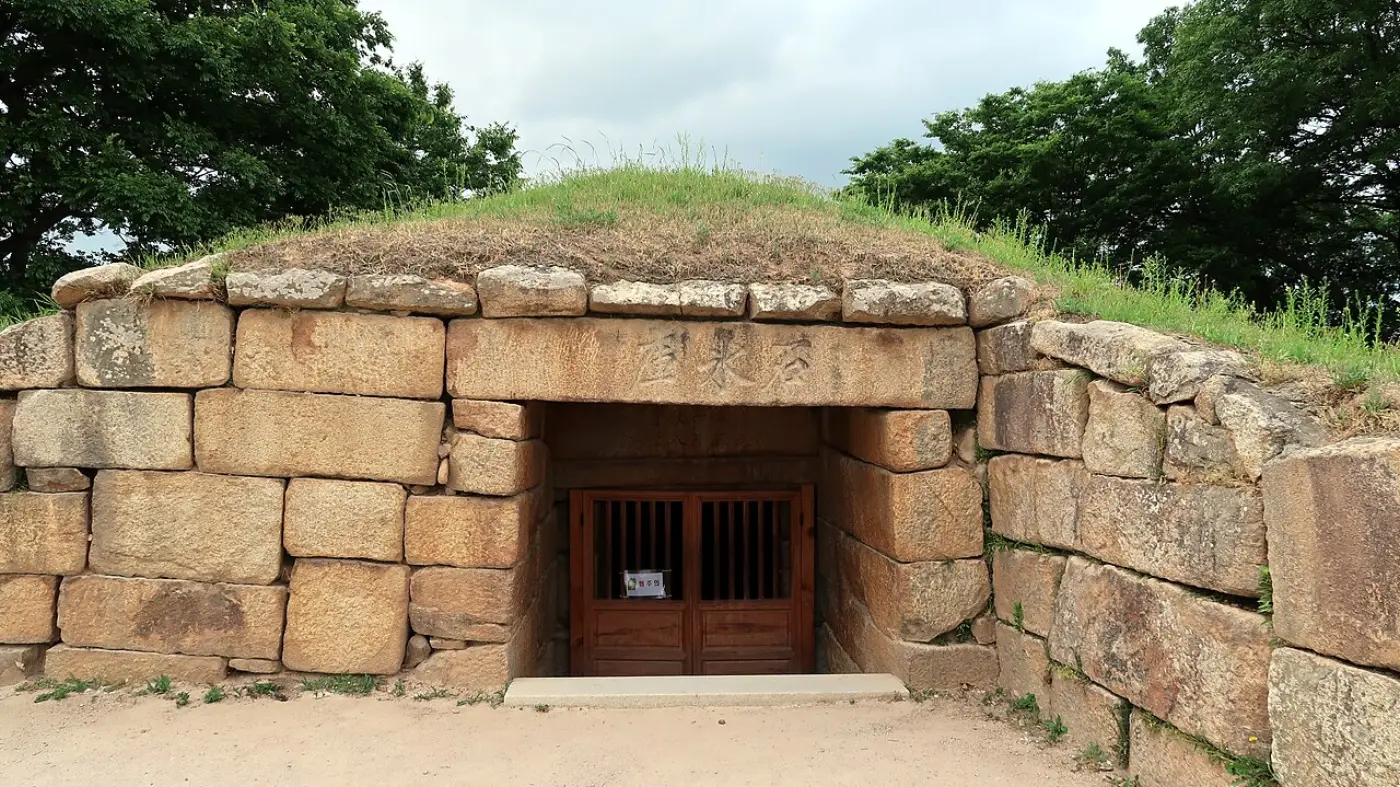
Academic papers narrow the range to the 17th century. The abstract of Kim So-ra's 2022 paper reads: 'In the 17th century, when the global Little Ice Age reached its peak, the Korean peninsula too experienced generally abnormal low temperatures, erratic climate fluctuations and the natural disasters they caused.' Jeon Je-hun (2024) likewise writes that 'the 17th century was the height of the Little Ice Age'. He argues that the turbulent weather of the time threw society into upheaval.
Lay the four sources' dates over one another, and the 17th century appears in every one. The encyclopedia's first cooling phase runs to the mid-17th century. Its account of the Maunder minimum covers both the 17th and 18th centuries. In my view, the sources are better served by reading Joseon's coldest time as this overlapping stretch than as a single year. The encyclopedia entries can be read on its website. The abstracts of the two papers are available on the Korea Citation Index (KCI).
The Gyeongsin Great Famine and the spread of ondol: what the 17th-century records show
The Kyunghyang Shinmun review describes 1670 and 1671 this way: 'In Joseon history, 1670 (the gyeongsul year) and 1671 (the sinhae year) were a time of unprecedented catastrophe. It was called the Gyeongsin Great Famine (庚辛大饑饉).' According to the review, drought set in from the intercalary second month of 1670. Crop-damaging cold struck in the fourth month, and hail fell relentlessly from the fifth to the seventh month. The review puts the casualties at as many as 1 million and says the state's finances collapsed.
In this list, cold appears only once, as crop-damaging cold, with drought and hail alongside it. This suggests that the disasters of the Little Ice Age involved more than low temperatures. It fits Kim So-ra's phrase 'erratic climate fluctuations'. A 2010 master's thesis from Ewha Womans University finds that flood and drought disasters were most frequent and most widespread in 1601–1650. The same thesis concludes that floods were at their largest and most frequent in 1651–1700.
Responses to the cold can also be traced inside the home. The encyclopedia's 'Ondol Culture' entry singles out the 17th century. Ondol was installed more actively then than at any time since full-floor ondol appeared in the late Goryeo period. The entry gives the cause: 'The fundamental cause lay in abnormal weather, with summer droughts (旱魃) and persistent winter cold.' According to Kim So-ra (2022), people throughout the capital eagerly installed ondol, from the lower classes in pit dwellings to the upper classes in the palace. As I read them, the two sources portray the spread of ondol as a response that cut across every social class.
The response came at a cost. The 'Ondol Culture' entry notes that as ondol multiplied regardless of region or class, firewood ran short. The shortage was both an economic and an environmental problem. Kim's paper describes the Four Mountains (四山) around Hanseong this way: 'The Four Mountains are presumed to have been so devastated that red earth was exposed.' In other words, keeping warm put pressure on another resource: firewood. The scene is worth reading alongside how much of Korea is covered by forest.
Joseon's weather records: the rain gauge, water-level gauges and the Giujedeungnok
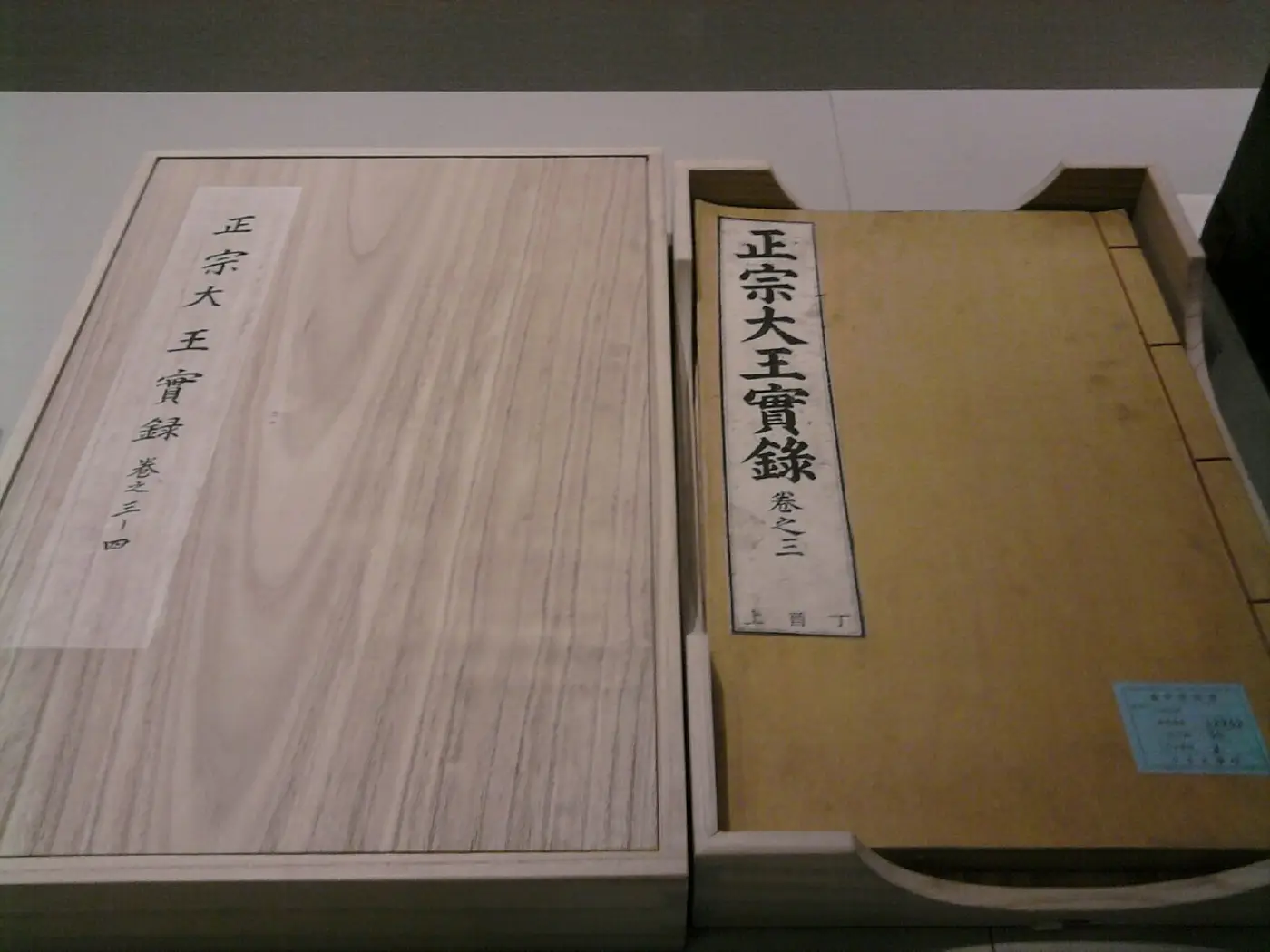
Joseon set up a system for measuring rainfall under King Sejong. According to the Korea Meteorological Administration (KMA), the Ministry of Rites (禮曹) proposed installing rain gauges in August 1441, the 23rd year of Sejong's reign. A new system for measuring rain was established in May of the following year. Rain gauges were installed in Seoul and in the counties and prefectures of each province. The KMA says Korea has measured rainfall with rain gauges since May 1442, about 200 years before Italy.
A paper analyzing the Giujedeungnok (Register of Rain Rituals) dates the first water-level gauges to 1441, the 23rd year of Sejong's reign. They were the Gaecheon gauge on the Cheonggyecheon stream and the Hangang gauge on the Han River. The paper counts 1,810 entries in the register's rain-ritual logs over the 254 years from 1636 to 1889. Of these, 775 are gauge readings: 668 from the Gaecheon gauge and 107 from the Hangang gauge. King Yeongjo revived Sejong's rain gauge as a bronze rain gauge. The paper explains his aim: 'It expresses the aim of compensating for the limitation of the water-level gauge, namely the measurement of flow (流量, flowing water).'
In other words, the water-level gauge was used to measure the amount of flowing water. I read this passage as a record of Joseon recognizing the limits of its instruments and trying to make up for them. Yet every Joseon instrument discussed here measures rain and water. It can therefore be said that the cold of the 17th century is read through records of events such as crop-damaging cold and famine. The Ewha thesis searched the Annals of the Joseon Dynasty, the Diaries of the Royal Secretariat (Seungjeongwon ilgi) and the Jeungbo munheon bigo for flood- and drought-related terms. Jeon Je-hun analyzed 583 key terms in the Annals from the 4th year of Hyojong's reign (1653) to the 7th year of Hyeonjong's reign (1666).
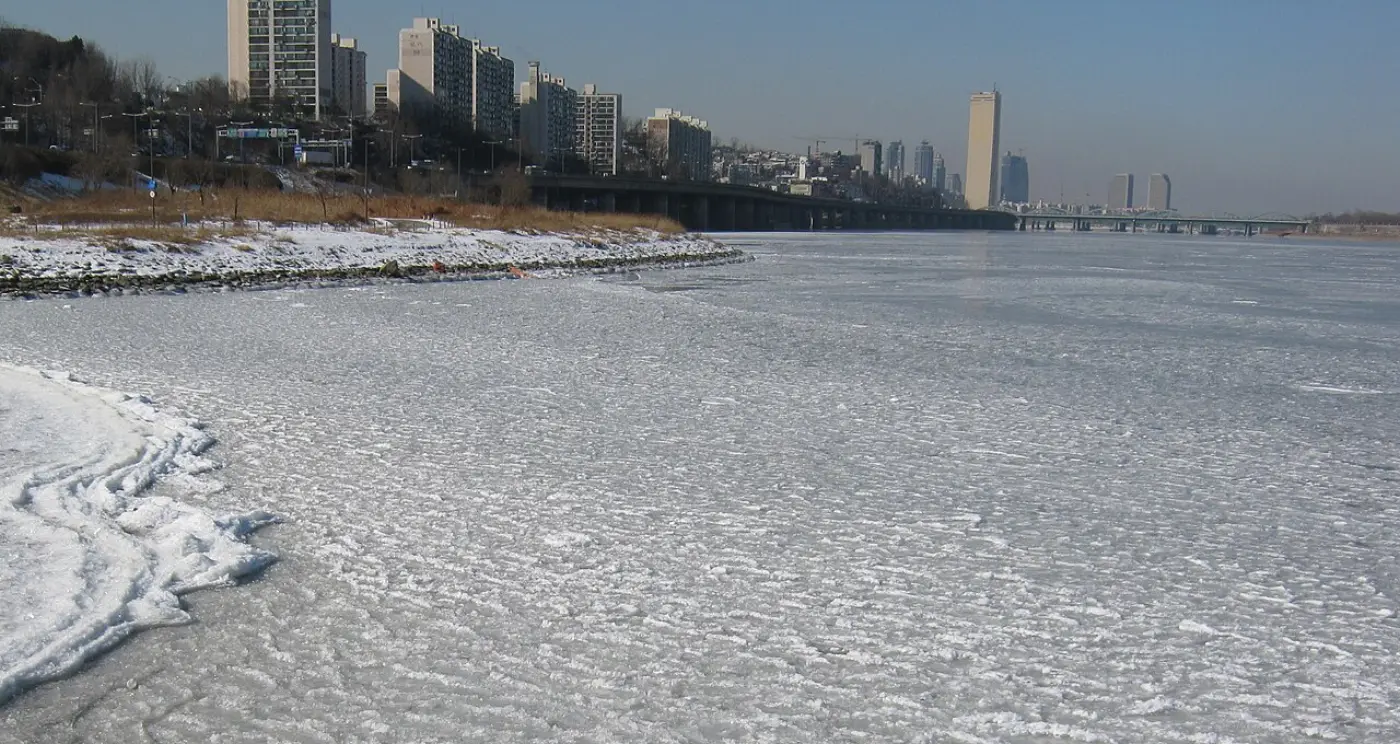
Modern observation starts by fixing a standard. According to a Newsspace article on the KMA's seasonal observation guidelines, the official reference point for the Han River's freeze has been in front of Noryangjin since 1906. Observers watch the water about 100m upstream of the second and fourth piers from the southern end of today's Hangang Bridge. Since records began, the earliest freeze came on 4 December 1934 and the latest on 13 February 1964. The KMA compiles its all-time winter rankings from 1973, when the observation network was greatly expanded nationwide. As I see it, the cold of different years can be compared on the same scale only once the place and starting year are fixed.
Ice cutters, famine relief and ondol rooms: how people in Joseon endured the cold
In midwinter, the Han River became a workplace. The Seoul Metropolitan Government's Media Hub describes ice cutting this way: 'Cutting ice was a state labor duty (國役) imposed on the people of the five districts of Hanyang, called jangbingyeok (藏氷役).' Cutting began only once the ice was four chi thick. The same article cites the Yongjae chonghwa to describe the work site. People tied kudzu cords to the ice to keep it from sliding.
The Yongjae chonghwa passage continues: 'On the riverbank, fires were lit with firewood to protect those whose bodies were frozen.' Even so, some workers got frostbite or froze to death. The Media Hub also cites an entry in the Annals of King Sejong dated 27 December 1420: 'Two hundred bottles of liquor were granted to the ice-storage workers (藏氷軍).' I read these records as cases where state-imposed labor is recorded alongside measures meant to make it less dangerous.
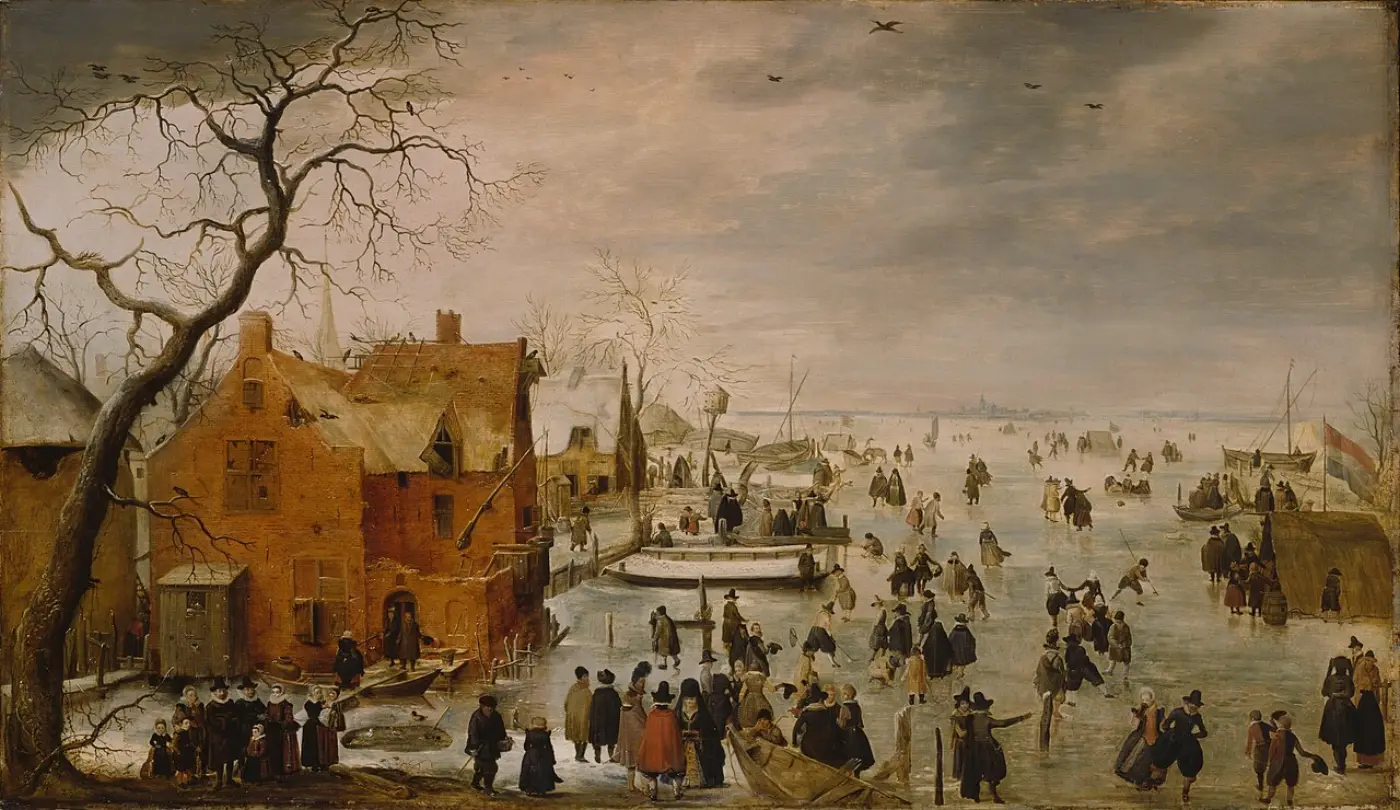
Ice was a cold to be endured, but it was also a resource people needed. When the ice failed to form in winter, a rite praying for cold (祈寒祭, gihanje) was held at the Sahandan altar (司寒壇). On one occasion, the rite was held and the ice froze solid, and King Yeongjo rewarded the officiants. A Korea.net article presents records of past winters released by the National Archives of Korea. According to the article, the Han River used to freeze hard enough for people to stand in the middle of it. People cut holes in the ice to fish. They also cut and stored ice to get through the summer heat.
When famine struck, the state's response entered the records. According to Jeon Je-hun (2024), 17th-century Joseon set up and ran the Jinhyulcheong (賑恤廳), a famine relief office, when disasters brought famine. It also applied cheiguhyulbeop (遞移救恤法), a relief method that moved grain to famine-stricken areas from nearby areas the famine had spared. The Kyunghyang Shinmun review notes that two ways of funding relief became widespread: grain contributions (napsok) and the sale of blank appointment certificates (gongmyeongcheop). Along the way, people with money gained a chance to buy higher status. I read the riverside work site and state relief as responses to the cold at different levels.
Herring and the Tambora eruption: cold periods around the world
The abnormal weather of the 17th century was not confined to Joseon. The Kyunghyang Shinmun review notes that abnormal weather around the 17th century also hit Qing China and Japan. Europe, too, suffered famines caused by disasters. Jeon Je-hun (2024) focuses on the herring, a cold-water fish. Herring fishing flourished both in Joseon waters and in the Dutch North Sea. From this, he concludes: 'It could be seen that the 17th-century Little Ice Age phenomenon was not confined to particular regions but was a global phenomenon.'
This comparison keeps Joseon's cold from being read as one country's local affair. The review's span for the Little Ice Age also takes in cooling caused by volcanic eruptions. A paper in the University of East Anglia repository examines the April 1815 eruption of Tambora in Indonesia. It explains that the eruption had a major impact on the global climate. It brought a 'Year Without a Summer' to Europe and North America in 1816. Just over a year separated the eruption from that summer, and the eruption killed tens of thousands of people.
The encyclopedia's 'Climate Change' entry describes the event this way: 'The Tambora volcano affected almost the entire Northern Hemisphere, and the following year, 1816, had the lowest spring and summer temperatures since weather observations began and was recorded as the "Year Without a Summer."' The same entry explains that Tambora and the late-19th-century eruption of Krakatoa lowered the global mean temperature by 0.2–0.5°C. Colloquium material from NASA's Goddard Space Flight Center describes the damage of 1816. Crop failures and famine struck many countries, from China to Western Europe and New England. Food riots and mass migrations of refugees followed.
The East Anglia paper also points out regional differences. According to the paper, indirect indicators, or proxies, clearly confirm cooling of the globe as a whole and of the Northern Hemisphere. Southern Hemisphere proxies, however, show no clear signal. I read this as showing that even a statement like 'the Earth was cold' hides regional differences. As with the three cooling phases on the Korean peninsula noted earlier, cold can be said to show up differently in the records depending on place and time.
Record lows: Earth and South Korea in the World Meteorological Organization (WMO) records
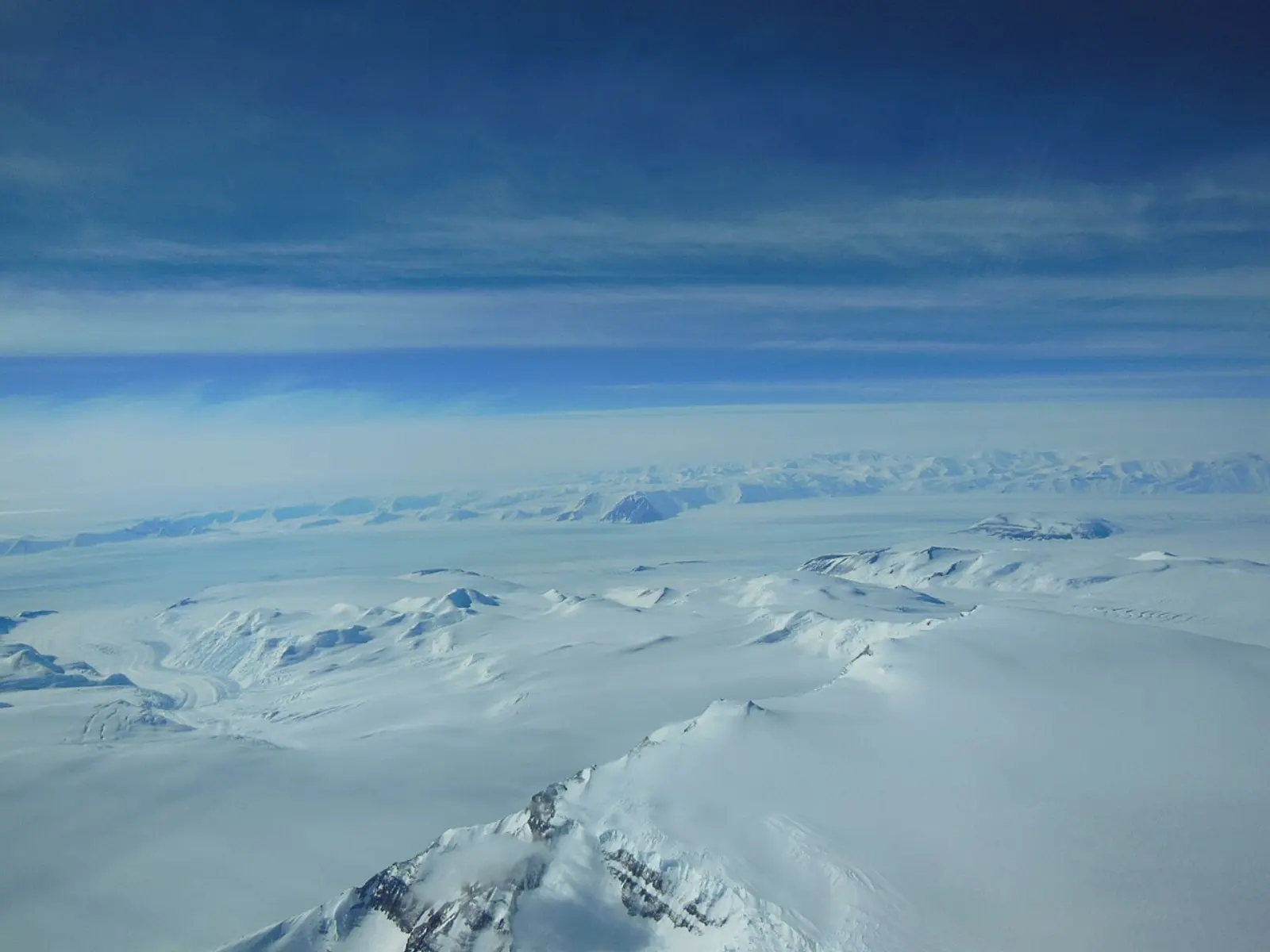
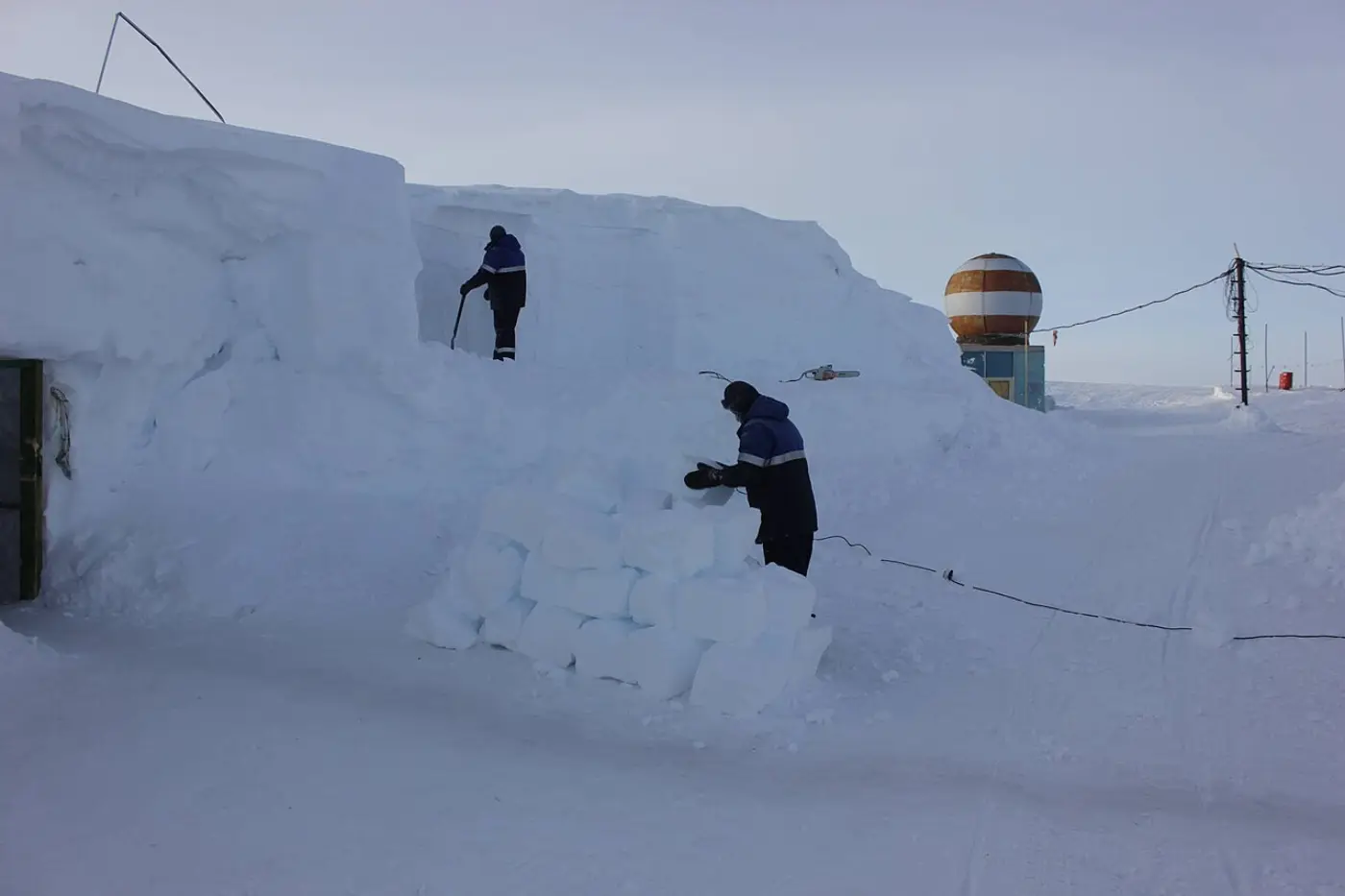
In the age of instruments, cold is recorded in numbers. The WMO lists -89.2°C as the world's lowest temperature. It was measured on 21 July 1983 at Vostok station, on the high Antarctic plateau. The Northern Hemisphere record comes from Greenland. There, an automatic weather station measured -69.6°C on 22 December 1991, and the WMO recognized it as the Northern Hemisphere record low. The station stands at a site called Klinck, near the summit of the Greenland ice sheet, 3,105m above sea level.
The Greenland record is lower than the -67.8°C measured in Russia at Verkhoyansk (February 1892) and Oymyakon (January 1933). A WMO news release reports that it has finished evaluating this observation, which is nearly 30 years old. I take this to mean that extreme records are confirmed only after verification, not as soon as they are measured. South Korea's record appears in a 2001 Kyunghyang Shinmun report. According to the report, the temperature in Yangpyeong, Gyeonggi Province, fell to minus 32.6 degrees in 1981. The report describes this as the lowest temperature in the history of South Korean weather observation.
The table below sets these records side by side. The world and Northern Hemisphere records both come from high ground: one on the Antarctic plateau, the other near the summit of an ice sheet. I take this shared feature to show that Earth's lowest recorded temperatures were measured at high altitude. The cold of 17th-century Joseon is not in the table, because that period's cold is traced through records of crop-damaging cold, famine and the spread of ondol.
Today's cold waves: what the IPCC, the Met Office and the KMA say, and how responses compare
The trend in average temperatures points toward warming. The encyclopedia states that the global mean temperature for 2011–2020 was 1.09°C higher than the 1850–1900 average. An explainer from Carbon Brief summarizes the conclusion of the IPCC's Sixth Assessment Report (AR6). Since 1950, it is virtually certain that hot extremes have become more common and cold extremes less common worldwide. The report adds that the year's lowest temperature has risen by about 3°C since 1960. In Korea, a Newsspace article reports that the Han River's frozen days fell from an annual average of 69 in the 1940s to 21 in the 1980s, and that in nine winters since records began the river has not frozen at all.
Still, cold waves have not gone away. The Met Office explains that extreme cold spells still occur within natural variability because weather patterns shift. A study it cites puts the chance of a December as cold as December 2010 at about half what it was in the 1960s. The Met Office states with high confidence that the Arctic's coldest days are warming at about three times the rate of global warming. Even so, it says, regional extreme cold is still likely to occur from time to time. Korea has seen this too. In January 2011, the average minimum temperature in the Yeongdong region of Gangwon Province was -6.9°C, 3.3°C below normal and the lowest on record.
The sources differ in how confidently they assign causes. The KMA attributed the 2011 cold wave to rising Arctic temperatures and a negative Arctic Oscillation index. According to the KMA, the nationwide average temperature in the winter of 2025 was 1.1°C, 0.6°C above normal. For that winter, too, the KMA attributes the southward surges of cold air to the stratospheric polar vortex and a negative Arctic Oscillation. The IPCC, by contrast, found much weaker evidence for a 'dynamical effect', in which Arctic warming makes weather patterns linger. In my view, this difference is less confusing if we keep the average trend separate from the causes of individual cold waves.
Comparing responses category by category brings the differences into view. At home, people in 17th-century Joseon installed ondol regardless of class. In the 18th century, they made ondol rooms smaller and kept out the cold with multi-layered windows and doors. At the state level, Joseon provided relief through the Jinhyulcheong and cheiguhyulbeop. As for migration, 19th-century Joseon commoners moved in large numbers to Qing China and the Russian Maritime Province to escape famine. The year 1816 brought food riots and refugee migration. Today, the Met Office holds that governments and industry still need to adapt to cold. As I read it, past responses spanned the home, the state and migration, while today's official recommendations focus on institutions.
| Category | Location | Date | Temperature | Source |
|---|---|---|---|---|
| World record low | Vostok station, high Antarctic plateau | 21 July 1983 | -89.2℃ | WMO |
| Northern Hemisphere record low | Klinck automatic weather station, Greenland (3,105m above sea level) | 22 December 1991 | -69.6℃ | WMO |
| Compared with the Greenland record | Verkhoyansk, Russia | February 1892 | -67.8℃ | WMO |
| Compared with the Greenland record | Oymyakon, Russia | January 1933 | -67.8℃ | WMO |
| South Korea's lowest observed temperature | Yangpyeong, Gyeonggi Province | 1981 | Minus 32.6 degrees | Kyunghyang Shinmun report (2001) |
Related reading: What share of Korea's land is forest, and how does it rank in the OECD? · What are the hottest and coldest temperatures ever officially recorded on Earth?
Conclusion: preparing at every level, and the questions that remain
Preparation looks different at each level. The official recommendations discussed in this article are aimed at governments and industry. The Met Office holds that adaptation to cold is still needed at that level, because the risk of extreme cold will not disappear entirely. At the community level, I see cheiguhyulbeop, which moved grain from neighboring areas, and the riverside fires as useful examples. At the household level, we can recall the principle behind 18th-century ondol rooms: shrink the space to be heated and keep out the cold. At the individual level, I think reading the seasonal data the KMA publishes alongside normal values can be a starting point.
The main lesson of this article is that responses to the cold also created new burdens. The surge in ondol led to firewood shortages. Grain contributions and blank appointment certificates, used to fund famine relief, opened the door to buying status. Questions also remain. It is still unsettled how to weigh explanations held with differing degrees of confidence, such as the dynamical effect of Arctic warming. I believe that reading past records alongside today's preparations lets us treat cold less as something to fear and more as something to prepare for.