At a glance
• Lee Chang-dong’s Possible Love had its world premiere in the main competition of the 83rd Venice International Film Festival on 6 September 2026. It is his first Venice competition entry since Oasis in 2002, twenty-four years earlier, and his first feature since Burning in 2018, eight years earlier.
• The critical response is unusually strong: 100% on Rotten Tomatoes (19 reviews, average 8.7/10) and 93 on Metacritic (14 critics, “universal acclaim”). The screening was followed by six to seven minutes of applause.
• The film follows a laid-off worker and his wife (Sol Kyung-gu, Jeon Do-yeon) whose lives become entangled with those of a wealthy documentary filmmaker and her husband (Cho Yeo-jeong, Zo In-sung). It runs 164 minutes, is distributed by Netflix, and opens in South Korean cinemas on 23 September.
1. Twenty-four years to Venice, eight years to a new film
On 6 September 2026, on the Lido in Italy, Lee Chang-dong’s seventh feature was shown for the first time. It screened in the main competition of the 83rd Venice International Film Festival, and when the lights came up the applause ran for six to seven minutes. Korean outlets reported that the lead actors wiped away tears and embraced one another.
Two spans of time meet in that screening. One is eight years: Lee’s previous film was Burning in 2018. The other is twenty-four: his last Venice competition entry was Oasis in 2002, which won him the Silver Lion for best director. Twenty-four years passed before a director returned to the same festival’s same section.
2. A novelist who became a director past forty
Lee Chang-dong was born on 1 April 1954 in Daegu, North Gyeongsang Province. He graduated from the Department of Korean Language Education at Kyungpook National University and worked as a Korean-language teacher at Shinil High School. In 1983 his novella “Jeonri” won the Dong-a Ilbo New Year literary contest, launching him as a novelist, and he went on to publish several works of fiction.
He entered the film industry in 1993, writing the screenplay for To the Starry Island and serving as assistant director. Then in 1997, past the age of forty, he made his directing debut with Green Fish — fourteen years after his literary debut and four years after entering film.
He also served in government. Under President Roh Moo-hyun he was the 40th Minister of Culture and Tourism, in office from 27 February 2003 to 30 June 2004. After leaving the post he returned to filmmaking and made Secret Sunshine and Poetry.
3. The arc of seven features
Green Fish (1997) — Mak-dong (Han Suk-kyu) returns from military service to the new town of Ilsan, but his family has scattered and the ground he lands on belongs to organised crime. A story about a hometown swallowed by development and a young man with no place in it. It was also the founding production of East Film.
Peppermint Candy (2000) — It opens with Kim Yong-ho (Sol Kyung-gu) on a railway track crying “I want to go back,” then traces his twenty years in reverse. Passing through Gwangju and an interrogation room on the way back to a picnic at twenty, the structure carves modern Korean history into one man’s face.
Oasis (2002) — Jong-du (Sol Kyung-gu), just out of prison, meets Gong-ju (Moon So-ri), who has severe cerebral palsy, beyond the reach of the world’s gaze. It won the Silver Lion for best director at Venice, and Moon So-ri won the Marcello Mastroianni Award for emerging actor.
Secret Sunshine (2007) — Shin-ae (Jeon Do-yeon), widowed and newly arrived in Miryang with her son, loses the boy as well, and then collides head-on with the word forgiveness as religion offers it. The film won Jeon Do-yeon the best actress prize at Cannes.
Poetry (2010) — As Mi-ja (Yun Jung-hee) begins to lose her memory and takes a poetry class, she learns what her grandson has done. The search for beauty and the reckoning with guilt overlap inside one person. It won the screenplay award at Cannes.
Burning (2018) — Jong-su (Yoo Ah-in), Hae-mi (Jeon Jong-seo) and Ben (Steven Yeun) meet, and something disappears. It began from a Haruki Murakami short story but is filled with what goes unexplained, and Lee co-wrote it with Oh Jung-mi.
Possible Love (2026) — And now, eight years on, the new film. Lee co-wrote it again with Oh Jung-mi, and it is produced by Pinehouse Film, which also made Burning.
4. Possible Love: the side holding the camera and the side being filmed
The film has two couples. Ho-seok (Sol Kyung-gu), a laid-off worker, and his wife Mi-ok (Jeon Do-yeon); and Ye-ji (Cho Yeo-jeong), a documentary director, with her husband Sang-woo (Zo In-sung). Their lives become entangled when Ye-ji sets out to make a documentary about laid-off workers.
At the Venice press conference Lee said the film “is connected to the fundamental question of every worker of this era,” adding that he wanted to put into the film “the question of how we live and survive in such an era, and how we find our selves and our identity, and think about it together with the audience.”
What international critics returned to repeatedly is that the form of exploitation has changed: rather than having their labour taken, the working class has its misery consumed as content. AwardsWatch wrote that the film confronts the privilege of looking at another’s suffering from behind the camera in an age when everyone turns life into content.
The film is dedicated to the tenth episode of Krzysztof Kieślowski’s Dekalog. IndieWire was careful to note that it is not a remake: it was conceived independently and later folded into the Dekalog tribute omnibus during pre-production.
5. Venice reception: 100% on Rotten Tomatoes, 93 on Metacritic
The aggregate figures recorded shortly after the premiere are these.
| Aggregator | Score | Sample |
|---|---|---|
| Rotten Tomatoes (Tomatometer) | 100% | 19 reviews, average 8.7/10 |
| Metacritic (Metascore) | 93 / 100 | 14 critics, “universal acclaim” |
Individual outlets divide as follows. All quotations are verbatim.
The Guardian ★★★★☆ 4/5
“a finely judged, beautifully acted and rather novelistic work”
Peter Bradshaw
IndieWire Grade A
Jeon Do-yeon “delivers another once-a-century performance less than 20 years since her first collaboration with Lee”
On her reunion with the director of Secret Sunshine
AwardsWatch Grade A
“searing treatise on exploiting human connection”
On the film’s treatment of misery as content
Variety Rave
“beautifully mature, quietly colossal relationship drama”
On the film as a whole
The Hollywood Reporter Rave
“impeccably crafted”
On the filmmaking
Deadline Positive
“The cast of top South Korean actors here is well chosen, each of the four main stars given plenty to work with”
Pete Hammond
Radio Times Positive
“rich and utterly absorbing”
On the viewing experience
Screen Daily Rave
A powerful return that digs into class, desire and exploitation
On Lee’s return to the Venice competition
Summarising the reaction during the festival, Deadline reported that the film was “going down a storm with critics on the Lido and seems to be the most unanimously praised film of the festival so far.” That is one reporter’s reading of the early press response, not a jury verdict.
* The Guardian, Variety, The Hollywood Reporter, Radio Times and Deadline quotations above are taken from Deadline’s round-up of the reviews (source 5); the IndieWire and AwardsWatch quotations were verified in those outlets’ own reviews (sources 4 and 9).
6. Jeon Do-yeon and Lee Chang-dong, nineteen years after Secret Sunshine
One reunion stands out. Jeon Do-yeon and Lee Chang-dong are working together again for the first time since Secret Sunshine in 2007 — nineteen years. That film won her the best actress prize at Cannes, and IndieWire’s review refers to it directly: the Secret Sunshine actress “delivers another once-a-century performance less than 20 years since her first collaboration with Lee.”
For Sol Kyung-gu this is a third Lee Chang-dong film, after Kim Yong-ho in Peppermint Candy (2000) and Jong-du in Oasis (2002); here he plays Ho-seok, the laid-off worker. Zo In-sung, by contrast, appears in a Lee Chang-dong film for the first time — IndieWire calls him a “Lee newcomer.”
7. When and where to watch
| Event | Date |
|---|---|
| Venice world premiere | 6 September 2026 |
| South Korea theatrical release | 23 September 2026 |
| United States, select theaters | 23 October 2026 |
| Netflix, worldwide | 6 November 2026 |
The film runs 164 minutes and is distributed by Netflix. It has been selected as South Korea’s entry for the Best International Feature Film category at the 99th Academy Awards — Lee’s fourth film to be submitted, after Oasis (2002), Secret Sunshine (2007) and Burning (2018).
It is in competition for the Golden Lion in Venice — the awards had not been announced as of 10 September — and is also an official selection of the Toronto International Film Festival.
8. What it adds up to
First, Lee Chang-dong’s films always begin on one face and spread outward into a society. Kim Yong-ho did that in Peppermint Candy; Shin-ae did it in Secret Sunshine. In Possible Love that face belongs to a laid-off worker and his wife.
Second, the question this film adds is aimed at the side holding the camera. When is recording another person’s suffering solidarity, and when is it extraction? That is the point international critics converged on.
Third, the numbers have arrived but the film has not. 100% on Rotten Tomatoes and 93 on Metacritic come from an early sample of 19 reviews and 14 critics. It is more accurate to watch how those figures move after the Korean release on 23 September.
Sources and references
- Wikipedia — Possible Love (2026 film): release dates, 164-minute running time, 100%/19 reviews on Rotten Tomatoes, 93/14 critics on Metacritic, Academy Award submission (accessed 2026-09-10)
- Wikipedia (Korean) — Lee Chang-dong: born 1954 in Daegu, Kyungpook National University, 1983 Dong-a Ilbo literary debut, Minister of Culture and Tourism 2003–2004 (accessed 2026-09-10)
- La Biennale di Venezia — 83rd Venice International Film Festival (2026) (accessed 2026-09-10)
- IndieWire — Possible Love Review: Another Masterpiece from Director Lee Chang-dong (Grade A) (accessed 2026-09-10)
- Deadline — Possible Love Reviews: Reaction To Lee Chang-dong’s Netflix Film (accessed 2026-09-10)
- Deadline — Possible Love Review: Powerful Story Of Class And Desire (accessed 2026-09-10)
- Screen Daily — Possible Love review: class, desire and exploitation (accessed 2026-09-10)
- The Hollywood Reporter — Possible Love Review: Lee Chang-dong’s Exquisite Netflix Drama (accessed 2026-09-10)
- AwardsWatch — Possible Love Review: Searing Treatise on Exploiting Human Connection (A) (accessed 2026-09-10)
- Netflix — Director Lee Chang-dong Returns with Netflix’s Possible Love (accessed 2026-09-10)
- Wikipedia — List of South Korean submissions for the Academy Award for Best International Feature Film — Oasis (75th), Secret Sunshine (80th), Burning (91st), Possible Love (99th) (accessed 2026-09-10)
- Financial News (Korean, 2026-09-07) — Lee Chang-dong’s Possible Love unveiled in Venice (accessed 2026-09-10)
- Herald Business (Korean) — Possible Love in Venice: the question Lee Chang-dong returns to after eight years (accessed 2026-09-10)
Image credits
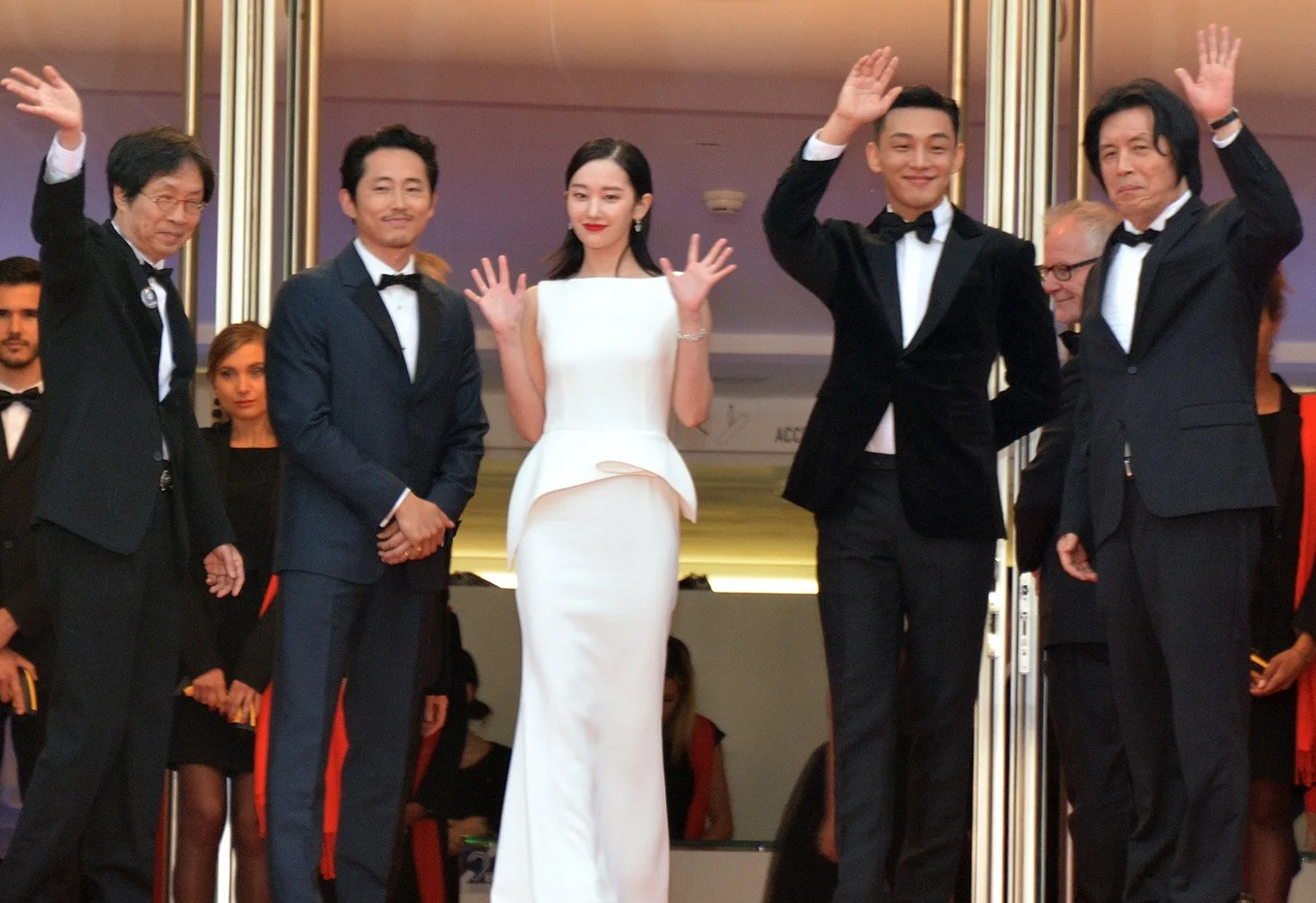
- Lee Chang-dong (Cannes 2018) — Photo by Georges Biard, Wikimedia Commons, CC BY-SA 4.0. This version has been resized and converted, and is provided under the same licence.
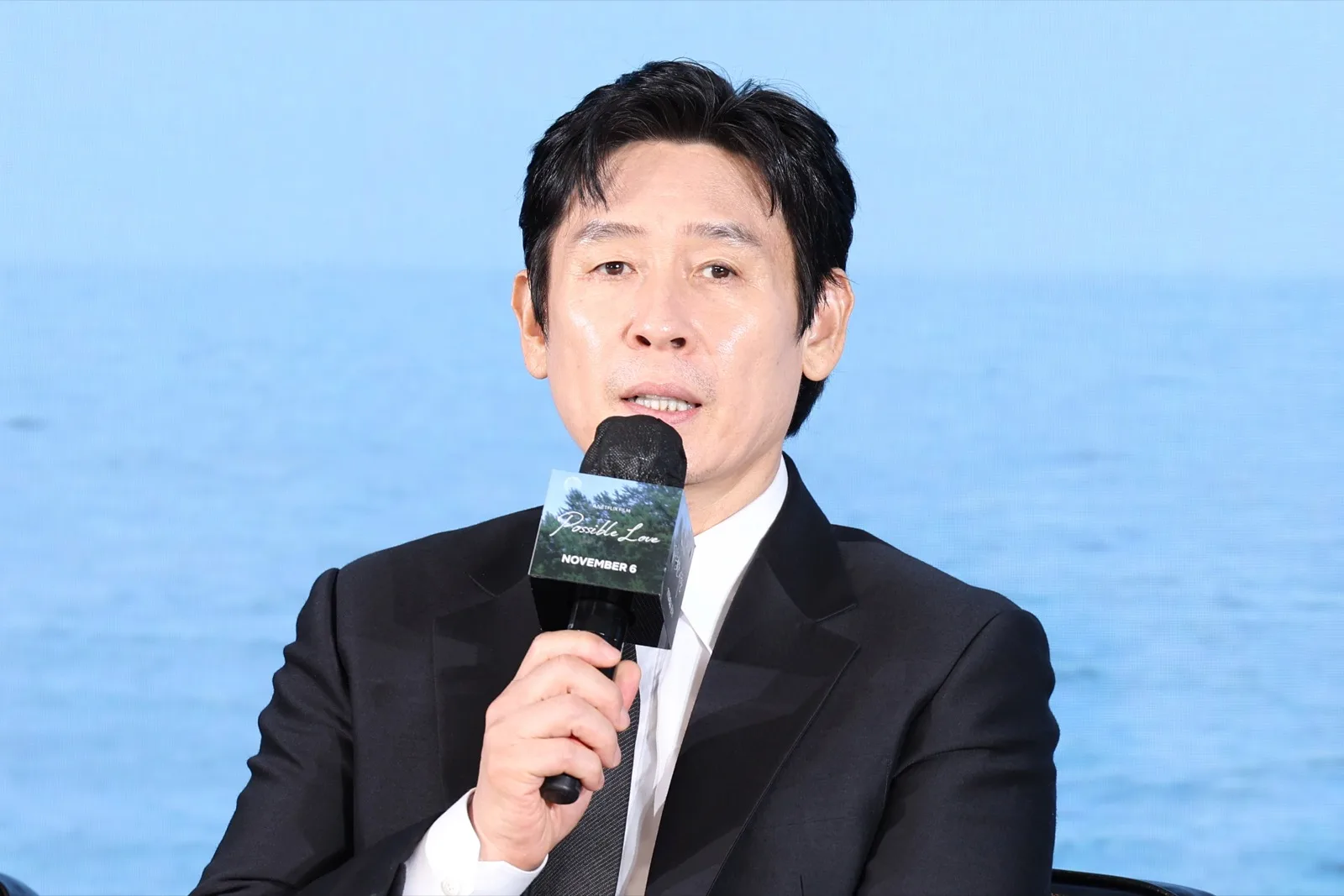
- Sol Kyung-gu (2026) — Photo by the Ministry of Culture, Sports and Tourism, Republic of Korea, Wikimedia Commons, CC BY-SA 4.0. Resized and converted, provided under the same licence.
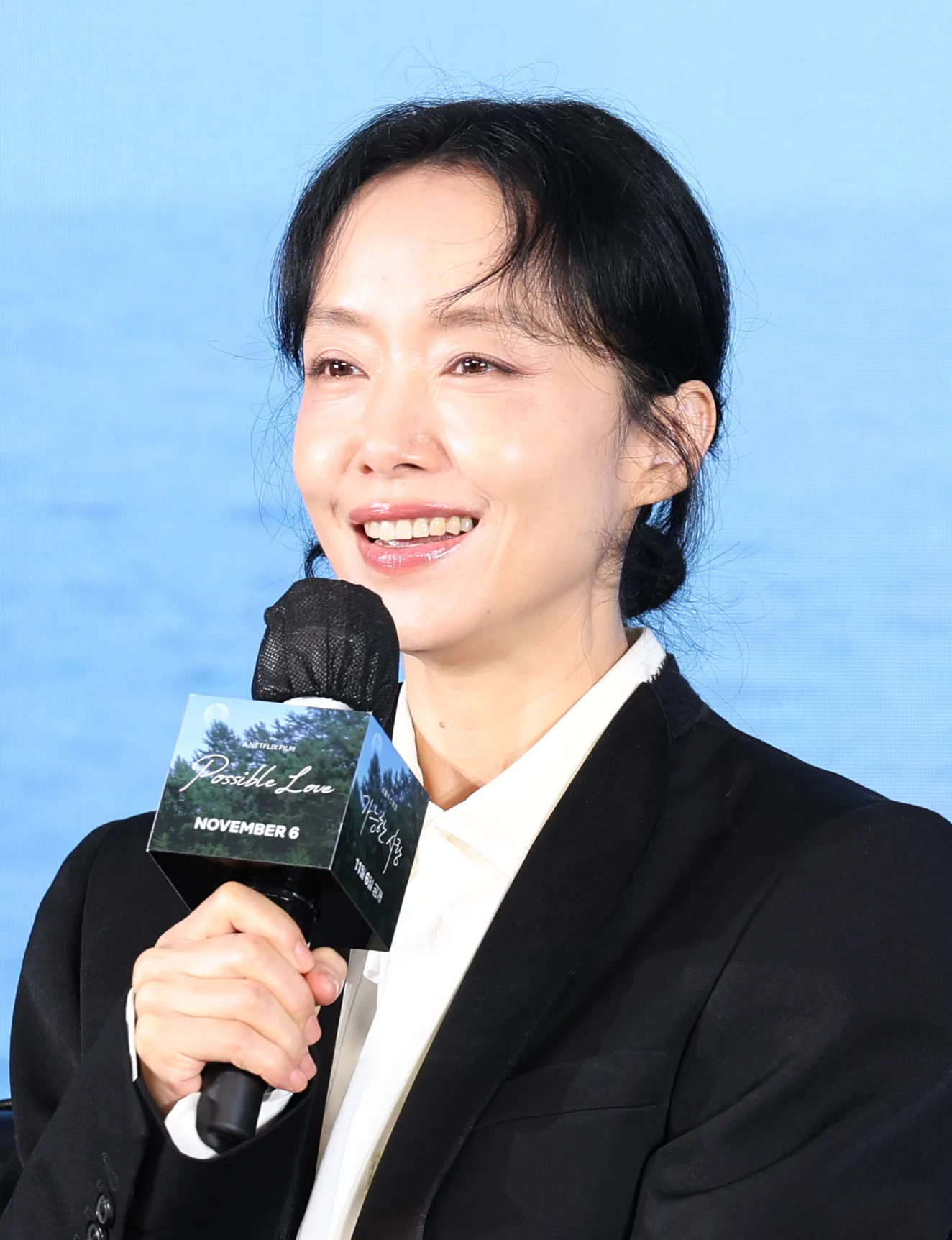
- Jeon Do-yeon (2026 press conference) — Photo by the Ministry of Culture, Sports and Tourism, Republic of Korea, Wikimedia Commons, CC BY-SA 4.0. Converted, provided under the same licence.