The short answer
Liaozhai zhiyi (聊齋志異, Strange Tales from a Chinese Studio) is a collection of strange stories compiled by Pu Songling (蒲松齡). In his preface, the 'Zuozhe zizhi' (作者自志), he explains how the book came about: he listened to ghost stories, wrote them down, and so produced a book. In the same piece he calls it a 'book of solitary indignation' (孤憤). Volume 1 contains commentaries that open with '異史氏曰' ('The Historian of the Strange says'). These turn uncanny events into judgments about the human mind and human conduct. The book can therefore be read both as a story collection and as a vehicle for its author's voice. This article is Part 1 of a three-part series.
This part covers the preface, the author's biographical sketch (作者小傳), the edition records and three tales from Volume 1: 'The City God Examination' (考城隍), 'The Painted Wall' (畫壁) and 'The Taoist of Mount Lao' (勞山道士). The biographical sketch notes that Pu left many writings but that this book in particular was widely popular: “家所藏著述頗富,而聊齋志異一書,尤膾炙人口云。” Parts 2 and 3 cover the other stories and later readings of the book.
Why he wrote: the preface
The 'Zuozhe zizhi' is Pu Songling's own preface to the book. It ends with the date “康熙己未春日”: the spring of the jiwei year of the Kangxi reign. Pu opens by comparing himself with an earlier writer: “才非干寶,雅愛搜神”. In other words, he lacks the talent of Gan Bao (干寶), compiler of the Soushen ji (搜神記, In Search of the Supernatural), yet he loves writings like it.
The same passage describes how the book was made. Pu says he enjoyed hearing people talk about ghosts. He writes, “聞則命筆,遂以成編。” Whenever he heard a story, he took up his brush, and that is how the book took shape. Over time, he adds, like-minded people from all quarters sent him stories by post (“四方同人,又以郵筒相寄”). His collection grew steadily.
In these two passages, Pu presents himself as a listener and recorder. By his own account, the book did not come solely out of one man's head. That complicates the view of Liaozhai zhiyi as the invention of a solitary author.
The preface also contains a heavier confession. Pu calls the book a successor to the Youming lu, then writes: “僅成孤憤之書:寄託如此,亦足悲矣!” All he has managed, he says, is a 'book of solitary indignation'. It is sad, he adds, to have to pour his feelings into it this way. The preface closes with “知我者,其在青林黑塞間乎!” In other words, those who understand me must be somewhere between the green forests and the dark frontier passes. The source material takes these to mean ghosts. Pu seems to be looking outside the human world for readers who would understand his book.

Pu Songling's life: the biographical sketch and Kotobank
The biographical sketch introduces Pu Songling as a native of Zichuan (淄川). He sat the entry-level examination (童子試) around the age of twenty, it says. He won the recognition of Shi Runzhang (施閏章), whom the original calls 'Mr. Shi Yushan' (施愚山先生), and became known for his writing. The sketch adds that Wang Yuyang (王漁洋) of Xincheng, that is, Wang Shizhen, thought his talent remarkable: “新城王漁洋先生素奇其才,謂非尋常流輩所及也。”
Kotobank's entry on Pu Songling gives more detail about his career. At 19 he came first in all three stages of the entry-level examination: county, prefecture and circuit. After that, however, he sat the provincial examination (鄕試) many times without passing. From age 33 to 70 he taught at the family school (家塾) of a powerful local family in his county. The entry adds that he spent 38 years as a family-school tutor before becoming a tribute student (貢生) at 71. Chinese Wikipedia likewise says that he failed repeatedly and made his living by teaching.
Pu describes his circumstances in the preface as well. He was often ill as a child and unlucky as an adult. He writes: “門庭之淒寂,則冷淡如僧;筆墨之耕耘,則蕭條似鉢。” His household was as desolate as a monk's, and his labors with the brush as meager as a begging bowl.
'Scholar Ye' (葉生), another tale in Volume 1, carries a '異史氏曰' commentary that voices the bitterness of failing the examinations. It includes the line “一落孫山之外,則文章之處處皆疵。” Once you fail, every part of your writing looks flawed. Kotobank's entry on Liaozhai zhiyi also notes the author's anger in the work. It was the anger of a man who never passed, aimed at the examiners, and it takes the form of satire and reproach. Set his first-place results as a young man beside the repeated failures that followed, and the commentary can be read alongside the author's own experience.
The editions: the manuscript, the Qingketing edition and other versions
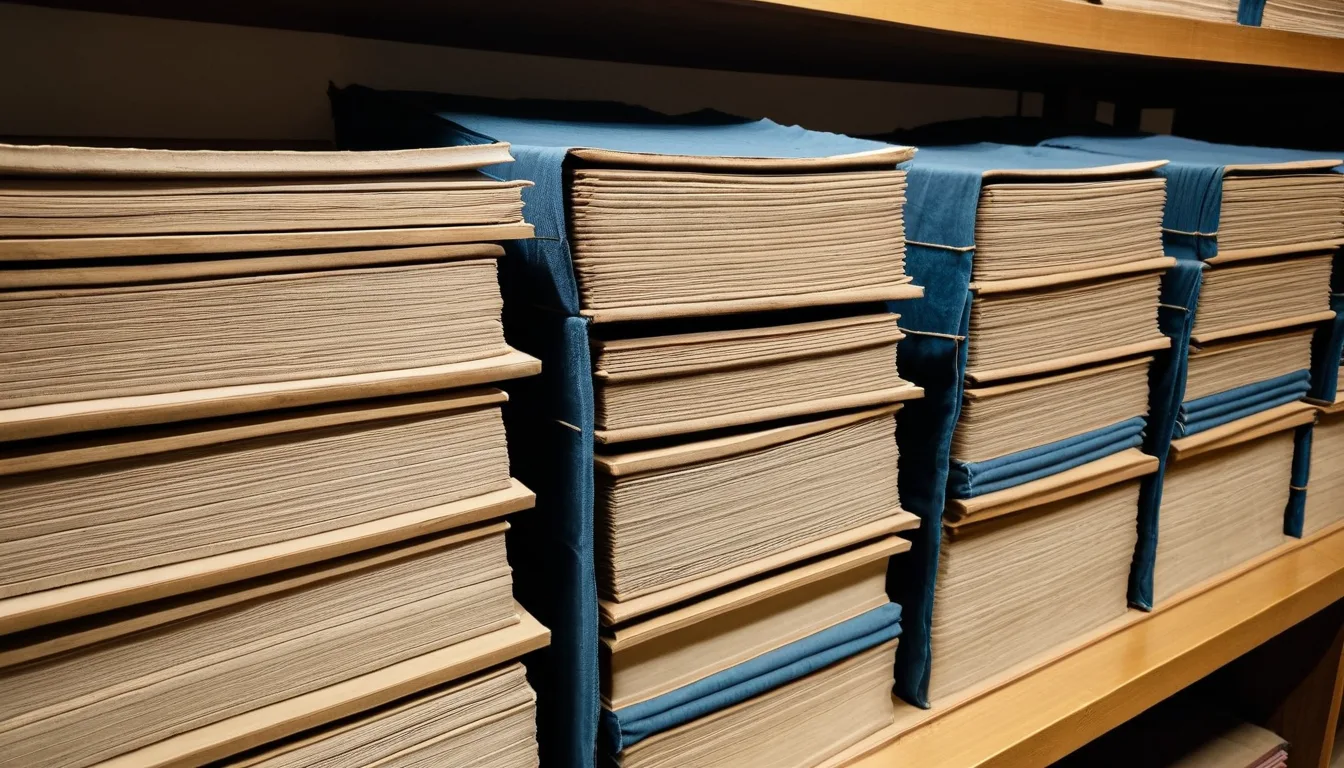
According to Kotobank, Liaozhai zhiyi circulated in hand-copied manuscripts (寫本) during the author's lifetime. The first printed edition (刊本) was the Qingketing edition (青柯亭本) of 1766, 51 years after his death. The 16-volume version in this line contains 445 stories and became the most widely circulated of all editions. There are also 12-, 18- and 24-volume versions. Finally, there is the author's own handwritten manuscript (手稿本), about half the length of the original draft.
Kotobank names the Collated, Annotated and Commented edition (会校会注会評本) as the best edition available today. It contains more than 500 stories. Chinese Wikipedia gives a separate account of the earliest surviving printed edition: the one Zhao Qigao (趙起杲) printed in Hangzhou (杭州) in 1766. According to the same source, Zhao cut stories on sensitive subjects. So the printed text may differ from the manuscript.
The handwritten manuscript has its own documented history. According to Chinese Wikipedia, the Pu family donated the surviving four volumes to the Liaoning Provincial Library (遼寧省圖書館) in 1950. They contain about 237 stories. Kotobank says the Pu family manuscript was published in facsimile (影印) in Beijing in 1955. In 2012 the Liaoning Provincial Library and Shanghai Classics Publishing House (上海古籍出版社) issued a high-quality facsimile of the half of the manuscript in the library's collection.
The Shandong Museum (山東省博物館) holds a hand copy (抄本) from the Kangxi period. Most scholars consider it the copy closest to the original manuscript. Readers who want the original text can find the preface, the biographical sketch and Volume 1 on Chinese Wikisource (維基文庫). Set the edition records side by side, and a gap appears between 445 stories and more than 500. In practice, the stories a reader meets may depend on the edition.
The examination answer in 'The City God Examination' (Volume 1)
'The City God Examination' appears in Volume 1. The passage of interest is an examination answer written by a character named Song Tao. It wins him the post of City God (城隍). The original presents the line as a quotation in an official document (公文).
The line reads: “有心為善,雖善不賞;無心為惡,雖惡不罰。” The first half means that good done deliberately, though good, goes unrewarded. The second half means that evil done without intent, though evil, goes unpunished.
The line can be seen as making the mind behind an act, rather than its outcome, the standard of judgment. It can be read as a refusal to measure people by visible good and evil alone. It is also striking that, in the story, an examination answer decides the post. Set beside Pu Songling's repeated failures, discussed above, this detail lets us see the examination system from a different angle. This is our own interpretation.
'The Painted Wall': the '異史氏曰' commentary and the question of the mind
'異史氏曰' commentaries appear not only in 'Scholar Ye' but also in 'The Painted Wall' and 'The Taoist of Mount Lao'. They speak not through a character but in the voice of a commentator, the 'Historian of the Strange'. The commentary to 'The Painted Wall' opens with a maxim: “幻由人生,此言類有道者。” The saying that illusions arise from people, it observes, sounds like the words of someone who knows the Way.
The commentary then develops the maxim into a principle: “人有淫心,是生褻境;人有褻心,是生怖境。” A lustful mind gives rise to lewd scenes; a lewd mind gives rise to frightening ones. It concludes: “菩薩點化愚蒙,千幻並作,皆人心所自動耳。” In other words, a bodhisattva may enlighten the foolish, and a thousand illusions may arise at once. Yet all of them are simply the mind moving of its own accord.
The commentary locates the cause of illusion in the beholder's mind, not in the outside world. Strange events thus become scenes that reveal the human mind. The answer in 'The City God Examination' also turned on '有心' and '無心': deliberate intent and its absence. Read together, both passages put the mind at the center of judgment.
'The Taoist of Mount Lao': the Taoist's warning and the satire of the '異史氏曰' commentary
'The Taoist of Mount Lao' features a spell for walking through walls. The student is overjoyed (“大喜,入謝。”), and the original then gives the Taoist's words: “歸宜潔持,否則不驗。” Once home, the student must keep himself pure, or the spell will not work. The Taoist thus makes clear that the spell comes with conditions.
The tale's '異史氏曰' commentary targets people who rely on tricks to throw their weight around: “遂謂天下之大,舉可以如是行矣,勢不至觸硬壁而顛蹶,不止也。” Such people believe they can go anywhere in the wide world this way. The satire is that they will not stop until they hit a hard wall and fall flat.
The wall-walking spell in the story seems to echo the '硬壁', or hard wall, in the commentary. The Taoist's warning states the spell's conditions, while the commentary mocks the habit of charging ahead on the strength of tricks. Character and commentator can be seen as each delivering a warning of their own.
Compared side by side, the three commentaries in Volume 1 work as follows. The commentary to 'Scholar Ye' voices the bitterness of a failed scholar. The commentary to 'The Painted Wall' states the principle that illusions come from the mind. The commentary to 'The Taoist of Mount Lao' satirizes those who trust in tricks. The same '異史氏曰' form does three different jobs: lament, principle and satire.
Wang Shizhen's dedicatory poem and the preface
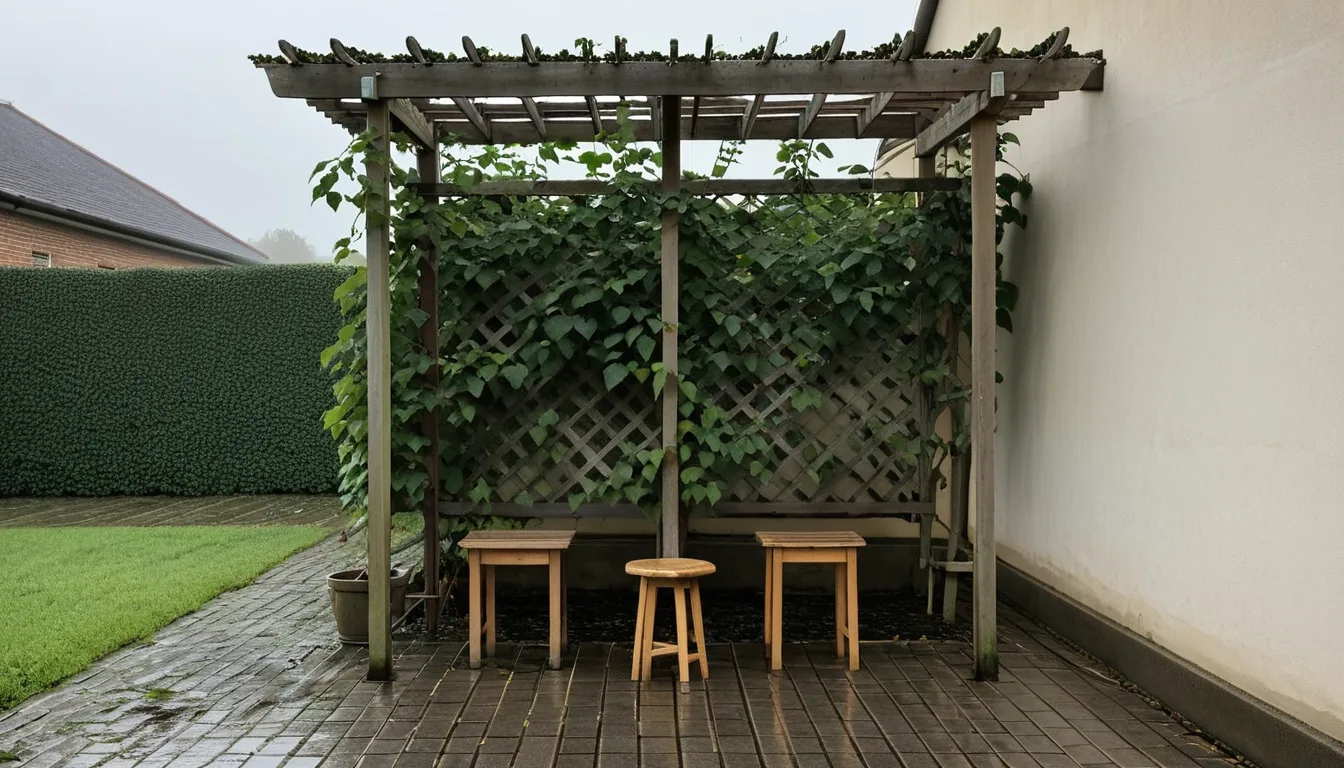
Wang Shizhen is the man who, according to the biographical sketch, thought Pu Songling's talent remarkable. Chinese Wikipedia says he wrote a dedicatory poem (題詩) for Liaozhai zhiyi. Its first two lines are “姑妄言之姑聽之,豆棚瓜架雨如絲。” and its last two are “料應厭作人間語,愛聽秋墳鬼唱詩。”
The first two lines say: take it as idle talk and simply listen, while rain falls like threads on the bean trellis and melon vines. The last two say he must have grown tired of composing the words of the human world. So he loves to hear ghosts chanting poems at autumn graves.
The poem pairs naturally with '喜人談鬼', the preface's statement that Pu enjoyed hearing people talk about ghosts. Pu wrote that he loved hearing ghost stories; Wang wrote of loving to hear ghosts sing. Pu also sought those who would understand him in '青林黑塞'. Together, the two texts suggest a shared sense that ghost stories stand apart from the speech of the human world.
| Edition | Date and holdings reported | Size and assessment | Source |
|---|---|---|---|
| Handwritten manuscript | Donated to the Liaoning Provincial Library in 1950; facsimile published in Beijing in 1955; high-quality facsimile in 2012 | About half of the original draft; about 237 stories in the four donated volumes | Kotobank, Chinese Wikipedia |
| Kangxi-period hand copy | Kangxi period; held by the Shandong Museum | Regarded as the copy closest to the original manuscript | Chinese Wikipedia |
| Qingketing edition | 1766, 51 years after the author's death | First printed edition; its 16-volume version, with 445 stories, became the most widely circulated | Kotobank |
| Collated, Annotated and Commented edition | Present day | More than 500 stories; rated the best edition | Kotobank |
Related reading: Do the Joseon Entries in the Shanhaijing (Classic of Mountains and Seas) Locate Gojoseon? (3/3) · How Did One or Two Sentences in the Shanhaijing Become Long Myths? (2/3)
Summing up
The preface combines two things: the pleasure of collecting stories by listening and writing them down, and the confession of 'solitary indignation'. In the three Volume 1 tales, both the characters' words and the '異史氏曰' commentaries pass judgment. 'The City God Examination' and 'The Painted Wall' focus on the mind. 'The Taoist of Mount Lao' targets reliance on tricks. Taken together, the strange tales seem to hold up a mirror to people.
Some questions remain. Which sensitive stories did Zhao Qigao cut? How does Volume 1 differ between the 445-story line and the editions with more than 500 stories? What might a comparison of the half-manuscript at the Liaoning Provincial Library and the hand copy at the Shandong Museum reveal? Direct comparison of the editions may gradually answer these questions.