The short answer: the seventh daughter is abandoned for being "another daughter"
The shaman song is clear about why Princess Bari is abandoned. She is born the seventh daughter to a royal family that wanted a son. A Kyongbuk Maeil article describes the East Coast Baridegi as "a child abandoned because she was born the seventh daughter." What happens after the abandonment, however, depends on the region. In the Seoul version, Princess Bari chooses to become a god of the underworld. In Kim Seok-chul's East Coast version, Baridegi becomes the star that stands apart in the Big Dipper.
The Princess Bari entry in the Encyclopedia of Korean Culture breaks the story shared by the many versions into numbered episodes. The third and fourth read: "3) The seventh child, too, is a princess. 4) Princess Bari is abandoned." The Korean particle for "too" tells us that the six earlier children were all daughters as well. A paper in the journal Korean Literature Studies says that Baridegi's parents abandoned her right after she was born.
A 2010 JoongAng Ilbo column sums up the song's main plot. Bari, once abandoned, travels to Seocheon Seoyeok-guk (西天西域國), the Western Paradise. There she obtains the water of life and brings it back to cure her father's illness. Taken together, these sources suggest she was abandoned less because of the number seven than because daughters kept being born. This distinction keeps us from reading Bari's story as merely the tale of one unlucky child.
The Seoul version: Bae Gyeongjae's 1930s performance and Akamatsu Chijō's 1937 record
The website of SeMA Mediacity Seoul, the Seoul Museum of Art's biennale, presents excerpts from the Seoul version of Princess Bari. e-flux Journal has published excerpts from the same version. The Seoul shaman Bae Gyeongjae performed it in the 1930s, and the Japanese scholar Akamatsu Chijō wrote it down in 1937. In this version the king is named King Eopbi. A fortune-teller warns him: if he waits a year to marry, he will have three sons; if he marries this year, he will have seven daughters. King Eopbi ignores the prophecy.
When the seventh daughter is born, the king names her Bari. The English excerpt explains that the name means "abandoned, thrown away." The king places her in a jade box and sends it far down the river. In a 2015 paper in Comparative Literature, Choi Seong-sil argues that "Bari" should be read as a common noun for someone who has been abandoned. Since the name itself describes her situation, the two sources can be seen as pointing in the same direction.
Later in the Seoul version, Mujangseung, the guardian of the healing water, realizes that Bari is a woman. He will give her the water of life only if she marries him and bears him seven sons. After she saves her parents, Princess Bari is offered half the kingdom. She turns it down and chooses to become a god of the underworld. Mujangseung follows her and comes to live in the world of the living. The "seven daughters" of the prophecy match the "seven sons" Mujangseung demands. The Seoul version seems to use the number seven to pair the cause of her abandonment with the price of setting things right.
More than 100 versions: two lines of tradition in the Encyclopedia of Korean Culture
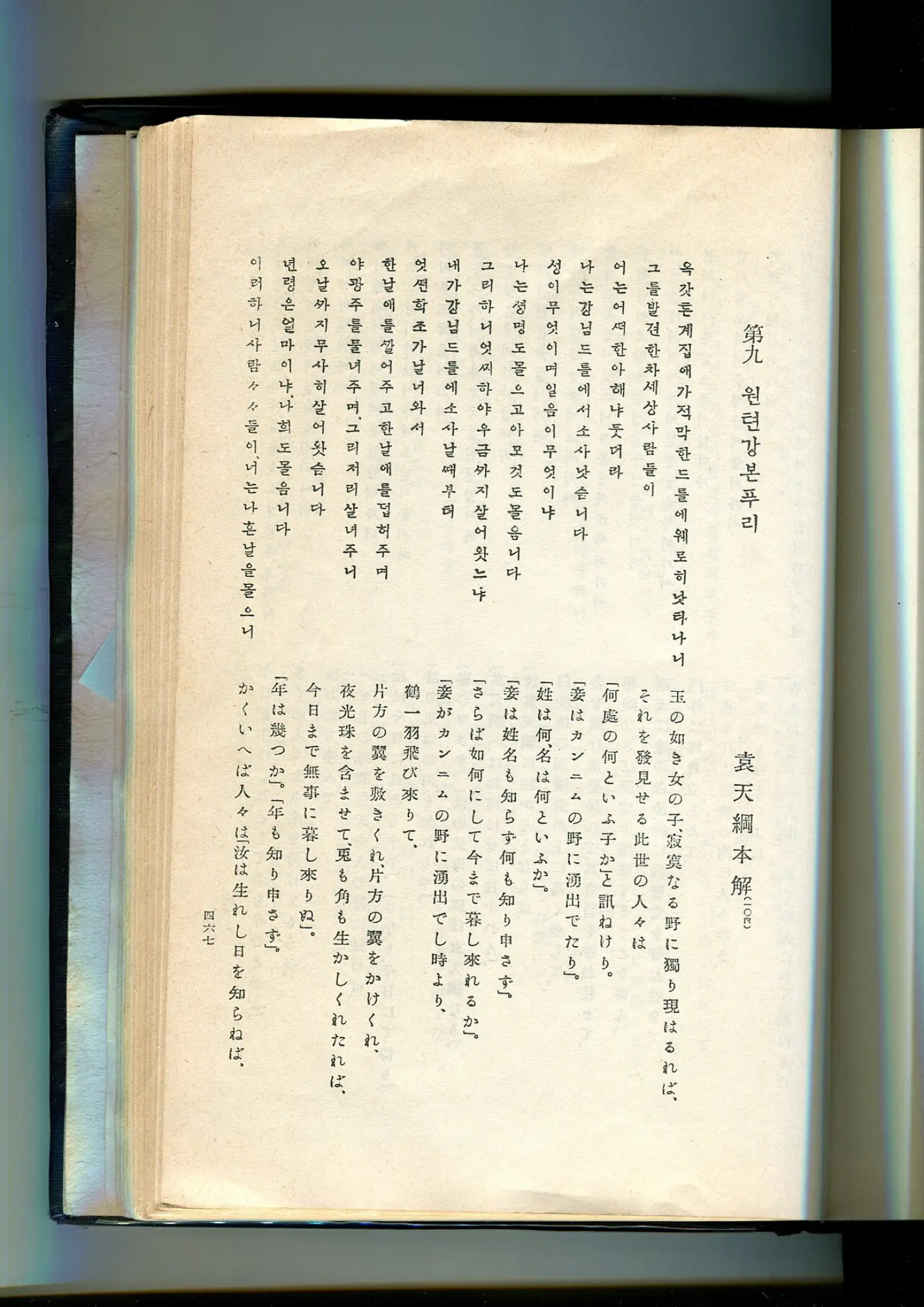
According to the Encyclopedia of Korean Culture, more than 100 versions of the Princess Bari shaman song have been recorded and reported across Korea. In Seoul's Jinogi-gut, a ritual for the dead, it is sung in the Malmi-geori segment. In the Honam region's ssitgim-gut it is sung in Ogu-puri, and in East Coast rituals in Barwon-gut. The song does not appear, however, in island regions or in Hwanghae Province rituals. This distribution shows that the Bari song has become a segment of different rituals in different regions.
The same entry explains the song as a series of problems and solutions. First, King Ogu wants children but has only daughters, one after another. That creates the first problem. Abandoning Princess Bari creates another. Only at the end, when someone brings back the healing water, is the problem fully solved. In this reading, the abandonment does not end the story; it opens the next problem. That the abandoned child is the one who fetches the healing water also fits this structure.
The encyclopedia also classifies the regional versions. In the Central-Western versions, which include Seoul, an old couple named Biri Gongdeok rescue Princess Bari, and she and Mujangseung are destined spouses. These versions are strongly ritual in character. They focus on Princess Bari as the guide who leads the dead to the underworld. The East Coast Gyeongsang region, by contrast, has well-developed ritual entertainment, and its songs tend to be longer. The East Coast versions include a scene in which Dongsuja, the guardian of the healing water, senses that the disguised Princess Bari is a woman and tries to expose her. The encyclopedia names four types. The Central-Western version is the basic type, the Honam version the reduced type, the East Coast version the expanded type and the North Korean version the variant type. This classification lets us compare differences in the endings with differences in the character of the rituals.
The East Coast Baridegi: marriage and a starry ending in Kim Seok-chul's 1976 version
A Kyongbuk Maeil article summarizes the East Coast Baridegi story. It uses the version performed by Kim Seok-chul, which Kim Tae-gon documented from February 23 to 26, 1976. In this version, Baridegi is the seventh daughter of King Ogu and Lady Gildae. The article adds that the myth survives everywhere in Korea except Jeju Island. In Seoul she is called Princess Bari; in Honam and on the East Coast, Baridegi.
In Kim Seok-chul's version, Baridegi must first marry Dongsuja, the guardian of the water, and bear him three sons. Only then does she receive the healing water and flowers. Dongsuja's sins, meanwhile, are forgiven, and he goes up to heaven. At the end, King Ogu and Lady Gildae become the Cowherd and Weaver Girl stars, and the seven sisters become the Big Dipper. The star standing apart from the others is Baridegi. A separate SeMA Mediacity Seoul text presents a Yeongdong regional version. There, her husband Dongsuja goes up to heaven alone, but Baridegi does not despair.
Set side by side, the Seoul and Kim Seok-chul versions differ point by point. The heroine is Princess Bari in Seoul and Baridegi in Kim's version. The king is King Eopbi in one and King Ogu in the other. Mujangseung demands seven sons in the Seoul version; Kim's version has three. In Seoul the husband follows Bari into the world of the living; in Kim's version he ascends to heaven. Bari ends as a god of the underworld in one and as the star standing apart in the Big Dipper in the other. This contrast can be read as a difference: the Seoul version makes Bari a deity, while Kim's version sets her in the sky as a constellation beside her family.
Bari in ritual: guiding the dead, the Mongnyeon story and Confucian ethics
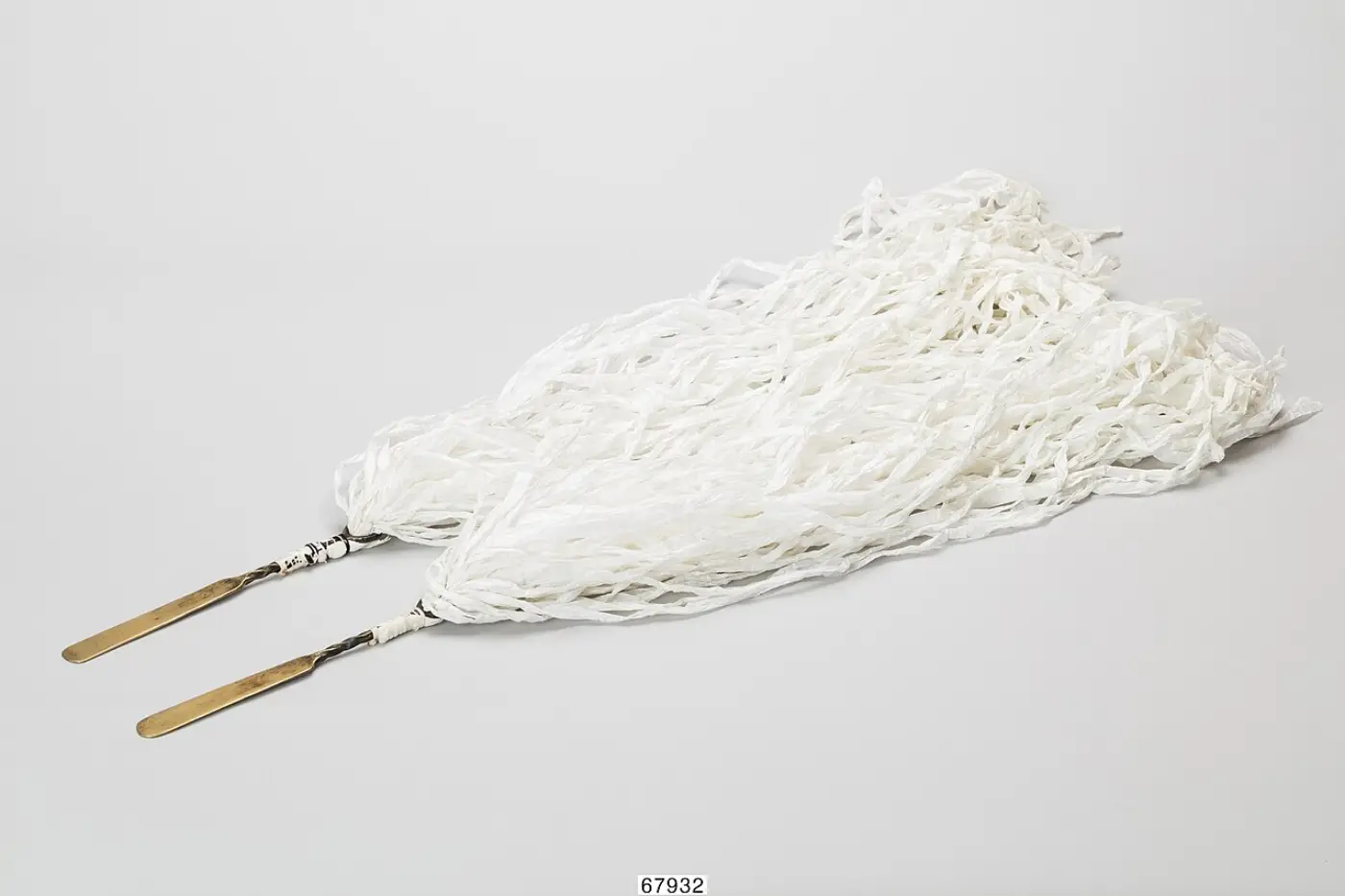
The Encyclopedia of Korean Culture's entry on shamanic myths says these myths are performed mainly in gut rituals. They are also called bonpuri, tales that explain the origins of the gods. Noh Jung-bang's 2015 paper in Language and Literature Studies (Eomun Yeongu) says the Princess Bari narrative song is performed in ssitgim-gut. According to the paper, once the recitation ended, the dead were considered to have been guided to the afterlife. In other words, a story that begins with abandonment is sung in real rituals to send off the dead.
How Bari is worshipped also varies by region. An e-flux Journal article says that shamans in the Seoul area serve Princess Bari as the founding deity of shamanism, their ancestral god. Elsewhere she is worshipped as a goddess of the underworld. The Kyongbuk Maeil describes the East Coast Baridegi as a deity ranked below Ksitigarbha Bodhisattva, Shakyamuni Buddha and the Ten Kings of the underworld. The same Bari, then, holds a different divine status depending on the region's rituals.
Noh Jung-bang (2015) argues that Korean shamanism lacked a concept of hell and borrowed one from Buddhism. Shamans, the paper suggests, imitated performances of the Mongnyeon story, which flourished at the Ullambana festival. In the paper's view, the structure and content of that story therefore entered the original Princess Bari tale. In Korea, the Mongnyeon story was passed down mainly through the Bulseol Daemongnyeon-gyeong sutra. A 2015 Ewha Womans University master's thesis finds Confucian influence prominent in the song's ethics, and Buddhist and folk-religion influence in its view of the afterlife. Confucian values such as patriarchy and filial piety stand out, the thesis concludes, but the narrative criticizes them at a deeper level. This reading warns against treating the opening abandonment scene as a simple reflection of Confucian values.
| Version | Heroine's name | Guardian of the water (husband) | Husband's final path |
|---|---|---|---|
| Seoul version (performed by Bae Gyeongjae, recorded 1937) | Princess Bari | Mujangseung | Follows Bari and comes to live in the world of the living |
| East Coast Kim Seok-chul version (documented 1976) | Baridegi | Dongsuja | Has his sins forgiven and ascends to heaven |
| Yeongdong regional version | Baridegi | Dongsuja | Ascends to heaven alone; Baridegi does not despair |

Summary
The two versions discussed above start from the same abandonment and end in different places. Because the reason for her abandonment is shared across regions, the song appears to rest on a solid common framework. Because the endings differ, each ritual appears to give Bari a different role. The encyclopedia also classifies the Honam version as the reduced type and the North Korean version as the variant type. Their endings are worth reading alongside these two. In the North Korean version, Princess Bari dies at the end.
The Ewha Womans University thesis notes that research on the Princess Bari song has so far focused mainly on its literary side, and adds that few studies have taken a religious-studies approach. Reading the song in the context of ritual can therefore be seen as an open question. Readers can start with the original explanations in the Princess Bari and shamanic myth entries on the Encyclopedia of Korean Culture website. Related papers are available through the Korea Citation Index (KCI) and the Ewha Womans University repository.