At a glance
• A capital is not necessarily the largest city. Ottawa, Canberra, Brasília, and Washington were created or chosen as capitals to avoid rivalry between big cities or to shift a country’s center of gravity, through a queen’s decision (1857), an international competition (1912), a national project (1957–60), and a congressional compromise (1790–91).
• Korea’s Sejong was launched on 1 July 2012 and the Government Complex Sejong opened that December, yet the legal capital remains Seoul; Indonesia’s Nusantara was designated by a 2022 law, yet in May 2026 the Constitutional Court confirmed that Jakarta remains the capital until a presidential decree is issued.
• Planned capitals pay a common price: decades between decision and relocation, periods when law and reality diverge, and cities that take far longer to fill with people than with buildings.
1. Why Capitals Are Placed Away From the Biggest City
The idea that a capital is a country’s largest city comes from cases like Paris, London, Tokyo, and Seoul. But Canada’s capital is Ottawa, not Toronto; Australia’s is Canberra, not Sydney; Brazil’s is Brasília, not São Paulo; and the capital of the United States is Washington, not New York. All of these were chosen or built to be capitals. The reasons were usually one of two: a neutral site was needed to end rivalry between big cities, or a country wanted to move its weight from the coast or the old center toward the interior or another region.
This article reads five planned capitals in chronological order: two nineteenth-century decisions in the British world (Ottawa, Canberra), one mid-twentieth-century national project (Brasília), and two cases still under way (Sejong, Nusantara). Together they show that making a capital is less a matter of urban design than of time and law.
2. Ottawa: The Capital a Queen Chose Because Parliament Could Not
The official procedural handbook of Canada’s House of Commons records the story plainly. Before Confederation, the Legislative Assembly of the Province of Canada could not settle on a permanent seat and wandered: it first met “in Kingston in 1841,” then moved to Montreal, Quebec City, and Toronto, and the rivalry between cities did not end. Finally, “In 1857, Queen Victoria chose Ottawa as the seat of government for the Province of Canada.” Ottawa was not a large city at the time, and that was precisely the solution: no big city would be the winner.
Choice was not relocation. The Assembly first convened in Ottawa in 1866, and after Confederation “the Parliament of Canada assembled in Ottawa on November 6, 1867 for the First Session of the First Parliament.” The Constitution Act, 1867 then wrote it into law: “the Seat of Government of Canada shall be Ottawa,” fixing in the constitution the city the Queen had chosen a decade earlier. Ottawa illustrates the first common feature of planned capitals: selecting a capital is a political decision to end rivalry between cities, and it takes more time before that decision settles into constitutional text.
3. Canberra: A City Drawn in a Competition
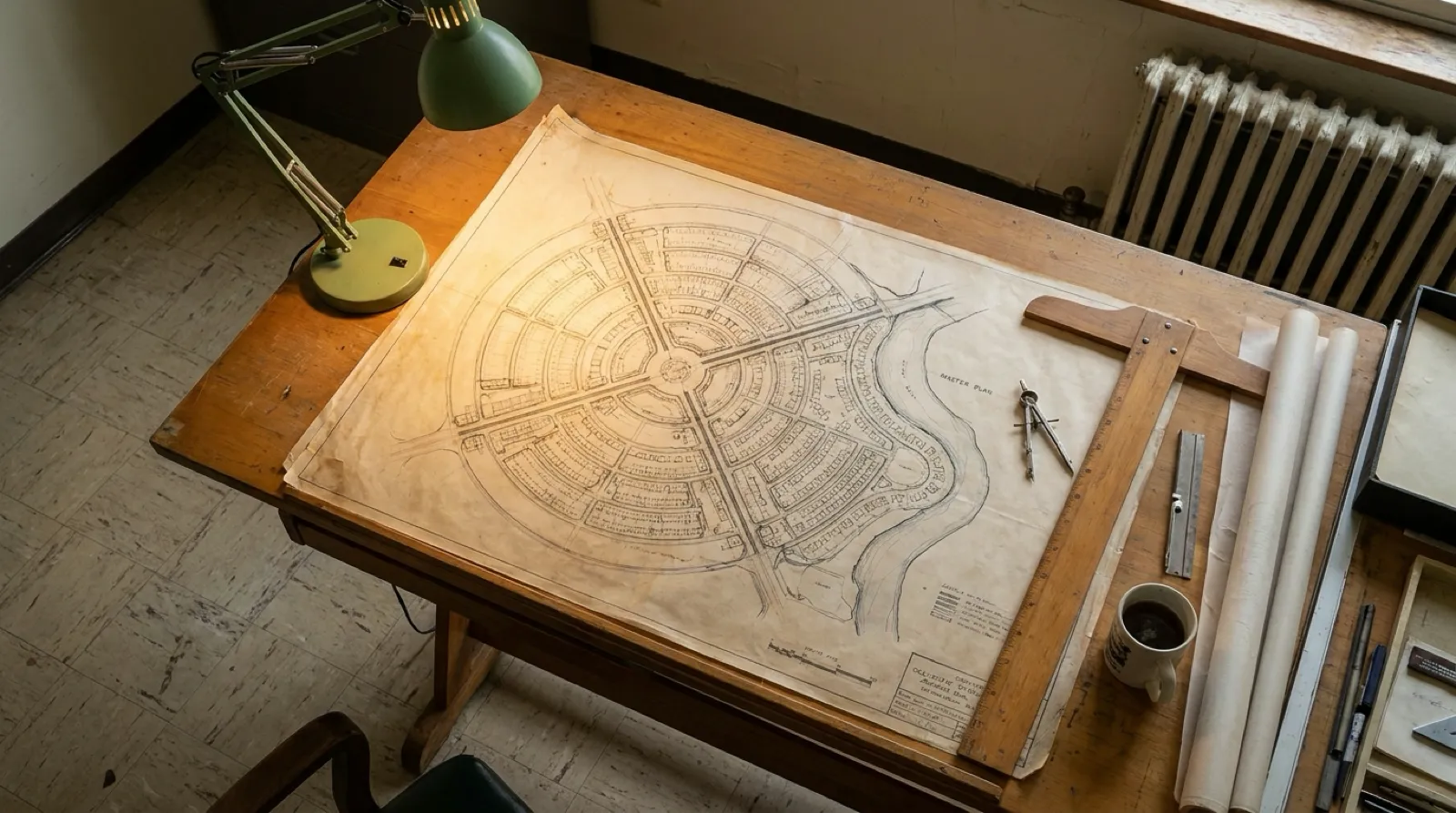
When Australia federated in 1901 it chose to give the capital to neither Sydney nor Melbourne. The National Library of Australia’s Federation research guide records that “In 1908, the Commonwealth Parliament passed the Seat of Government Act 1908, designating the Yass-Queanbeyan area for Australia’s Capital Territory,” and that “In 1911 the new Federal Capital Territory on the Limestone Plains came under Commonwealth control.” An international design competition was held in 1911, the Chicago landscape architect Walter Burley Griffin won it in 1912, and “In 1913 the name of the new capital was declared to be Canberra and the first sod was turned.”
Canberra is a different type from Ottawa. Rather than choosing an existing town, Australia designed a city on empty land. Griffin’s plan was an ideal city built around a lake and axes, with government functions arranged along them, and it took more than a decade before that city actually received Parliament. Five years passed between the 1908 Act and the 1913 name, and far longer before Parliament moved from Melbourne.
4. Brasília: A Capital Built to a Deadline, and the Only “Modern City” World Heritage Site
Brazil moved its capital from coastal Rio de Janeiro to the interior highlands. Brazil’s government news agency, Agência Gov, states that “Inaugurated on 21 April 1960, Brasília was built to house the new capital,” that it was “recognized as World Heritage by UNESCO in 1987,” and that it “was the first – and to this day the only – modern city to receive that title.” UNESCO itself said in a 2023 statement that “Brasília, the country’s capital, has been inscribed on UNESCO’s World Heritage list since 1987,” recognizing “Lucio Costa’s urban design (the ‘Plano Piloto’) and Oscar Niemeyer’s architectural creations.”
Brasília represents the third type of planned capital: a city built from scratch within a deadline set by the state. Where Ottawa was the product of political compromise and Canberra of a competition, Brasília was the product of a government’s will on a compressed schedule. The result was a whole city that documents one era of twentieth-century modernist planning, but also a city that soon faced the growth of satellite towns beyond its planned core. How a made capital becomes a city of real people was the part the plan did not contain.
5. Washington: The Prototype of the Planned Capital
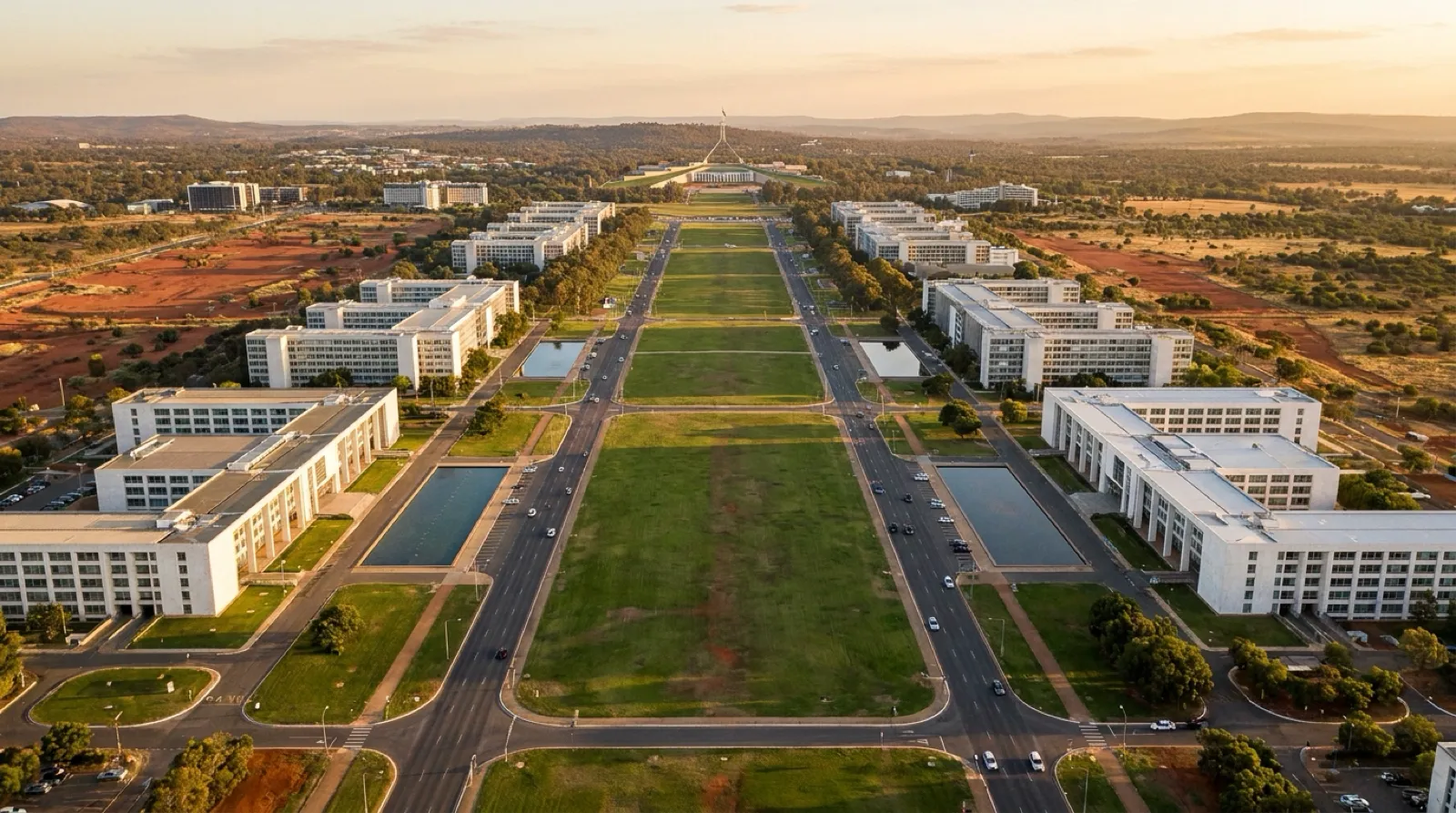
The prototype that inspired all three is Washington, D.C. The U.S. National Park Service’s history of the National Mall explains that the city’s open spaces and parklands were “envisioned by Pierre L’Enfant’s plan, which was commissioned by President George Washington,” a plan that laid out “the original 1791 Federal City.” That Congress decided in 1790 to place the permanent capital on the Potomac, made Philadelphia the temporary capital, and moved the government in 1800 is widely documented, but the official source checked for this article confirms the 1791 plan and its commissioner, so only that part is cited here.
Washington was built not in an existing metropolis like New York or Philadelphia but on empty land chosen through a compromise among the states, and its arrangement of government buildings along broad avenues and axes reappears in the designs of Canberra and Brasília. This lineage of more than two centuries shows that the idea of “making a capital” is not a twentieth-century invention but a choice present at the birth of modern states.
6. Sejong: A City Launched, but Not a Capital
Korea’s Sejong shows where a planned capital meets the law. The city’s official archive of its founding records that Sejong Special Self-Governing City came into being through the 2003 Special Act on the New Administrative Capital, the Constitutional Court’s 2004 ruling of unconstitutionality, and the 2005 Special Act on the Multifunctional Administrative City, overcoming “the Constitutional Court’s ruling, controversy over the revised plan, opposition from local residents and many other twists and turns,” and that “with one eup, nine myeon and one dong it made its historic launch on 1 July 2012.” The population at launch was 100,751.
Government functions moved on the schedule of the new complex. The Government Buildings Management Office of the Ministry of the Interior and Safety explains that the Government Complex Sejong was built “to relocate central administrative agencies to the Yeongi and Gongju area of Chungcheongnam-do and create a multifunctional administrative city, with the aims of decentralization, balanced development and relieving overcrowding in the capital region,” and that “after Phase 1 was completed in November 2012, Phase 2 was completed in November 2013 and Phase 3 (including Sejong Complex 2) in November 2014.” Yet since the Constitutional Court’s 2004 decision, Korea’s legal capital remains Seoul, and Sejong is the city where central agencies gather under the name “multifunctional administrative city.” Unlike Canberra and Brasília, which were built first and then took on the status of capital, Sejong is a case where the city was built but never received the name.
7. Nusantara: The Law Passed, but the Decree Has Not Come
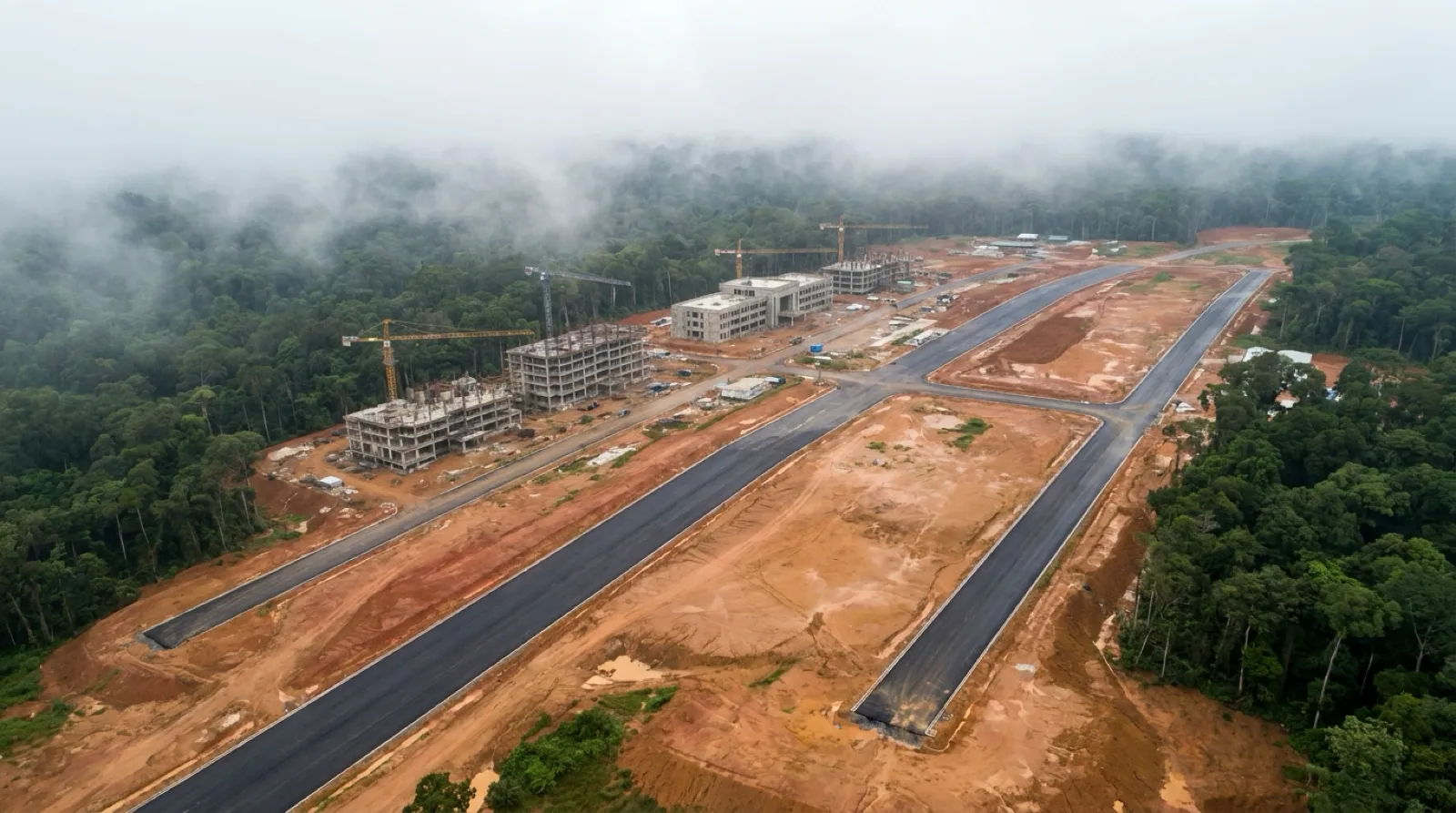
Indonesia is the most recent and largest case. The U.S. International Trade Administration’s 2024 market intelligence describes “the relocation of the seat of government from Jakarta to Nusantara, East Kalimantan” as a central component of Indonesia’s plans, notes that construction began in July 2022 with an estimated project value of $45 billion, and records that the Nusantara National Capital Authority (OIKN) manages development and that construction of government ministry offices is under way. The project, launched by former president Joko Widodo, aims to relieve Jakarta’s overcrowding, land subsidence, and traffic congestion.
But the legal capital has not moved. As the Malaysian daily The Star reported, on 12 May 2026 Indonesia’s Constitutional Court rejected a judicial-review petition against the capital-transfer laws, and Chief Justice Suhartoyo “reaffirmed Jakarta remains the country’s capital until a decree is issued to formally transfer its status to Nusantara.” Article 39 of the 2022 State Capital Law provides that “the position, function and role of the capital would remain in Jakarta until the issuance of a presidential decree to transfer the capital status to Nusantara.” Jakarta’s governor confirmed that the city still uses the designation “DKI Jakarta” because “the capital transfer has not legally taken place,” and President Prabowo Subianto has not issued the decree. The government targets making Nusantara the “political capital” by 2028, but the budget has been cut and redirected to other priorities. The buildings are rising; the capital is still on paper.
8. Three Prices Every Planned Capital Pays
First, time. Ottawa took ten years from selection (1857) to constitutional text (1867); Canberra five years from the Act (1908) to the name (1913) and longer still to the arrival of Parliament; Sejong nine years from the first law (2003) to launch (2012); Nusantara more than four years from the law (2022) to a decree that has yet to be issued. The decision to make a capital must outlast a single government’s term, and when governments change, so does the pace.
Second, the gap between law and reality. Sejong hosts the central agencies but is not the capital; Nusantara has a law naming it the capital but no decree, so it is not the capital either. A star on a map and a statute calling a city the capital are separate events.
Third, people. Just as Brasília, with a design complete enough to become World Heritage, still experienced growth beyond its plan, what fills a city is not government complexes but the people who decide to live there. A planned capital succeeds not at its inauguration but in the population statistics of the decades that follow. When the capital marker on a map is not on the biggest dot, it means that country once decided to pay these three prices.
Sources
- House of Commons of Canada — House of Commons Procedure and Practice, 3rd ed.: Ottawa as the Seat of Government (Accessed: 2026-09-07)
- National Library of Australia — Federation: Focus on Canberra (Accessed: 2026-09-07)
- Agência Gov (Brazilian government news agency) — Brasília: única cidade moderna reconhecida como Patrimônio Mundial da Unesco (Accessed: 2026-09-07)
- UNESCO — UNESCO joins the Ministry of Culture in recovering Brasilia’s cultural heritage (2023) (Accessed: 2026-09-07)
- U.S. National Park Service — National Mall and Memorial Parks: History & Culture (Accessed: 2026-09-07)
- Sejong Special Self-Governing City — 세종시 탄생과정 기록관 (Archive of Sejong’s founding) (Accessed: 2026-09-07)
- Government Buildings Management Office, Ministry of the Interior and Safety (Korea) — 정부세종청사 소개 (About Government Complex Sejong) (Accessed: 2026-09-07)
- U.S. International Trade Administration — Indonesia New Capital City Nusantara (Market Intelligence, 2024) (Accessed: 2026-09-07)
- The Star (Malaysia) — Court ruling raises further questions over future of Indonesia’s Nusantara (Accessed: 2026-09-07)