The Short Answer
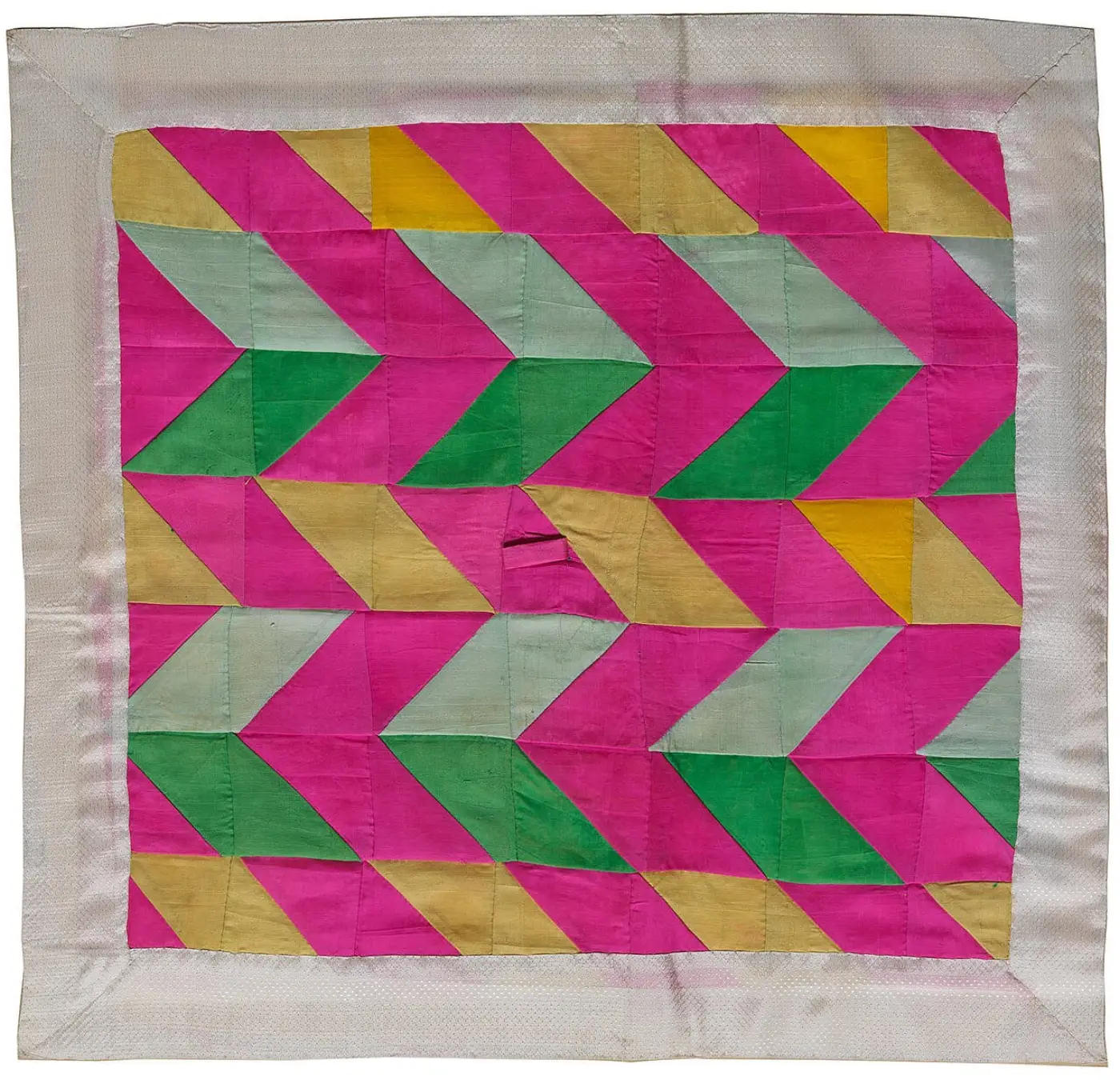
A bojagi is a square cloth used to wrap or cover things. A jogakbo is a bojagi pieced together from fabric scraps left over from making clothes. The Encyclopedia of Korean Folk Culture, published by the National Folk Museum of Korea, says ordinary people were the main makers and users of jogakbo. Korean sources link bojagi to the character 福 (bok, good fortune) and describe it as an auspicious object. The Joseon court brought in specialist artisans to make separate wrapping cloths for ceremonies.
Bojagi were used especially often at weddings. Japan has a similar cloth, the furoshiki (風呂敷). Jogakbo have recently drawn renewed attention in contemporary art and fashion. This article starts with the definition. It then covers ideas of good fortune, palace and folk bojagi, weddings, surviving jogakbo, a comparison with furoshiki and the modern revival.
How the Two Korean Encyclopedias Define Bojagi
The Encyclopedia of Korean Culture defines bojagi as “a square piece of fabric made from cloth for wrapping things or keeping them covered.” The definition contains two verbs: "wrap" and "keep covered." It sets only two conditions: the material is cloth, and the shape is square.
The same encyclopedia says a bojagi is used “with one to four long ties attached at the corners.” The body of the cloth wraps the object, and knotted ties hold it in place. A bojagi, in other words, is a tool made of cloth, ties and knots.
The two definitions show that bojagi were not only for carrying things. The word "covering" brings storage and concealment into the definition. The definition also says nothing about pattern, color or maker. That is why the single name "bojagi" can refer both to a silk cloth from the palace and to a commoner's patchwork. The distinction between gungbo and minbo, discussed below, marks two branches within this broad definition.
Both encyclopedias are available in full online. Look up the "bojagi" (보자기) entry in the Encyclopedia of Korean Culture and in the Encyclopedia of Korean Folk Culture. The latter also has a separate entry on jogakbo (조각보). All the Korean passages quoted in this article come from these three entries.
Bok (袱) and Bok (福): Good Fortune in Two Korean Encyclopedias and English Wikipedia
The Encyclopedia of Korean Culture links bojagi and good fortune this way: “The Sino-Korean word bok (袱), meaning wrapping cloth, was believed to share a meaning with bok (福, fortune). The folk belief likened the contents wrapped in a bojagi to good fortune, holding that wrapped-up fortune is kept safe, and this belief further spurred the development of bojagi.” In other words, the encyclopedia does not present this meaning as fact. Words such as "was believed" and "folk belief" mark it as something people believed. The encyclopedia then credits that belief with spurring the development of bojagi.
The Encyclopedia of Korean Folk Culture puts it slightly differently. It says that bojagi “means bok (福), its Sino-Korean homophone, and so carries the auspicious meaning of creating and accumulating good fortune.” The Encyclopedia of Korean Culture says people believed the two characters shared a meaning. The folk encyclopedia stresses that they sound the same. Either way, both draw the auspicious meaning from the characters.
The English Wikipedia entry 'Jogakbo' finds the meaning elsewhere. It says that joining pieces of fabric symbolized continuing good luck. It also notes that jogakbo most often used red and blue. Red was thought to drive away evil spirits, and blue is said to have symbolized life.
Read side by side, the three sources show that the idea of good fortune has more than one layer. The two Korean encyclopedias find it in the characters. English Wikipedia finds it in the act of joining fabric and in color. The meaning drawn from the characters applies to bojagi as a whole. The meaning drawn from joining applies to jogakbo. This distinction lets us read the common saying that "bojagi wrap up good fortune" more precisely.
King Yejong's Ban and the Sangbang jeongnye: Palace and Folk Bojagi
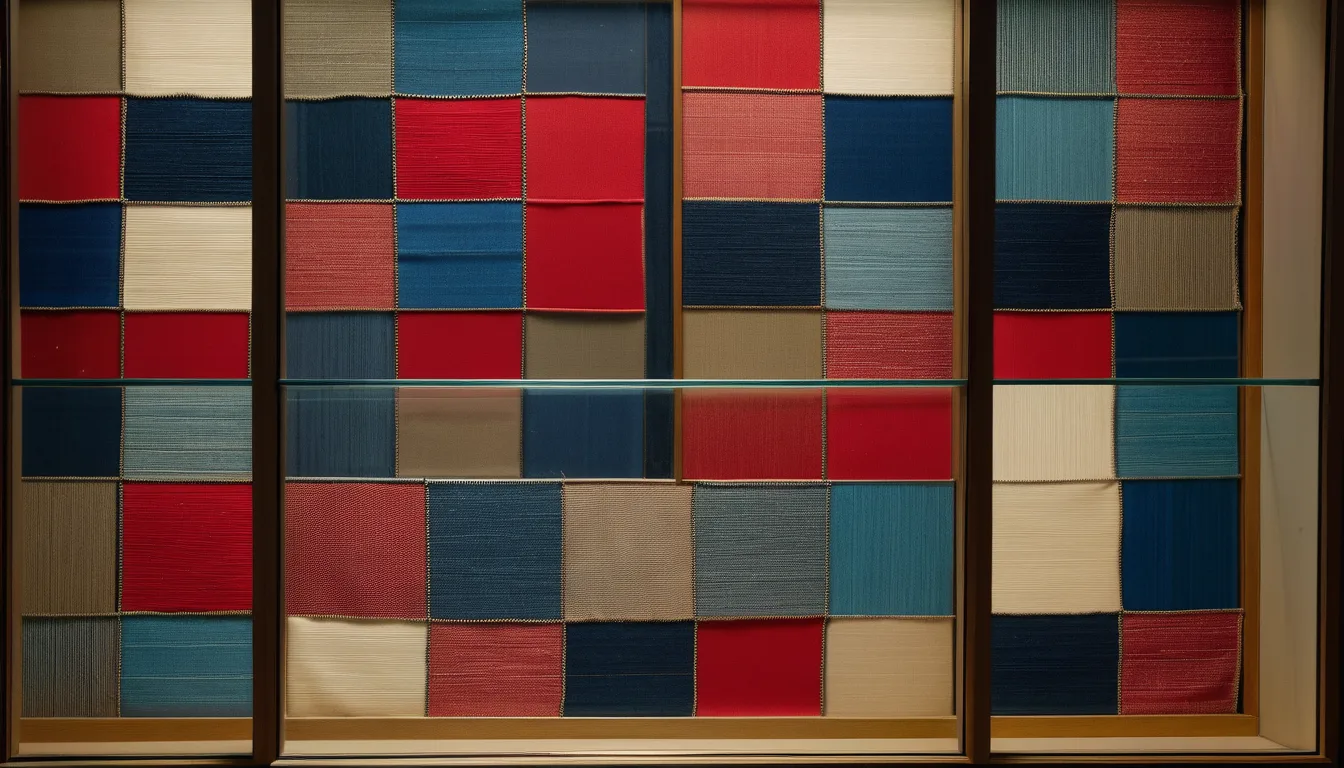
The Encyclopedia of Korean Culture cites a 15th-century prohibition. In 1469 (the first year of King Yejong's reign), “an order was issued forbidding commoners (庶人) from using red-dyed clothing and red-dyed wrapping cloths (紅染袱).” A hongyeombok was a wrapping cloth dyed red. The record can be read as showing that the color of a bojagi was subject to rules set by the state. In other words, color could mark whom a bojagi belonged to.
The same encyclopedia names the Sangbang jeongnye (尙方定例), a document published in 1752 (the 28th year of King Yeongjo's reign), as a valuable source on bojagi. The Encyclopedia of Korean Folk Culture describes how the court used bojagi. The Joseon court used them for “bonggwa (封裹), the formal wrapping of precious ceremonial objects (uimul, 儀物) such as royal seals (eobo, 御寶) and royal books (eochaek, 御冊).” They also wrapped gifts for royal weddings. These cloths were made of costly silk, either decorated with gold leaf and painting or woven with patterns.
No single person made such cloths. According to the Encyclopedia of Korean Folk Culture, the royal household “brought in specialist artisans such as needlework women, gold-leaf artisans and court painters to make them by the hundreds.” If you are curious about the silks used in palace bojagi, see the Korean silks whose names change with the weave.
The English Wikipedia entry 'Bojagi' distinguishes gung-bo (palace bojagi) from min-bo (folk bojagi). According to the entry, gung-bo were made from a single piece of cloth. They are unsigned, but known artisans and painters attached to court offices made them. Min-bo, by contrast, were made by people whose names are unknown. The Encyclopedia of Korean Folk Culture likewise says jogakbo were “made and used mainly by commoners.” The distinction, then, rests not only on splendor. It also rests on the number of cloth pieces and on who made them.
From Hambo to Pyebaekbo: Wedding Bojagi in the Encyclopedia of Korean Culture
The Encyclopedia of Korean Culture lists wedding bojagi as one category of bojagi. They include “hambo, gireogibo, sajudanjabo, yedanbo, yeongilbo (涓吉褓) and pyebaekbo.” The list suggests that each stage of a wedding had its own bojagi.
The same encyclopedia also describes how bojagi related to a bride's trousseau. The list of wedding goods “is said to have included dozens of bojagi carefully prepared for a daughter leaving home to marry.” Here, bojagi are items on the trousseau list. They were tools for wrapping other things, but they were also part of the trousseau in their own right. The phrase "carefully prepared" shows that they were made by hand.
Royal weddings were on a far larger scale. The English Wikipedia entry 'Bojagi' says that up to 1,650 bojagi may have been made for a single royal wedding. As noted earlier, the Encyclopedia of Korean Folk Culture also says ceremonial bojagi for the royal household were made by the hundreds. Dozens in an ordinary household and up to 1,650 at court are very different scales. Even so, both records treat bojagi as part of the wedding. At weddings, it seems, bojagi were treated as more than packaging: they were a way of observing proper form.
Jogakbo in the Relics of Naesosa in Buan and Haeinsa in Hapcheon
According to the Encyclopedia of Korean Folk Culture, jogakbo were also called jjokbo. They were made from fabric scraps left over from making clothes. The encyclopedia says that surviving examples “compose their surfaces freely, without a fixed pattern.” English Wikipedia says the pieces are joined with a triple-stitch technique called kkaekki. Notably, free composition and a set stitching technique coexist in a single object.
The Encyclopedia of Korean Culture briefly explains how jogakbo began: “Jogakbo have drawn attention in recent times for the refinement and modernity of their composition, but they originated in the reuse of waste materials.” The sentence covers both where jogakbo started and how people judge them today. An object meant to save leftover fabric is now admired for its refined composition. The Encyclopedia of Korean Folk Culture describes jogakbo and embroidered bojagi (subo) as “both daily necessities and the products of creative work in which women gave full rein to their sense of beauty.”
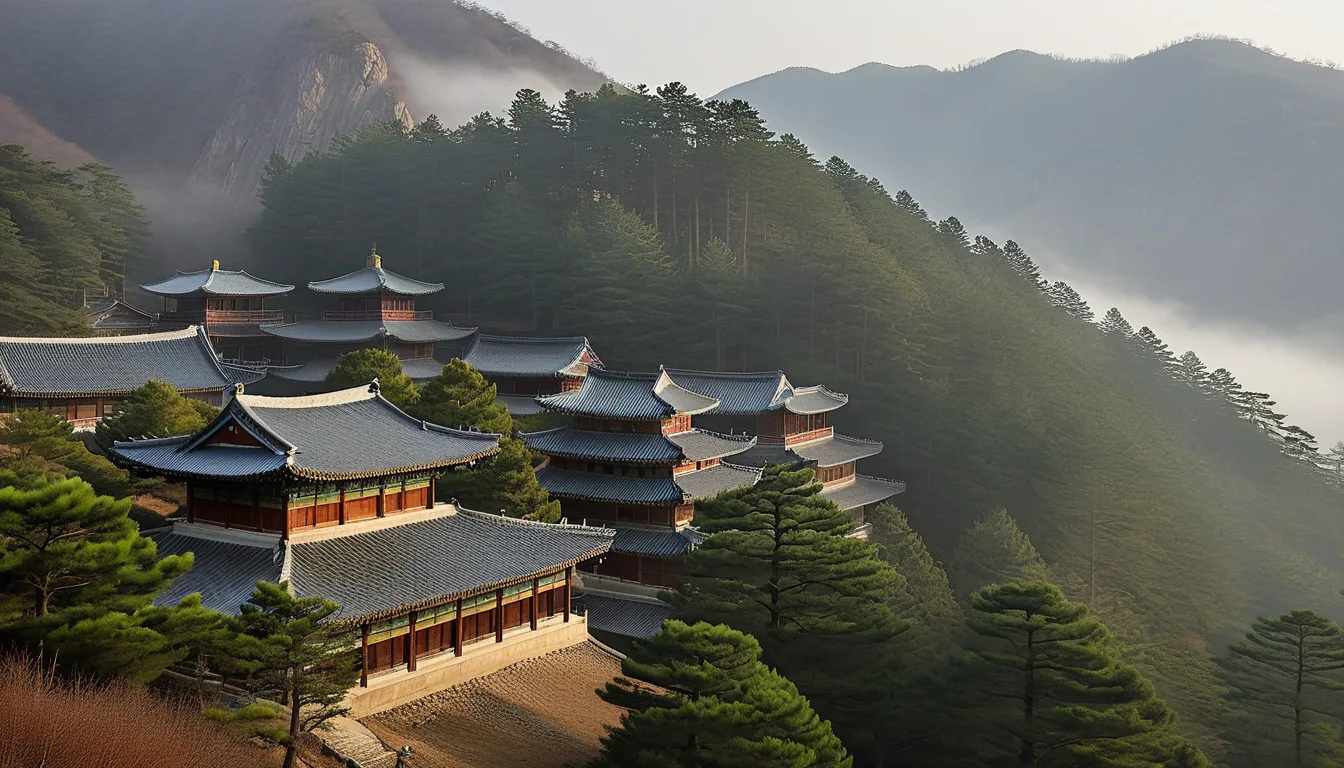
Some examples can be dated. According to the Encyclopedia of Korean Folk Culture, the oldest surviving jogakbo belongs to Naesosa temple in Buan. It was made in 1415 (the 15th year of King Taejong's reign) and probably served as a cover for a hand-copied sutra. It measures about 14×36 cm and is divided into 108 sections of small squares and triangles. Three jogakbo once placed inside the Vairocana Buddha statue at Haeinsa in Hapcheon were made in 1490 (the 21st year of King Seongjong's reign). The Encyclopedia of Korean Culture names a different object as the oldest surviving bojagi. It is an embroidered bojagi at the Jeonju City Museum, thought to date from the late Goryeo period.
The Encyclopedia of Korean Folk Culture says the discovered relics alone confirm that jogakbo have a history of more than 600 years. It adds a caveat: “It is possible that they were already in use before then.” Keep in mind that the oldest bojagi and the oldest jogakbo are different objects. And although jogakbo are described as mainly used by commoners, the earliest dated examples came from a temple and a Buddha statue. The contrast can be read as a reminder that surviving objects may not show the full range of how jogakbo were used.
Bojagi Alongside the Furoshiki (風呂敷) in Japanese Wikipedia
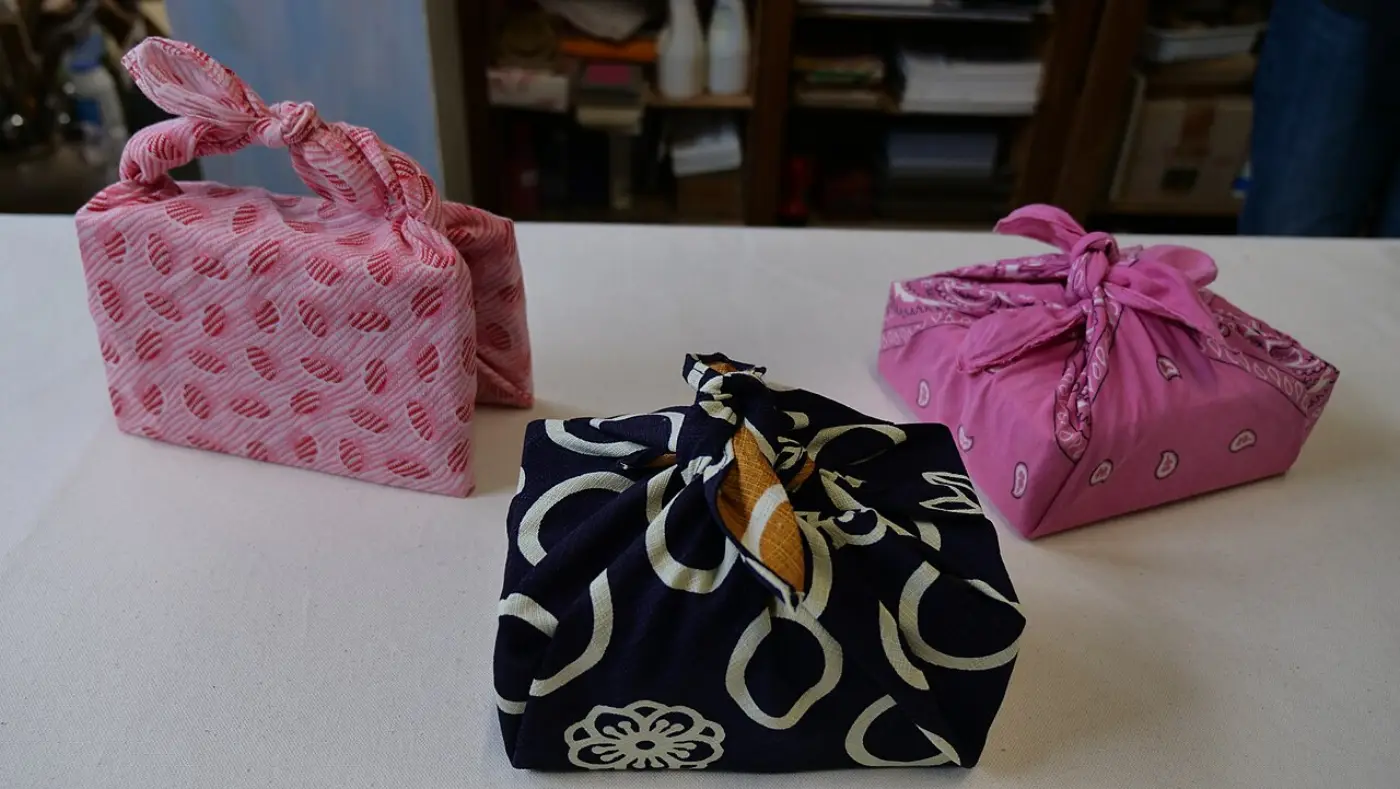
The Japanese Wikipedia entry '風呂敷' defines the furoshiki as a nearly square cloth. People use it to wrap things for carrying or storage. The entry says furoshiki reached ordinary people in the Edo period, as public bathhouses (sentō, 銭湯) spread. It also explains Japanese gift etiquette. It is considered polite to bring a gift wrapped in a furoshiki and to "untie the furoshiki and hand the gift over" on the spot.
Here is how the two cloths compare, point by point. First, shape: English Wikipedia describes the traditional bojagi as square, and Japanese Wikipedia describes the furoshiki as nearly square. Second, the unit of size. Bojagi ranged from one width, or pok (about 35 cm), for small objects to ten widths for large items such as bedding. The furoshiki's basic size is one width, about 34 cm on the short side and about 37 cm on the long side.
Third, where the auspicious meaning lies. The Korean encyclopedias discussed above find it in the characters 袱 and 福. Japanese Wikipedia finds it in the scrolling arabesque pattern. Its vines stretch endlessly in every direction, so it stood for long life and many descendants. Fourth, weddings. Korea had wedding bojagi such as the hambo and the pyebaekbo. In Japan, the entry says, people appear to have wrapped wedding goods and bedding fabric in arabesque-patterned furoshiki.
Fifth, when their use declined. Furoshiki fell out of use after Western bags arrived in the Meiji period and later, and today they are rarely seen on the street. English Wikipedia says everyday use of bojagi declined in the 1950s. Seen this way, the two cloths share a similar shape and the "width" as a unit of size. The difference lies in where the meaning sits. The Korean sources place it in the characters, while the Japanese source places it in the pattern. The custom of unwrapping a gift on the spot also shows that untying the cloth was itself part of the etiquette.
From Huh Dong-hwa's 1983 Exhibition to Kim Whanki and Shin Sang-ho: The Modern Revival
According to the English Wikipedia entry 'Bojagi', Koreans began treating bojagi as art only in the late 1960s. The 'Jogakbo' entry says interest in bojagi grew after an exhibition that Huh Dong-hwa held at the National Folk Museum of Korea in 1983. The entry adds that the exhibition inspired contemporary textile artists, who are said to have created work based on bojagi.
According to the 'Bojagi' entry, the Museum of Korean Embroidery in Seoul holds 1,500 bojagi and focuses particularly on jogakbo. In April 2018, Huh Dong-hwa and his wife, Park Young-sook, donated most of their collection to the Seoul Museum of Craft Art. These two museums are good places to start if you want to see jogakbo in person.
Jogakbo also influenced artists in other fields. The painter Kim Whanki's 1938 work Rondo is said to resemble jogakbo in its arrangement of color. The ceramist Shin Sang-ho reworked the composition of jogakbo in ceramic in his 2008 work Fired Painting – Jogakbo. English Wikipedia says the patchwork style of jogakbo inspired the fashion designers Lee Jung-hee and Karl Lagerfeld. Painting, ceramics and clothing all focus on how jogakbo are composed. That focus points to the quality noted earlier: the "refinement of their composition."
The Encyclopedia of Korean Folk Culture views today's bojagi culture from a different angle. It says bojagi culture “lives on in the environmentally minded spirit of zero waste and in a gift culture of beautifully wrapping and presenting precious gifts.” Jogakbo began as a way to reuse scraps, and they can be read as sharing the zero-waste spirit of not throwing things away. The phrase "gift culture" invites a comparison between the wedding wrappings described earlier and gift wrapping today.
| Source | What it is | Passages used here | How it differs from the others |
|---|---|---|---|
| Encyclopedia of Korean Culture, 'bojagi' | Korean-language encyclopedia entry | Definition, the 袱/福 folk belief, the 1469 ban, wedding bojagi, jogakbo as reuse of waste materials | Presents the link to good fortune as a folk belief that "was believed" |
| English Wikipedia, 'Bojagi' and 'Jogakbo' | English-language encyclopedia entries | Gung-bo and min-bo, 1,650 bojagi for a royal wedding, modern art and fashion | Finds the auspicious meaning in the joining of fabric and in color |
| Japanese Wikipedia, '風呂敷' | Japanese-language encyclopedia entry | Definition of furoshiki, size of one width, gift etiquette, arabesque pattern | Finds the auspicious meaning in the arabesque pattern |
Related reading: Korean silk names: why gapsa, hangna, sukgosa and gongdan differ by weave (5/7) · Myeongju: How Korean Silk Is Reeled from Cocoons and Woven on a Loom (4/7)
Conclusion
Several layers overlap under the single name bojagi. In meaning, good fortune drawn from the characters differs from good fortune drawn from the act of joining. In makers, known court artisans differ from people whose names are unknown. In use, covering, weddings, sutra covers and gift wrapping all appear together. The comparison with furoshiki shows that even similar cloths can place their meaning in different places.
Some questions remain. Only a direct reading of the Sangbang jeongnye can show what it says about bojagi. Whether jogakbo existed before 1415 is also an open question. How Rondo of 1938 connects to the shift in the late 1960s needs further study as well.