The short answer: silk names depend on weave, thread and origin
Gapsa, hangna, sukgosa and gongdan are silks with different weave structures. Gapsa can also be named for whether its thread was boiled, and hangna for where it was made. This article is Part 5 of a seven-part series.
The Encyclopedia of Korean Culture, published by the Academy of Korean Studies, defines the scope of the word in its entry on "bidan" (silk): "In the Joseon period, bidan was a collective term for dan (緞) fabrics woven in satin weave, but today it is a term for silk fabrics in general."
The definition shows that the meaning of "bidan" shifted over time. In Joseon records, it meant satin-woven dan fabrics. So when the word appears in old texts, it is arguably safer not to read today's broader meaning into it.
From mulberry trees to raw and boiled gapsa: what UNESCO and the encyclopedia say
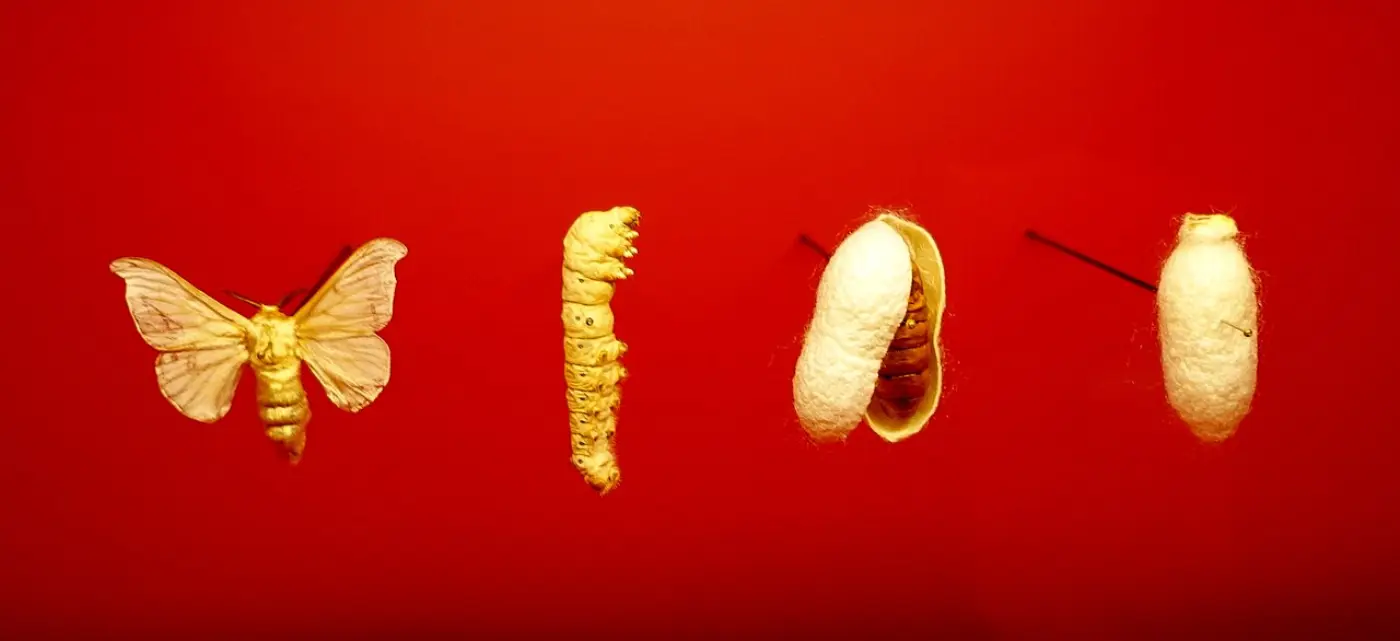
In describing "Sericulture and silk craftsmanship of China," UNESCO outlines the whole process of silk making. First, mulberry trees are grown and silkworms raised. Next, the silk is unreeled and spun into thread. Finally, the fabric is designed and woven. This description concerns the Chinese tradition.
The Encyclopedia of Korean Culture's entry on gapsa explains that the fabric is also named for the state of its thread. Gapsa woven from raw silk is called saeng-gapsa or saengsu-gapsa. Gapsa woven from boiled, degummed silk is called suk-gapsa or suksu-gapsa. The same encyclopedia's hangna entry says hangna is made from silk thread, hemp yarn, rayon and other fibers.
Read side by side, the two entries show that a fabric's name can carry information about its thread. They also show that the name hangna alone does not tell you which thread was used. This arguably gives a reason to check the fiber separately when reading a museum label.
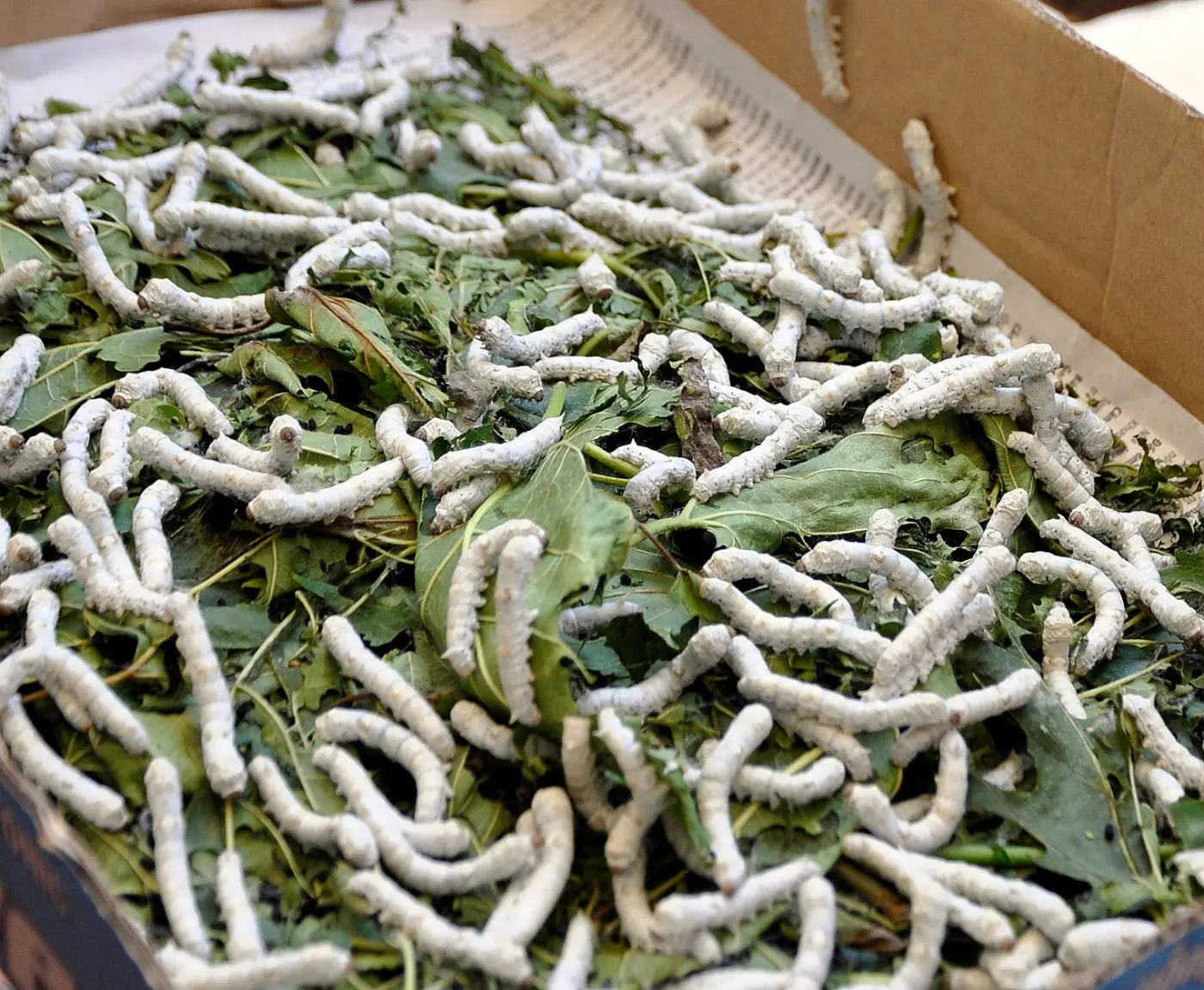
Plain, gauze, leno and satin: the weaves behind gapsa, hangna, sukgosa and gongdan
Gapsa is a semi-transparent silk woven with plain and gauze weaves alternating up, down and side to side. Unpatterned gapsa, woven only in the ground weave, is also called "sunin" because its surface looks like fish scales. Hangna is woven in yeojik, a mix of plain and leno weave. Its plain-woven weft threads come in odd numbers, such as 3, 5 or 7. Depending on that count, the fabric is called 3-jok, 5-jok or 7-jok hangna.
The Academy of Korean Studies' Digital Humanities Dictionary of Korean Costume divides gosa into two kinds in its sukgosa entry: "Gosa is a fabric woven by combining plain weave (平織) and gauze weave (紗織); the kind with a plain-weave ground and gauze-weave pattern is called sukgosa (熟庫紗), and, conversely, the kind with a gauze-weave ground and plain-weave pattern is called saenggosa (生庫紗)." The same entry names the round character su (壽, longevity) and gourds hanging from vines as typical sukgosa patterns.
Gongdan is an unpatterned silk woven in warp-faced satin. The encyclopedia's gongdan entry says it has been used since the late Goryeo period. Gongdan is highly lustrous, smooth on the surface and crisp to the touch. A 1783 entry (the 7th year of King Jeongjo) in the Annals of King Jeongjo (正祖實錄) mentions osadan (五絲緞) and palsadan (八絲緞), gongdan woven in 5-end and 8-end satin. Gapsa and sukgosa use the same two weaves but arrange them differently, so their names differ. The terms "saeng" (raw) and "suk" (cooked) can also be read as marking different things: the state of the thread in gapsa, and the arrangement of the weaves in gosa.
Who wore what: from the 1623 Seungjeongwon Ilgi to the 1796 Annals of King Jeongjo
A paper in Boksik, the Journal of the Korean Society of Costume, compares sa (紗) and ra (羅) in late Joseon records. It counts about 80 kinds of sa and about 12 kinds of ra. Sa served many purposes depending on its type and pattern, while ra was used mainly for undergarments. The most widely used sa was the gapsa group (甲紗類). The gungsa group (宮紗類) was the finest sa, used for court ceremonial dress and official robes. The Encyclopedia of Korean Culture likewise notes that gapsa was widely used for jeonbok vests, gugunbok military uniforms, skirts, jeogori jackets, dangui and wonsam.
Hangna appears in the Seungjeongwon Ilgi (Diaries of the Royal Secretariat) on April 3, 1623, in a record of hangna-hye (亢羅鞋) being issued. The Garye Dogam Uigwe for the 1759 wedding of King Yeongjo and Queen Jeongsun states that hangna was used for the nakyeong (絡纓). For gapsa, there is a 1796 entry (the 20th year of King Jeongjo) in the Annals of King Jeongjo. It says that gapsa had been required for officials' jangbok (章服) for no more than 30 years. In earlier times, the entry adds, gapsa was hard to obtain even from the Sangbang.
One surviving piece of gongdan comes from the objects enshrined inside the iron Medicine Buddha of Janggoksa Temple, made in 1346. The Encyclopedia of Korean Culture describes it as the earliest gongdan found in Korea. In 1361, King Gongmin fled to Andong to escape the Red Turban invasion. Among the items he gave to Taesamyo Shrine was a piece of yellowish-brown gongdan, 64.6 cm wide and 58.2 cm long. These records show that even within silk, fabrics differed in use and status. There is also a contrast: the gapsa group, the most widely used sa in late Joseon, is described in the 1796 record as a precious fabric.
Korean and Chinese silk: dang-hangna, the origin of the word gosa, and myeongju weaving
The encyclopedia's hangna entry says the fabric was named for where it was made. Chinese hangna was dang-hangna (唐亢羅), and Japanese hangna was wae-hangna (倭亢羅). Imports from the West were called seoyang hangna (西洋亢羅) or yang-hangna (洋亢羅). According to the Dictionary of Korean Costume, the name gosa (庫紗) refers to fabric collected into the imperial storehouses to meet the needs of the Qing (淸代) court. The Hangul word "bidan" first appeared in Beonyeok Nogeoltae (飜譯老乞大), which Choe Se-jin translated between 1509 and 1517. The 19th-century Bidan Naeha Balgi is a Hangul list of fabrics sent from China.
A point-by-point comparison of the living traditions in Korea and China makes the differences clear. On designation, the Korea Heritage Service portal lists Korea's myeongju-jjagi (silk weaving) as a National Intangible Cultural Heritage. China's sericulture and silk craftsmanship was inscribed on UNESCO's Representative List of the Intangible Cultural Heritage of Humanity in 2009. By region, myeongju-jjagi is centered in Gyeongsangbuk-do, while the Chinese tradition is centered in Zhejiang and Jiangsu provinces and in Chengdu, Sichuan. As for who carries the tradition on, myeongju-jjagi is managed by the National Intangible Cultural Heritage Dusan Son Myeongju Research Society, an incorporated association. In China, the skills have been passed down within families and through apprenticeships.
Seongbuk-dong in Seoul was once home to Seonjamdan (先蠶壇), the altar where Joseon queens performed rites. Seonjamje was a rite to pray for a good harvest in silkworm farming, the source of cloth. The Seongbuk Seonjam Museum, which restores and displays materials on the rite, opened on the site. Its opening special exhibition, "The Art of Silk Thread: Knot Artisan Kim Eun-young," showed norigae pendants, silk pouches and knotwork. The records of dang-hangna, gosa and the Bidan Naeha Balgi show that Korean silk was tied to Chinese silk in both its names and its inventories. Today's ways of passing on the craft, by contrast, can be read as being documented differently in the two countries.
| Fabric | Weave (structure) | Distinctive features | Further naming criteria |
|---|---|---|---|
| Gapsa | Plain and gauze weaves alternating up, down and side to side | Semi-transparent; unpatterned gapsa has a scale-like surface ("sunin") | State of the thread (saeng-gapsa and saengsu-gapsa; suk-gapsa and suksu-gapsa) |
| Hangna | Yeojik, a mix of plain and leno weave | Plain-weave weft threads in odd numbers, such as 3, 5 or 7 | Number of weft threads (3-jok, 5-jok, 7-jok); place of origin (dang-hangna, wae-hangna, yang-hangna) |
| Sukgosa | Plain-weave ground with a gauze-weave pattern | Round su (壽) character and gourds on vines | Called saenggosa when the ground and pattern weaves are reversed |
| Gongdan | Warp-faced satin, unpatterned | Highly lustrous, smooth and crisp to the touch | Number of satin ends (5-end osadan, 8-end palsadan) |
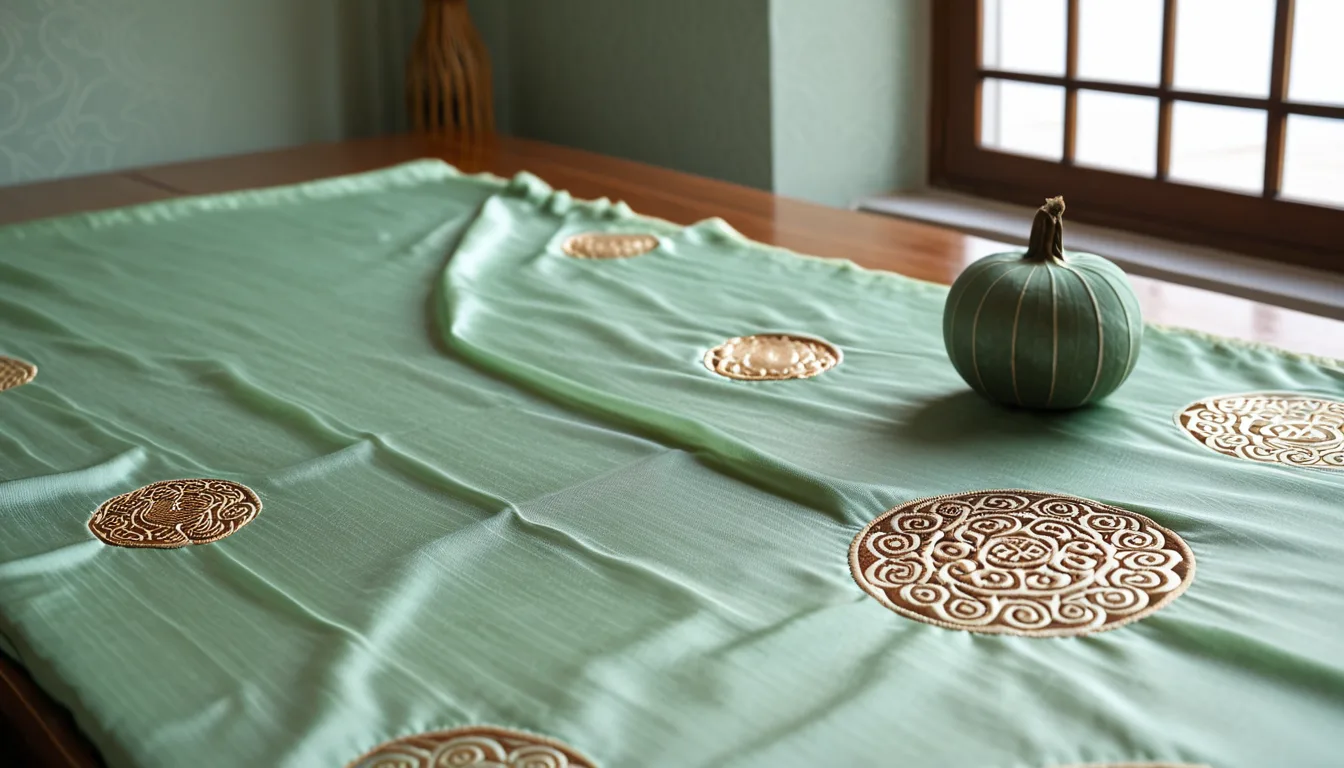
Summing up
What the discussion has shown is that a single fabric name can carry several layers of information. Weave structure, thread condition, pattern and place of origin can all go into it. A fabric name on a museum label can therefore be read as a clue to both how the cloth was woven and its history. One question remains open. What changed during the 30 years mentioned in the 1796 record is worth checking in the original text.
The original entries on bidan, gapsa, hangna and gongdan are available in the Academy of Korean Studies' Encyclopedia of Korean Culture. The sukgosa entry of the Dictionary of Korean Costume explains the difference between sukgosa and saenggosa. Designation details for myeongju-jjagi are on the Korea Heritage Service's National Heritage Portal.